

The Goods and Services Tax (GST) moved a step further to becoming a reality with the Lok Sabha unanimously passing the amendment that enables the highly anticipated reform.
GST is expected to replace as many as 17 indirect central and state tax levies and result in a cutback in logistics costs of businesses across all sectors, enhancing ease of doing business. Moreover, the overall consumer demand is set to improve since the benefits of the reduction in costs are likely to be passed on to the consumers. But what does this mean for car buyers?
Decline in vehicle prices
The implementation of GST will remove the effect of multiplicity of taxes on the cost of goods and services. The standard excise duty of 12.5 percent and VAT of 12.5-15 percent along with cess, entry taxes and CST (Central Sales Tax) take the effective tax rate up to 26-30 percent in the current system which will drop to a standard rate of 17-18 percent under the GST.
Within passenger vehicle industry, mid-size segment (1,200-1,500 cc) will be the largest beneficiary with an estimated duty decline of nearly 20 percent. The small car segment could see a price benefit of about 10 percent, while luxury cars and utility vehicles segment could get a benefit of up to five percent.
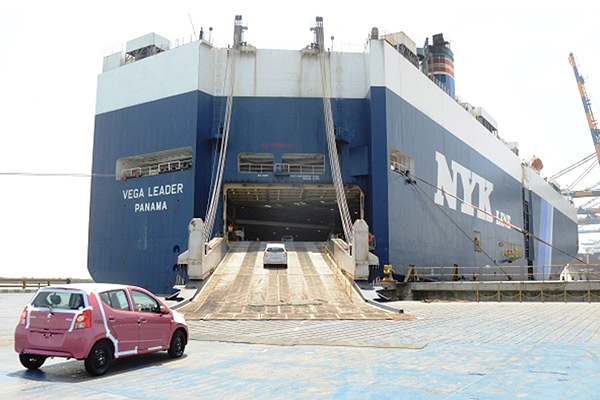
However, with regard to vehicles in the luxury segment, there is unlikely to be a significant impact on demand given the small amount of the benefit. Moreover, the customs duty is among the taxes which will be left out of the GST and therefore prices of vehicles brought in as imports or Completely Built-Up (CBU) units is unlikely to change.
Within the two-wheeler segment, prices are likely to drop by about 8-10 percent. This will result in improved demand for cost sensitive 100-125cc segment.
Change in price structures
The implementation of the goods and service tax is likely to result in a shift in price structures. With a standard tax rate for both the compact sedan/hatchbacks and mid-size/full-size sedans, the price gap is expected to shrink. A higher number of buyers may thus naturally choose to go for vehicles belonging to the latter segment; a departure from the current buying behavior.
Moreover, apart from the change in buying preference due to the shrinking gap between small cars and mid-size segment, the implementation of the GST could force some manufacturers to reorganise their strategies especially in the sub-four-metre segment which was born out of the excise duty benefits.
Uniform price
Besides absorbing a host of taxes, GST will permit carmakers to have a uniform ex-showroom price of its vehicles across the country. Currently, all the vehicles are priced differently across the states on account of diverse excise rates. The uniformity in prices will ease the concern among car buyers over deciding on a place to buy the vehicle and even curb the practice of registering it elsewhere.
-With inputs from CRISIL Research
 Rivan RS
 Viraaj Bhatnagar
 Uday Singh
 Suraj Viswanathan