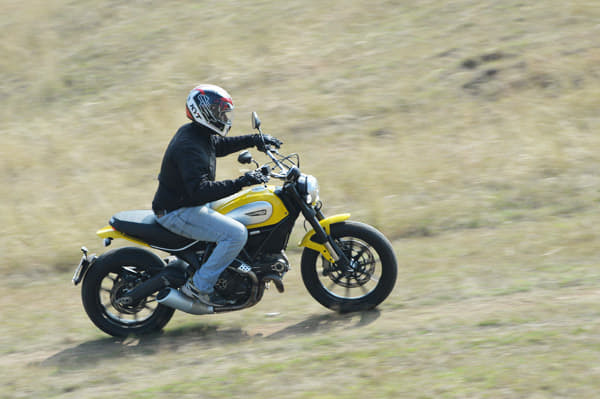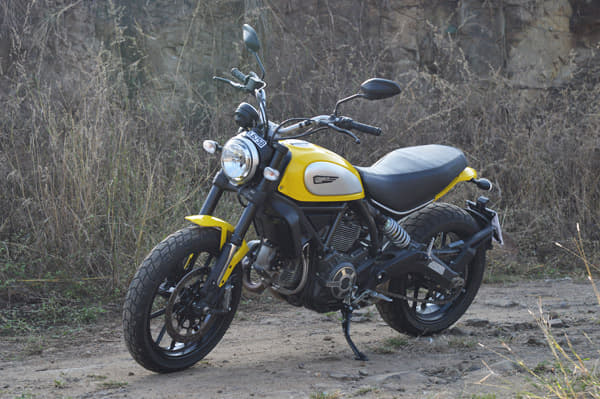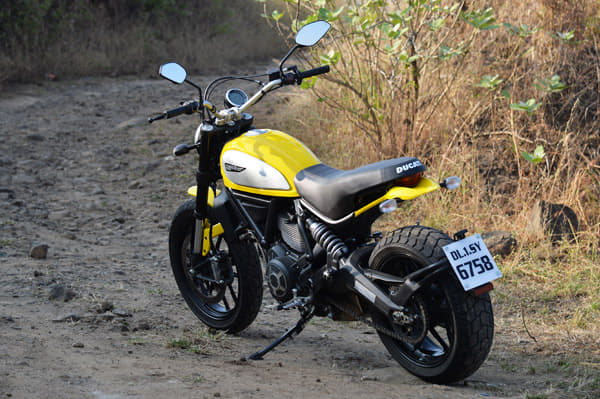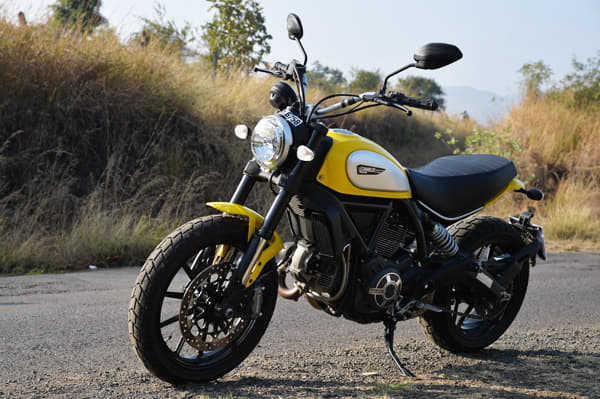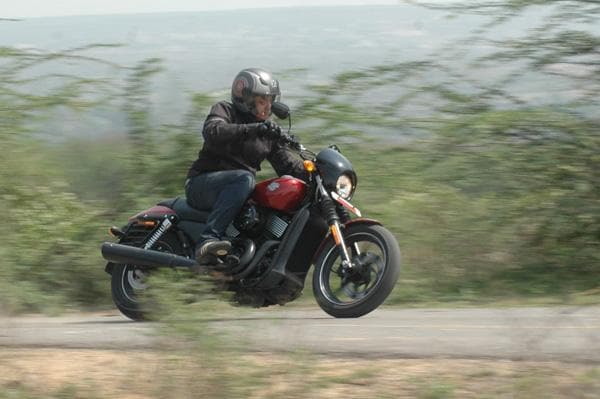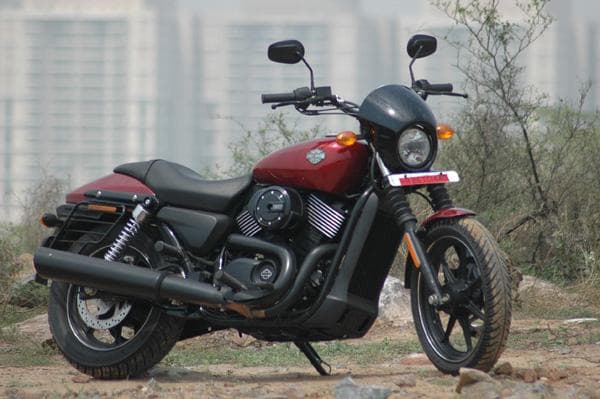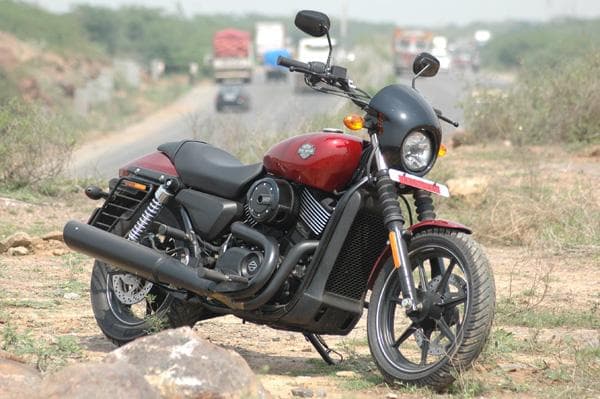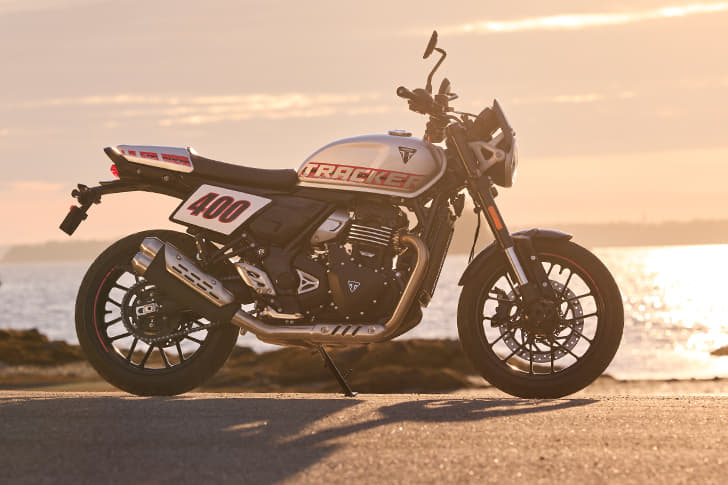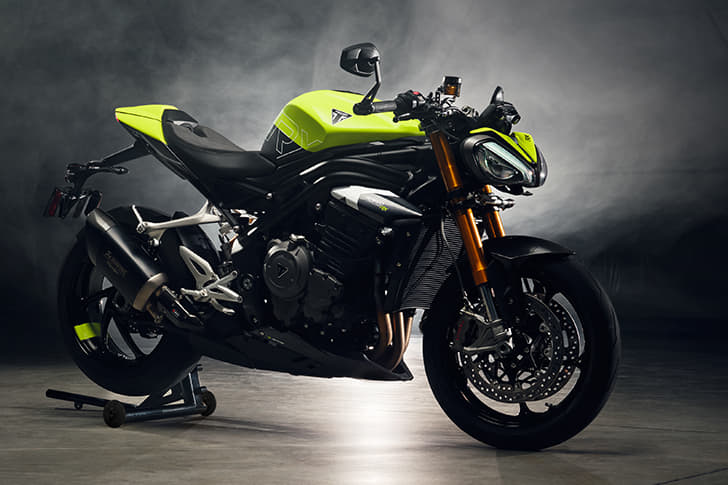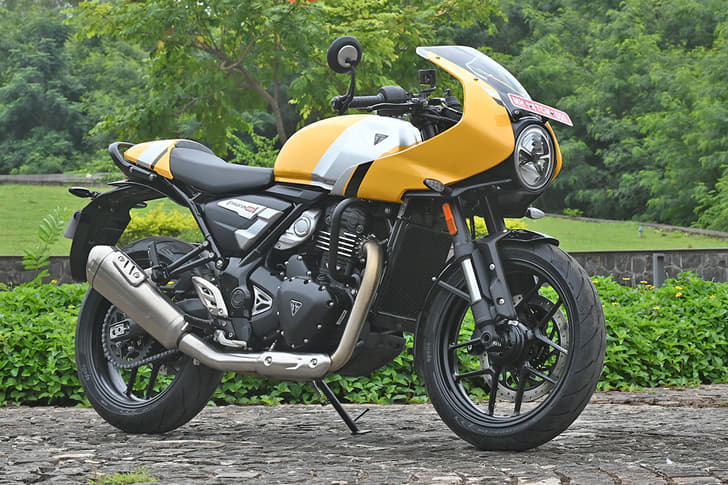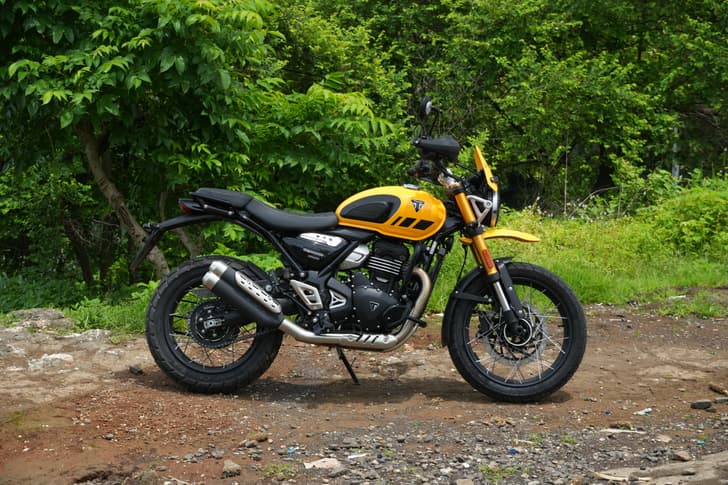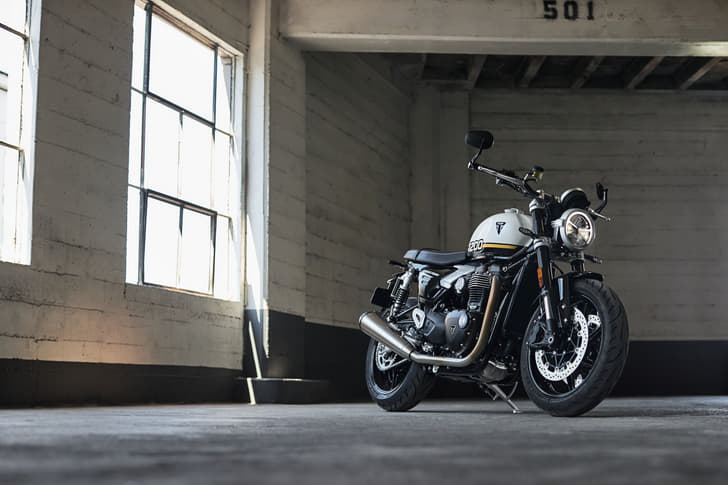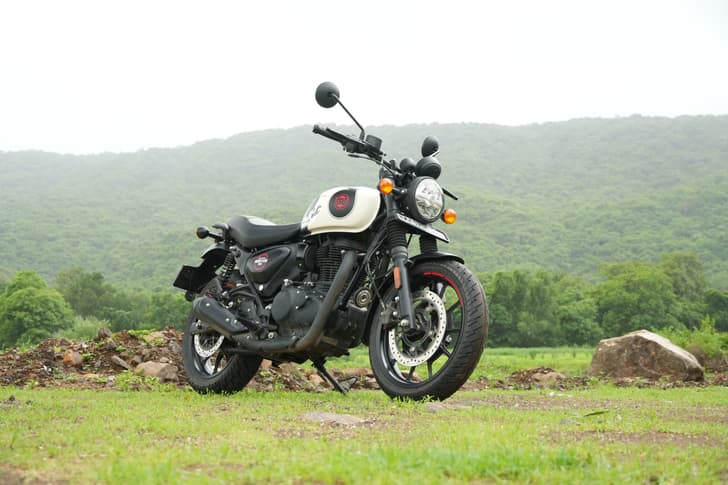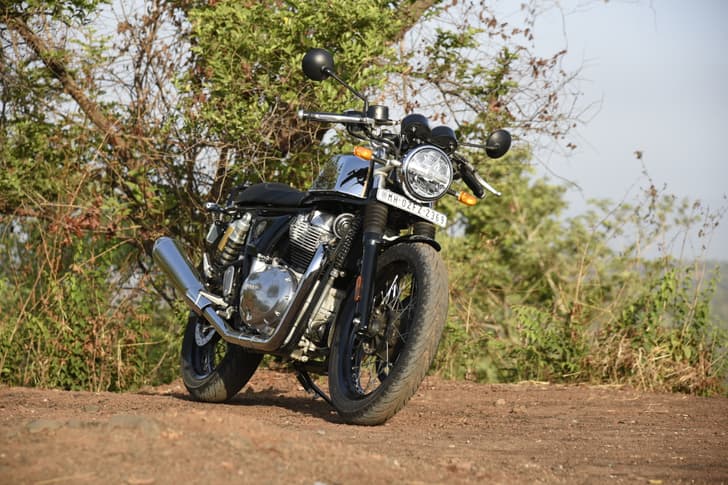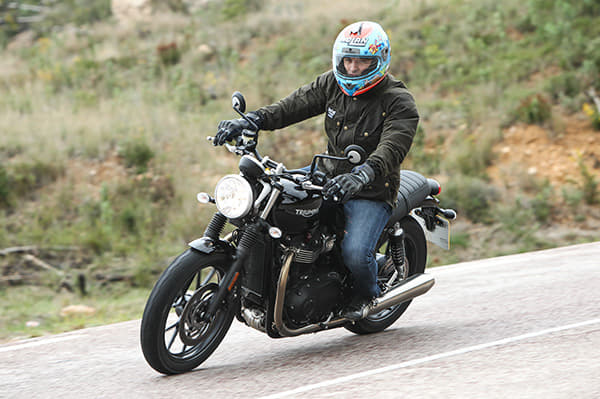
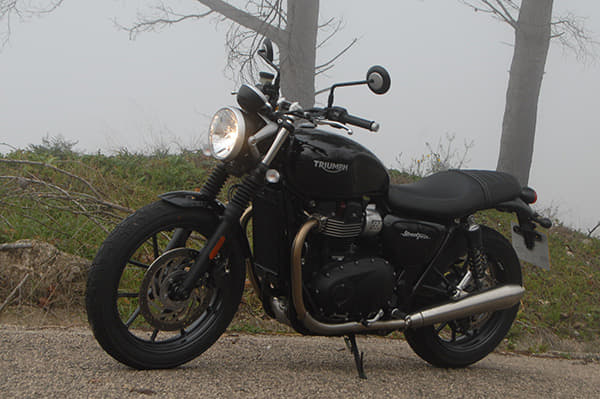
The twisting roads of Valencia make a good setting to ride Triumph's most important, new motorcycle in a long time, the Triumph Street Twin – a bike that is all set to replace the ever popular Bonneville. The Street Twin is all-new. Its familiar silhouette may have you think otherwise, but Triumph engineers tell us that under the skin this is a new bike, from chassis to engine to a wide array of added electronics.
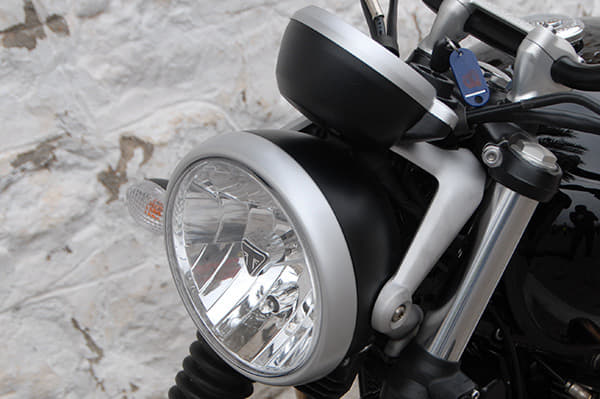
The Street Twin headlight has the Triumph logo set smartly, smack in the centre. Our test bike showed off a black and silver theme. The handlebar, grips and mirror stalks are all black, while the bar end weights, control levers, and mirrors are shiny in a nice contrast. The new Triumph gets a combined digital-analogue instrument console; the speedometer is analogue, while other information is displayed digitally. However, the Street Twin lacks a tachometer.
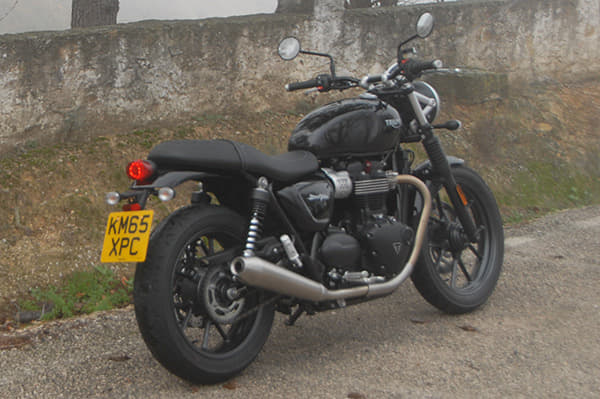
The Street Twin's teardrop-shaped tank has subtle curves that are well thought-out, to provide good thigh grip to the rider, but holds slightly less fuel as compared to today’s Bonneville. The riding saddle is well padded and contoured to provide good comfort. The tail section ends with small indicator stalks and a stylish LED-powered tail-lamp. Long, upswept silencers match the Bonneville theme perfectly, giving the motorcycle a nice retro look. Triumph provides the Street Twin with all black, 10-spoke alloy wheels. Attention-to-detail, build quality and materials seen on the new Bonnie are simply brilliant.
Triumph has built the Bonneville Street Twin engine from scratch. It is now a larger capacity, 900cc, in-line configuration two-cylinder motor, that makes 54bhp at 5,900rpm. This may not impress you, but the torque output of 8.2kgm delivered at an accessible 3,230rpm is outstanding. The new engine is also liquid-cooled, which Triumph tells us has helped increase its efficiency. On Valencia roads, the Street Twin engine felt free-revving and effortless in low-speed riding situations. The new Bonnie feels and performs best at cruising speeds above 90kph. Heady doses of torque leave you satisfied when overtaking, with more than ample torque offered at the wrist.
The exhaust note is soulful, and pleasantly gruntier than the older bike. There’s a grown-up, gruffer big bike note that now gives the Street Twin access to the bad boy club now. Liquid-cooling has played a big part in how stress-free the new Street Twin feels, even after hours of pushing the bike from the riding saddle.
The Street Twin provided excellent ride quality over the smooth riding surfaces we tested it on. Considering the lack of potholes in Valencia, we can’t comment on how much of this composure will be maintained on bad roads.
The telescopic forks in front and dual shock absorbers at rear have been tuned to absorb even the smaller bumps, while larger undulations are soaked up easily thanks to dual stage springs. The tubular steel frame is lighter, and not shared with any other Bonneville.
Riding on the hilly roads of Millares near Valencia we learnt it is possible to push the Street Twin to its limit. Handling is surprisingly good, and is a step up from the earlier Bonnie. The hills taught us that you really don’t miss a rev-counter on the Street Twin, as you will soon learn you can count on the plentiful torque to short shift up the gearbox to derive a good performance.
The Street Twin is equipped with traction control and ABS that can be switched off. It’s impressive so much has been added on to the new Triumph, while still making it a substantially lighter bike. The outgoing Bonneville weighs 209kg, while the Street Twin tips the scales at 198kg!
So the Bonneville Street Twin looks the part and offers top-notch quality and fit-finish. The engine, with its improved performance, audio and much healthier torque output is a step in the right direction too.
Overall, the Street Twin feels like a thoroughly well-bred motorcycle, and Triumph has offered the added value of modern electronic riding aids. In terms of handling, the Street Twin scores highly, as long as you don’t ride it like a supersports motorcycle. That leaves very little to complain about, so far. In India, much of the new Street Twin’s success then will come down to how well Triumph India manages to price the motorcycle when it reaches our market early next year.
 Dinshaw Magol
 Rishaad Mody