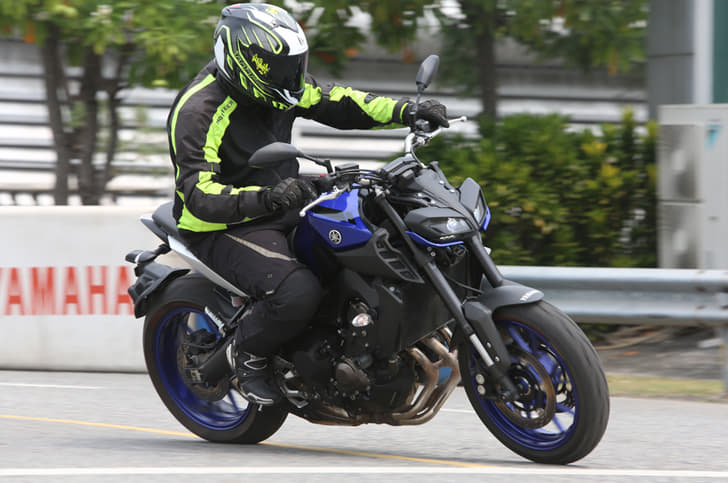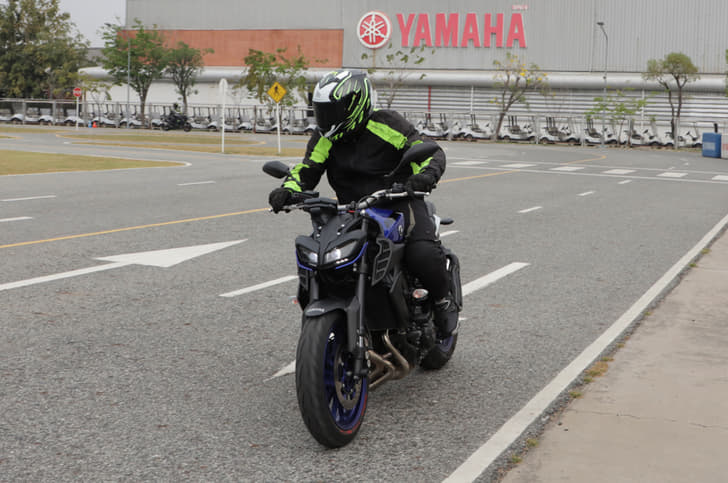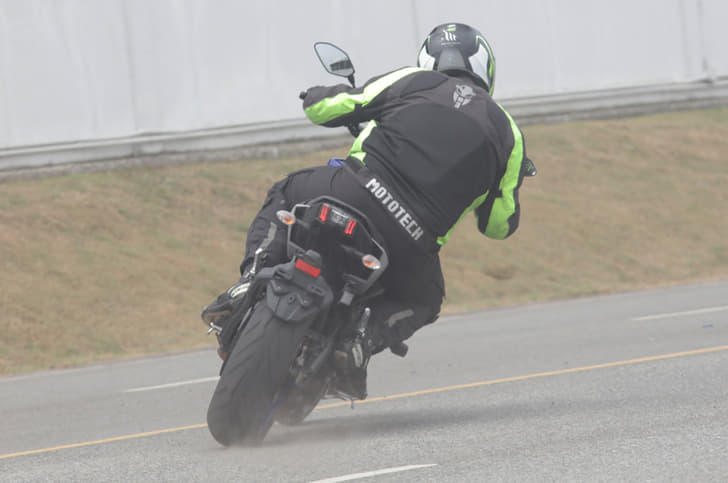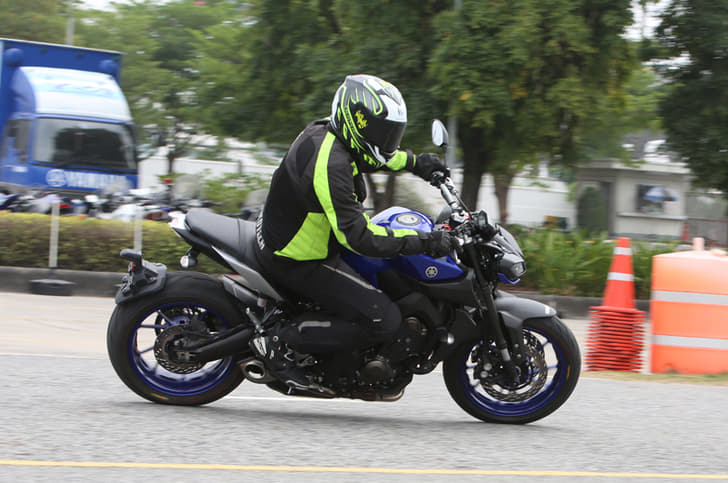
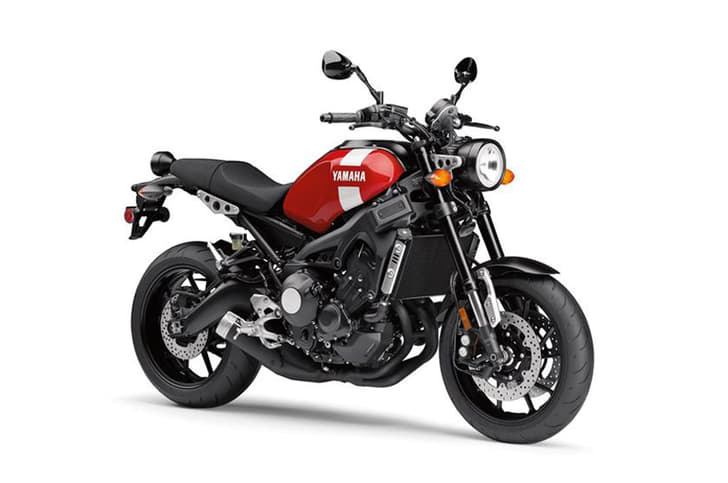
At first, I was flabbergasted at the prospect of riding two juicy new Yamahas around a 200m training track, part of the Yamaha Riding Academy in Thailand. This is a particularly compact facility, built mainly as part of an elaborate (and genuinely good) rider training programme for Yamaha’s customers – I hope this gets replicated for India as well. At the time, however, I had other pressing concerns which were Thailand’s oppressive heat and humidity, though the overcast sky provided mild relief. I had motorcycles to ride and – oddly enough – nowhere to ride them! Well, almost.
Going by experience, Yamahas are always fun to ride and so the Indian contingent of motorcycle scribes soon turned the safety arena into a mini racetrack. However, you must note that the following riding impressions are largely limited to a second gear environment (although I did attempt to measure their comfort at low speeds in high gear). Having said that, we did have ample time in the limiting facility to get a good first impression, at least, and I started off with the coolest of the lot – the XSR900.
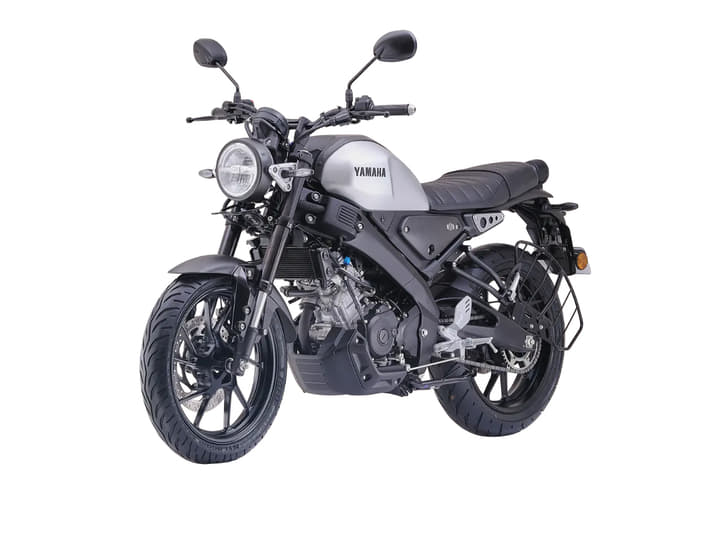
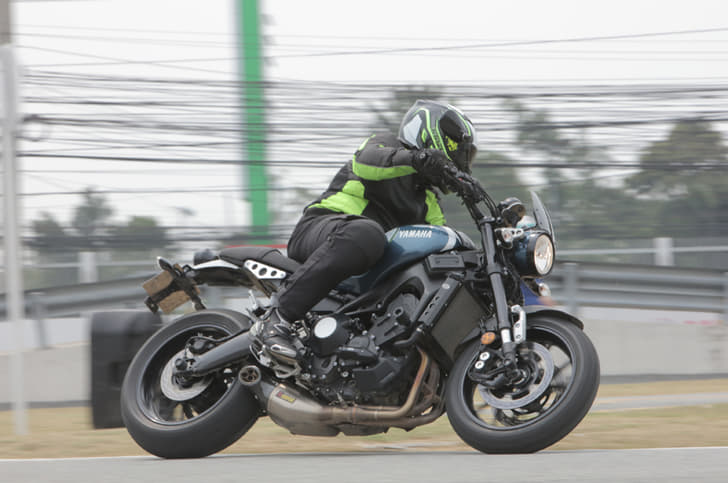
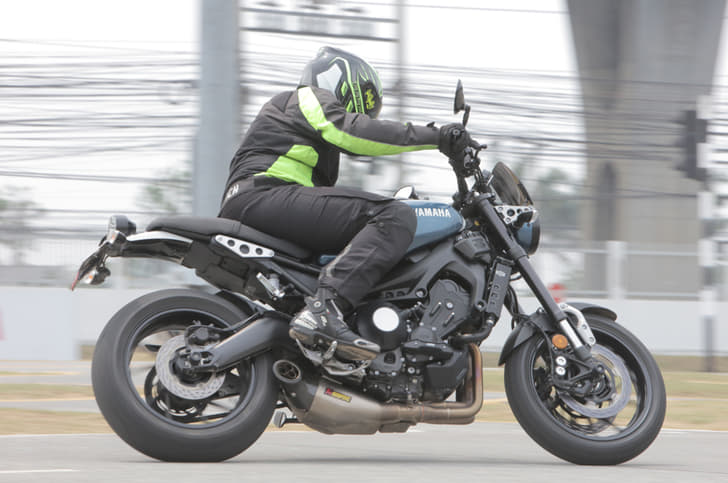
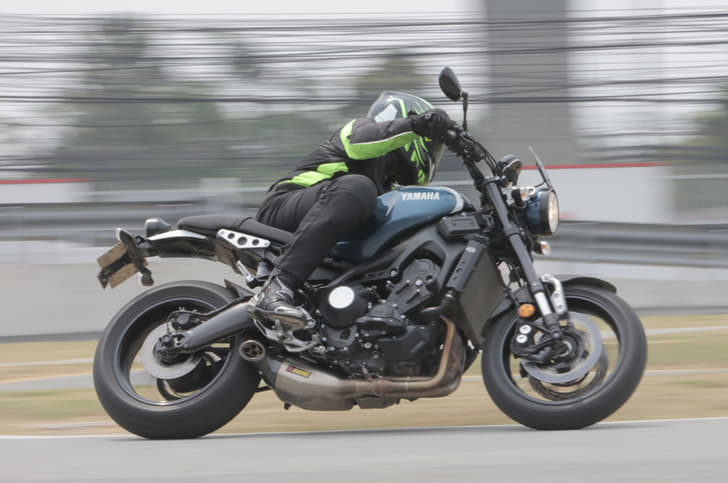
The XSR skims the neo-retro design philosophy and is a decidedly funky-looking motorcycle. The name has its roots in the 1968 XS 650, which later evolved into the XS 400 and also an XS Eleven. The XSR 900, however, is more ‘neo’ than ‘retro’ if you know what I mean. It shares its chassis and motor with the other 900s in Yamaha’s line-up, namely the MT-09 and the Tracer 900.
This tall-ish motorcycle seats you in a faintly aggressive riding position, one which is commanding but not committed in any way. The old-school (in a Yamaha way) fuel tank certainly looks the part, and the single-unit seat is comfy and generous. It gets a conventional handlebar and a single-pod digital speedometer that packs in all the info in an easily legible format. Initially, I thought the XSR felt a bit top-heavy and this feeling remained (but became less prominent) throughout the ride. It certainly feels less nimble than the MT-09 but is still a lot of fun to throw into corners. Like the other 900s, the XSR also gets three riding modes, with A being the most powerful, followed by B and Standard. Traction control can be disengaged if you please although ABS cannot, which is alright for a motorcycle of this format.
This is a quick motorcycle if not a lightning-quick one, and is clearly a motorcycle for someone with roots in an older generation of riding. In other words, this is a fast, modern machine that will appeal to those interested in neither manic reactions nor futuristic styling – and this tribe is a growing number, I think. It’s powered by an 847cc, in-line triple with liquid-cooling and DOHC, the same format in the other 900s I sampled. From what I attempted to gauge, you can ride this motorcycle at 50kph in sixth gear if you like, and accelerating from that point is gradual but possible. The XSR is cakewalk-easy to wheelie although finding this out has certainly cast aspersions on my return to Yamaha’s lovely riding facility on the outskirts of Bangkok.
With its 1440mm wheelbase (again, common to the other two 900s), a 25 degree rake angle and 4.1 inches of trail, the XSR is a lovably stable motorcycle but one that makes you want to have fun on it. The upside-down fork and monoshock are shared with the MT-09 and Tracer but, on the XSR, seemed most softly sprung – this may just be down to the pre-load setting. This is a motorcycle that will let you get your knee-down, even, but its home turf is undoubtedly going to be the up in the hills, munching on long, sweeping corners as you maintain rapid progress. Its 830mm seat height shouldn’t be a bother for those taller than 5’10” and neither should the 195kg kerb weight. With a 14-litre fuel tank, the XSR should also prove to be an able long-distance motorcycle.
Overall, the XSR is a very likeable motorcycle (it’s more expensive, even if by a negligible margin, than the MT-09) which you just cannot turn down for its appeal. As of now, Yamaha won’t comment on its Indian arrival (if at all it will come here, that is), but this is a fulfilling motorcycle and a format that will appeal to a wider audience than the narrower, sharper-focused, race-track enthusiasts. It won’t come Triumph/Kawasaki-cheap, of course, and you can expect it to be launched at Rs 11.5 lakh (ex-showroom), being a CBU import from Japan. Fingers crossed for this one!
 Dinshaw Magol
 Rishaad Mody