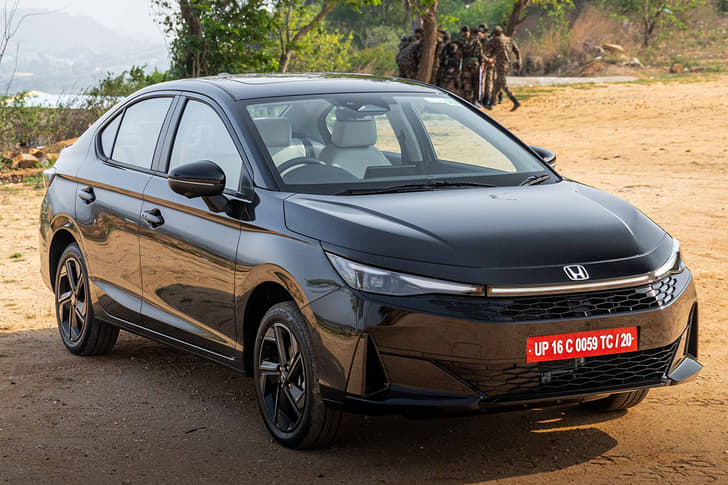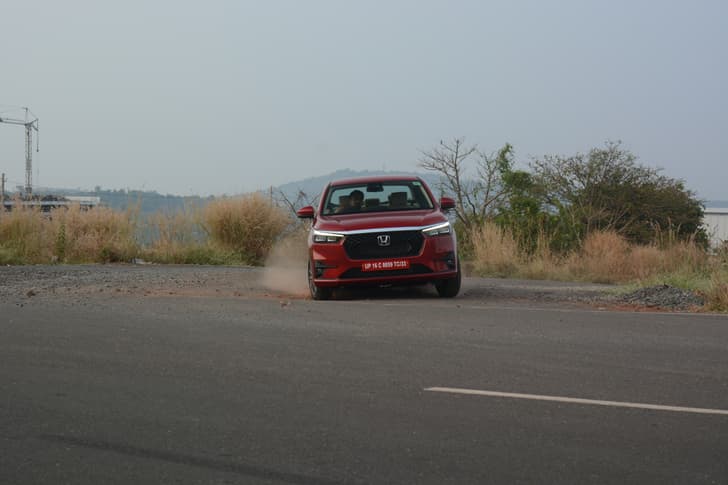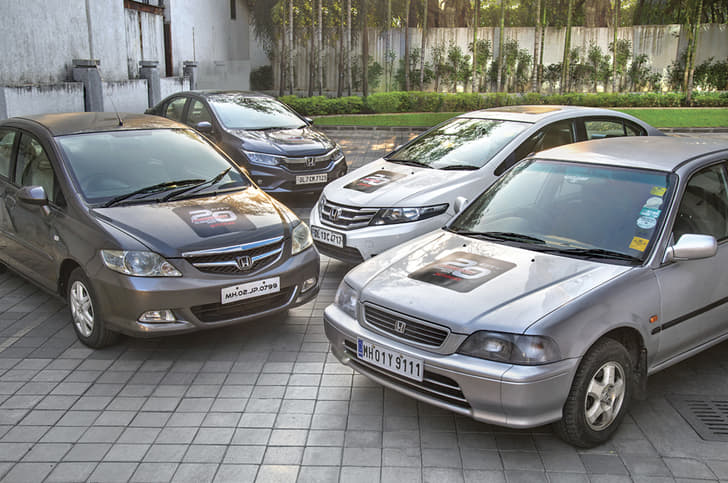
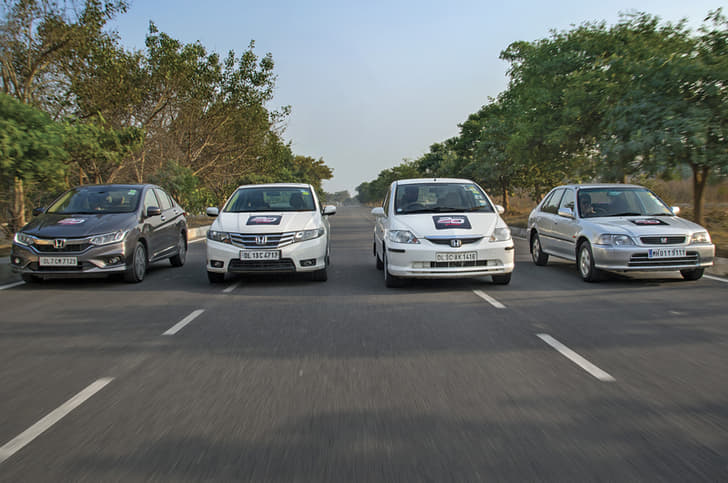
It is hard to believe that the Honda City has been in India for two decades. It feels like last week that the 100-horsepower family sedan first spun its front wheels in anger on Indian tarmac, and it feels like yesterday that we were introduced to the good life beyond 5,500rpm.
Now, if you are a pre-millennial, you’ll remember that back in 1998, we Indians were just about wrapping our collective heads to the fact that cars could cost as much as Rs 10 lakh. Power steering was just about making it into the factory-fitted list and the engine technology of the day was asthmatic at best. It was into this slow-motion scene that Honda let loose the 1.3- and 1.5-litre engines in the first-generation City. Crisp, rev-happy and powerful, the Honda engines were the Blackbirds in our Cessna world. It gave us our first taste of real speed and taught us about manic top-end performance. A friend of mine even came back from a drive in his 1.5 with his hands shaking. He told me that he had just seen 184kph on the clock! Those original four-cylinder ‘Hyper-16’ drugs set the tone for what we now take for granted in a Honda – great engines.
Don’t get us wrong – engines weren’t the only department the City made giant leaps with. Over two decades, the Citys that these great engines came wrapped in also evolved drastically in their approach to things (yes, even the second-generation City – we will explain). They grew bigger, got more practical, made you feel richer and grew safer. It is why we’ve decided to throw a party, a party to celebrate the life of the City, and you are invited.
THE BIRTHDAY PARTY
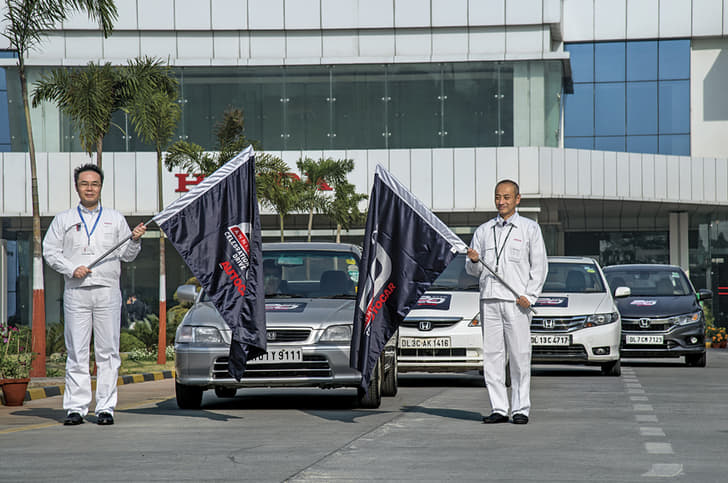
Our plan is simple. It is to drive four generations of what is now a landmark car over nearly 6,000km of India’s Route 66 – the Golden Quadrilateral, which is also known as the road that connects the four cities that make India’s heart beat. We are doing this because the link between the Golden Quadrilateral project and the Honda City runs deeper.
Conceptualised in 1999, construction of the Quadrilateral started in 2001. It connects major industrial, agricultural and cultural centres in India but, most importantly, it has revolutionised intercity travel in the country. When travel companies charge you too much for Mumbai-Delhi flight tickets, you can now actually think of going the distance in your car. The road also helps that cupboard you ordered online get to you faster. On a serious note, the Golden Quadrilateral project sped up the way agricultural and industrial produce made their way around the country; it helped improve and modernise India. The project was completed in 2012, but the City continues to evolve.
Honda introduced the City in India a year before the government thought of building the mother road. The first-generation City helped kick-start the way we motor around, to what it is today, so, from taking almost half a century to get to 100kph, we were suddenly there in 10sec and a bit. You don’t need to stretch your imagination to understand the revolution that it brought about. Honda then went all schoolmaster sensible with the second-gen, then threw in a mix of the first-gen and second-gen to brew the third-gen, and then smoothed out that car’s rough edges and gave the nation what it wanted with a diesel engine in the fourth generation.
By driving all four generations of City on four different legs of the Golden Quadrilateral, we hope to take a trip down memory lane. The aim is simple: we hope a fortnight in these cars will help us revisit the things we love about the City and understand a car that has reinvented itself along the way to get to where it is now.
WHAT WE SAID
The favourite
Auto India – April 1998
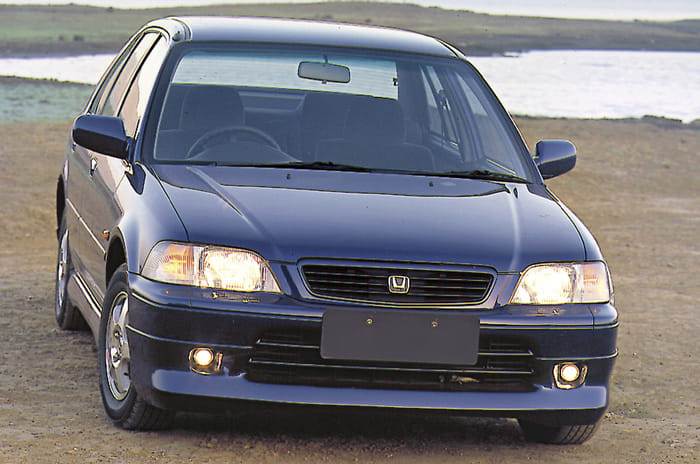 Step on the pedal and a hidden beast is unleashed. Once past the 2,500rpm threshold, the motor begs to be wound right up to the rev-limiter. Though fit and finish is excellent, it simply lacks the solid feel of the Escort or the Astra, especially on a rough road. But if you enjoy driving, there’s nothing else that could give you more pleasure.
Mr Practical
Autocar India – December 2003
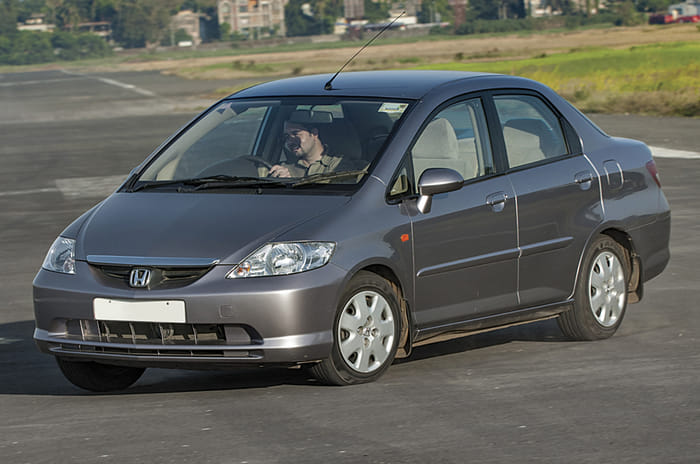
There’s no doubt that the new City has lost the sporty and entertaining character of the earlier model. This car is designed and developed to really live up to its name as a highly efficient, easy-to-drive and thoroughly reliable urban commuter. The spacious, comfortable interiors, nimble handling and smooth power delivery make this an unbeatable family car.
Best of both worlds
Autocar India – November 2008
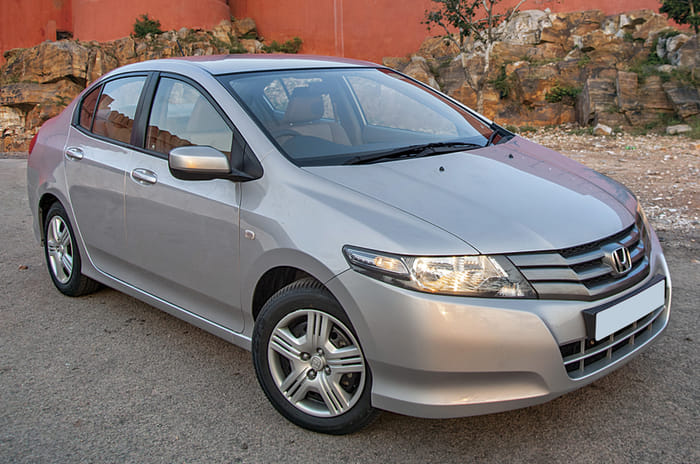
Superb comfort and space, impressive fuel economy and a huge boot make the new City every bit as practical as the previous model. The interiors should have been better made and Honda has stinted on some essential features and options. However, what you can’t take away from the Honda’s new sedan is how well it mates practicality to driving pleasure.
Going diesel
Autocar India – February 2014
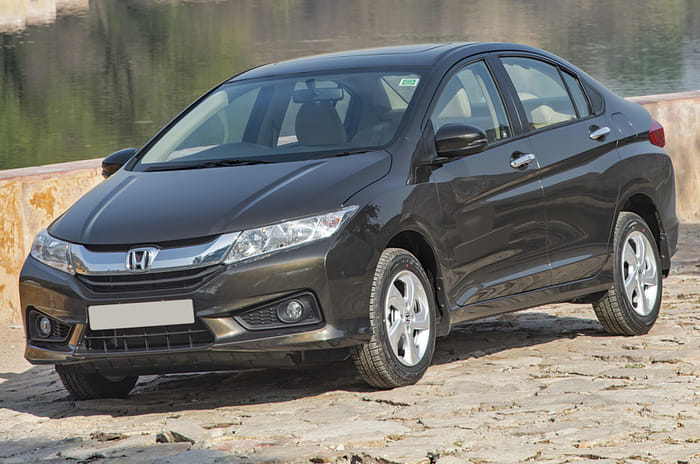
The all-new, feature packed interiors and shockingly spacious back seat haven’t just raised the bar, they’ve catapulted it out of the reach of the competition. The diesel sets new standards for efficiency, while the petrol motor packs a strong enough punch to appease enthusiasts too.

 Uday Singh
 Dipan Sur
 Glenn Noronha