
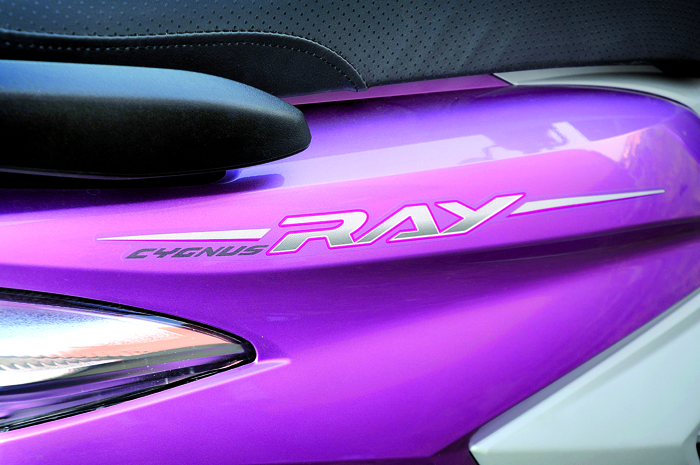
With an ever-increasing number of women taking to two-wheelers, the Indian market for automatic scooters has lately been doing rather well. And in view of the growing potential of this segment, two-wheeler manufacturers here are launching several new offerings to woo the fairer sex. We pitch the two latest entrants to the market – Vespa LX125 and the Yamaha Ray – against each other to determine which one has the most ‘chic appeal’.
The Vespa, in vogue since the 1940s, continues to be popular with both the sexes to this very day. The LX125’s retro, flamboyant styling remains distinct still, making this one of the most recognisable scooters in India. Yamaha’s smart new Ray is no slouch either. It’s light and a very able ride in city traffic.
The clearly more charismatic Vespa fits the bill as a ladies scooter, while Yamaha’s Ray, likewise, preys on the same target audience, armed with a confidently light, contemporary air. So, which scooter is able to fight down its rival?
Design and styling
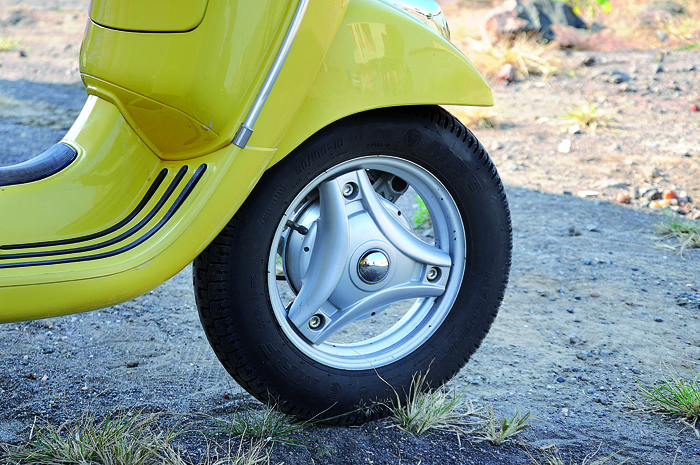
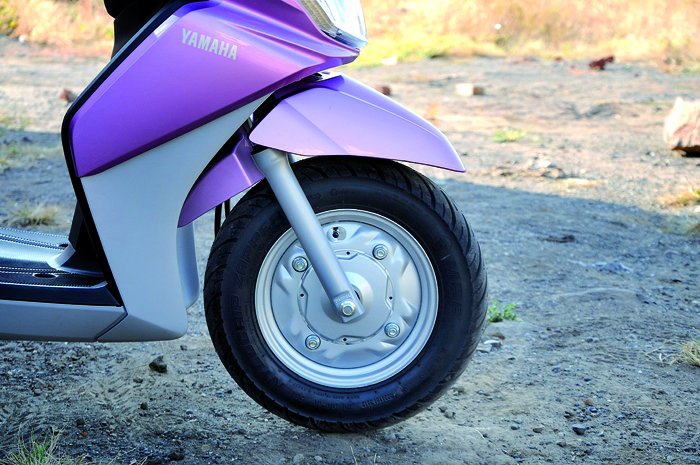
The LX125 and Ray are both purpose-built city commuters that are individually styled to fit into today’s market. The LX125 attracts buyers from every sphere of the market, while the sleeker Ray is aiming to strike more of a chord with the Indian youth. Both scooters are shod with 10-inch wheels –
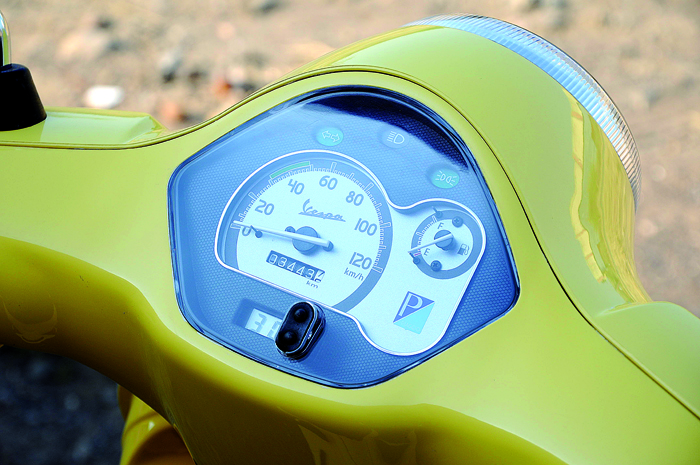
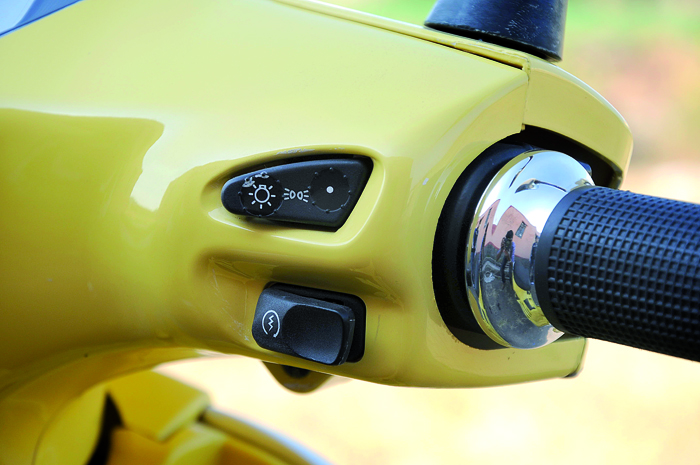
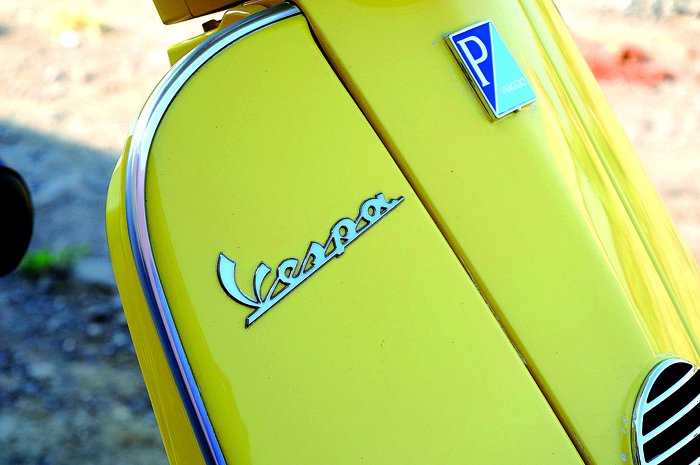
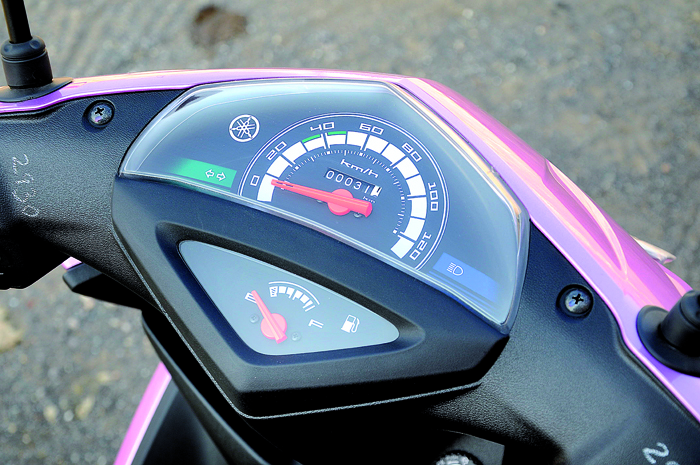
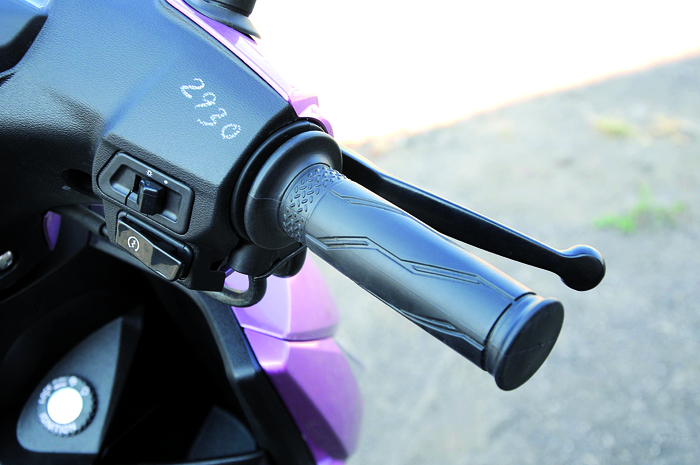
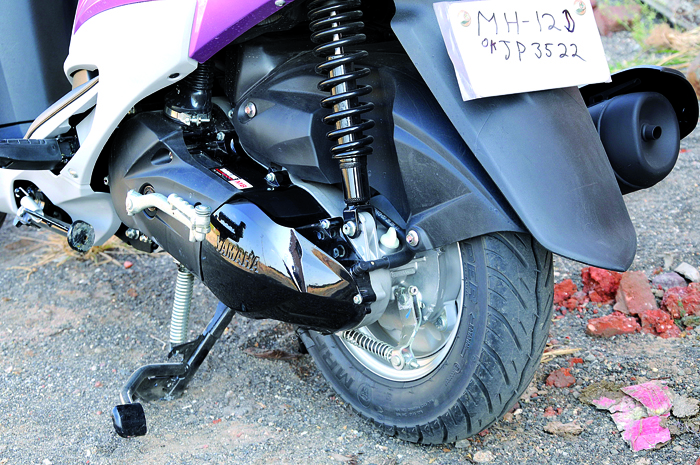
the LX125 comes with upmarket, three-spoke alloys, while the Ray opts for relatively common-place pressed steel rims. The LX125 sticks by its famous, retro design theme, its rounded, bright body panels streaked with splashes of contrasting chrome, while the Ray relies on a next-gen design that uses sharper lines. The LX125’s classic instruments are plain-Jane in contrast to the Ray’s sharper styled, flush-fitted console, both scooters offering a prominent, easy-to-read speedometer and fuel gauge. There’s little to choose between these two premium scooters in terms of their switches, control levers and mirrors, both scooters offering adequate quality components.
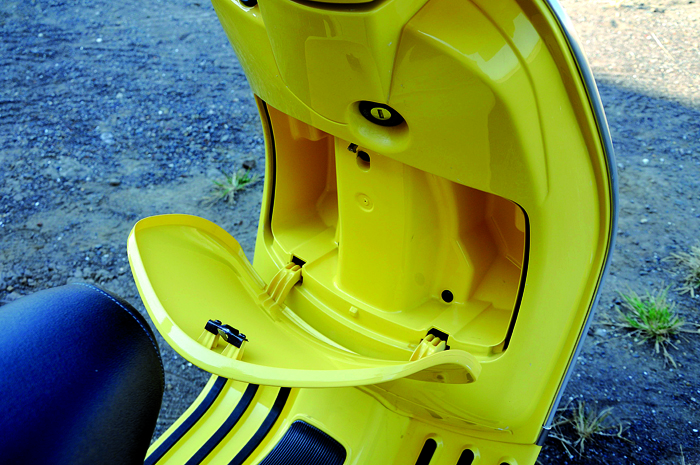
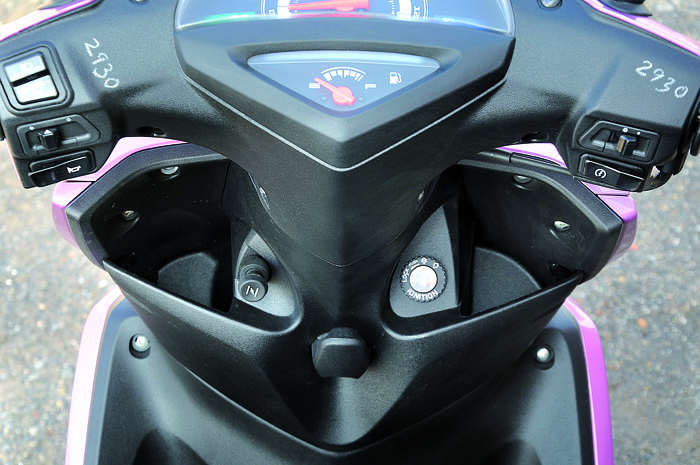
A complaint we have with the pair however has to do with neither offering the feature of a brake locking clamp, a key safety requirement on gearless scooters. Both scooters do although provide welcome utility space with front storage compartments, the LX125’s bay sits flush-fitted in its body panel, and can be opened via a push of its ignition key, whereas the Ray has nicely sculpted cubby holes. Primary lockable storage space is of course available beneath the scooter seats, where the LX125 has a significantly larger boot. The LX125 gets a broader, ridged floorboard, while the more narrow, all-flat Ray floorboard is rubberised, proving very helpful in wet riding conditions. Fit-finish and overall quality are top-notch affairs on both scooters. Both rivals feel well built and sturdy enough to last trouble-free through several years of ownership.
Performance
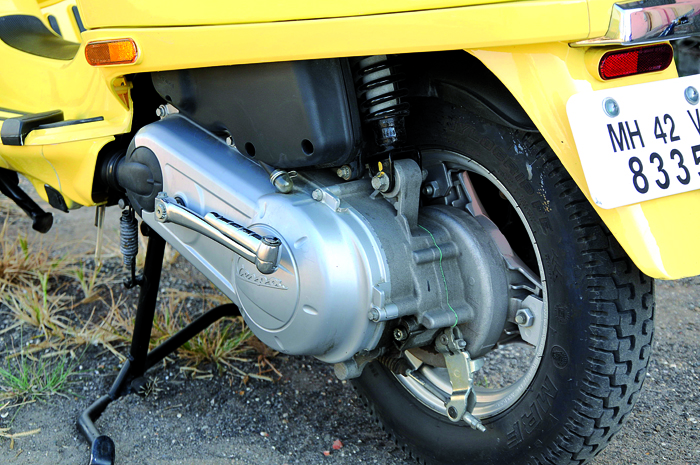
Both the competitors are powered by four-stroke, single-cylinder and air-cooled powerplants. At 125cc, the LX125 engine boasts of a larger capacity, and this is the only Indian scooter to breathe through a three-valve head. Power output on the Vespa is 10.06bhp at 7500rpm, while maximum torque is 1.08kgm at 6000rpm, and the 113cc Ray puts out 7bhp at 7500rpm, with 0.82kgm of torque offered at 5000rpm. Both scooters come equipped with CVT transmission systems that work seamlessly to provide smooth automatic gearshifts. There is a performance disparity, which isn’t a key concern given both scooters aren’t built to enthuse speed addicts. The LX125 achieves 60kph in 10.07 seconds, while the Ray passes it in 12.23sec. Both engines run vibe-free with a refined and really smooth feel throughout their wide powerbands.
And they are both nearly at par in terms of efficiency. The LX125 returned 40.7kpl in city-riding conditions to the Ray’s 41.8kpl. Out on the highway, the LX125 posted 42.1kpl whereas, at 45.1kpl, the Ray returned a better figure.