The values of numbers are changing. 100, for example, is no longer greater than 99. This is because we are living in a changing world where less is more. Let me explain.
Just a few years ago, transport designers across the world were in pursuit of higher numbers. Their efforts focussed on making aircraft and cars go faster with engines that promised bigger performance. The bigger the number, the bigger the appeal. Boeing was toying with the idea of a Sonic Cruiser that would fly as close to the sound barrier as you could dare, and BMW was celebrating with big-bore V8s and oversized V12s. Efficiency was important, but in the overall scheme of things, it came a distant fifth.
And then the bubble burst. Yes, rising demand and the price of oil was already creating havoc but then, 9/11 came along and created a set of new global dynamics. And add to that, climate change; now no longer just a topic of academic discussion. These factors demanded a change in engineering and technological objectives. So, the new challenge became ‘how do we reduce fuel consumption without affecting performance’. How much can we reduce harmful emissions without cutting down on power? How do we reduce the weight of the vehicle rather than how much can we overbuild it.
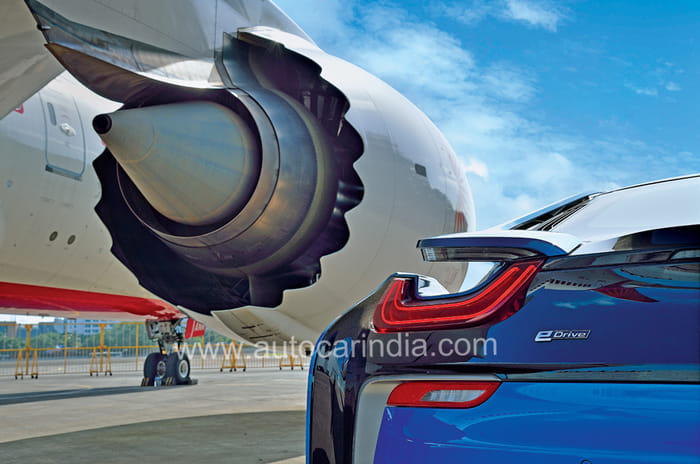
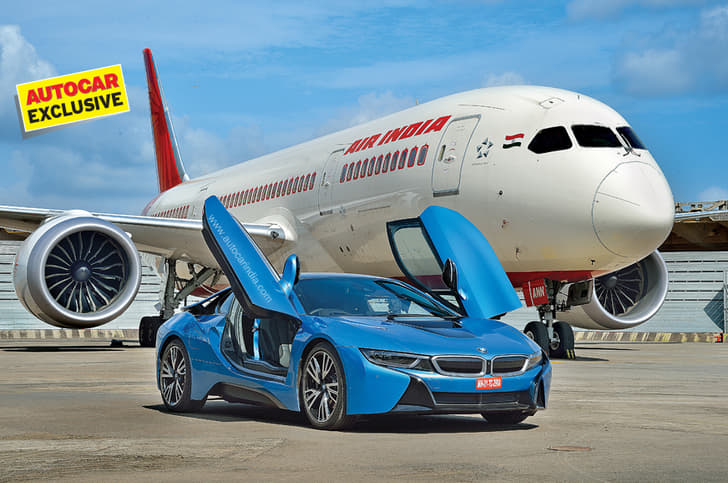
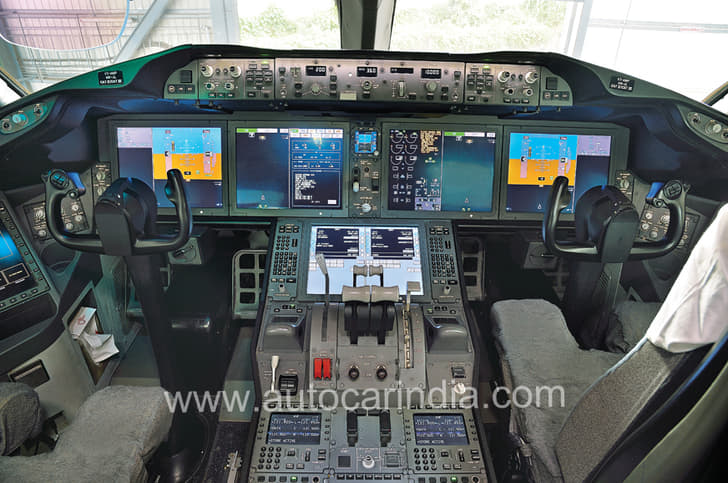
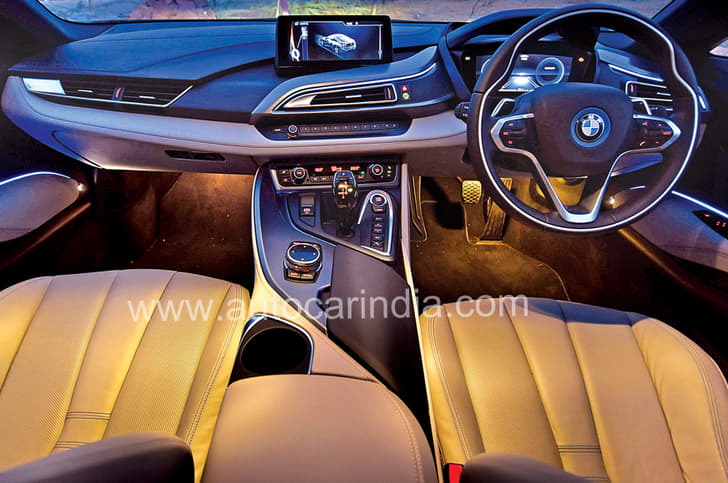
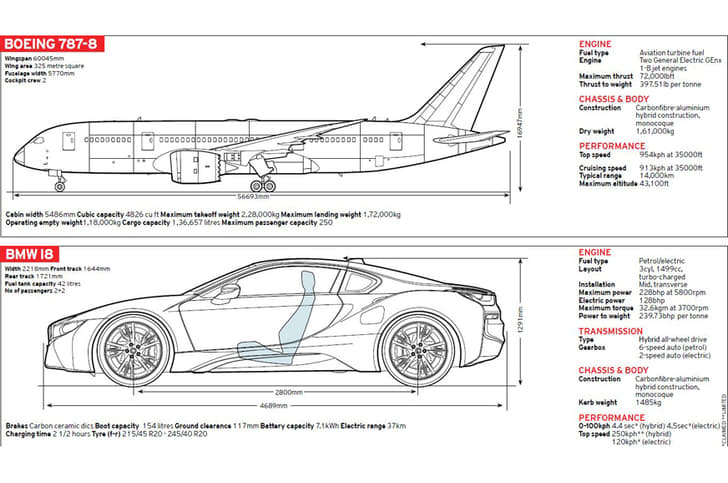
Our two stars today, on the face of it, seem as different as chalk and cheese. But under the skin, both are designed to fulfill similar objectives. In the left corner, the BMW i8. A plug-in hybrid sports car with a top speed of 250kph. On the right, Air India’s Boeing 787 with a top speed of 954kph at cruising altitude. One costs around $200 million while the other will put you back by Rs 3 crore. While the car can seat two (though it has four seats), the Boeing can seat close to 250.
Despite their apparent differences, they share more in common than is instantly apparent. Firstly, they represent a new reality; they are markers to the way ahead. Secondly, they are demonstrations of the technology and materials that were once believed to be in the domain of exotics. And thirdly, they represent the long-term vision of two leaders who believed in forging ahead. The i-series cars from BMW, the i3 and the i8, are thought to be part of the personal vision of BMW heiress Joana Quandt, who recently passed and Allan Mulally – who sanctioned the three-cylinder EcoBoost engine later at Ford – is the one who pushed for the Dreamliner.
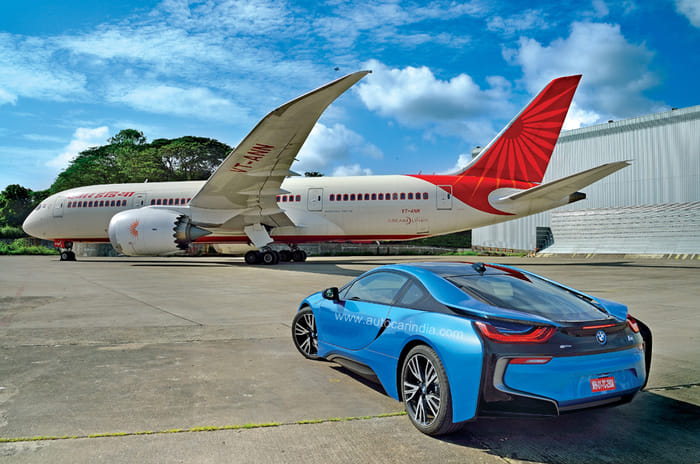
The sun had just peeked over the horizon when Team Autocar lands up in Gate No.1 at the Santa Cruz Airport in Mumbai. It’s not a gate that you’d know unless Air India pays you your salary and your job is to keep aircrafts flying. Thanks to due diligence in the past week, the red tape is lowered for us as we drive the electric-blue BMW i8 in for its date with the Dreamliner. And then, as if on cue, we see the LED lights of a 787 lining up on the runway behind.
The name Air India isn’t on the tail, so we known it is a Dreamliner. Excitement is high, we’re about to be given a ringside view of the power and the majesty of a full-bore take off from close up. AI 131 carries approximately 55 tonnes of fuel and if the flight is full, there’ll be at least another 140 tonnes to deal with. And when I say ringside, I mean ringside; Air India’s engine maintenance facility is halfway down runway 27, and aircrafts pass so close we can feel the hot gasses as they thunder past.

 Uday Singh
 Glenn Noronha
 Dipan Sur