Latest questions answered by experts
I own a 2021 Maruti Brezza (petrol), which is not E20 compatible, and I am getting low mileage. Now I'm looking for a new car and am confused between the following options: Kia Seltos HTE(O) IVT, Hyundai Creta EX CVT, Maruti Suzuki Grand Vitara Zeta(O), and Skoda Kushaq (TC) I have seen a few posts and videos suggesting that the new Creta and Grand Vitara will be launched in the coming months. Should I wait for the new launches to get the best car? Kindly suggest, as having multiple options is creating a lot of confusion.
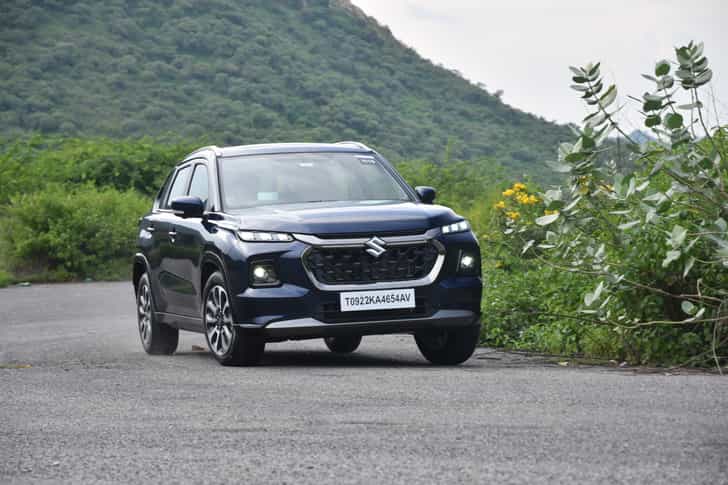
While your concerns are valid, do note that all cars will see a mileage drop running on E20 petrol; it's just that E10 compliant cars like your 2021 Maruti Suzuki Brezza will see a relatively higher impact due to the engine not being calibrated for the fuel. As for which car to pick, since mileage is your maximum priority, we recommend the Maruti Suzuki Grand Vitara Zeta (O). It remains the mileage king in its segment, and even when you factor in the efficiency drop, it will do better than the others you have shortlisted. Bear in mind, however, that it uses the same 1.5-litre petrol engine as your Brezza, so in terms of powertrain, it won't feel like much of an upgrade on that front. As for the new launches, the Grand Vitara may get a minor facelift later this year, but it will not really impact the overall ownership experience (or mileage), so we recommend going ahead and buying it now. The next-gen Hyundai Creta is not due until sometime in 2027.
I am planning a 5-6 day road trip to Delhi. My car is a JK-registered Maruti S-Cross, manufactured in December 2016 and registered in April 2017. Will I be allowed to drive it in Delhi?
Yes, you can drive your JK-registered Maruti Suzuki S-Cross in Delhi for your 5-6 day road trip. The 10-year diesel and 15-year petrol car ban in Delhi applies to vehicles registered in Delhi, not to out-of-state vehicles visiting the city. As long as your car is registered, insured and has a valid PUC certificate, you are legally allowed to drive it in Delhi. However, be aware that Delhi has strict enforcement of emission norms and random PUC checks, so make sure your PUC is up to date and the car is in good running condition. Also, carry all original documents, including RC, insurance, and PUC, as police checks are common. There is no restriction on the number of days you can drive the car in Delhi as a visitor, but if you plan to stay long-term or move to Delhi, you would need to re-register the car locally. For a short road trip, you are absolutely fine.
I am considering the Toyota Hyryder Hybrid top model. I have never owned an automatic car. I drove it and found it a bit underpowered. Will it be safe to take it to the mountains? Will it climb steep roads without any issues? Is overtaking at high speeds difficult? Is it worth buying? If not, please suggest another option.
The Toyota Urban Cruiser Hyryder Hybrid is a very sensible choice for your first automatic. It is smooth, efficient and easy to drive in the city, and the hybrid system works well in stop-start traffic. However, your concern about feeling underpowered is valid. The hybrid system is tuned for efficiency rather than outright performance, and under hard acceleration, you will feel that the engine is straining a bit. Overall, performance feels adequate, and while it will climb hills and handle mountain roads without issue, performance doesn't feel particularly strong or effortless like some turbo-petrol or diesel cars.This Toyota car is a great choice if your priority is efficiency and ease of use, but if you want more performance and better overtaking ability, a 1.5 turbo-petrol automatic powered SUV like a Kia Seltos or Skoda Kushaq/VW Taigun would be a better fit.
I am a senior citizen, and I want to buy an automatic car. Please suggest an automatic car that I can purchase.
For a senior citizen looking for an automatic car, the priority should be ease of use, comfort and reliability. The Maruti Suzuki Brezza automatic is a very sensible choice. This Maruti Suzuki car is easy to drive, has a smooth torque converter automatic gearbox, light controls and a comfortable ride, which makes it ideal for city driving and longer journeys. The compact SUV is also easy to get in and out of, has good visibility and is backed by Maruti’s strong service network, which is important for hassle-free ownership.

I have an old Honda City, a 2011 model, which we use for my kids' daily school commute. The daily travel is around 45 km. I'm planning to get a Tata Punch EV for the same purpose. Should I keep the old Honda City, or exchange it? It would be useful during the service period of the Punch EV.
The Tata Punch EV makes for a sensible upgrade for your daily 45km use. It will be far more efficient and cheaper to run than your Honda City, and the compact size makes it easy to manoeuvre in city traffic. The question of whether to keep the City comes down to how you plan to use the car. If the Punch EV will be your only car, it is worth keeping the City as a backup for longer journeys. However, if the Punch EV will be dedicated to the school run and you have access to another car for longer journeys, it makes sense to exchange the City and reduce your overall ownership costs. This Tata car is a reliable and practical choice for your daily commute, but keeping the City as a backup gives you flexibility if you need it.
Hello Autocar India team, I own a Maruti Suzuki S-Presso VXI+ AMT, which I purchased in October 2024. The odometer reading is 8900 KM. I am looking to upgrade to an EV. My driving will be mostly 90% city and 10% highways 1) How much should I expect while selling my S-Presso? 2) Among Mahindra XUV 3XO AX7L EV, Kia Syros EV HTK (42 kWh) and Tata Curvv EV Accomplished X55, please rank the cars.
With 90% of city driving, the move to an EV makes sense. Of the three in your shortlist, we would recommend you go with the Kia Syros as it's the most well-rounded offering as a car, and the electrical powertrain is very well calibrated. With the Kia, you can also expect a very reliable and glitch-free experience, as Hyundai (Kia's parent company) have excellent electric drivetrain experience. The Syros is also a very spacious car inside, and while the 42 kWh battery limits range, it will do just fine for your usage given that it is mostly all within the city. Make sure you have access to home charging, though, as relying solely on public chargers is not really feasible.
My daily running is around 20 km. Would the Tata Punch EV be a good choice for my usage?
Your running is quite low, and thus you don't really have to go electric as you would not recover the extra outlay an EV would require. However, from a distance point of view, an EV will do just fine; 20 kms a day would mean you would easily manage with even the smaller battery Punch and would only have to charge about once a week. Still, make sure you have access to home charging, as relying fully on public chargers is not really feasible.
I am a first-time buyer and confused about whether to buy the Tata Taigo Pure+ AMT, Hyundai i10 Sportz AMT or Swift VXi Opt AMT. I will use the car for occasional city as well as highway driving and not for everyday commuting. Please suggest the best option or any other option available around this budget range. Also, please suggest if I should but cng for this type of usage or stick to a petrol car.
For your usage, we would recommend the Maruti Suzuki Swift VXi (O) AMT. As a first-time buyer with occasional city and highway driving, the Swift strikes the best balance of reliability, ease of ownership and driving comfort. The new Swift is a well-rounded hatchback with a refined engine, good fuel efficiency and a proven ownership experience. The AMT is smooth enough for city use, and the car feels stable and confidence-inspiring on the highway.The Tata Tiago Pure+ AMT is a strong value proposition with a solid build and good safety credentials, but the Swift has a more refined engine and a more consistent ownership experience. The Hyundai Grand i10 Nios Sportz AMT is also a good option with a comfortable ride and a feature-rich cabin, but the Swift feels more engaging to drive and has a stronger resale value.On the CNG question, we would recommend sticking to petrol. CNG only makes financial sense if you have high monthly running, and for occasional city and highway use, petrol is the more convenient and hassle-free option. You avoid the compromises of reduced boot space too.
Is it worth waiting for the Innova HyCross facelift instead of buying one now? I've seen test mules being spotted multiple times. I'm looking to buy the GX (O).
If you are looking at the Toyota Innova Hycross today, we would not wait for the facelift. Typical of Toyota and especially the Innova, the facelift is unlikely to bring major mechanical changes, and at most there might be a few more feature additions and some cosmetic updates. In fact, the bigger risk is that the facelift could push prices up slightly, which would hurt the value proposition of the GX (O). The Hycross is already a very well-rounded MPV with excellent space, comfort and Toyota’s proven reliability. If you need the car now, there is no strong reason to delay the purchase.
Hi Autocar Team, I am planning to buy my first car and am confused between the Mahindra XUV 3XO RevX A MT Petrol and the Maruti Suzuki Brezza ZXi+ Turbo MT Petrol. I feel the Brezza offers better value for money, more features, and is actually priced lower than the 3XO. At the same time, I understand that the Brezza offers better reliability, fuel efficiency, and long-term peace of mind. However, the 3XO feels more premium and, from what I have heard, offers a better ride quality. I plan to keep the car for 10 years or more, so long-term ownership is an important factor. Could you please suggest which of these two would be the better choice for my requirements?
Go for the Maruti Suzuki Brezza ZXi+ turbo MT petrol. For a first car with a 10+ year ownership plan, the Brezza works well. Maruti’s service network, proven reliability and lower long-term maintenance costs make it a stress-free ownership proposition. The Brezza’s turbo petrol engine is also well-suited to Indian conditions, offering good drivability and efficiency without being overly complex. The Mahindra XUV 3XO RevX A MT petrol does make sense too, but we would lean towards it more if a peppy and lively drive feel is what you are after. Overall, the ride and handling balance is better with the 3XO, which has a good mix of city comfort and high-speed stability. The Brezza, however, leans towards the city with a much more pliant ride at low speeds. Thus for you keeping in mind a long ownership period, we would lean towards the Brezza.

I want to buy the new Renault Duster 1.3 Turbo DCT. Is it a good choice, considering my usage is mostly city driving with an average monthly running of around 800-900 km? I am also considering the Hyundai Creta. Between the Duster and the Creta, which one would you recommend for my requirements?
The Renault Duster 1.3 turbo DCT is a good car, with its biggest strength being its ride quality and handling. It feels planted on bad roads, absorbs bumps well and is genuinely enjoyable to drive. The 1.3 turbo petrol is punchy, and the DCT is quick, which makes it fun on open roads. But for your running of 800-900 km a month, mainly in the city, the 1.3 turbo-DCT isn't going to be very efficient.In comparison, the Hyundai Creta is more suited to your needs. Its interior feels airier and brighter, and overall it is a proven product with a stronger ownership track record. Sure, the Duster is the better driver’s car and feels more robust on rough roads, but the Creta will be more fuel efficient and is a better urban SUV, especially in its 1.5 Petrol IVT avatar, which is smooth and very seamless. A new Creta is expected to be launched early next year, so if you can wait, that could be worth getting.
I need a suggestion. I travel around 30 km daily and am confused between two models: the Skoda Kushaq 1.5 and the Volkswagen Taigun 1.5. Please suggest which one is the better buy in terms of overall ownership.
Both the Kushaq and Taigun are mechanically identical, sharing the same 1.5 TSI engine + dual-clutch automatic gearbox options and chassis, so the driving experience is essentially the same. The decision comes down to brand preference, dealership experience and minor differences in interior design and feature packaging. The Volkswagen Taigun's design and interior feel slightly more premium, but the difference is marginal. At the end, besides aesthetics, see which brand is getting you a better deal. You won't go wrong with either.
I have a budget of Rs. 1 crore for buying a new car. Which car should I buy? I want to keep the car for 4-5 years and do not want a car whose refreshed model is expected to be launched within the next 1-2 years.
The new BMW X3 would be a good option to consider. It was launched recently and does not have a life-cycle update for at least two years. It is an SUV making it easy to live with in India, has a premium, feature-packed interior and a strong powertrain that makes it fantastic to drive and good ground clearance. The XDrive 30 M-Sport petrol gets a punchy engine, and is priced just under the Rs. 1 crore mark making it the ideal choice for you.

Can I buy the MG ZS EV in 2026? I am getting the Exclusive Plus model for Rs. 18.5 lakh on-road.
The MG ZS EV has been around since 2021, and it has barely been updated since. As of today, there are far more modern, better equipped, and more efficient electric cars available in the market. So even though the pricing is attractive, we'd advise you to consider a newer car instead. For Rs. 18.5 lakh on-road, you can consider the Kia Syros EV, Vinfast VF6, Tata Curvv EV, or even the MG Windsor.
I have an Audi Q3 (that I want to replace) and an Innova. My budget is Rs. 1.3 crore (on-road), and I use my car mainly for city driving, with an average speed of 20 kph. I need a car that delivers a minimum mileage of 10 kpl, is easy to manoeuvre, and has features like a powered tailgate and ventilated seats.
Since mileage is key, most petrol-powered luxury SUVs available in this price will deliver single digit figures, especially given your average speeds of 20kph. The Lexus RX is a car that might interest you. Being a hybrid, fuel efficiency is likely to be impressive. Further, this Lexus car isn't too large to feel cumbersome to drive in the city. Also, it is well-equipped with powered tailgate and ventilated seats that you're looking for.If you're looking for something that's a bit more fun-to-drive, and you don't mind opting for a diesel, you could pick between a BMW X5 and a Mercedes-Benz GLC. The BMW car will be a bit nicer to drive but it misses seat ventilation, while the Mercedes' interior is very impressive, and it packs in the features you're looking for. Hence, it is the GLE 300d that would get our vote.
I am a 21-year-old college student. We currently have a 2025 Mahindra XUV 700 at home for family trips, outings, and weekend drives. However, I require a second car (preferably a non-SUV) for daily city commutes, easy parking, and college use. My budget is below Rs. 12 lakh, and I do not want an EV.
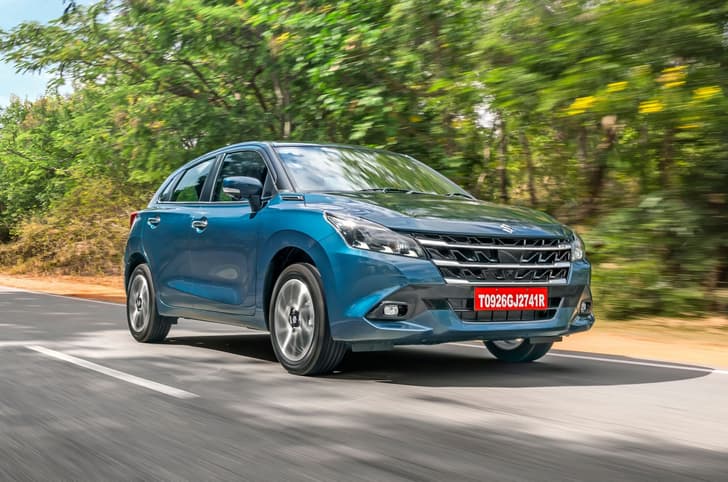
Go for the Maruti Suzuki Baleno. It is the most sensible and well-rounded choice for your requirements. As a second car for daily city commutes, college runs and easy parking, the Baleno’s compact dimensions, light controls and excellent fuel efficiency make it extremely easy to live with. It is also one of the most spacious hatchbacks in the segment, so you will not feel cramped on longer drives or when carrying friends. Maruti’s service network and low maintenance costs add to the ownership peace of mind, which is important for a student car. The Baleno’s 1.2-litre naturally aspirated petrol engine is smooth and reliable, and the car feels stable and comfortable at city speeds. Since you already have the XUV 700 for family trips and weekend drives, the Baleno complements it perfectly as a practical, fuss-free daily runner. The top-spec Alpha trim will fit comfortably in your budget and is the most sensible and dependable choice under Rs 12 lakh for your specific needs.

My requirement is a 6-7 seater vehicle. For low maintenance cost, I can go with either CNG or diesel car as my monthly running is 1000 km and occasionally it can be as high as 2000-3000 km monthly. I am from Pune and my frequent outstation routes will be Mumbai, Kolhapur, Latur and Kokan area (ghat sections). Also, since I can rent it out as self driving car and I will own upto 7-10 years. I have owned Alto, Wagon R, SX4, EON and i20 active disel. I have mentioned vehicles so that you can understand my driving and owning experience.
Given your requirements, the Maruti Suzuki Ertiga CNG is the most sensible recommendation. Your monthly running of around 1,000 km, with occasional spikes, does not justify a diesel, especially with the higher purchase cost and maintenance associated with modern diesel engines. The Ertiga CNG strikes the right balance between low running costs, reliability and practicality. It is a proven 7-seater with a comfortable ride, good service network and low maintenance costs, which is important given your plan to keep the car for 7-10 years. The CNG system is factory-fitted and well-integrated, making it a far better option than any aftermarket CNG installation. The only drawback is the reduced boot space with the CNG tank, but for your usage pattern and occasional rental plans, the overall cost savings outweigh this limitation. If you need more space and comfort, the Maruti Suzuki XL6 CNG is a good alternative, offering a more premium cabin and captain seats in the middle row making it a strict 6-seater, but the Ertiga remains the more value-driven choice. Alternatively, there is also the Toyota Rumion, which is Toyota's version of the Ertiga so if there is a lower waiting time, you can check out the Rumion too.
I'm planning to buy my first premium motorcycle and have a budget of around Rs. 3.1 lakh on-road. After a lot of research and multiple test rides, I've narrowed my options down to the Triumph Tracker 400 and the Triumph Scrambler 400 X. I'm looking for advice from owners or experienced riders who have spent time with either or both bikes. I've been riding motorcycles for around 7-8 years and this bike will be my primary motorcycle for at least the next 4-5 years. My usage will be approximately 70-80% city commuting to office and 20-30% rides during weekend with occasional long-distance trips of more than 250 km every 2-3 months. I will almost always have a pillion with me, so pillion comfort, suspension, and overall ride quality are very important factors. I enjoy riding but I'm not someone who rides aggressively all the time. I appreciate a refined, confidence-inspiring motorcycle that is also enjoyable on open highways. I'll be paying the full amount in cash so I'm looking for the best overall ownership experience rather than simply the cheapest option. During my test rides, the Tracker 400 felt lighter, more road-focused, and easier to ride in the city. It had a cowl so didn't get to check it with the pillion. The Scrambler 400 X engine felt somewhat the same but just a little toned down and not as aggresive as the Tracker given the higher power produced and better suspension. However, the braking was not as expected. My main concerns are related to finding more suitable bike for someone who rides mostly in the city but enjoys weekend touring. Which bike is more comfortable for both rider and pillion on longer rides? Does the Scrambler's taller suspension and larger front wheel become a disadvantage in daily city riding? Is the Tracker significantly easier to live with in traffic? Considering the fact that I'll own the bike for 4-5 years, which one offers the better overall ownership experience? I'd really appreciate insights from owners, especially those who have ridden both motorcycles or regularly ride with a pillion. Thanks in advance!
For your usage, where you regularly ride with a pillion both usually inside the city and occassionally on the highway, the Triumph Scrambler 400 X is the better option than its sibling, the Tracker. The Scrambler has a far more upright and commanding rider's triangle, is more spacious for both rider and pillion and its suspension comfort is also much better than the Tracker. Coming to the braking issue on the Scrambler, Triumph (not Bajaj) insists on equipping the bike with organic brake pads which don't have the same life or power as sintered units but its an easy fix. You can fit the sintered pads from any other 350cc Triumph onto the Scrambler and this will be an inexpensive and easy fix to your problem.
Hi everyone, I wanted to enquire about the Hero Xtreme 250R. I wanted to know if all the issues seen in the 2025 models have been rectified in the current 2026 manufacturing lots. I have heard a lot about engine issues with this bike, but I have also heard that in the 2026 models the issues have mostly been rectified. I also wanted to know that Hero showcased a TFT display, cruise control, and ride-by-wire features for this motorcycle at EICMA 2025, but they have not yet been released. What are the updates on this particular model with cruise control, and when will it be launched? If any of you own this motorcycle, please share your experience with it. Also, if you have any information about the launch of the updated version, please let me know.
The Hero Xtreme 250R is a relatively new product, and, like many first-generation models, it faced some initial teething issues. Hero has been proactive in addressing these, and the 2026 manufacturing lots are understood to have received updates to improve reliability and overall refinement. That said, it is still early days for the bike, and a long-term ownership track record is still being established.As for the EICMA 2025 showcase of the Xtreme 250R with more features, it remains to be seen if and when Hero updates the India-spec bike with these features. If you are eyeing the Xtreme, waiting for this updated model makes sense.
Brezza ZXI+ Petrol AT vs XUV 3XO AX5 Petrol AT. I’m super confused. I loved the peppy TCMPFI engine of the 3XO, but being in the Maruti family has made me used to reliability and smooth after-sales service. However, the higher taxes on the Brezza and the strong value-for-money proposition of the 3XO have left me stuck. Will the 3XO be as reliable as the Brezza for 8-10 years? I’m ignoring mileage for now, as the 3XO is already around Rs 2 lakh cheaper. My brain says Brezza, but my heart says 3XO.
Go with the Mahindra XUV 3XO AX5 Petrol AT. The Brezza ZXI+ Petrol AT is a very sensible choice, but the 3XO is simply the better value proposition here. The 1.2 turbo petrol engine is genuinely peppy, the torque converter automatic is smooth, and the car feels more premium and better equipped for the money. The Brezza’s new Boosterjet engine brings down the price and offers the turbo punch you want, but it isn't available with an automatic. As such, the Maruti Suzuki Brezza 1.5 NA AT doesn't offer the same value for money as the 3XO.On reliability, the XUV 3XO is a proven product and Mahindra’s service network is strong. It may not have Maruti’s legendary reputation, but it is not a car you should be worried about owning for 8-10 years. The Brezza is the safer, more predictable choice, but the 3XO is the smarter buy here.
I am planning to upgrade from a Toyota Yaris CVT to either the Kia Seltos IVT or the Toyota Hyryder. My annual usage is around 9,000 km, with 60% driving in Bangalore city and 40% on highway trips. Please help me choose between the Kia Seltos IVT and Toyota Hyryder.
With 9,000 km a year and a 60% city/40% highway split, the Toyota Urban Cruiser Hyryder strong hybrid is the better fit. The hybrid system delivers excellent fuel efficiency in city traffic, where the car runs on electric power for the majority. This makes a noticeable difference in running costs over time. On the highway, this Toyota car is comfortable and stable, and the hybrid system still contributes to efficiency. The Kia Seltos IVT is a very good car with a smooth automatic gearbox and a more premium cabin, but at your usage level the hybrid advantage is more meaningful than the extra features. The Hyryder is also backed by Toyota’s strong reliability reputation, which is important for long-term ownership. The only drawback is that the Hyryder does not feel as quick as this Kia car on the highway and has a smaller boot. Overall, the Hyryder hybrid is the smarter choice for your usage pattern.
Need expert advice?
Ask the Autocar community and experts.