
Autocar India
AR

Avinash R

18w

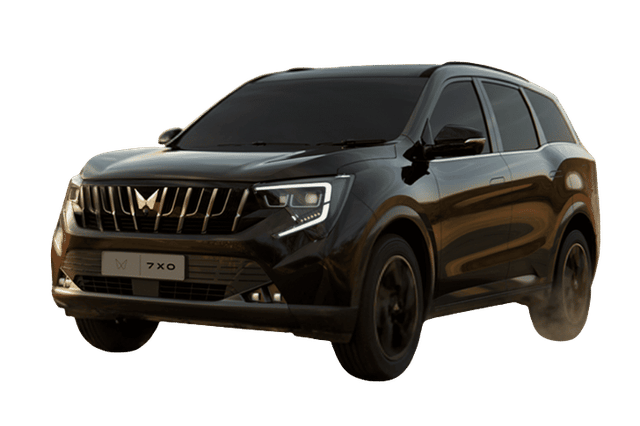
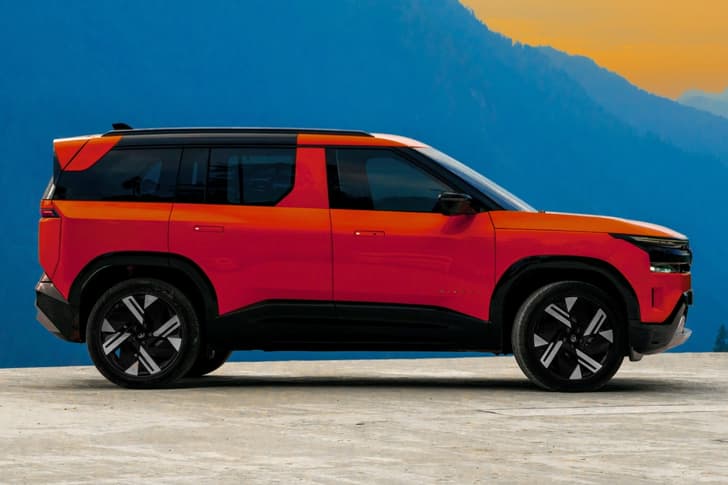
I am planning to buy a petrol SUV automatic and am confused between the 7XO and the Sierra. Considering mileage, features, maintenance, and reliability, which one is better?

Autocar India team

Autocar India

Verified
17w

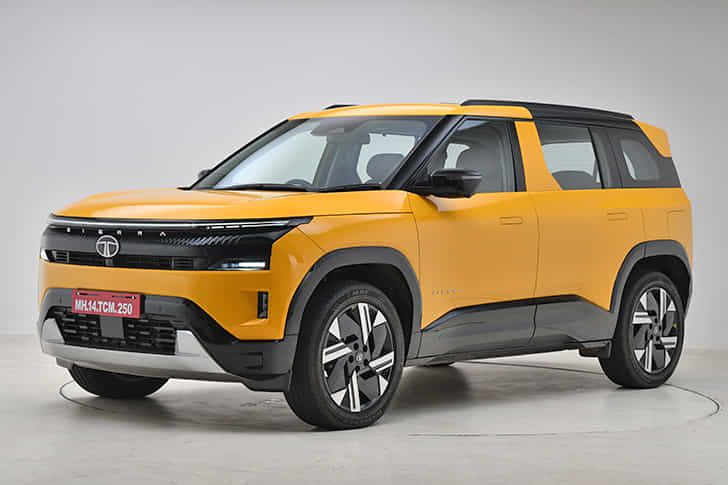
If you are buying a petrol automatic, the Tata Sierra makes more sense if mileage, features and lower running costs are your priority. Its smaller 1.5 litre turbo petrol engine and overall size should make it more efficient. You also get a more feature-rich cabin at a lower price, as the two sit in different segments.

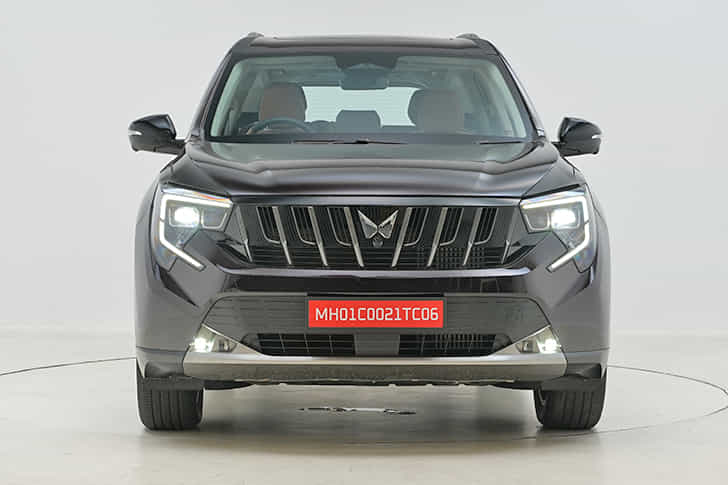
The Mahindra XUV 7XO suits buyers who want a more traditional SUV feel with stronger road presence and a proven mechanical package. Its powerful 2.0-litre turbo petrol engine delivers more effortless performance. But the petrol automatic will be less efficient and costlier to run. If long term reliability and established credentials matter more, the XUV 7XO is the safer bet.
Tata Sierra

Tata Sierra

More questions on similar cars

BT

Basaveshwar Talur

3d

Please suggest a good value-for-money car under Rs. 20-25 lakh that is suitable for a family of 7 with good reliability and service. I am looking for a family-oriented car, 80% for city and 20% for highway. I am confused between EV and diesel. Should I consider the Mahindra Scorpio N or the XUV 7XO?

Autocar India team

Autocar India

Verified
1d

With 80% city use, a family of seven and a Rs 20-25 lakh budget, the Mahindra XUV 7XO is a good choice. If you can install a charger at home, though, the Mahindra XEV 9S could be a great alternative since your usage is primarily in the city. The base Pack One Above with the larger 79kWh battery pack fits within your budget and comes with all the essential comfort and tech features. In our real-world tests, we managed a combined 477.5km on a single charge, though that figure will drop sharply on the highway with a full load of passengers and luggage. Your highway trips will therefore need some planning around charging stops.If that seems like too much effort, then the XUV 7XO diesel automatic makes the most sense. It feels easier to drive in town than the Mahindra Scorpio N, with lighter controls and a smoother driving experience. Ride comfort and cabin noise levels are better, too, which your family will appreciate.A couple of things to note: with all three rows up, boot space is limited. The third row is also a bit tight for taller passengers, so check if it works for your family.Alternatively, consider the Kia Carens Clavis/Carens Clavis EV. Their smaller footprint makes them easier to drive and park in the city, and the third row is more spacious than in the XUV 7XO/XEV 9S.

VehicleMahindra XUV 7XO
VehicleMahindra XEV 9S
VehicleMahindra Scorpio N
VehicleKia Carens Clavis
VehicleKia Carens Clavis EV
SA

Saurabh

3d

I am planning to buy a new car. I am confused between XUV 7XO AX5 petrol and diesel. My monthly run is about 1,200 to 1,300 km, mostly on smooth roads (Dwarka Expressway/KMP, etc.). I have a few questions: Is it advisable to have a diesel variant in terms of total cost of ownership and a 10-year timeline, being in NCR? I do not expect DPF issues since I drive at 100-120kph for a few hundred kilometres every month. Is this assumption fine? As per current applicable rules, will I be able to sell the diesel variant to other states after 10 years with proper NOC, fitness, etc., from Gurgaon RTO?

Autocar India team

Autocar India

Verified
2d

At 1,200 to 1,300 km a month with regular expressway use, this is not the kind of usage pattern that typically makes a diesel a bad idea from a DPF perspective. Your assumption there is broadly fair because the car will regularly get the sustained runs and exhaust temperatures needed for regeneration, unlike a pure short trip city diesel.The bigger issue is 10-year ownership in NCR. Even with the policy debates and legal back-and-forth, the reality is that diesel ownership in Delhi NCR carries uncertainty that petrol simply does not. If your plan is genuinely to keep the car long term, that matters.On resale after 10 years, under current rules, yes, selling the Mahindra XUV 7XO outside NCR with the proper NOC, transfer process and compliance in the destination state should be possible, assuming that state permits the vehicle and its emissions category. But policy environments can change over a decade, so we would not make a purchase today purely assuming that the exit route remains friction-free.So if you are buying with a 5 to 7-year ownership mindset, the diesel makes strong sense. If you are genuinely buying for 10 years plus in NCR, the petrol is the lower-stress choice even if the diesel suits your usage better.

VehicleMahindra XUV 7XO

Popular discussions right now

DJ

Deepak Jain

4d

I am planning to buy the Honda City facelift that was launched yesterday. How does it compare with the Volkswagen Virtus? I am also assuming that the government will continue supporting E20 fuel even if E85 is introduced in the future. So, is it still safe to buy a petrol vehicle in Delhi/NCR?

Autocar India team

Autocar India

Verified
3d

The new City facelift does make a stronger case now because Honda has added genuinely useful features like a larger infotainment screen and ventilated front seats, while pricing has remained fairly sensible. But fundamentally, the character of the car has not changed.Against the VW Virtus, the choice still comes down to personality. The Virtus is the more fun to drive option, especially with the turbo petrol engines, because it feels stronger, more eager and more engaging from behind the wheel. The City, on the other hand, is the more balanced sedan. The 1.5 naturally aspirated petrol is smooth, refined and easy to live with, but if outright performance is your priority, it will not feel as quick as the turbo Virtus. The City hybrid changes that equation because it is genuinely quick and can match the 1.5 TSI for straight line pace, but it is still not what you would call an enthusiast’s car.On the fuel front, yes, it is safe to buy a petrol car in Delhi NCR. Current mainstream petrol cars are already E20 compatible, and even if India eventually pushes toward higher ethanol blends, that transition will be gradual rather than an overnight switch. Beyond a certain point, if the country were to move meaningfully toward very high blends like E85, manufacturers would need proper flex fuel engines engineered for that fuel, and the government would also need to continue offering lower blend fuel options during any transition.

VehicleVolkswagen Virtus
VehicleHonda City

Posted on: 21 Jan 2026