Road Trips & Adventure
Discuss long drives, touring, off-roading and vehicles built for adventure.
I am planning a 5-6 day road trip to Delhi. My car is a JK-registered Maruti S-Cross, manufactured in December 2016 and registered in April 2017. Will I be allowed to drive it in Delhi?
Yes, you can drive your JK-registered Maruti Suzuki S-Cross in Delhi for your 5-6 day road trip. The 10-year diesel and 15-year petrol car ban in Delhi applies to vehicles registered in Delhi, not to out-of-state vehicles visiting the city. As long as your car is registered, insured and has a valid PUC certificate, you are legally allowed to drive it in Delhi. However, be aware that Delhi has strict enforcement of emission norms and random PUC checks, so make sure your PUC is up to date and the car is in good running condition. Also, carry all original documents, including RC, insurance, and PUC, as police checks are common. There is no restriction on the number of days you can drive the car in Delhi as a visitor, but if you plan to stay long-term or move to Delhi, you would need to re-register the car locally. For a short road trip, you are absolutely fine.
This will be my second car. I already own a Toyota Glanza MT for city driving, and this new car will mainly be used for weekend highway trips and family travel (around 6,000-7,000 km per year). With a budget of Rs. 40-42 lakh and a plan to keep it for 10-15 years, is the Toyota Innova Hycross Hybrid ZX(O) the best overall choice, or would you recommend any other petrol, hybrid, or EV in this price range?
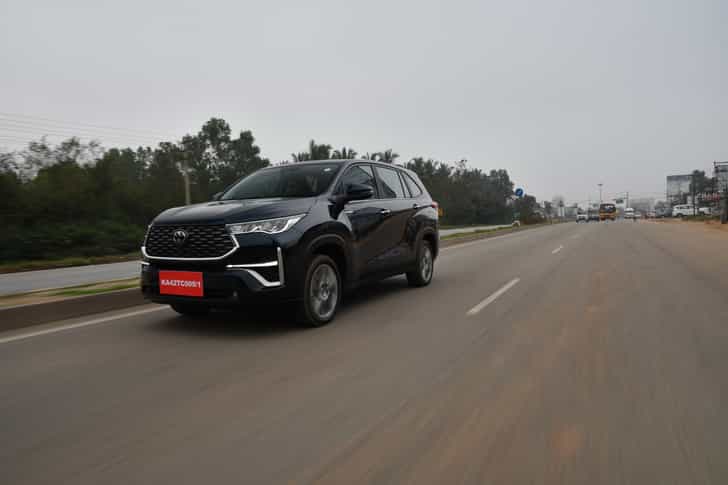
Yes, the Innova Hycross Hybrid ZX (O) fits your use best. For weekend highway runs with family, nothing in this price range gives you that much space, airy cabin, comfy second row and a big boot with the third row folded. Your running is relatively low, but among hybrid cars, the Hycross still makes sense because it helps keep fuel costs under control on mixed trips and should remain economical to own over a 10-15 year period. Toyota’s service network and strong resale value are also major advantages for such long-term ownership.Kia will be launching the seven-seater Sorento, and JSW will launch the T2 i-DM plug-in hybrid SUV in the coming months, both of which should fall within your budget. If you're not in a hurry and open to trying something a bit different, we'd recommend you wait for these before finalising on the HyCross.
This will be my second car. I already own a Toyota Glanza MT for city driving, and this car will mainly be used for weekend highway trips and family travel (around 4000-6000 km/year). With a budget of Rs 40-42 lakh and a plan to keep it for 10-15 years, is the Innova HyCross Hybrid ZX(O) the best overall choice, or would you recommend any other petrol, hybrid or EV in this price range?
Buy the Innova HyCross Hybrid ZX (O). For weekend highways with family and a 10-15 year plan, nothing in this price range gives you the same mix of space, comfort and hassle-free ownership. It is genuinely easy to live with, seats are comfortable for long stints, the third row is usable, and with it folded, you get a huge boot for bags. Toyota’s hybrid system is smooth and proven, and among hybrid cars, Toyota’s long-term support and resale value are about as worry-free as it gets.One point to remember is that at highway speeds, the hybrid doesn’t save as much fuel as in the city, and when you floor it, the engine can sound a bit strained. Ride on the ZX(O)’s 18-inch wheels is a touch firmer too - if you value plushness over kit, the ZX on 17s rides nicer and costs less.If you want a richer drive, the Skoda Kodiaq is lovely, but it will likely stretch Rs. 40-42 lakh on-road and long-term costs are higher. Electric cars like the BYD Seal are soothing and quick, but they are 5-seat only, and highway charging still needs planning; with 4-6k km a year, you won’t save much anyway.Overall, the Toyota car remains the smart pick.
My daily running is 150 km, with a monthly running of 3,500-4,000 km. Around 75% of my driving is on highways and 25% is in rural areas. Every year, I take 2-3 family trips of 3,000-4,000 km. We are usually three to four members travelling daily. Please suggest the best car for me.
Go for the Kia Seltos diesel. Your daily 150 km and 75% highway use suit a diesel perfectly, and the Seltos' motor is efficient on long runs - expect an efficiency on highways in the high teens so your 3,500-4,000 km months won’t bleed your wallet. The Seltos also rides comfortably over broken rural stretches, has enough space for 3-4 people every day, and a boot sufficient for those 3,000-4,000 km family tours. Pick the automatic if you’re often stuck in traffic or drive long hours; the manual will squeeze out a bit more mileage. Safety kit and highway stability are solid, and the cabin keeps fatigue low on all-day drives.One caution: it’s not a hardcore rough-road SUV. If your “rural” is truly bad roads or light off-road trails every day, you’ll need to slow down, and tyre upgrades may help, or consider something like the diesel Mahindra XUV 7XO with AWD, though this would be a pricier option.
Hello Autocar. I have been looking for a second car for our family. We currently own a Tata Tiago EV Long Range, which is used for all our city driving and weekend trips to our hometown, around 80 km one way. However, we now feel the need for a dedicated highway car because we miss taking longer family road trips. Our budget is under Rs. 15 lakh. My primary choice was the Honda Elevate VX Manual. I deliberately avoided the CVT because we already have an automatic EV for city use, and I don't think a petrol automatic can match the smoothness and instant response of an EV. However, I've started reconsidering my decision because I feel the Elevate isn't the ideal highway cruiser. While it is spacious and comfortable, it doesn't feel particularly relaxed at highway speeds, and its highway fuel efficiency isn't very impressive. The next option I shortlisted is the Hyundai i20 N Line N6 Manual. I generally prefer spacious hatchbacks over sub-4 metre SUVs, and I never really liked that segment. Choosing the N Line would also save me around Rs. 5 lakh compared to the Elevate, while offering better cruising ability and fuel efficiency, considering this car will be used almost exclusively for highways and long road trips. My main question is whether the i20 N Line would be comfortable enough for a family of four with some luggage. All of us are lean, under 170 cm tall, and below 60 years of age. Everyone in the family likes the idea of the N Line. We have also ruled out diesel cars because my family doesn't like them, and I didn't push that option either due to DPF concerns and the fact that the car won't be used regularly. Please advise whether the i20 N Line N6 Manual would be a good choice for us.
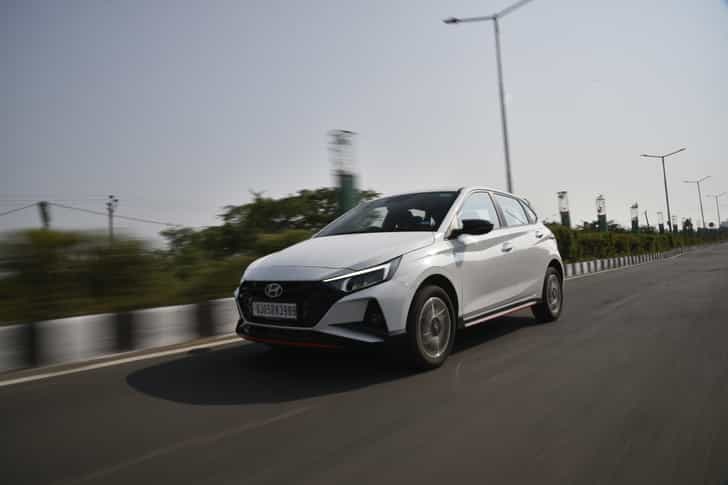
The Hyundai i20 N Line N6 manual is a good highway car. Its tall sixth gear allows it to cruise comfortably at highway speeds while returning respectable fuel efficiency. The engine has a strong mid-range, making overtakes easy, and it feels stable at high speeds. For your use case, performance will feel noticeably dulled with four people on board, and pushing the engine harder will reduce fuel efficiency. It also suffers from a weak bottom end, so performance below 2,000rpm is not particularly strong. A full load can also leave ground clearance marginal over taller speed breakers, and the ride is on the firmer side, which passengers may find uncomfortable. While cabin space is generally good for the segment, the boot may feel tight when carrying luggage for four.The Honda Elevate has a definite advantage when it comes to space. While your family of four, all under 170cm tall, will fit comfortably in the i20, the Elevate gives them more room to stretch out, which matters on longer journeys. Its shorter gearing means performance is actually quite good for a naturally aspirated engine, but as you pointed out, it does not feel particularly relaxed at highway speeds.If you can live with the i20 N Line’s shortcomings, it is a good fit for your needs and significantly cheaper than the Elevate. Before making a decision, take your family on an extended highway test drive to see how they feel in the rear seat. As a family car, though, the Elevate is the better choice.Alternatively, consider the Skoda Kushaq 1.0 TSI manual. It offers better highway performance than the Elevate, more space than the i20, and is one of the best-handling SUVs in its class, which you are likely to enjoy.
I am thinking of buying a Toyota Camry. But one concern is the ground clearance, because Bangalore's potholes and speed breakers are a nightmare.
Ground clearance is a valid concern, but we don't think it should be a deal-breaker. The new Toyota Camry has a quoted 145mm ground clearance, which doesn't sound like much on paper. However, in our road test, we found that it cleared most speed breakers without scraping, and its suspension does an excellent job of absorbing sharp potholes and broken roads.That said, you'll still need to exercise some caution on Bengaluru's larger speed breakers and deep potholes, particularly when the car is fully loaded. Approaching such obstacles at an angle and at low speeds will help avoid scraping the underbody.
Hi, I am planning to purchase an automatic car in the range of 20-25 lakh. My driving is split equally between traffic and normal roads, and occasionally to hill areas. Please suggest the best options for me.
Without knowing your annual running, it's difficult to recommend the ideal fuel type. However, for a mix of 50% city driving, 50% open roads and occasional trips to the hills, we'd lean towards a strong hybrid or a refined petrol automatic.Our top recommendation would be the Maruti Suzuki Victoris Hybrid. It fits within your ₹20-25 lakh budget, offers excellent fuel efficiency in city traffic, is smooth and refined to drive, and remains comfortable on long highway journeys. It also has a 5-star Bharat NCAP safety rating, making it a very well-rounded family SUV.If you'd rather have a conventional petrol SUV, we'd recommend the Kia Seltos Petrol IVT. It offers a refined naturally aspirated petrol engine, a smooth IVT automatic, a premium cabin and a comfortable ride. It is equally at ease in city traffic, on the highway and during occasional hill drives.If you enjoy driving and don't mind slightly higher running costs, the Skoda Kushaq 1.0 TSI Automatic is another excellent option. Its new 8-speed torque-converter automatic is smooth in traffic, while the turbo-petrol engine performs well on highways and in the hills.
I’m looking to buy a car with a 25L on-road price in Delhi. My running would be around 5-6k km per year with occasional highway trips, but I need absolute comfort for the family during those trips. Please suggest your pick.
Get the Kia Carens Clavis, as it's the best car for transporting a family in comfort on a budget of Rs. 25 lakh. The suspension is comfy without being floaty, the second row has loads of space, and you can pick captain seats for easy entry and a relaxed posture. With only 5-6k km a year, petrol makes the most sense, and the Clavis is quiet and smooth at city speeds yet easy on the highway.If you want hassle-free driving in traffic and effortless cruising, go for the turbo-petrol automatic in a mid trim to stay within budget. If you usually travel light and don’t mind a manual, the 1.5 petrol saves money and still works fine for occasional highway usage. You also get 6 airbags as standard and proper AC coverage for all rows, which matters when the car is full.One thing to know: it won’t thrill keen drivers, and the 1.5 petrol can feel a bit lazy when fully loaded. But for pure family comfort, the Carens is the one. Alternatively, if you don't mind settling for a low to mid-level trim with fewer features on your budget, the Tata Safari and Mahindra XUV 7XO offer even more space and comfort with more powerful engines.

Need expert advice?
Ask the Autocar community and experts.