AK

Ajay Kumar Ajanvi

1d

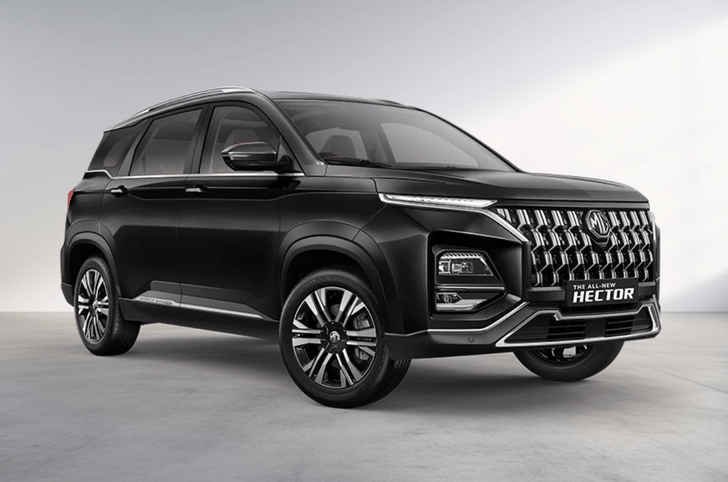
I have a 2021 MG Hector with me, which gives me only 7-8km of mileage, although it is in very good condition. My running is around 900-1000km per month. Should I upgrade to Mahindra 9S? I am confused because the resale value of my car is only 8.25 lakh. Is it worth taking a loan and buying 9S, or is it more logical to continue with the MG?

Autocar India team

Autocar India

Verified
31m
Retaining your MG Hector is the sensible choice if it is otherwise serving you well, without niggles or issues. Sure, the Hector's fuel efficiency is expectedly low, but you will have to invest a huge sum over and above the resale value of your car to purchase the Mahindra XEV 9S, which will be a decision solely driven by a want, rather than a need.
Also, over the next few years, the rate of depreciation for your Hector will flatten, and its value won't drop as drastically year after year. So, from a financial perspective, it makes more sense to hold on to it for a few more years.
MG Hector

MG Hector

More questions on similar cars

NA

Nasir Ali

5d

I have been driving a XUV700 Petrol AT, and it has done around 52,000 Km. I have been looking at EV options, and the only thing that appears to make sense is the XEV 9S. Does it make sense to go for a car with the same top hat, or should I wait for other better options? My running is 1200 km per month, so not sure it makes financial sense to take the depreciation hit.

Autocar India team

Autocar India

Verified
20h

As a long-time XUV700 owner, you’re right that the Mahindra XEV 9S is the most natural upgrade. It will feel familiar, but also a clear step up. The basic body shape and seating layout are similar, but the 9S’s dedicated EV platform, triple-screen dashboard, far richer feature list (ventilated seats, boss mode, middle-seat adjustability) and quieter, smoother powertrain make it feel like a more premium, next-generation version of what you already like. The sliding middle row also gives you the flexibility you don’t get in the XUV700, especially if you often travel with family.However, at 1,200 km a month, the fuel saving versus your existing petrol AT won’t fully compensate for the immediate depreciation hit of selling a 52,000 km XUV700 and buying a new EV. At least not in the short term. So switching purely for financial sense is difficult to justify.We would look at it like this: if you want the refinement, tech, and driving experience of an electric car now and are okay with the depreciation as the price of that upgrade, the XEV 9S is a very logical move. If you’re on the fence and primarily worried about money, it’s perfectly sensible to hold on to the XUV700 a bit longer and revisit an EV when the next wave of models arrives.

VehicleMahindra XEV 9S
RP

Rohit P

5d

I am planning to upgrade from my 2017 Honda City diesel, which is now over nine years old. I am looking for a 7-seater, although it will mostly be used as a 5-seater, with occasional requirements to carry 6-7 passengers. The car will primarily be used in Gurgaon for city driving, along with highway trips on the Delhi-Mumbai Expressway for going to Kota, Rajasthan. My key requirements include good comfort for five passengers, a usable third row when needed, and a preference for an automatic transmission. My budget is around ₹26 lakh. At present, I am inclined towards the Tata Safari Petrol AT (Accomplished X). However, my main concern is the drop in mileage and the resulting increase in running costs. My current Honda City delivers around 23 kpl on highways and about 15 kpl in the city, whereas I expect the Safari petrol automatic to return roughly 12 kpl on highways and about 9 kpl in city conditions. This translates to a significant 40-50% drop in fuel efficiency, leading to noticeably higher fuel expenses. My monthly usage is approximately 800 km, split evenly between city and highway driving. While fuel efficiency is an important factor, it is not the only deciding criterion. I have considered diesel options but ruled them out due to my usage pattern, as the car may remain unused for weeks at a time and may not see highway runs for two to three months, which could lead to DPF-related issues. I have also evaluated the Mahindra XUV700 AX7 AT in both petrol and diesel forms. The petrol variant still has relatively low mileage, while the diesel brings back the same DPF concerns. Additionally, the third row in the XUV700 is not very practical due to tight headroom and limited knee room. The second row does not slide, which makes access more difficult. I briefly considered the Carens Clavis as well, but it appears to offer lower safety compared to the other options.

Autocar India team

Autocar India

Verified
17h

Pick the Tata Safari petrol. It meets most of your requirements, though fuel consumption will be high, particularly in the city. As a daily car, it is easy to drive, has light steering and a smooth automatic transmission, and runs well on bad roads. The second row slides, so you can share space with the third row when you have 6 or 7 on board, and getting in and out is easier than in the Mahindra XUV 7XO. On the highway, it feels steady and quiet.If fuel efficiency is a big concern, consider the Kia Carens Clavis with turbo petrol DCT combo. It will be slightly more efficient than Safari, and the third row is even more comfortable. In terms of safety, it has a comprehensive safety suite but it hasn't yet been tested by BNCAP.On the test drive, take the Safari on the highway and check the stability and overtaking performance.

VehicleTata Safari
VehicleMahindra XUV 7XO
VehicleKia Carens Clavis
KK

Kks

1w

My daily commute is around 250 km (round trip) between Greater Noida and Gurgaon, so I am looking for a cost-effective car with minimal running costs. I currently own a Maruti XL6 CNG, which has already completed 1 lakh kilometres. Please suggest the best suitable car, considering I plan to sell my existing vehicle.

Autocar India team

Autocar India

Verified
1d

If you can install a charger at home, then go for the Tata Nexon EV 45kWh with your 250km daily Greater Noida to Gurgaon run, it is the calmest, lowest-cost way to cover this distance on a single charge. In our real-world testing, the 45kWh Nexon managed 350km (combined city and highway) on one charge, which is enough for your commute with some buffer. It feels smooth and quiet, pulls cleanly for quick lane changes, and the higher seating position and light steering make long hours less tiring.One thing to be aware of: at very high speeds, the range will drop faster, so stick to a steady 80–90kph to comfortably finish the day without a top-up. If you want to stick with CNG and need three rows, then consider the Kia Carens Premium (O), which can be had with a dealer-fitted CNG kit.Do a test drive of the Nexon on part of your actual route to see the range you get at your usual speed.

VehicleTata Nexon EV
VehicleKia Carens

Posted on: 14 Apr 2026