
Autocar India
SA

Sathyan

6w

I own a 2017 Skoda Yeti from the last batch, which has completed 1,30,000 km on the odometer. It has been very well maintained, and I have recently done a major service, including the replacement of the timing belt and water pump. However, I have started feeling the urge to upgrade. Would it be a good idea to upgrade to a new car under ₹35 lakh, preferably a diesel automatic, considering my daily running of around 80 km on the highway? Or would it make more sense to retain the Yeti for a few more years?

Autocar India team

Autocar India

Verified
5w

We understand your love for your Skoda Yeti. It's a superbly engineered car which is very well suited to Indian conditions. Your car with over 1,30,000km on the odometer would likely be the most used Yeti in India! While care and periodic maintenance will keep the Yeti running, issues are bound to crop up every now and then. Hence, there is a case for a new vehicle. 

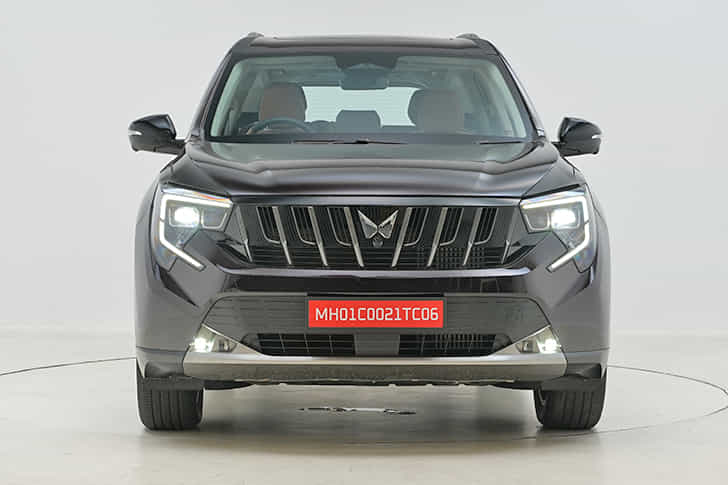
The best bet in your budget is the Mahindra XUV 7XO diesel-AT in fully loaded AX7 T form. It's got a strong diesel engine, smooth gearbox, and, as someone used to a Yeti, you'll appreciate the ride and handling balance too. The XUV 7XO is also packed with lots of tech and features, which really make it feel like a good value even at its price.

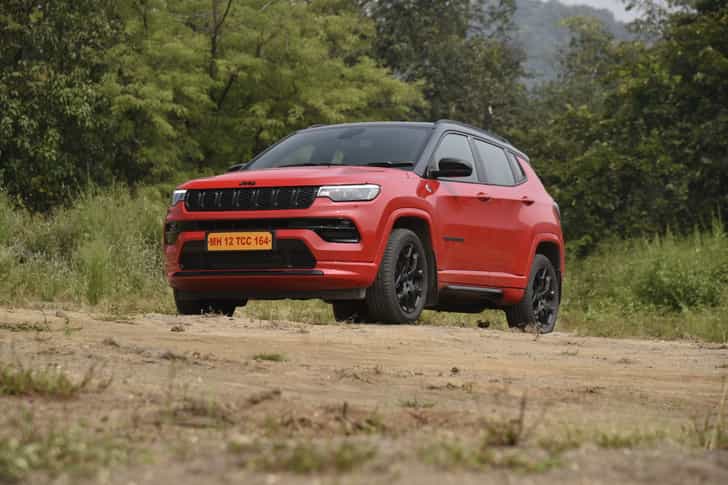
Alternatively, you could consider the Jeep Compass, which, like your Yeti, comes across as a solidly engineered product. It has been around for quite some time now, but there's a toughness that shines through, and ride and handling are also really good. The 9-speed gearbox dulls some of the engine's performance, though. The Compass is also not very large for its price - something that also worked against the Yeti.   
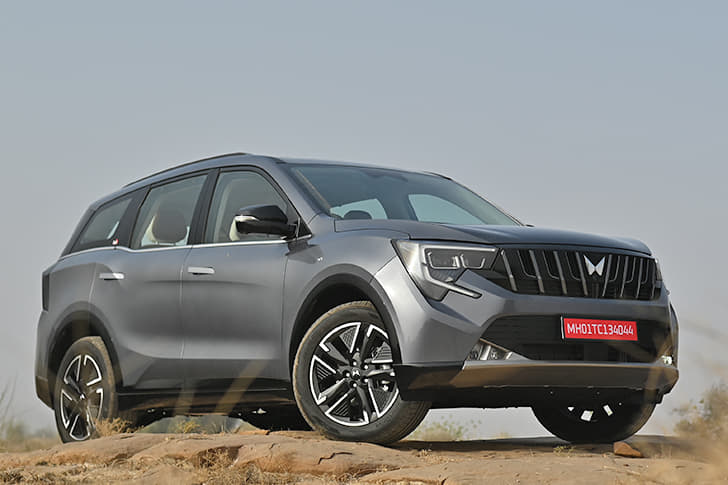


Mahindra XUV 7XO

Mahindra XUV 7XO

More questions on similar cars

AG

Anil Gupta

3d

Hi Autocar team, I own a 2015 Hyundai i20 Elite petrol manual. My average running is around 500 km per month. I am looking for a practical SUV that can accommodate a family of 5–7 members occasionally. This will be my last car, as I am 58 years old, and it will mostly be driven alone or with a co-passenger. I have looked at the Tata Sierra and Mahindra XUV 7XO. I am confused between electric and petrol, and also between manual and automatic. Please suggest.

Autocar India team

Autocar India

Verified
5h

With 500 km a month with at most you and one passenger (but sometimes 5-7 members), the Mahindra XUV 7XO petrol automatic in the 7-seat version is the better fit for you. It gives you a proper third row for those rare family trips, yet the rest of the time it works well as a calm, easy daily car.For your low running, petrol makes more sense than electric. Try to avoid the higher upfront price of an EV as you will not drive enough each month to recover that extra cost. The XUV’s petrol with the automatic gearbox that changes gears on its own will feel far easier than your i20 manual in stop-go traffic.A couple of trade-offs to note. The Mahindra car that you are considering, is big, so parking in tight spots needs some care. Also, the third row is best for kids or short adults on short trips but not during long highway stretches.Overall, for your usage and this being your last car, the XUV 7XO petrol automatic 7-seater lines up best.

VehicleMahindra XUV 7XO
VehicleTata Sierra
MK

Manish Kulkarni

4d

Which car should I buy if I plan to do road trips across India, including Ladakh, the Spiti circuit, followed by the 7 sisters & South India, with my family? I am looking for a five-seater, preferably diesel or hybrid. I can wait up to six months, until around Diwali. My yearly running will be around 10,000-12,000 km, which consists of 65% highway, 15% ghat roads, and 30% city driving. I live in the Thane suburbs (Dombivli). Good service, support and reliability are very important to me. The options I am considering are: XUV 7XO, Scorpio, Vision S, Thar Roxx, Duster (Hybrid), and Honda Elevate (Hybrid). Should I consider an AWD or 4x4 model, or are there any other options you would recommend?

Autocar India team

Autocar India

Verified
2d

From your list, the Mahindra Scorpio N 4x4 diesel is the safest fit for this use. As a five-seater with the last row folded, it offers a large boot, a tough body and proper 4x4 with low range for slush, snow or rocky terrain. It also has strong pulling power on steep hill roads when fully loaded. Mahindra’s wide service network on these routes is an added advantage when you are far from cities.Be aware that the Scorpio N is not as quiet or as comfortable on long highways as softer monocoque SUVs, and in the city, the ride can feel a bit bouncy. The Mahindra XUV 7XO is the better road car. It is more comfortable and refined, but for your intended usage, it is not as robust or as versatile as the Scorpio N, especially for tougher terrain in the Himalayas where the Scorpio N’s higher ground clearance and proper 4x4 make a real difference. The same limitation applies to options like the Renault Duster Hybrid and Honda Elevate.As for the Mahindra Thar Roxx, it is less comfortable than the Scorpio N, especially in terms of seating and long-distance usability.

VehicleMahindra Scorpio N
VehicleMahindra XUV 7XO
VehicleMahindra Thar Roxx
VehicleRenault Duster
VehicleHonda Elevate
DA

David

3d

I am planning to buy a new car by the end of the year, and my current top choice is the Mahindra XUV7X0 (AX7 petrol automatic variant). Earlier, I was considering the Kia Seltos and Hyundai Creta, but I no longer like their current exterior designs, so I have shifted my focus. For context, I currently own a Maruti Suzuki Ertiga (petrol + CNG), which is almost 10 years old and has been driven only around 50,000 km. My usage is quite low. The office is about 13 km away (around 30 km round trip), but I often use public transport. I mainly use the car on weekends, roughly 2-3 times a week, and my monthly running is around 400-450km. My priorities for the new car are: strong road presence and mass appeal, comfortable and premium interior, good reliability, reasonable service and maintenance costs (I am used to Maruti-level affordability), suitable for family trips. Given my low usage and requirements, would the XUV7X0 petrol automatic be a good choice, or should I consider other options?

Autocar India team

Autocar India

Verified
2d

Low monthly use, mostly weekend family trips, and you want strong road presence with a premium feel, in that brief, the Mahindra XUV 7XO petrol automatic is the right fit, and it’s the one we would pick for you. It lines up with your goals for three clear reasons. First, presence and space: it looks big, sits high, and feels like a big step up from your Maruti Ertiga. Five adults ride in real comfort, and with the third row folded, you get a huge boot for family trips. Second, the petrol motor feels smooth and strong at low speeds and on the highway, so city gaps and quick passes are easy without effort. Third, the cabin feels premium for the price, with a clean screen layout and a quiet ride that your family will like.A few trade-offs to note, given your context: service will not be Maruti-affordable, and the car will use more fuel than your Ertiga CNG. It’s also a large car, so tight parking will need care, and Mahindra’s software still throws the odd small glitch.If the budget allows, the Toyota Innova HyCross hybrid brings top comfort and very low city fuel use, but it is pricier. Overall, for your low running and desire for presence and a premium feel, the XUV 7XO petrol automatic fits best.

VehicleMahindra XUV 7XO
VehicleMaruti Suzuki Ertiga
VehicleToyota Innova HyCross

Popular discussions right now

RO

Rohin

2w

I am confused about buying the AMT version of the Skoda Kylaq, Tata Nexon, or Maruti Fronx. My budget is between 11 and 13 lakh. My usage is mostly city driving of about 1,000 km per month, with occasional long highway drives.

Autocar India team

Autocar India

Verified
6d

Between the three, the Skoda Kylaq is the best automatic for the money. It doesn’t use an AMT but a proper 6‑speed torque-converter with the 1.0 TSI, which is smooth, robust and easily the nicest for your occasional highway runs.The Maruti Suzuki Fronx 1.0 turbo also gets the same 6‑speed torque-converter auto, and while it is refined and efficient, it doesn’t have the same solid, European feel or driving dynamics as the Kylaq. However, from an overall cost-of-ownership point of view - price, fuel efficiency and service, the Fronx is likely to work out cheaper.The Tata Nexon in your budget doesn’t get a torque-converter. You mainly have a 6‑speed AMT, which is convenient but nowhere near as smooth or quick as a proper automatic. There is also a 7‑speed DCA dual‑clutch option, which is noticeably better than the AMT, but still not as seamless as the autos in the Kylaq and Fronx, and it can push the price higher.For 11-13 lakh, 1,000km a month in the city and the odd long drive, we would pick the Kylaq auto. If budget discipline and running costs are top priority, go for the Fronx 1.0 turbo automatic.

VehicleSkoda Kylaq
VehicleMaruti Suzuki Fronx
VehicleTata Nexon
YA

Yash

1w

I am confused between the 7XO and Safari. I took the test drive of both and loved the rugged suspension setup of the Safari, but I also liked the easy driving nature and dynamics of the 7XO.

Autocar India team

Autocar India

Verified
3d

Between the two, the Tata Safari does a great job of projecting toughness. It feels solid, has that reassuring heft, and its suspension setup really shines on broken roads and you can carry speed with confidence and it just shrugs off rough patches.That said, the Mahindra XUV 7XO is the more rounded package overall. Its 2.2-litre diesel is not just more modern, but also noticeably smoother and stronger than the older Fiat-sourced 2.0-litre unit in the Safari. It delivers better drivability in everyday conditions, which makes a difference in city use as well as on the highway.Mahindra car has also worked well on the suspension, and the improvements show. The 7XO feels more composed, offers better ride comfort over a wider range of surfaces, and is simply easier to drive. It has lighter controls, better balance, and a more user-friendly nature overall.Where the Safari still holds an edge is in the third row. It’s more usable and accommodating, whereas the 7XO’s last row is quite tight and best reserved for occasional use.So unless third-row space is a priority, the 7XO stands out as the better all-rounder. It’s more refined, easier to live with, and ultimately the more modern SUV.

VehicleTata Safari
VehicleMahindra XUV 7XO
SU

sudip

6d

I am planning to buy either the Tata Sierra or the Kia Seltos turbo-petrol automatic. My usage will be 90% in Bengaluru city traffic, with occasional highway drives. Hence, I am not sure if the Seltos DCT gearbox would become problematic after a few years due to heavy traffic. Would the Sierra’s torque converter be more reliable and a better choice in these conditions?

Autocar India team

Autocar India

Verified
6d

Go for the Tata Sierra torque converter. The key difference lies in how these gearboxes behave in the real-world conditions. The Seltos turbo-petrol DCT is quick and exciting, but in slow, crawling traffic, it can feel hesitant and slightly jerky, as it constantly works the clutch. This is not ideal for long-term ease in heavy city conditions. The Sierra’s torque converter is the opposite. This Tata car is smoother at low speeds, more forgiving in stop-go traffic, and generally better suited to this kind of usage, making daily driving far less tiring.There is a trade-off, though. Torque converter automatics are typically less fuel efficient than DCTs, and in a large, heavy car like the Sierra, you will notice this in real-world mileage. So, you are essentially choosing smoothness and durability over outright efficiency.

VehicleTata Sierra
VehicleKia Seltos

Posted on: 16 Mar 2026