

Autocar India
PG

Prashanth Gorijala

7w

How is XEV 9e? One of my friends who owns an XEV 9e is saying that the car wobbles after he crosses 60km/h. Is it true? How is the road grip and overall handling of the 9e? What is your take on the new variant Cinelux?

Autocar India team

Autocar India

Verified
5w
The Mahindra XEV 9e is actually one of the more impressive electric SUVs in its class, offering a strong mix of performance, space, comfort and technology. In typical Mahindra fashion, it also feels quite robustly engineered, which is important for Indian road conditions.
Coming to your friend’s point about the car wobbling after 60kph, that hasn’t really been a characteristic we’ve experienced. The XEV 9e is generally quite stable at highway speeds. EVs, by design, have a low centre of gravity because the battery pack sits in the floor, and that usually gives them very good straight-line stability and planted road manners. So if your friend is experiencing a wobble, it could be due to something specific to that particular car, such as tyre pressure, wheel balancing, alignment or even poor road surfaces can cause that sort of sensation. It’s not something that appears to be an inherent trait of the vehicle.
In terms of grip and handling, this Mahindra car feels secure and predictable. It’s not meant to be a sporty driver’s SUV, but the wide track, long wheelbase and low battery placement help it feel planted through corners. The steering is light and easy for city driving, though, like most electric SUVs, it’s tuned more for comfort and ease rather than outright driver engagement.
As for the Cinelux variant, it’s essentially a cosmetic and feature-focused update rather than a mechanical one. The changes are mainly around new exterior colour options, fresh interior trims and some additional equipment aimed at making the cabin feel a bit more premium and lounge-like.
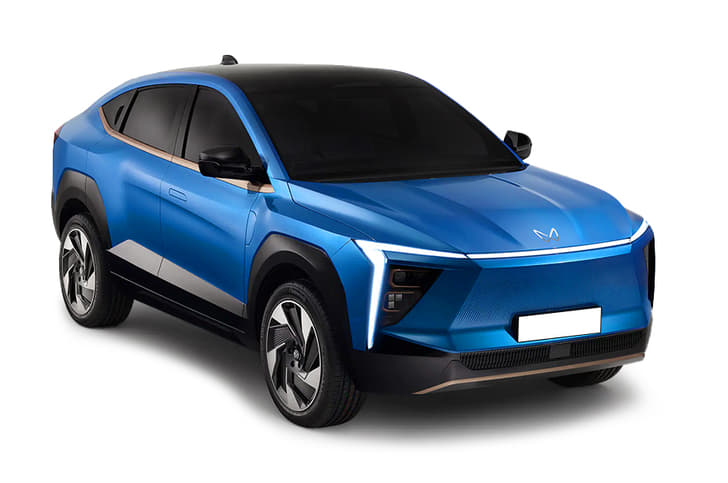
Mahindra XEV 9e

Mahindra XEV 9e

Explore cars mentioned
SI

Sid

5w

The car now gets a custom mode for suspension tuning. That should solve the jumpiness issue your friend experienced

More questions on similar cars

SR

Srikanth Reddy Mothkupally

4d

My 2018 Tata Hexa XTA has been facing turbo and DPF issues. I have also been struggling to find spare parts when needed. The car has done 71,000 km. Is it advisable to keep it in the long run?

Autocar India team

Autocar India

Verified
1h

Given a 2018 Hexa XTA with 71,000 km and repeated turbo and so‑called DPF trouble, plus the hassles you’ve had getting parts, I would not plan to keep it for the long run. The Hexa is lovely to travel in, but Tata no longer sells it, and parts for items like the turbo, differential bits, and some trim are already in short supply. As the car crosses 80,000-100,000 km, more components wear out on a big diesel and an older automatic, which can mean longer downtime and higher bills if parts are not readily available.Before you decide, please note that a 2018 Hexa is BS4 and therefore does not normally have a DPF. If someone has called it a DPF issue, get a second opinion at a strong Tata workshop or a trusted diesel specialist. Many owners see similar symptoms from a clogged EGR, faulty sensors, or exhaust parts, not a DPF. A proper scan with the right tool can save you from chasing the wrong fix.If you still love the car and can live with waits, you can hold on, but set it up for fewer surprises. Get the turbo and intercooler pipes pressure-checked, clean the EGR and intake, refresh the automatic gearbox oil if not already done, and note exact part numbers so you can pre-order likely items. Even then, delays will remain.

AM

Ashish Mehta

4d

Hi team Autocar, at the outset, I am an ardent follower of the Autocar podcast, just love to hear from Hormazd, Sergius and Ketan. Thank you for creating great content. Thank you for upskilling my auto instincts. I have a query. I currently own a Basalt AT Max, 2 years old, with 10K km on the odometer, which I use for my office commute (750-800 km per month). I am considering replacing it. What would be good options in the Rs 15-17 lakh budget? Also, should I replace it now, considering the resale value will keep dropping?

Autocar India team

Autocar India

Verified
8m

Firstly, thanks for your appreciation. Coming to your query, for a mostly city office run of about 750-800 km a month and a Rs. 15-17 lakh cap, we would lean toward the Maruti Suzuki Brezza ZXi AT. It fits your use because the 6-speed automatic is smooth in stop-and-go traffic, the tall driving position makes city driving less tiring, and ownership is easy with a wide service network. Coming from a two-year-old car with only 10,000 km, this will feel like a step up in comfort and ease without jumping to a much bigger, heavier car that you don’t really need for city duty.Two quick reasons it suits you: your monthly use is not high, so a simple petrol automatic makes sense and keeps costs predictable, and the Brezza’s calm, easy nature in traffic is exactly what reduces daily stress on a commute. It also holds value well among compact SUVs which helps when you do sell later.Trade-offs to note are that it isn’t the quickest when you want a fast overtake, and the cabin, while solid, doesn’t feel fancy like some rivals.If you prefer something a bit smaller and even lighter to drive, look at the Toyota Urban Cruiser Taisor 1.0 turbo with the automatic. It uses a smooth automatic gearbox, is easy to park, and should fit your budget in mid to high-trim models in most cities. If you want a sharper drive and more features, the Kia Sonet 1.0 DCT mid variant is worth a look, though its dual-clutch automatic transmission can feel a bit jerky at very low speeds.On the bigger question: with just 2 years and 10,000 km, you’re in the sweet spot to keep your current car. The biggest drop in value happens early, and you’ve already taken most of it. From here, the fall is slower. Unless you want a clear upgrade in comfort, safety features or size right now, holding on for another 2-3 years makes better money sense.

VehicleMaruti Suzuki Brezza
VehicleKia Sonet
VehicleToyota Urban Cruiser Taisor
RD

Rohit Dewan

4d

I am getting a very good deal on a 2019 Audi A4 30 TFSI with low mileage. It is owned by someone I know well, with full service records and no accident history. Should I go for it?

Autocar India team

Autocar India

Verified
3d

For mixed city use and some weekend trips, a clean 2019 Audi A4 30 TFSI from a known owner with full records is a buy we would back, as long as the price sits well below current market listings in your city. It suits this use because the Audi A4 is very quiet and comfortable, so daily traffic feels easy, and the 1.4 turbo petrol with the 7‑speed automatic is smooth and quick enough for gaps in traffic and steady highway runs.A few things to weigh up for your situation. Service and parts will cost more than a mass‑market car, so plan for that each year. Low mileage on a 2019 car can mean the tyres and battery are old, even if they look fine, so check the tyre manufacturing week/year and battery health and budget to replace them soon if they are original. In very slow traffic, these gearboxes can feel a bit hesitant off the line, so make sure it feels smooth in stop-and-go driving.If the deal is tempting, do one final check at an Audi workshop in your city. Scan the car, confirm there are no pending issues, get the approximate price for the next service, and ask what it would cost to bring wear parts up to date. If all this clears up and the price is right, this A4 is a safe, enjoyable step up.

VehicleAudi A4

Popular discussions right now

KY

Krishna Yadav

6d

I am planning to sell my Mahindra XUV700 and switch to the Renault Duster. I would like your expert opinion on whether this would be a good decision.

Autocar India team

Autocar India

Verified
5d

On paper and in real-world ownership, these are very different cars, and the Mahindra XUV 7XO sits in a clear segment above. The XUV 700 is a bigger, more complete SUV. It offers more space, better road presence, stronger performance and a far richer overall experience, including the option of a third row and a more premium cabin. It is designed as a proper family SUV and feels more capable on highways and long drives.The Renault Duster, even in its new form, is a simpler, more driver-focused and lighter SUV. It will likely be easier to drive in the city and feel more rugged and straightforward, but it is still a step down in terms of overall size, features and cabin experience.So the decision really comes down to intent. If you are moving because you want something more compact, easier to use daily and less feature-heavy, then the Duster can make sense. But if you are expecting it to feel like an upgrade or even equal to the XUV700 in terms of space, comfort and overall experience, it will not.

VehicleRenault Duster
RO

Rohin

1w

I am confused about buying the AMT version of the Skoda Kylaq, Tata Nexon, or Maruti Fronx. My budget is between 11 and 13 lakh. My usage is mostly city driving of about 1,000 km per month, with occasional long highway drives.

Autocar India team

Autocar India

Verified
5d

Between the three, the Skoda Kylaq is the best automatic for the money. It doesn’t use an AMT but a proper 6‑speed torque-converter with the 1.0 TSI, which is smooth, robust and easily the nicest for your occasional highway runs.The Maruti Suzuki Fronx 1.0 turbo also gets the same 6‑speed torque-converter auto, and while it is refined and efficient, it doesn’t have the same solid, European feel or driving dynamics as the Kylaq. However, from an overall cost-of-ownership point of view - price, fuel efficiency and service, the Fronx is likely to work out cheaper.The Tata Nexon in your budget doesn’t get a torque-converter. You mainly have a 6‑speed AMT, which is convenient but nowhere near as smooth or quick as a proper automatic. There is also a 7‑speed DCA dual‑clutch option, which is noticeably better than the AMT, but still not as seamless as the autos in the Kylaq and Fronx, and it can push the price higher.For 11-13 lakh, 1,000km a month in the city and the odd long drive, we would pick the Kylaq auto. If budget discipline and running costs are top priority, go for the Fronx 1.0 turbo automatic.

VehicleSkoda Kylaq
VehicleMaruti Suzuki Fronx
VehicleTata Nexon
DE

Devakumar

1w

I have booked the Tata Sierra Adventure Plus petrol manual, but I am now confused between the petrol and diesel manual variants, particularly in terms of mileage and performance. I am not interested in an automatic transmission. My annual running is less than 6,000 km. Could you please advise which engine option would be more suitable for my usage? Additionally, I would appreciate any alternative suggestions for a spacious car with good mileage that fits my needs.

Autocar India team

Autocar India

Verified
6d

The Tata Sierra is a big, heavy car, and the petrol engine, being a naturally aspirated unit, feels just about adequate, especially once you load it up or hit the highway. The diesel, on the other hand, suits the car far better with its stronger low-end pull, making overtakes easier and long-distance driving far more relaxed.That said, with your low annual running of under 6000 km, the petrol still makes sense if your usage is mostly in the city. It will feel smoother, easier to live with and perfectly adequate for everyday driving, even if it lacks that effortless punch on highways.If you are open to alternatives for a better petrol manual experience, the Renault Duster with its turbo petrol engine is a strong option. It feels far more effortless to drive, while naturally aspirated options like the Kia Seltos or Hyundai Creta offer a more refined and effortless experience than the Sierra petrol.

VehicleTata Sierra
VehicleRenault Duster
VehicleKia Seltos
VehicleHyundai Creta

Posted on: 15 Mar 2026