autocar-logo
Mumbai
AS

Abhishek Sood

1w

I am confused between petrol, diesel, and electric options from Mahindra. My annual running is around 10,000 km, and I am considering the XUV700 (AXT automatic - petrol or diesel) or the XEV 9E. Mahindra is known for its diesel engines, but given my relatively low usage, will DPF (Diesel Particulate Filter) issues become a concern? On the other hand, I have heard that the petrol engine is not very refined and has poor fuel efficiency. Also, I am unsure about choosing an EV, as daily charging management could be challenging, especially with a 2-year-old child. Which option would be the most practical and suitable for my usage?

Autocar India team

Autocar India

Verified
23m

Your annual running of 10,000km isn’t very high, but the gap in running costs between petrol, diesel and EV is still significant over a few years.

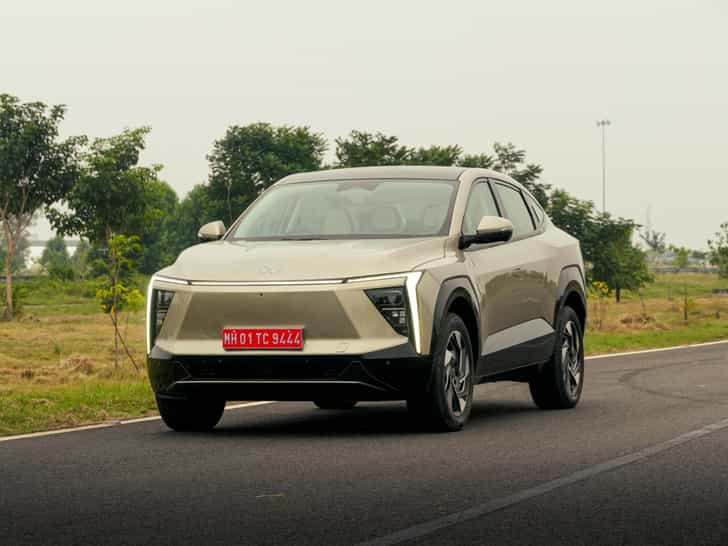
The Mahindra XEV 9e is naturally the cheapest to run, and it’s not a headache to live with if you can install a home charger and don’t regularly do very long drives beyond roughly 400-420km in a day. A home charger is like having a petrol pump at your house - you plug in at night and leave with a full “tank” every morning. It will actually make an EV more convenient to top up than a petrol or diesel car, where you always have to detour to a fuel station. 

However, if you don’t have home charging (or very reliable workplace charging), then an EV quickly becomes inconvenient because of the planning and the long waits for charging. Also, the uncertainty with public chargers, so in that case it’s best to avoid one.

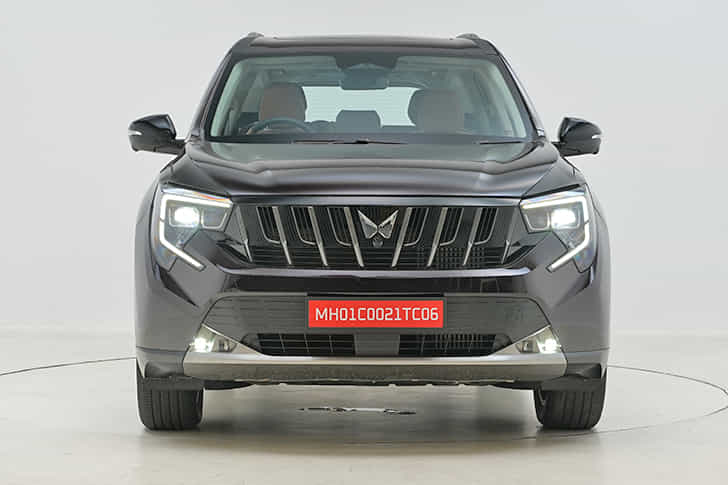
Between the petrol and diesel Mahindra XUV7XO automatics, the petrol is actually quite refined and much smoother than the diesel. The real issue is its very low real‑world fuel economy, especially in city use, which makes running costs shoot up. The diesel, on the other hand, is also reasonably refined and much more practical because of today’s pump prices and the efficiency gap. Moreover,  you can recover the diesel XUV7XO’s roughly ₹1.4 lakh higher upfront cost in about a year of your usage.

After that, you are clearly ahead on total cost of ownership. Also, the diesel’s resale value is likely to be higher as well. So between the petrol and diesel XUV7XO, the diesel is the better option for you. Between diesel and EV, it really comes down to whether you have stress‑free home charging.
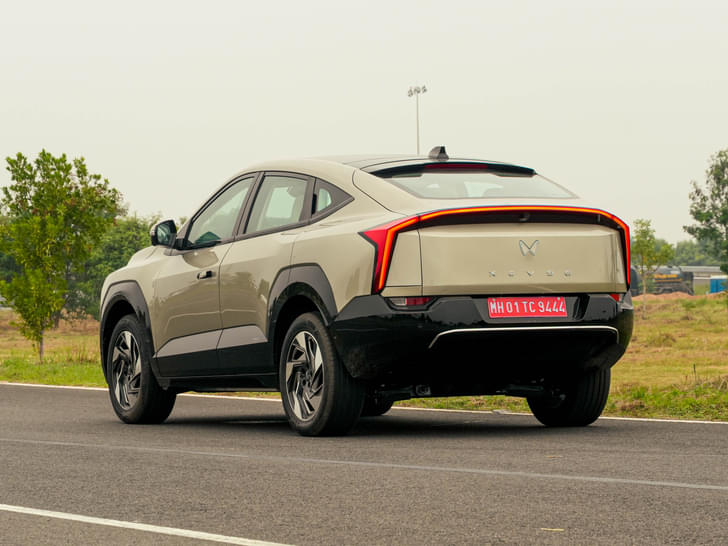
Mahindra XEV 9e

Mahindra XEV 9e

Got a suggestion for Abhishek?

Add a Comment

Recommended questions for you

AA

Ahaan Asthana

1w

Dear Team, If my annual running is around 8,000-9,000 km, with 90% of it on highways, which would be a better choice—the Tata Harrier petrol manual or the Mahindra XUV700 diesel manual?

Autocar India team

Autocar India

Verified
7h

Since 90% of your 8,000-9,000 km a year is highway, the Mahindra XUV7XO diesel manual is the more suitable choice.The 7XO’s 2.2‑litre mHawk diesel is genuinely strong, with around 185 hp and 420 Nm in the manual, so it pulls hard even with passengers and luggage and makes effortless high‑speed cruising and quick overtakes its strong point. Diesel efficiency on long runs will also be noticeably better than a big turbo‑petrol, which matters over your kind of annual mileage. Mahindra has reworked the suspension and dynamics versus the old XUV700, so stability, body control and high‑speed confidence are a clear step up. This makes it a very relaxed long‑distance car.The Tata Harrier 1.5 turbo‑petrol is much smoother and quieter, with about 170 hp and 280 Nm, and it has enough punch for highway work. But you have to rev it more and live with higher fuel consumption when you cruise fast or drive fully loaded. For predominantly highway running, that means more fuel stops and higher running costs without the same effortless torque you get from a big diesel

VehicleMahindra XUV 7XO
VehicleTata Harrier
SS

Sumanta Singha

1w

Hi Team, I am planning to buy a 7-seater SUV. I was initially interested in the Mahindra Scorpio N 4WD, but after a test drive, I realised that the third row is not very practical for my family, as my children are grown up and find it cramped. So, I am now considering the Mahindra XUV7XO. However, I am confused between the petrol and diesel AWD variants. Some people say AWD is not very effective. My expectation is that AWD should at least help on snow/ice roads and for mild off-roading. My daily driving is around 20 km in bumper-to-bumper city traffic, and my monthly running is about 900–1,000 km. If I decide not to go for AWD, should I choose the petrol or diesel variant instead? Please advise.

Autocar India team

Autocar India

Verified
7h

You’ve done the hard part by rejecting the Mahindra Scorpio N; its third row is cramped, and knees‑up even for kids, and the ride is bouncy because of its body‑on‑frame layout. The Mahindra XUV 7XO is a better family SUV, with a new suspension and Mahindra’s new DaVinci damping (an evolution of FSD) that gives it a more composed, comfortable ride in the real world.On AWD: for the kind of “soft” use you’re describing, it’s more of a nice‑to‑have than a need‑to‑have. AWD certainly helps on very slippery stuff like snow, ice and wet mud. But its real benefit only comes through when paired with the right tyres and technique. If you genuinely expect regular snow or ice, snow chains for your tyres are a good option. They transform grip far more than the drivetrain alone. For occasional soft‑roading and bad roads, the XUV 7XO in 2WD with its new suspension is already very capable.Given your running (roughly 1,000km a month, mostly city), you’re borderline for justifying diesel purely on economics. The 2.0 petrol is very smooth and punchy, but quite thirsty in traffic - real‑world city figures under 6 kpl are common. The diesel is more efficient and torquey, especially at low revs, but doesn’t have the same refinement and will cost a bit more upfront. For your usage, I would lean towards the petrol 2WD. You get the nicer driving experience, and you aren’t driving enough for fuel savings to decisively outweigh the petrol option

VehicleMahindra XUV 7XO
VehicleMahindra Scorpio N
GB

Gulshan Bhatia

1d

Hi AutocarIndia, I have a budget of ₹23-25 lakh. My monthly running is approximately 12,000-14,000 km, with around 70% city driving and 30% highway usage. I am confused between choosing a petrol vehicle and an EV. I am not considering a diesel option since my driving is not very regular at times, and I am concerned about potential DPF clogging issues. Currently, I am evaluating the Mahindra XUV 7XO A7 T petrol, which costs around ₹25 lakh on-road in Pune. However, considering the current global war situation, I feel petrol prices may increase permanently, which is making me seriously consider an EV. I am therefore looking at the Tata Harrier EV Fearless Plus 75 kWh, which is priced around ₹27 lakh. Though I have heard that some discounts are available, and the effective price could come down to around ₹26 lakhs. Given my usage pattern, budget, and long-term cost concerns, please guide me on whether a petrol or EV would be the better choice and help me decide between these options. Thanks in advance.

Autocar India team

Autocar India

Verified
1d

The Mahindra XUV 7XO petrol does not suit this kind of running. A turbo petrol will be significantly more expensive to run over time, and with your usage, the fuel cost difference will be substantial.The Tata Harrier EV makes far more sense here. It offers very low running costs per km, smooth and effortless driving in the city, and strong performance on highways. With your high usage, the savings on fuel will add up quickly and justify the higher initial cost.The key condition is charging. If you have reliable home or office charging, the EV becomes a very practical and economical solution. Without that, managing frequent charging will become inconvenient.On your concern about diesel, in your case, it is actually not an issue. With such high and consistent running, DPF problems will not arise, as the car will regularly get the kind of driving needed to keep the system healthy.

VehicleMahindra XUV 7XO
VehicleTata Harrier EV

Posted on: 5 Apr 2026