Autocar India
AP

Ashish Patel

3d

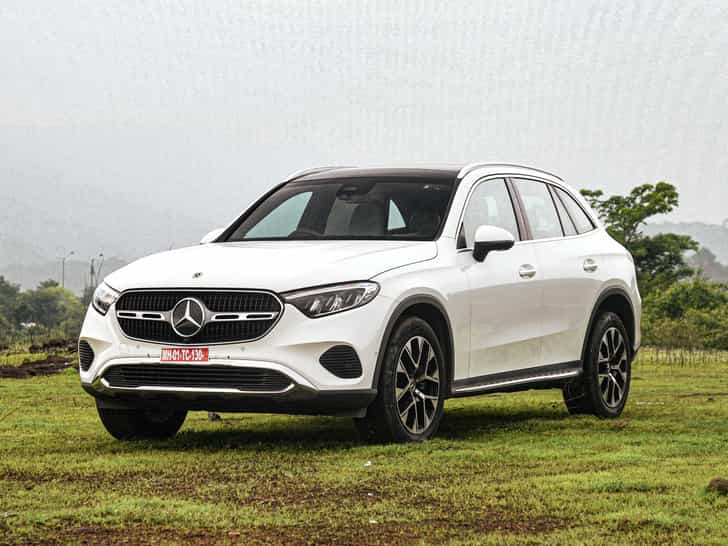
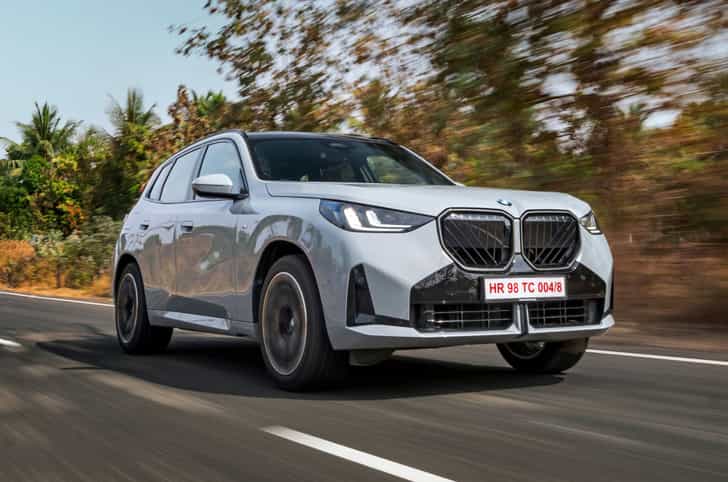
I am confused between the BMW X3 30 and the Mercedes-Benz GLC 300. My driving is around 75-80% in the city, and I also enjoy driving. I want a car that is engaging to drive while still being comfortable on city roads. Rear seat comfort is important, as passengers should feel stable and not experience excessive movement. I am also open to waiting for about a year until 2027 to see if the GLC gets a facelift. The X3 has been recently launched, and I prefer buying the latest model available. Could you please help me decide which car would be the better choice?

Autocar India team

Autocar India

Verified
17m

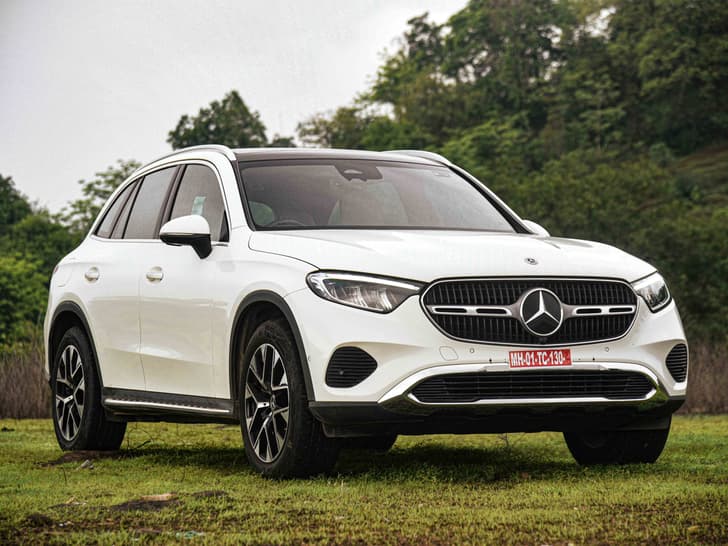
With 75-80% city use, some fun drives on weekends, and a clear need to keep the back seat calm, the Mercedes GLC 300 4MATIC fits your brief better right now. In slow to medium city speeds, it rides softer, so speed breakers and broken patches are handled with less bounce, and people in the back do not get tossed around. 

The steering is light at low speeds, and the automatic gearbox, which changes gears on its own, is very smooth, so daily traffic is easy, yet the engine still feels strong when you want to make a quick overtake. It is also quieter inside, which makes city trips feel less tiring.

The trade-off is that when you really push on a fast road, the GLC does not feel as eager or as tight as the BMW. 

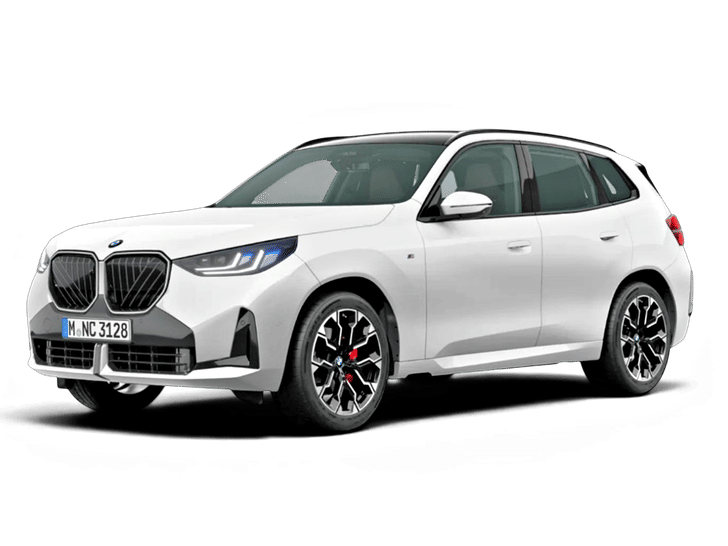
Pick the BMW X3 xDrive30 if you drive yourself most of the time and want a car that feels sharper and more connected on an open road. The new X3 also gives you the freshest design and tech today, which matters to you. 

Just note that its ride is firmer in the city, so the back seat will feel a bit more movement on rough roads than in the GLC.

On waiting: a GLC facelift by 2026-27 is possible, but India timing is uncertain, and updates may be small. If “latest” is your top goal, the new X3 gives you that today. If city comfort for family comes first, the GLC 300 is the safer bet.
Mercedes GLC

Mercedes GLC

More questions on similar cars

AS

Ashish sachdeva

3d

I am planning to buy an EV in the ₹50-60 lakh price range. My key requirements are around 500 km range, along with good space, comfort, and overall refinement. I have shortlisted the Tesla Model Y L and the BYD Sealion 7. Which of these would make more sense for my needs?

Autocar India team

Autocar India

Verified
1h

While both your shortlisted EVs are excellent in their own right, they do have their shortcomings. The Tesla Model Y L is priced at Rs 62 lakh (ex-showroom), putting it outside your budget, and though it has an impressive WLTP range, it has yet to be proven in the real world. Similarly, though the BYD Sealion 7 represents excellent value for money, its real-world range is far removed from its official figure, and in our real-world test, the dual-motor version managed around 370km on a full charge. Of the two, we'd recommend the Sealion 7, which offers better value overall than the Tesla. However, another EV you should consider in your price range is the recently unveiled Hyundai Ioniq 5 facelift. The original model came the closest to delivering a real-world 500km range in our tests, and this new one, with its larger 84kWh battery, should easily cross that figure. Hyundai's EV powertrains are among the most efficient around, and the Ioniq 5 is as well-appointed and equipped, spacious and comfortable as the best out there.

VehicleTesla Model Y
VehicleBYD Sealion 7
VehicleHyundai Ioniq 5
SS

Samir Shah

8h

Hi Autocar Team, I’m not sure if my earlier query reached you, so I’m sending it again. I have shortlisted the Kia Carens Clavis 1.5 Turbo DCT and the XUV 7XO AX7 petrol AT for my daily chauffeur-driven 30 km commute in Mumbai traffic, along with 3-4 highway trips a year of around 400 km each. Rear seat comfort is very important, as the car will mostly be chauffeur-driven and occasionally used by my elderly mother for short city trips. Based on my requirements, you had recommended the Carens Clavis 1.5 Turbo DCT. However, I am concerned about the reliability and potential overheating issues of the DCT in Mumbai traffic. Could you please guide me on this and help me make the right decision?

Autocar India team

Autocar India

Verified
4h

We would still pick the Kia Carens Clavis 1.5 turbo with the DCT for you. The back seat is the key here: the Carens has a lower step-in and wide door opening, which makes it easier for your mother to get in and out and sit comfortably. In slow city traffic, the ride feels soft and calm in the back, and on the highway, it stays steady and quiet enough for long runs. The variant with 16-inch wheels will be a tad more comfortable than the high-end variants with 17-inchers.On your DCT worry, try the following practices to ensure that the DCT doesn't heat up - avoid holding it on the throttle on slopes, and if you are stopped for a long time, keep the brake pressed or shift to Neutral. Do take the full extended warranty for peace of mind.For a relatively more worry-free experience, you could also consider the Kia Seltos 1.5 Petrol IVT, if having a seven-seater isn't a priority.

VehicleKia Carens Clavis
VehicleKia Seltos
PD

Prashant D

3d

Is the Hyundai Venue HX10 DCT better than the Mahindra XUV 3XO AX7 L in terms of reliability, after-sales service, and a glitch-free infotainment system?

Autocar India team

Autocar India

Verified
6h

You are picking mainly for peace of mind - strong reliability, easy service and a screen that does not act up. Between the Hyundai Venue DCT and the Mahindra XUV 3XO AX7 L, we would lean toward the Venue DCT for this brief. Hyundai’s service reach is wider and more consistent across cities and smaller towns, which makes routine work and parts replacement simpler. Hyundai’s infotainment software is also proven to be stable in daily use, with clean menus and a steady phone connection, so it tends to be less fussy over time.The Mahindra XUV 3XO is proving to be reliable, but its infotainment UI is not as clean as Hyundai's. Mahindra’s network is large too, but service quality can vary by location, so your local dealer matters more here than with Hyundai.Two trade-offs to keep in mind. The Venue’s DCT can feel a bit hesitant if you inch forward in very slow traffic and can get warm if you slip the clutch often.Overall, for reliability, after-sales and glitch-free screens, the Venue is the safer bet.

VehicleHyundai Venue
VehicleMahindra XUV 3XO

Popular discussions right now

PS

P S RAHUL

4d

I am 60 years old and have booked the Toyota Innova Hycross top-end variant. My usage will be mostly within the city, along with 4-5 long trips every year. Is this the right choice for my needs, or should I consider any other options? I plan to continue doing long-distance drives comfortably over the next 10 years.

Autocar India team

Autocar India

Verified
4d

You want a car that is comfortable in the city, easy to drive and capable of doing long trips for the next 10 years. The Toyota Innova Hycross fits this very well. The hybrid system makes it very smooth and quiet in city driving, and the automatic gearbox is effortless, which becomes more important with age. On highways, it is stable, comfortable and built for long-distance travel, which is what the Innova name has always stood for.What really works in your favour is long-term ownership. Toyota’s reliability, strong service network and resale value make it one of the safest bets if you plan to keep the car for many years. The Hycross also offers excellent space, easy ingress and egress and a comfortable ride, which are important for everyday use and for passengers as you grow older.

VehicleToyota Innova HyCross
VN

Vedant Nawange

1w

Hi, I am confused between buying the Kia Seltos diesel, which I love for its interior and power and which gives around 15 km/l mileage, and the Toyota Hyryder, which involves a slight design compromise but offers 22+ km/l mileage. My daily running is around 70 km, including both city traffic and highway cruising. Also, please share if there is even the slightest possibility of a Kia Seltos hybrid coming next year, as I would be happy to wait.

Autocar India team

Autocar India

Verified
6d

With a 70 km daily mix of traffic and highway use, we would lean towards the Toyota Urban Cruiser Hyryder strong-hybrid. Your usage is high, and the hybrid will use far less fuel in city traffic while staying calm and smooth. It pulls away on electric power at low speeds, so stop-go driving feels quiet and easy.You like the Seltos for its cabin and stronger shove, and that is fair. The Seltos diesel feels stronger when you press the throttle for quick passes, and its cabin does look and feel richer. If most of your 70 km is open highway and you really value that strong pull and the Kia car interior, the Seltos diesel automatic is still a solid pick.On a Kia Seltos hybrid: Kia does intend to introduce a hybrid, but timing is not yet decided as they are trying to localise components. We estimate it could arrive in 2027, but that could change. For your mix of city and highway, the Hyryder strong-hybrid lines up best with what you need right now.

VehicleKia Seltos
VehicleToyota Urban Cruiser Hyryder
PS

Peasant Sampan

4d

Hello Autocar, I am planning to buy a sedan, with almost 90% city usage. Please suggest a suitable option. Also, is it true that for my usage, naturally aspirated (NA) engines are better suited than turbo-petrol engines?

Autocar India team

Autocar India

Verified
4d

For your usage, a naturally aspirated petrol with a CVT or IVT is the best fit. These setups are smoother, easier to drive in traffic and more predictable, which matters far more in city conditions than outright performance. So yes, in your case, NA engines are better suited than turbo petrol.The Hyundai Verna IVT stands out as the most well-rounded option for city driving. The engine is smooth, the IVT gearbox is very intuitive in stop-and-go traffic, and the overall driving experience is effortless. It feels refined and easy to live with daily.The Honda City Hybrid is worth considering if your running is high. It offers excellent fuel efficiency, strong performance and is very easy to drive in the city thanks to its hybrid system. However, it comes with a higher upfront cost, and the battery placement results in a higher boot floor, which slightly affects practicality.Compared to the Verna, the standard Honda City CVT is also an option, but the engine feels a bit noisier, and the gearbox is not as intuitive as the Verna’s IVT in everyday use.

VehicleHyundai Verna
VehicleHonda City

Posted on: 5 May 2026