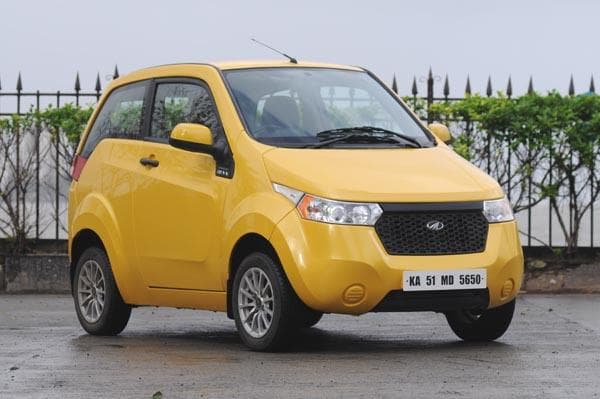
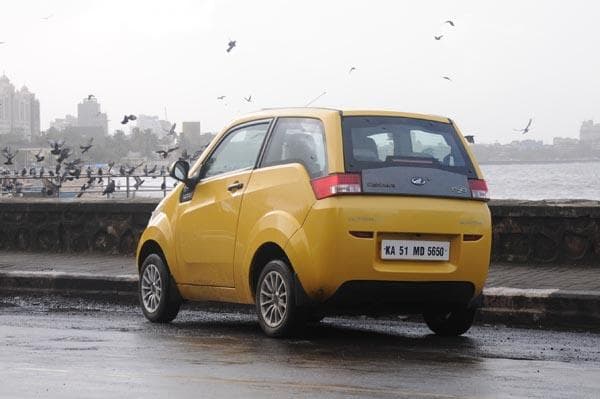
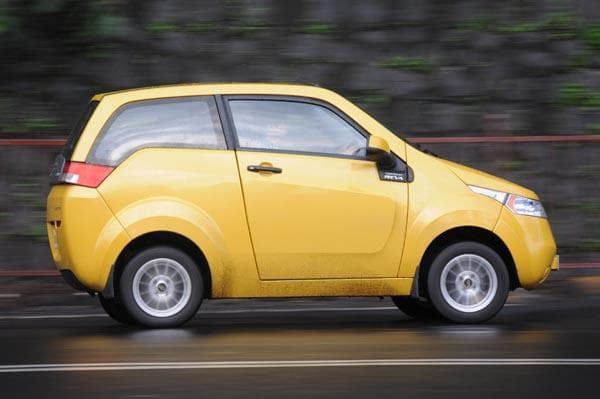
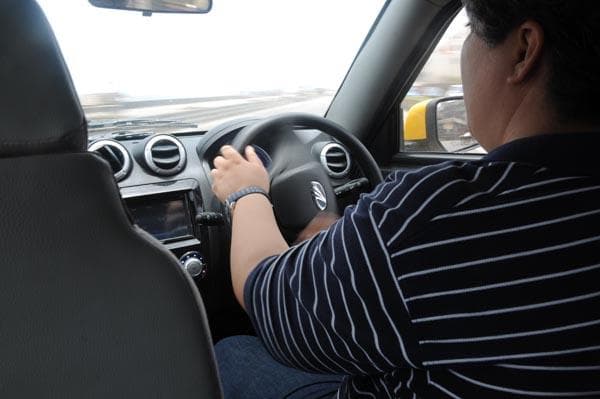
Driving the Mahindra e2o has always been an exercise in concentration for me. It’s not that it is difficult to drive; in fact, its small dimensions and great visibility made it a breeze. It’s just that ‘range anxiety’ or the fear of running out of battery juice mid-way, was an ever-present travelling companion on every journey. As a result, I’d find my eyes drawn more to the ‘available range’ readout on the dash than the road I was driving on. This fear of running out of electricity also made me cancel plans that were more than two suburbs away from my home when I had the car, just in case. And despite the car being well equipped with the likes of a touchscreen, Bluetooth, electrically adjustable mirrors and satellite navigation, I’d be reluctant to even use features as basic as the radio or air conditioning, lest it add to the battery drain.
Now, there’s an improved e2o that should at least alleviate some of that tension, as it promises a much improved driving range on a full charge. While the original e2o would run out after 80km (something I never had the chance to verify, thankfully), this one will let you do 120km, says Mahindra. What’s more, the company has also given it electrically assisted power steering to make it even easier to drive at low speed, and by that measure, better suited to its intended use as an urban runabout.
Of course, the first time I set out in this e2o T2, as it’s called, the old stigma raised its head, and I tried to stick to a single lane so I wouldn’t have to use the indicators. But having a ‘distance to discharged’ figure that was three digits long for a change was definitely more re-assuring. The battery level also drained noticeably slower than in the old car. And in case you were wondering what the compromise is for this added range, no new batteries have been added; the motor has just been programmed to use power more efficiently.
As for the steering, the e2o, much like budget hatchbacks such as the Tata Nano, is so compact that once you’re on the move, you don’t really feel the need for powered assistance. However, it was always still quite a handful to strongarm into a tight parking spot. The new electrically assisted system helps tremendously in this regard, but also has its own set of issues. For one, it removes all feel from the steering, and you have precious little connection to what’s going on with the front wheels. This won’t bother the typical e2o buyer too much, and its effects are somewhat nullified by the second issue – a very slow rack. It takes four full turns to get the wheel from lock to lock, and as a result, you’ll find yourself spinning the steering a lot more than you would in any other car, even to change lanes. This was, however, likely done to reduce the load of the power steering on the batteries, and it only serves to highlight just how tight the e2o’s turning circle is.
Other than this, the e2o hasn’t changed. It still draws a lot of attention and questions about propulsion and running costs from passersby, and it still has a surprisingly spacious four-seat cabin. That said, quality and fit and finish in the cabin isn’t anything to write home about and the ride quality is rather choppy, with the car thudding its way through bumps. You also still need to make sure you have a plug point near your parking spot at home if you plan to own one, the regenerative brakes feel scarily inconsistent and take a lot of getting used to, and you should probably opt for this eye-popping shade of yellow so that people will see you coming; they certainly won’t hear you. The other issue is price – the e2o T2 will serve as the range-topping variant, while the T0 and T1 with unassisted steering and an 80km range, will continue as the starter models. The e2o famously had widely disparate pricing according to which city you purchased it in, and that’s only likely to continue for the T2. Although Mahindra has made efforts to make the car more affordable over the months since its launch, the T2 will still be more expensive than the standard models, and the added convenience factor will only be worth it if you have the infrastructure suited to living with an electric car.
GAVIN D’SOUZA
 Lenny D'sa
 Sergius Barretto
 Saumil Shah
 Soham Thakur
 Nikhil Bhatia