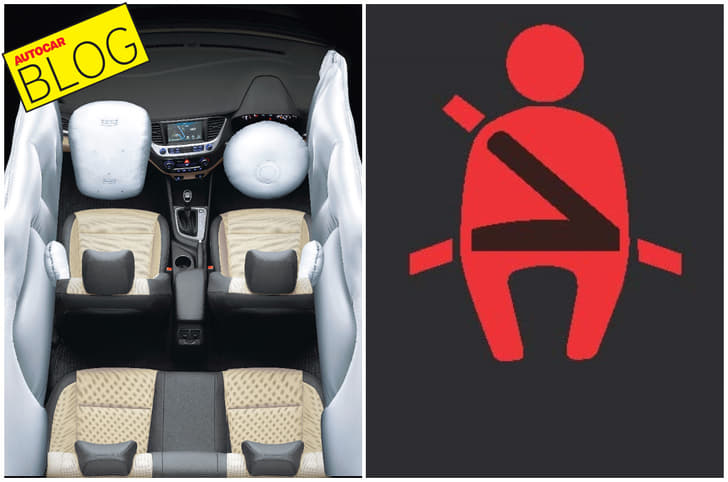
Politicians these days like to prescribe what technology the industry should use and Nitin Gadkari, the minister for road transport and highways (MoRTH), has made a habit of it. When he is not shoving ethanol down automakers' fuel tanks, he is insisting on what safety tech should be used. Recently, he announced that he would make six airbags mandatory for cars. Great. Why not eight, or twelve? A car with more airbags is safer, right?
That’s what the safety police on social media and even the ‘real’ media like to think. Gadkari’s announcement was given a thumbs up, called ‘brilliant’, proclaimed as a ‘much needed’ piece of legislation by the moral grandstanders who like to publicly show they really care about safety and the world’s well being.
The truth is six airbags, especially in small cars that don’t go very fast, is an overkill, which won’t reduce the killing on our roads, but will certainly kill the small car market. Existing models will have to be replaced with all-new models that will become much more expensive. It’s not just the cost of the airbags, but the cost of completely re-engineering a car with thicker pillars and broader sections to accommodate them that throws costs out of whack. The budget end of the car market will no longer be budget and could force those with limited means to remain on a bike, a far more dangerous option than any car.
Besides, airbags alone don’t make a car safe. They have to work in conjunction with the body structure and seat belts to prevent injuries. Also, the number of airbags isn’t a measure of safety either. Fewer, smartly engineered airbags in a structurally strong car will offer more protection than more airbags in a car made of tin foil. Furthermore, a single, long side air curtain bag can better protect the heads of front and rear passengers than two individual airbags.
This is where a mandatory new car assessment rating like the long talked about Bharat New Vehicle Safety Assessment Programme (BNVSAP) would be more effective. It sets goals and lets industry decide how to achieve them. The mandatory ratings would let consumers choose how safe a car they want. Incidentally, the BNVSAP is also something Mr Gadkari is now backing.
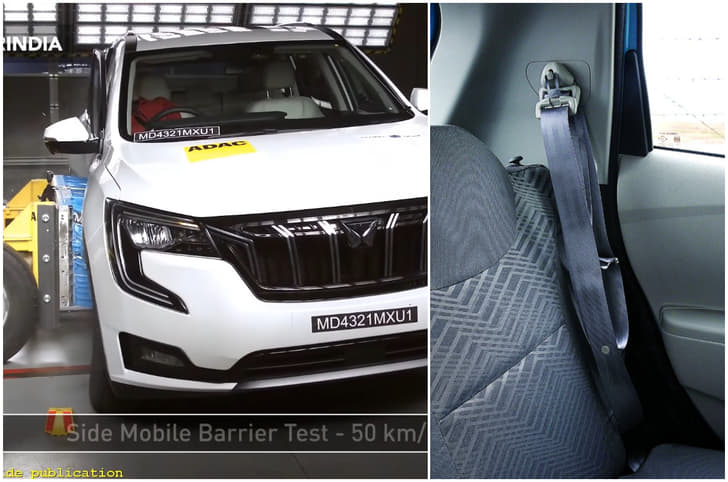
The International Road Federation (IRF) has rightfully called out Mr Gadkari on this absurd ruling and has asked him to rethink what it has called ‘a pro-rich and an anti-poor policy’, and instead focus more on legislation that will ensure usage of seat belts. In fact, a passenger properly belted in the rear seat (with head restraints in place) with no airbags will stand a greater chance of survival than if they were in the same car with six airbags but unbelted.
The trouble is, educating people to wear belts in the rear will take a generation, if at all. Motorists just have to be forced to buckle up. A simple, cheap and effective way to do this is making the seat belt reminder warning mandatory for rear passengers, just like the front. This annoying alarm would dramatically increase seat belt wearing rates and potentially save lives.
The thing is, crash ratings, the number of airbags and passive safety in general always hijacks the discourse on safety, when it’s simple active safety features like blindspot warning indicators, tyre pressure monitors, forward collision warning systems that can actually prevent a crash, that are far important, especially today when driver distraction (with all the on-board gizmos) is at an all-time high. In fact, possibly the most effective safety device in a car today after the seat belt itself is the speed warning chime, a hugely frustrating but highly effective deterrent against speeding – the single biggest cause of road accidents. And guess whose idea that was? Mr Gadkari’s! He can mandate some practical regulations when he wants to.

 Viraaj Bhatnagar
 Dipan Sur
 Dhruv Dhaka


 Saptarshi Mondal