.jpg?w=728&q=75&fm=auto)
.jpg?w=728&q=75&fm=auto)
.jpg?w=728&q=75&fm=auto)
.jpg?w=728&q=75&fm=auto)
.jpg?w=728&q=75&fm=auto)
.jpg?w=728&q=75&fm=auto)
.jpg?w=728&q=75&fm=auto)
Datsun, Nissan’s sister brand, has been in India for a little over two years now. But in this span of time, the country’s response to the brand can be best described as lukewarm. This time around though, Datsun is leaving no stone unturned with its third offering, the Redigo, its entry-level hatchback. It is determined to take the fight to the yet undisputed segment champion, the Maruti Alto, with a product that is better value, better specified and better engineered.
The hatchback recently made its global debut in New Delhi, and is slated to reach showrooms in June 7, 2016 with bookings currently open against a downpayment of Rs 5,000. The Redigo is expected to come at a killer price of around Rs 2.5 lakh (ex-showroom, Delhi) for the base variant, and Datsun also promises that the car will bear the lowest cost of ownership in its segment. In theory, this should make the baby Datsun cheaper to own than Maruti’s stalwart. The big USP on this car though is that it looks a lot more expensive than its price suggests. Whether the Redigo will be as big a success as Datsun hopes it to be is a question only time can answer. So, here’s all you need to know about the car before it hits our roads.
What is it?
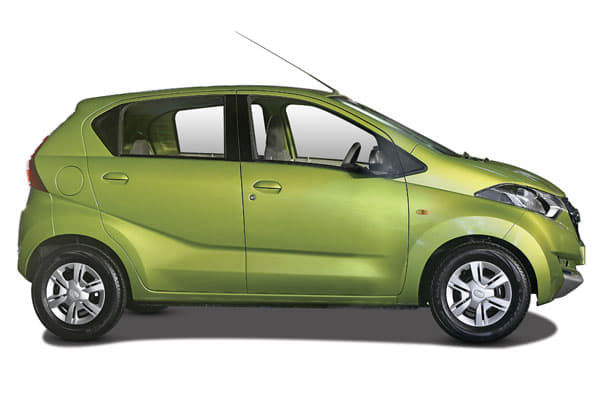
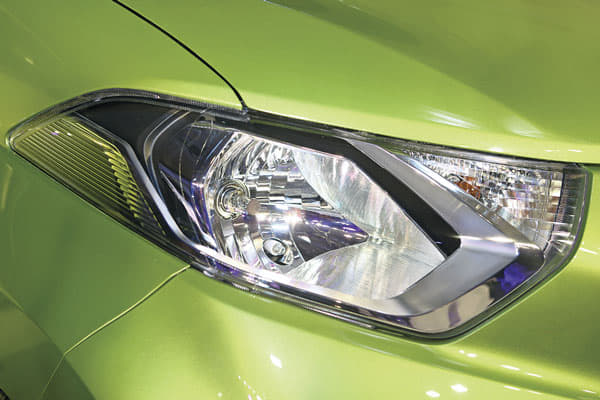
Seen first as a concept at the 2014 Auto Expo, the production-ready car is extremely close to the original design. This is especially commendable since the budget segment that the Redigo slots into, seldom has a budget for niceties like cutting-edge styling and complex surfaces. Highlights on the exteriors include Datsun’s hexagonal grille, swept-back headlamps and the well-defined character line that sweeps up towards the rear.
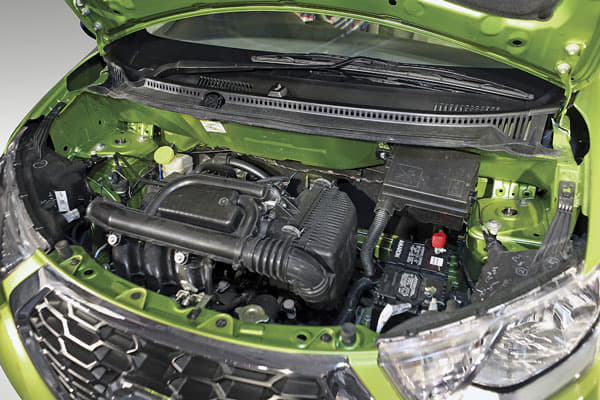
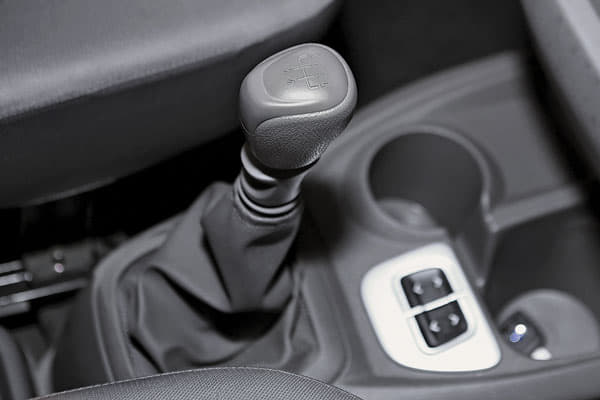
The Redigo shares its CMF-A (Common Module Family) skeleton with the extremely popular Renault Kwid and that gives it a huge advantage. Its low cost can be greatly attributed to the fact that the Kwid and Redigo are almost 100 percent locally manufactured (actually 98 percent). Besides their basic framework, the Redigo and the Kwid also share the same 799cc three-cylinder petrol engine and five-speed manual gearbox.
.jpg?w=700&c=0)
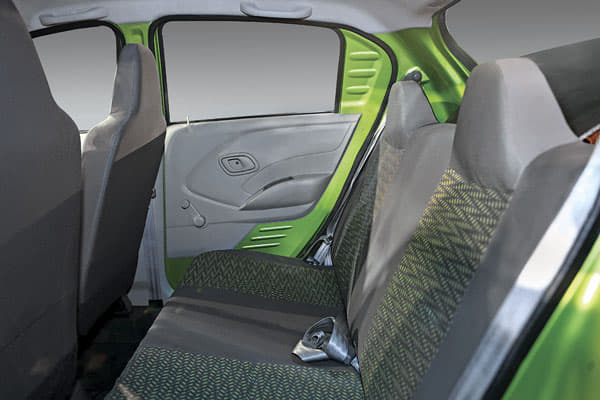
However, the two cars represent very different takes in terms of design. The Kwid comes across as a micro SUV with details like squared-off wheel arches and body cladding. The Redigo’s exteriors, on the other hand, take a more sophisticated, urban approach. Datsun calls it an ‘urban crossover’, a car built to take on the daily city grind. This is made evident by the car’s ground clearance of 185mm, which should make easy work of driving the car over our pothole ridden roads. Furthermore, given our cramped city spaces, the Redigo, just 3,430mm long and 1,560mm wide, has a very small footprint, notably smaller than the Kwid. It instead liberates volume with its tall-boy stance and more stand-up seats. Also worth noting that the wheels have been pushed to the extreme corners of the car. While this, in all likelihood, is an attempt to maximise interior space, the short overhangs, as a result, also lend the car a planted look and should impart a fair amount of stability. The stubby bonnet and steeply raked front end too appear to be a bid to max out cabin volume.
 Viraaj Bhatnagar
 Dipan Sur
 Glenn Noronha
 Dhruv Dhaka