Familiar family
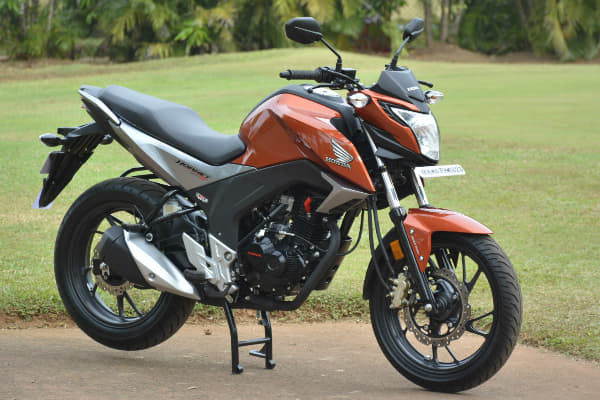
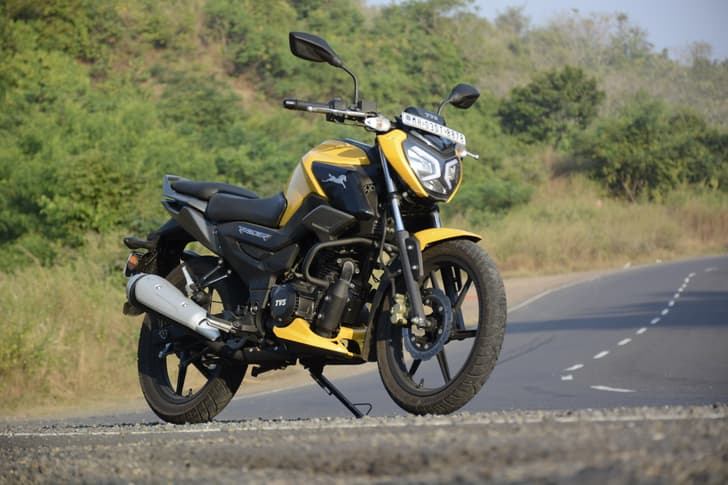
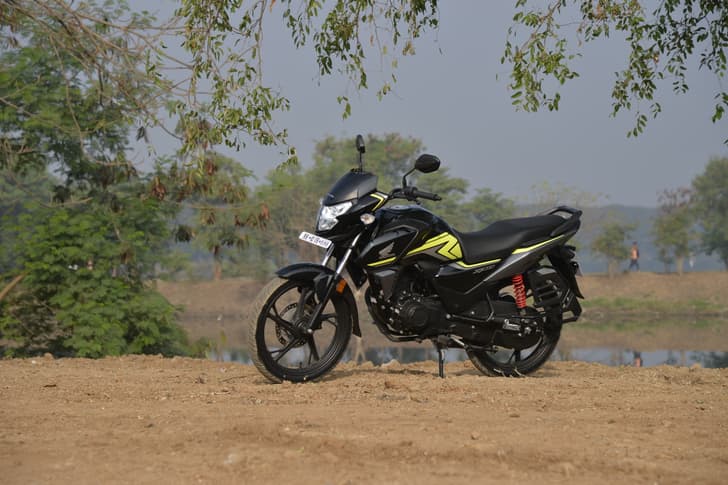
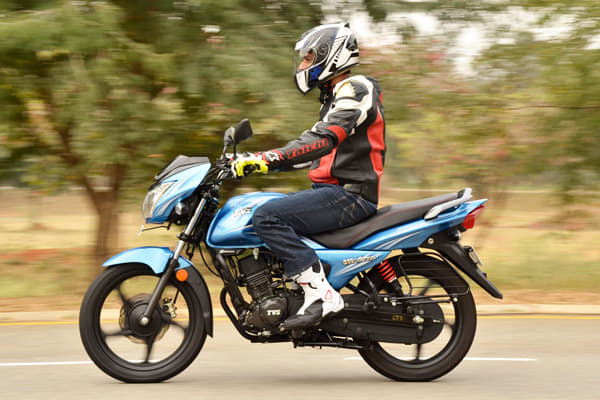
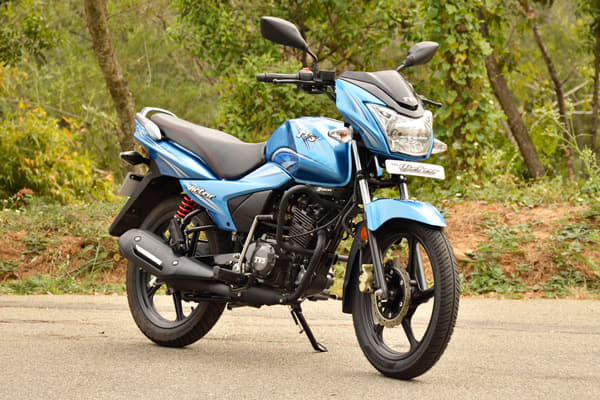
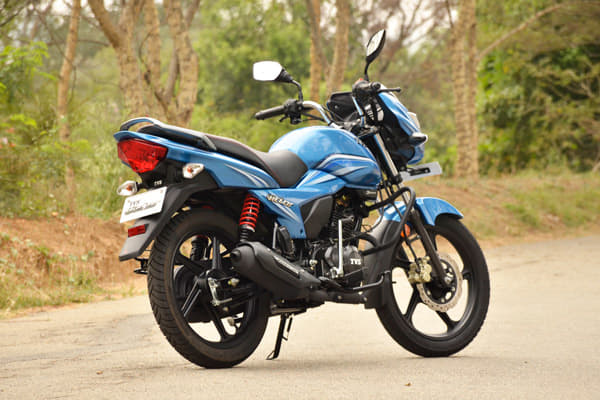
As part of the facelift, the reintroduced Victor gains a sharper look, while not giving up any of its family design cues. Still styled to look the commuter motorcycle it is, the new Victor headlamp now sports more angular, contemporary lines. The instruments include an up-segment tachometer that’s legible and tells you engine speed, while a digital display includes other essential information, and even a twin trip facility. A TVS typical economy riding indicator flashes out its presence too.
To touch, the 2016 Victor palm grips, control levers and switchgear all feel nice and well-finished, while the mirrors also offer adequate rear view vision. A hazard warning button is also in place on the new Victor. New graphics adorn the 2016 model's fuel tank and flank panels. The motorcycle seat has a nice ‘leather-like’ texture, with up-market red stitching that catches your eye and adds a touch of class. You also get smart alloy wheels, in a matte black theme that also coats several other surfaces.
To sum it up, overall quality, fit-finish and attention to detail are all good on this new TVS.
110 forever
The Victor comes with a four-stroke, 109.7cc, single-cylinder engine that is air cooled, with button start. It’s a three-valve powerplant dubbed '3V Ecothrust' in TVS marketing parlance. Twin inlet ports are fed by a CV-type carburettor – a novelty for this segment of commuter bikes. The new Victor comes with larger airbox, and TVS' R&D has spared no effort to ensure torque output is class benchmark. The new motor is good for a power output of 9.5bhp available at 8,000rpm, while maximum torque available is 0.96kgm, put out at 6,000rpm.
The new engine immediately succeeded in conveying a nice, refined feel, with snappy throttle response, and flawless character. Power delivery is always smooth and buzz-free, even when riding fast, pulling revs higher than required on a commuter bike. The powerband is wide, with a reasonable spread of bottom and mid-range performance always available.
The gearbox is smooth-shifting, via a heel-and-toe lever, and the motorcycle clutch feels light, with just the right progression dialed-in.
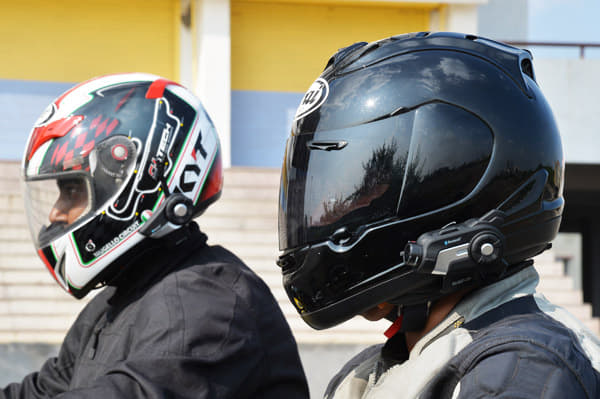
A highlight to the new Victor engine is TVS having spring loaded the rocker arms. We immediately put this to test, hammering the bike at high revs for a couple of laps around the TVS test track at Hosur, then getting our helmets off and training our ears on the engine, to listen in for any tappet noise, common on small-capacity, air-cooled engines. The springs do work, for as hard as we tried, we couldn’t get the Victor to make any tappet clatter.
Performance feels just as quick as expected from a 110cc motorcycle, and very close to even some more upmarket 125cc bikes.
Victory march
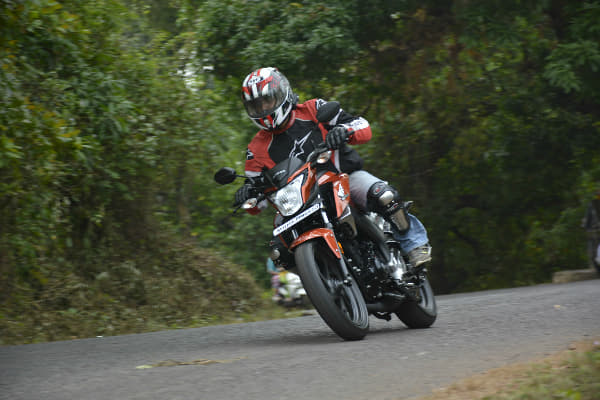
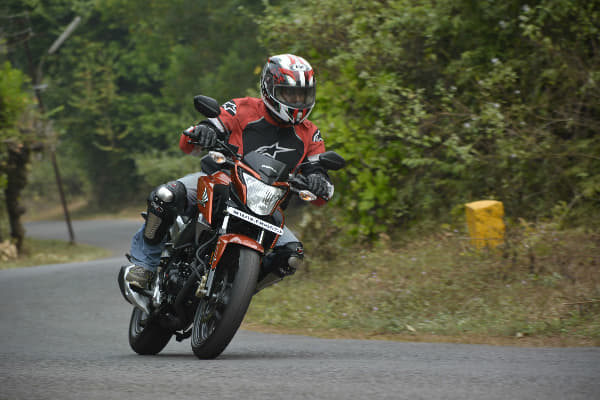
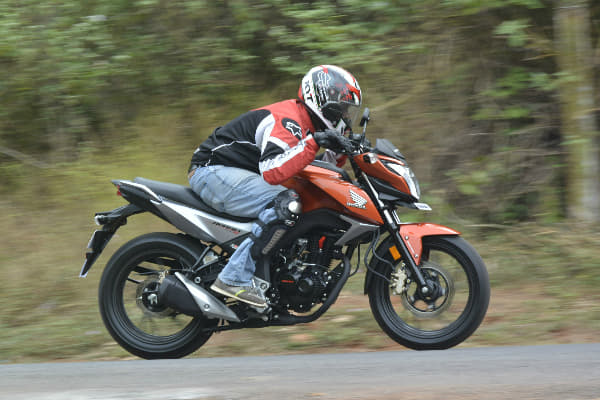
The Victor remains a comfortable motorcycle to pilot, with an upright commuter-friendly riding position. The footrest-to seat-and handlebar triangle is well thought out, and riding saddle well-padded, also step-free and long enough for both rider and pillion.
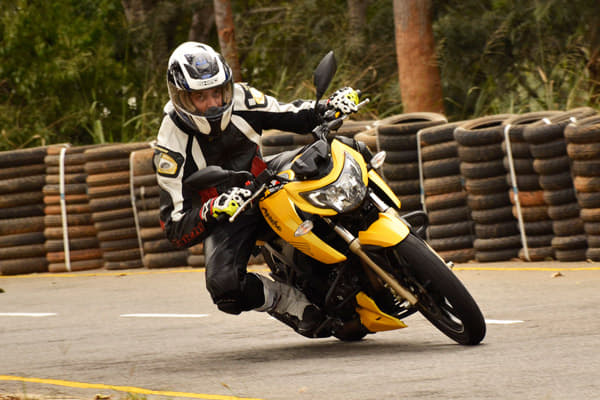
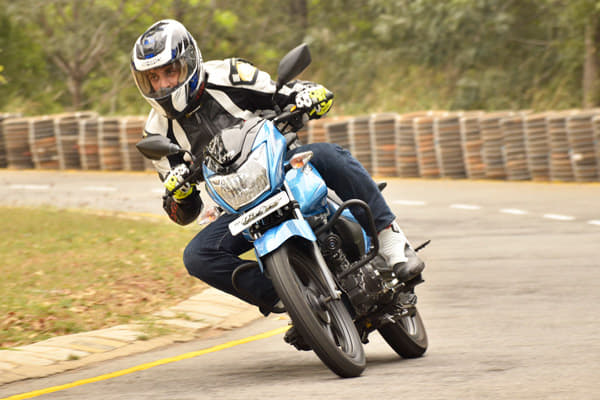
The new TVS uses a conventional tubular steel frame, with TVS telling us key areas in the chassis have been stiffened to help handling. Suspension is telescopic in front, with dual shock absorbers at the rear, including a TVS-designed ‘Series Spring’ technology. The swingarm is box section steel. Ride quality is good, and the 2016 Victor handles with light feel, steering giving the rider a neutral, precise feedback. Cornering manners are par for this class, with the bike riding on tubeless tyres front and rear offering adequate grip. The tyres are a softer compound, branded Remora and made by TVS.
You’ll be surprised by the powerful retardation force that greets you the moment you hit the front brake. The Victor comes with an optional front disc brake, a 240mm, petal type rotor, the added safety which proved well worth paying for.
The 2016 Victor fits into its class smartly, offering nice features, a refinement engine with ample performance and good comfort too. Pretty much at the top of its space, TVS has done well to improve upon the older bike, leaving virtually no rough edges. It is high time then, the South Indian company moved with the times, and made a capable new Victor 125 along these same lines.
 Dinshaw Magol
 Rishaad Mody