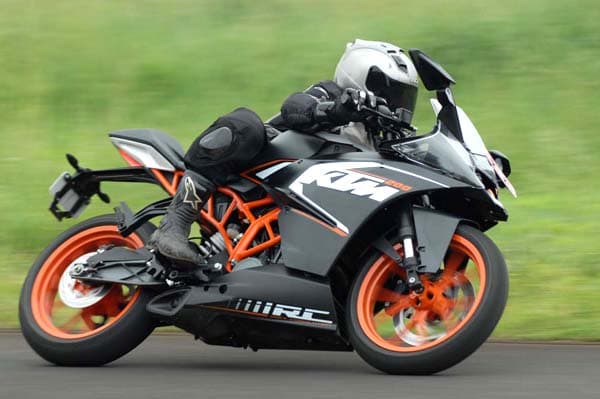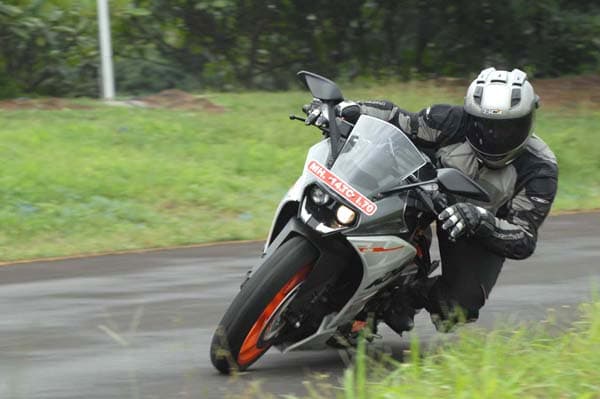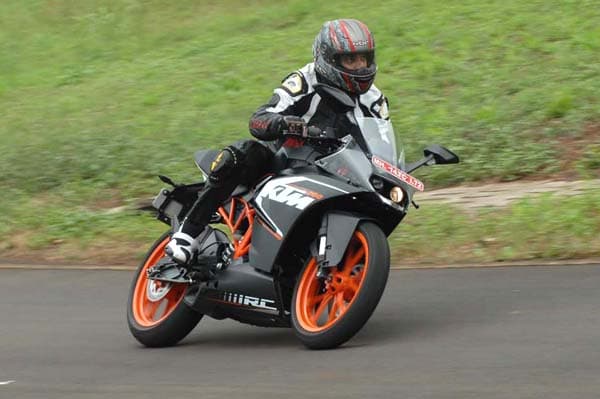
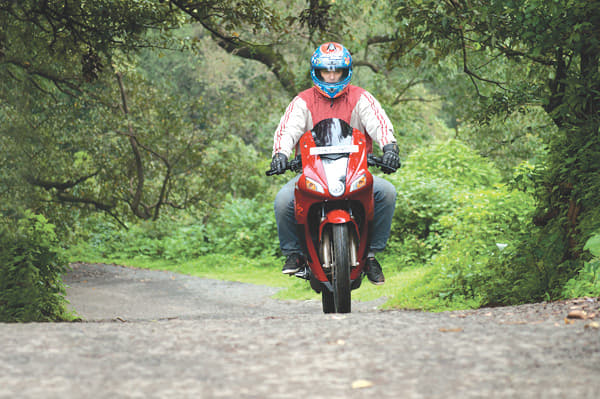
The Karizma has come a long way since its inception back in 2003 and has catered to a mixed audience, some of whom are power hungry and then those who simply required a sweet combination of excitement with reasonable comfort. Deliver this the Hero flagship did, with charm, and over the years, the Karizma has seen a few cosmetic and engineering upgrades including a fully faired-in version named the ZMR, but the bike has, at its heart, remained more or less the same.
This time around, Hero has made the Karizma more aggressive, tipping it closer towards a sportsbike. Can the new ZMR compete with today’s generation of uber-quick KTM Dukes, or the sporty CBR bikes from Honda?
Let’s find out.
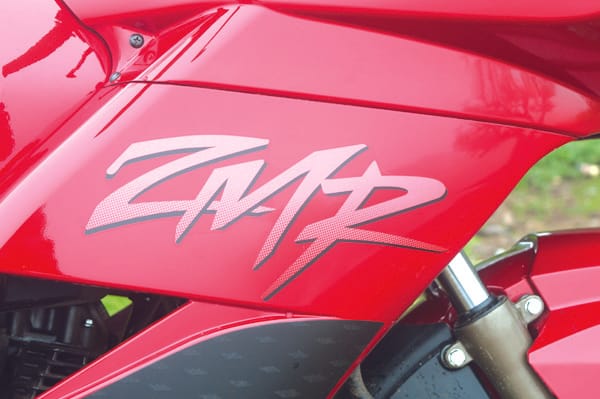
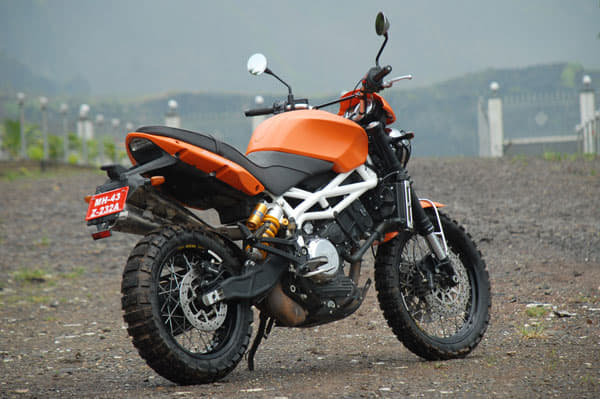
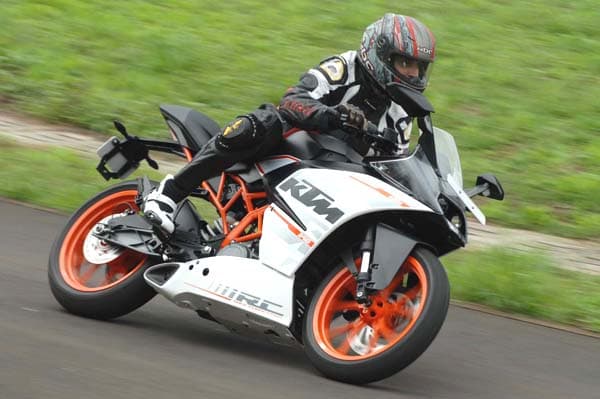
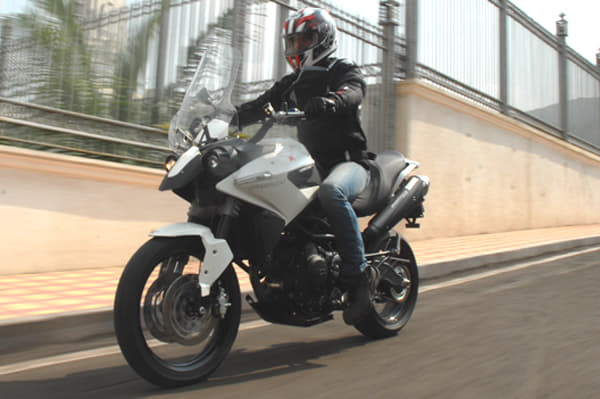
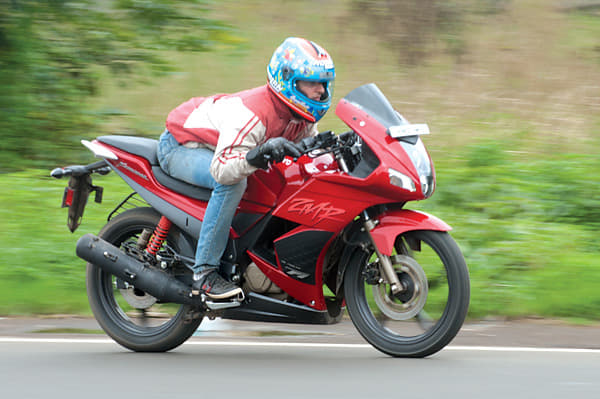
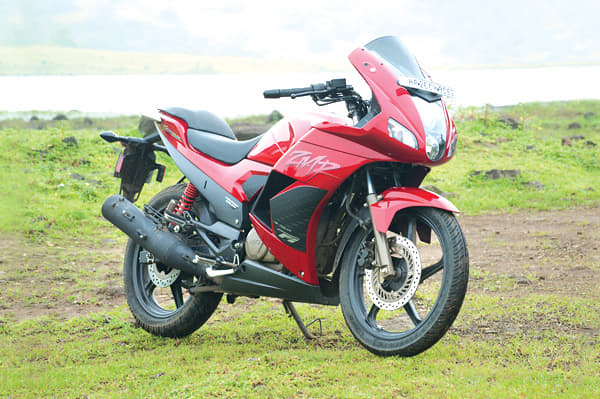
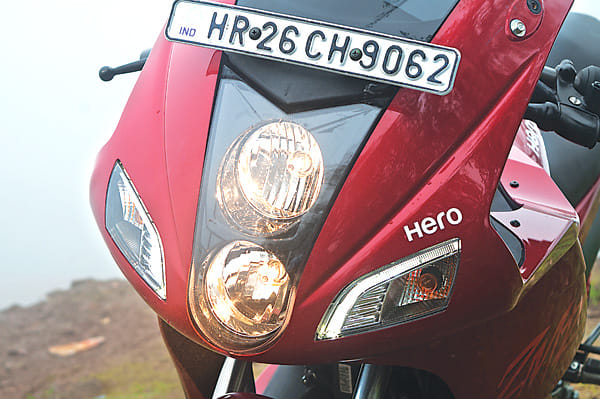
The new Karizma ZMR derives many of its design elements from the EBR 1190RX. It now has radically reworked design elements and body panels that have helped shave 2kg. Viewed head-on, the long and curvy front-fairing continues to use DC-powered headlights that are now vertically stacked, with an LED strip sitting besides clear lens indicators.
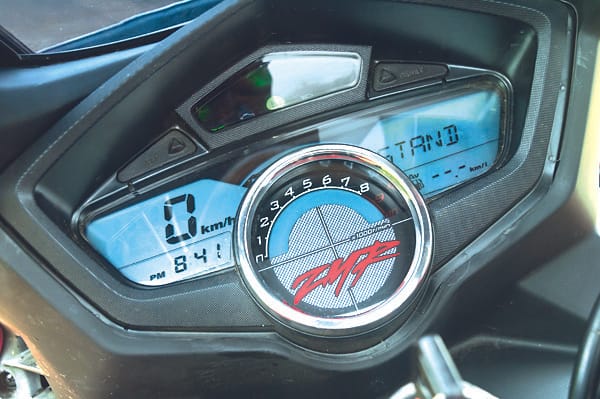
We found that the large tinted visor on the ZMR protects riders from wind blast well, especially when crouching under it to improve aerodynamics for better performance. The bike fairing flows neatly downward to cover the engine bay. It continues to use attractive blue backlit digital instruments, displaying a speedometer, odometer, tachometer, fuel-gauge, dual trip meters, a clock, real time mileage indicator and also reminding one to put on a helmet.
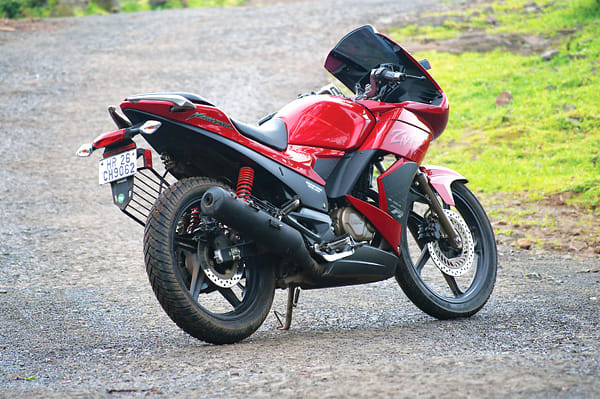
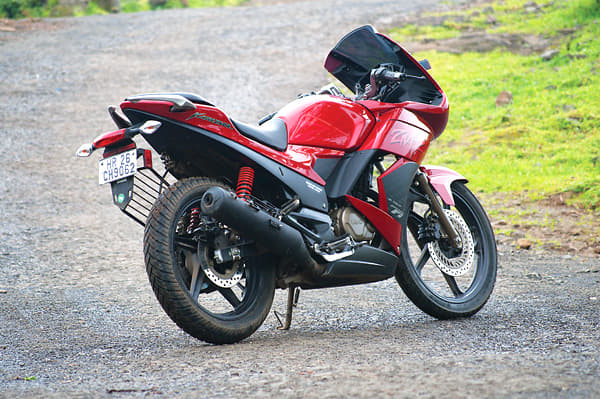
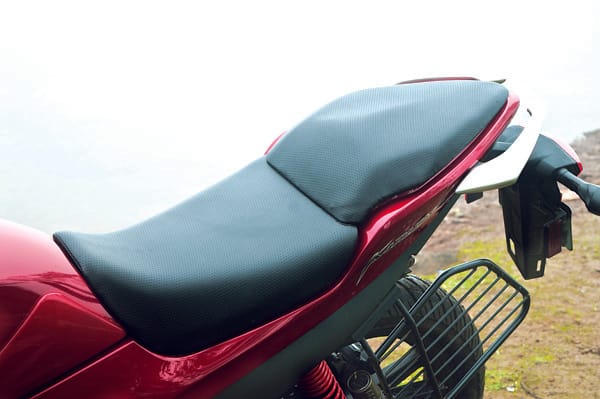
The ZMR now comes with neat, short clip-on handlebars, clad with familiar switchgear, as well as a nice set of grips and control levers. Dual horns are a useful feature, and sound out loudly when called upon. The ZMR uses a familiar, slim fuel-tank, while the riding saddle is now a split unit, nicely textured with good attention-to-detail showing through. Both side panels extend from the rider’s thigh region up to the bike’s tailpiece, where you see a unique, horizontal-set tail-light with indicators attached to it.
The lower bits of the ZMR sport a contrasting dark shade, which extends to the motorcycle’s alloy wheels and its mudguard. Suspension and the engine cases get the same light gold, faux magnesium alloy treatment as before. The new ZMR is well built, with good overall finish and paint lustre.
While Hero has raised compression on the Karizma ZMR from 9.0 to 9.6:1, its fuel-injected engine remains largely similar, a 223cc, four-stroke, air-cooled powerplant, with an oil-cooler in place to help keep cool. It now produces a healthy 20bhp at 8,000rpm, while peak torque of 2.01kgm is produced at 6,500rpm.
The ZMR retains a time-tested five-speed gearbox, shifting in the one-down, four-up pattern.
The ZMR does make for a more eager bike now, and its engine responds with a peppier feel. The bike feels at home cruising at speeds of about 100kph, and can happily pull away from rest with strong acceleration when called for. Opening up the bike during our performance tests, we achieved zippy acceleration to 60kph starting from a standstill, the Hero flagship taking 4.48seconds to pass this hurdle, thereafter achieving 100kph in 12.39secs.
Our tests found that top speed remains identical to the older bike, a true 129kph. Disappointingly, the new engine puts out disproportionately high vibes when pulled to high rpm, causing more than acceptable discomfort to the rider’s palms.
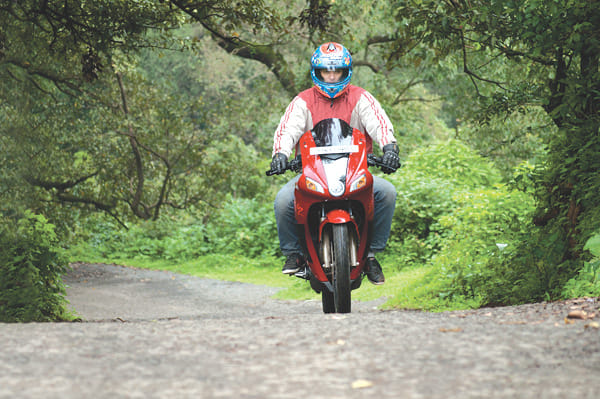
When seen in light of its predecessors, the ZMR doesn’t disappoint, however, the Indian sportsbike market has come a long way, with really potent new machines available, notably the KTM 200 Duke and Bajaj Pulsar 200NS, which the ZMR fails to match on performance.
Up front, the ZMR deploys a set of twin telescopic forks, while gas filled shock absorbers work at the back. The rear tyre is wider, a 120/80 section unit, and it uses disc brakes at both ends.
In the saddle, we found that Hero’s latest motorcycle does handle better, changing lanes and attacking corners quicker than earlier, owing largely to the more focussed riding position. Straightline stability is good, the bike always handling with a predictable feel. Ride quality, meanwhile, is fair, and allows for comfortable riding on bad road surfaces. High speed handling is good too.
Brake feel is nice as well, with both disc brakes working together to provide reassuring, safe stops. We managed to bring the ZMR from 60kph to rest in 16.24 meters.
The Karizma ZMR though slightly up on power, to its credit, did not show any significant drop in fuel-efficiency. The motorcycle delivered 37.5kpl when test riding it in real world Indian city riding conditions, and returned 42.9kpl during economy testing on open highways.
 Dinshaw Magol
 Rishaad Mody