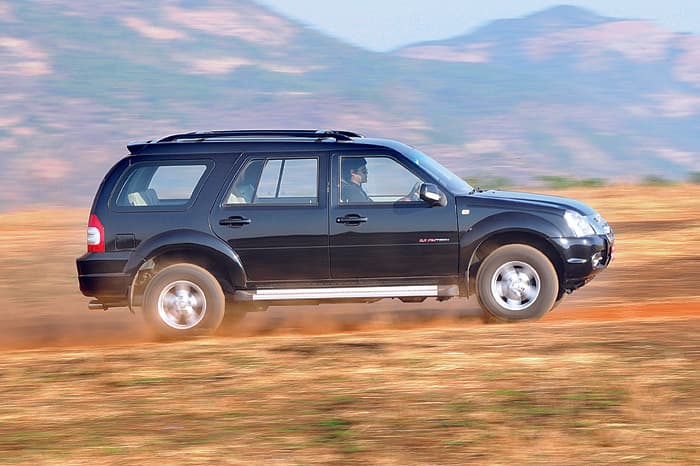
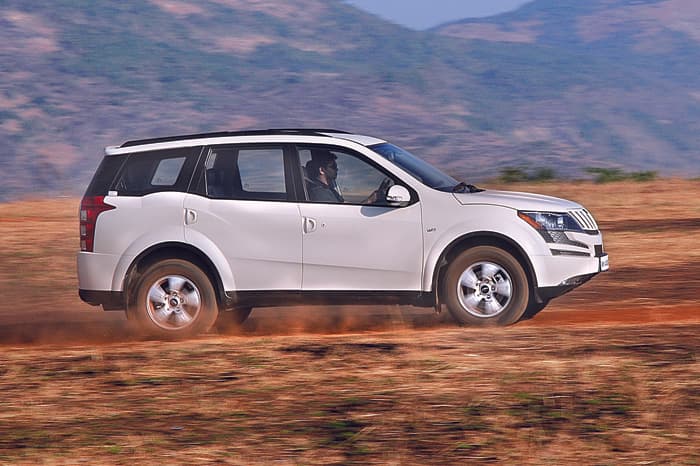
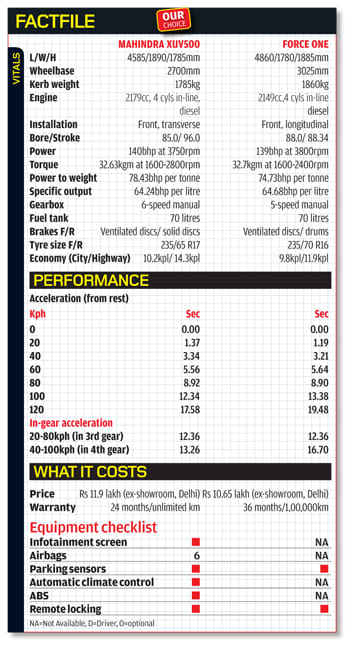
The three-month interval between the launch of the Force One and its actual arrival in showrooms could see a change of fortunes for the minnow SUV maker. Not because three months is too long a wait, but because within that interval came the Mahindra XUV500 to put a spanner in the works. It was more like a sledgehammer blow. Force Motors was hoping the One, with its size, features and Merc-sourced drivetrain, would be enough to attract buyers. But the XUV500, at Rs 11.9 lakh (ex-showroom, Delhi) for the W8 version, is Rs 1.3 lakh more than the Force One but comes brilliantly equipped. What’s more, the Mahindra has as much power and torque, looks light years more contemporary and comes from a company that is unmatched in the business of SUVs. Has the Force One already lost even before it’s turned a wheel against the Mahindra?
The body-on-ladder-frame One has quite a few aces up its sleeve and you’ll know this the moment you hit a bad patch of road. With a ride that is a lot more sorted than the XUV’s stiff-kneed setup, the Force One simply isolates you better from what’s going under the wheels. The XUV’s problem is that it reacts to changes in the road surface with sharp vertical movements and this means you get tossed about quite a lot. The rear-wheel-drive Force is also easier to manage at higher speeds. The XUV’s driven front wheels fidget over road imperfections and there’s quite a bit of torque steer over loose surfaces. What this means is that you have to pay a lot more attention in the XUV at higher speeds.
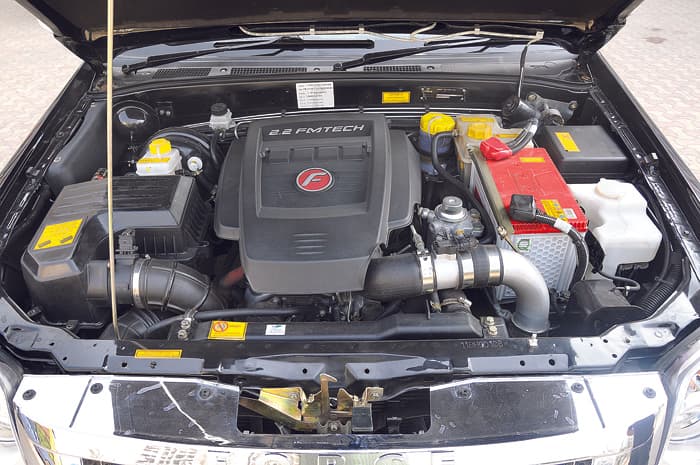
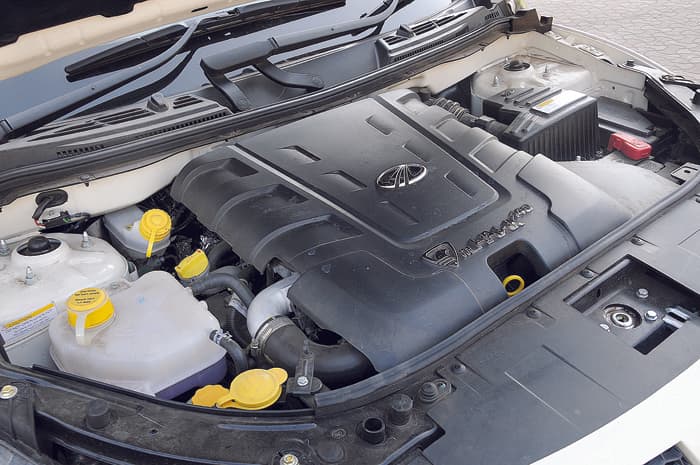
The Force also has the more responsive, quieter engine. Where the Force pulls with, ahem, force all the way from 1000rpm to 4000rpm, the XUV makes you wait a bit more before the turbo spools up. It’s not much of a difference and the XUV is 1.0sec quicker to 100kph than the One (it is 75kg lighter as well), but in everyday driving, it’s the Force that demands fewer gearshifts.
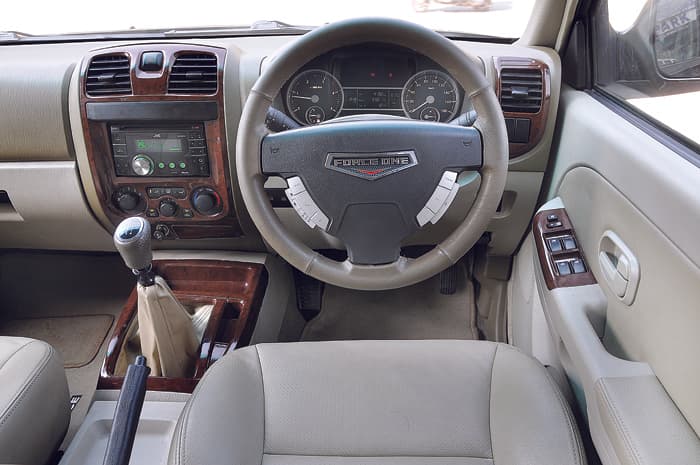
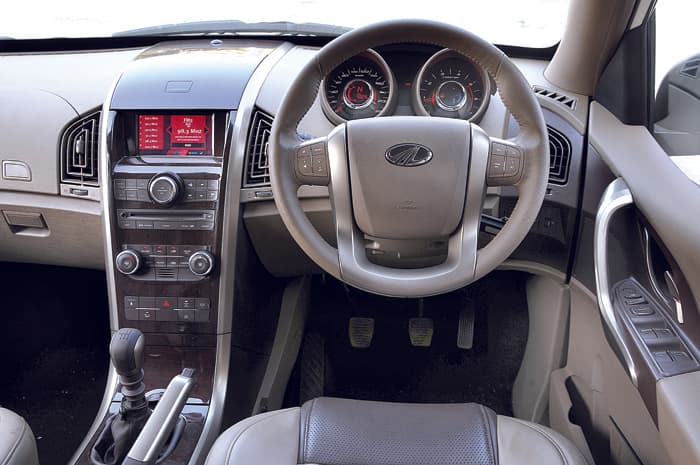
That’s a good thing because the One’s gearbox, despite being a Mercedes-Benz G32 unit, has a long throw and requires effort. The XUV’s gearbox isn’t any better. The gearshift is notchy and engaging second gear is particularly hard work, and if you don’t slot the lever properly, it has a tendency to jump out of gear. Both SUVs have relatively heavy clutches as well, but the Force One’s is more progressive and easier to modulate than the Mahindra’s.
Also significant are the fuel efficiency figures of both. The Force has noticeably shorter first, second and third gear ratios, and this combined with its torquey engine means it is as fuel efficient in the city as the XUV. On the highway though, the XUV’s super-tall sixth gear gives it a huge advantage. The Force One, with just five speeds, makes its engine work harder at higher speeds and is nowhere near as fuel efficient.
The Force One’s interiors make the XUV’s look space-age. The hooded dials, neat graphic displays and the modern dash design of the XUV really make it feel special, despite its mediocre cabin quality. In sharp contrast, the Force One’s old-school dashboard and cheap plastics aren’t anywhere near as appealing. The XUV is vastly better equipped as well. You get ABS with EBD, six airbags, hill-descent control, satellite navigation, climate control and voice commands.
The XUV’s seats are also more comfortable than the Force One’s. Sure, it may not have the same third-row space and the boot can just about hold a one-rupee coin with all the seats up, but the middle row and front seats have enough legroom and support to make them far better than the Force One’s flat-ish seats.
In the end, it’s the Mahindra that simply trounces the Force One. There’s no competition, really. The Force One may have the better ride, more space in the third row and a more responsive engine, but next to the XUV500 it looks prehistoric. The XUV feels a generation or two ahead and though it’s more expensive, it is worth every extra buck you pay for it.

 Uday Singh
 Glenn Noronha
 Dipan Sur

.jpg?w=728&q=75&fm=auto)
_6.jpg?w=728&q=75&fm=auto)
.jpg?w=728&q=75&fm=auto)
.jpg?w=728&q=75&fm=auto)
_0.jpg?w=728&q=75&fm=auto)
.jpg?w=728&q=75&fm=auto)
.jpg?w=728&q=75&fm=auto)
.jpg?w=728&q=75&fm=auto)
.jpg?w=728&q=75&fm=auto)
.jpg?w=728&q=75&fm=auto)
.jpg?w=728&q=75&fm=auto)
.jpg?w=728&q=75&fm=auto)
.jpg?w=728&q=75&fm=auto)
.jpg?w=728&q=75&fm=auto)
.jpg?w=728&q=75&fm=auto)
_0.jpg?w=728&q=75&fm=auto)
.jpg?w=728&q=75&fm=auto)
.jpg?w=728&q=75&fm=auto)