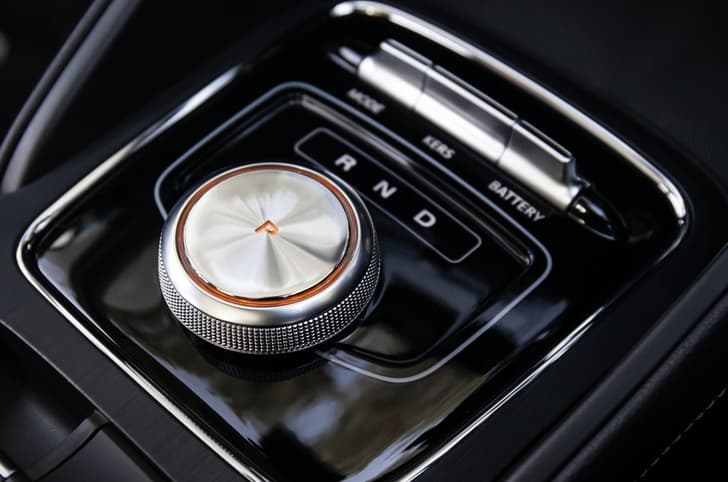
Anyone who’s driven a regular internal combustion (IC) automobile will be familiar with the concept of a gearbox. Even those driving an automatic and not changing gears themselves will know that there is some sort of gearbox involved.
- Electric motors spin to as much as 20,000rpm
- Electric motors produce maximum torque from 0rpm
- A multi-ratio gearbox would add complexity and cost
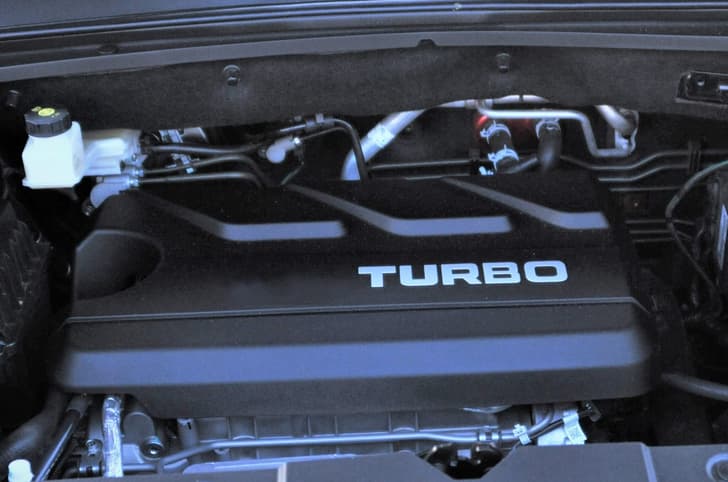
Beyond providing for a change in the drive direction, the reason for a gearbox is simple. By its design, an IC engine can only reliably spin up to a certain mark, around 7,000rpm for the average petrol-powered road car. They also only make useable and peak torque in a narrow rev band. Thus, a gearbox is used to vary the effective torque and speed as required by differing driving conditions.
For instance, at start-off, a large gearwheel is used, which provides more leverage and thus more torque that’s needed to overcome inertia. Conversely, at high speeds, a smaller gearwheel is deployed which spins faster, thus providing more vehicle speed. In this way, different gear sizes provide differing amounts of torque and speed while keeping the engine spinning within the meat of its power band.
An electric motor, on the other hand, develops its maximum torque from literally a standstill and it stays pretty much consistent right across the rev range. Furthermore, this rev range is very broad, easily and safely spinning to as high as 20,000rpm. Thus, with such a wide window of operation, one gear ratio is sufficient to provide the torque and speed required.
This does not mean, however, that a multi-ratio setup isn’t possible for an EV. With multiple gears, an EV could achieve better low-end acceleration as well as top speed, and this could also help increase its range marginally. In fact, some Formula E race cars have used gearboxes with up to five speeds, while the Porsche Taycan employs a two-speed gearbox.
However, given that a single ratio provides the bulk of the required performance, nearly every EV today uses a single-speed unit rather than have to manage the complexity of a multi-ratio gearbox as well as the added cost – the last thing an EV needs. And this is why EVs today have no gearbox, or rather, just a single speed unit.

 Uday Singh
 Glenn Noronha
 Dipan Sur