At the launch of the 2025 Sierra last week, Tata Motors also showcased the new platform on which the SUV is built. Called the All-Terrain Ready, Omni-Energy and Geometry Scalable Architecture (ARGOS), the platform will also underpin future models in the carmaker’s line-up. Here’s everything you need to know about it.
Where does ARGOS fit in Tata's platform strategy?
The ARGOS sits between the ATLAS platform, which underpins SUVs like the Curvv, and the Jaguar Land Rover (JLR)-derived OmegaArc on which the Harrier and Safari SUVs are based. Essentially, ARGOS can be used to develop SUVs measuring 4.3 to 4.6 metres in length.
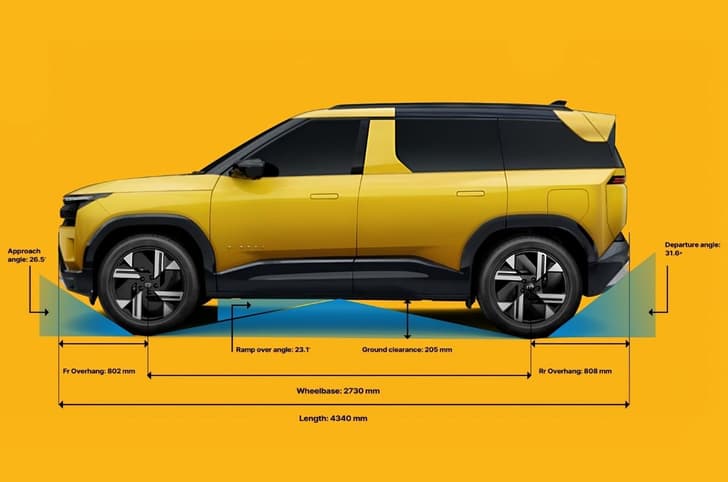
Tata claims that ARGOS was developed to enhance the Sierra’s overall dimensions and bring it on par with SUVs in its class and a class above. The Sierra is the tallest (1,715mm), the widest (1,841mm) and has the longest wheelbase (2,730mm) in its segment. Its ground clearance is 205mm. The ARGOS platform also enables better handling in rough conditions, with the SUV getting a decent water-wading capacity of 450mm.
Which future models will the ARGOS platform support?
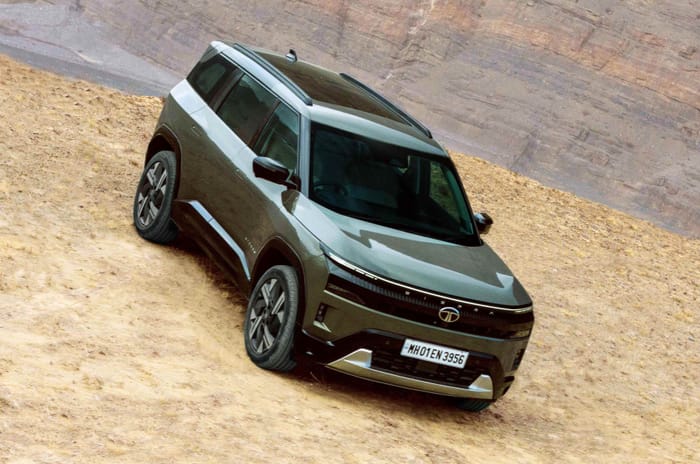
The ARGOS platform will support the upcoming ICE-powered Sierra AWD, set for a launch in early 2027, and possibly a 7-seater version of the Sierra.
Which powertrains will the ARGOS platform support?
The ARGOS platform can support multiple powertrains, including petrol, diesel, hybrid and CNG. The 2025 Sierra launched with a range of powertrain options. There’s a new 1.5-litre naturally aspirated petrol engine producing 106hp and 145Nm of torque and mated to a 6-speed manual or a 7-speed DCT automatic. Also new is the 1.5-litre turbo-petrol engine, making 160hp and 255Nm of torque and paired with a 6-speed automatic gearbox. The diesel variants get the familiar 1.5-litre engine, which puts out 118hp and 260Nm of torque (280Nm on AT) and is available with 6-speed manual and 6-speed automatic transmission options.
What are the key features of the ARGOS platform?
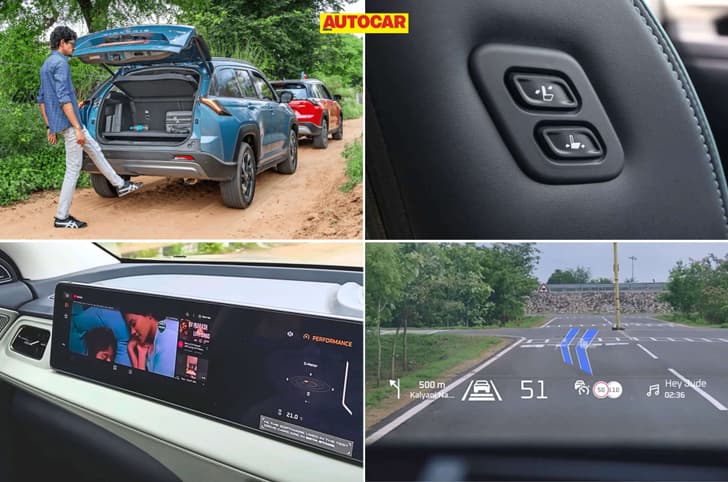
For starters, ARGOS is an AWD-ready platform. It not only supports multiple powertrains but also debuts Tata’s new-gen electrical architecture and supports the development of software-defined vehicles (SDVs). This enables a more advanced E/E (electrical/electronic) architecture than the ATLAS platform, as it can accommodate more tech-related features such as advanced driver assistance systems (ADAS), 5G connectivity and over-the-air (OTA) updates.

 Uday Singh
 Dipan Sur