Battery-fuel hybrid technology, while still far from being considered mainstream, is not niche either. Overseas, the hybrid market is quite developed and virtually every manufacturer has some hybrid on offer. In India too, various types of hybrid vehicles are on sale and finding quite a few buyers.
Hybrids
Hybrids can be classified into three categories based on their assists. The first, called Micro Hybrids, are basically start-stop systems that switch off the engine automatically when the vehicle is stationary and the battery powers the electrical equipment. The second are Mild Hybrids which have propulsion via an engine alone or the engine and an electric motor. The electric motor, however, cannot power the vehicle alone. The third are Full Hybrids which can have propulsion from only the engine, only the electric motor or from a combination of both.
The weak link
In any application today, be it vehicles, standby systems or even phones, the battery is considered the weak link with costs, weight, charging and back-up time all lagging behind what the application demands. In the case of hybrids, the micro and mild hybrids typically use lead acid batteries with bumped up capacity while the full hybrids use far higher capacity lithium batteries. The lead acid batteries, while cheaper in costs, are heavier and offer a longer charge and lower capacity. The lithium batteries are generally smaller in size for a given capacity and have good charge and standby times but are far more expensive and in both cases, the life cycle may not last the life of the car.
A bright spark
That is where some companies like one called Ayataiq (AIQ) promises to change things, not by improving the battery technology but by eliminating it entirely and relying instead on ultracapacitors.
Capacitors are electronic components that can store energy and are typically used as temporary batteries. They are the cylindrical or round components you see sticking out of circuit boards in most electrical and electronic devices.
Ultracapacitors, simply put, are high-capacity capacitors that can store larger amounts of energy. It is here that it gets interesting; ultracapacitors benefit from the inherent characteristic of capacitors in that they charge and discharge very quickly and effectively and thus don’t need external charging when used in an automobile. They also don’t wear down or deteriorate and so, usually, can outlast the life of the vehicle; so, no battery replacement costs. However, one big limitation is that during discharge, the voltage is not steady and drops and so, the energy level available for use is significantly lower than the lead acid or lithium batteries where the voltage remains constant until discharged.
But systems today have been developed to work around this and ultracapacitors are used in automobile applications to store energy in regenerative braking systems and in start-stop systems for cranking and voltage stabilisation.
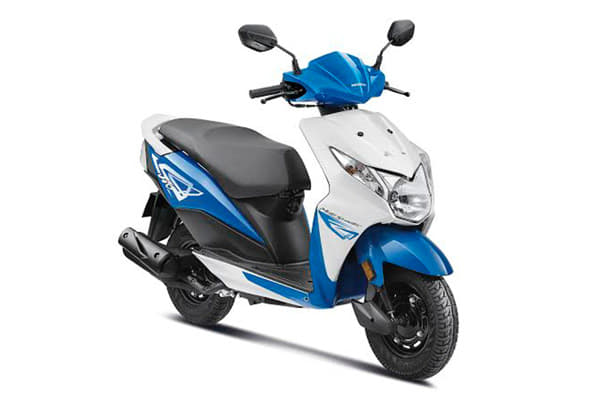
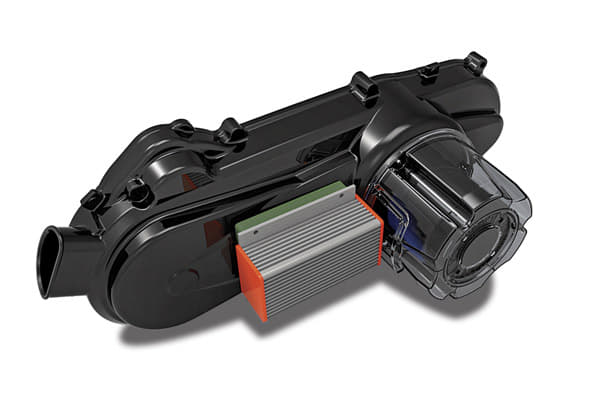
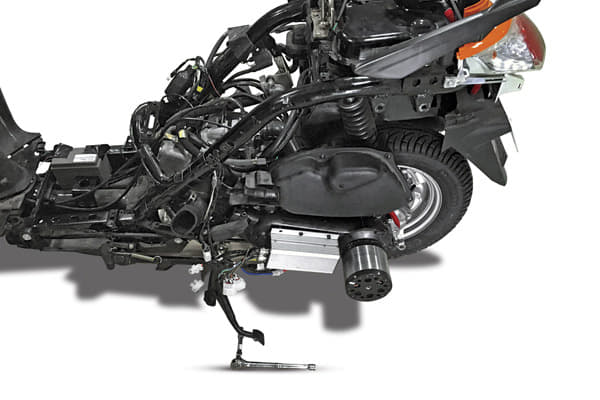
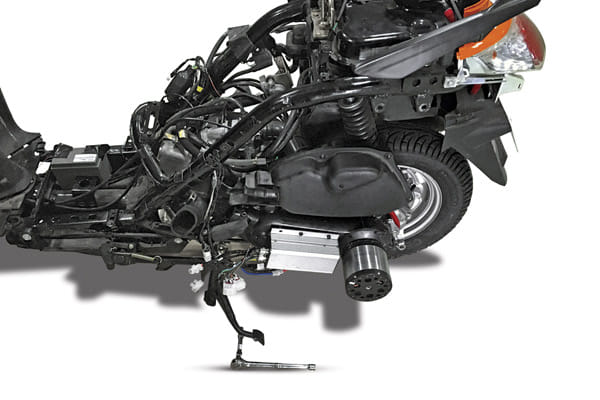
The Ayataiq system uses ultracapacitors as a power source in a full hybrid setup. Being capacitors, the charge cycle is very quick and thus, charging the pack is done fully on board while the engine is on. This does away with the need to plug in and charge. The company has fitted a mass market Indian scooter with the system and the bike can be ridden from rest to 30kph with ultracapacitor power. The system can also be used under dual-power mode with both the ultracapacitor and engine power. In August last year, the bike was tested at the ARAI test facility in Pune using the homologation drive cycle IDC (Indian Drive Cycle) and an average of 38 percent fuel was saved compared to its standard counterpart.
Compared to an expensive lithium-ion battery system, the ultracapacitor system is far cheaper, does not need replacement through the life of the vehicle and with charging on board, also does not require any charging infrastructure. This makes it very useful in emerging markets like India. Ayataiq is currently working fast towards commercialising the two-wheeler system and also a four-wheeler system. The company is quite keen to bring this technology application to India and is in talks with two-wheeler manufacturers who have also independently evaluated the results at their own facilities.
 Vishal Venugopal
 Ved Janve
 Stephen Raj Antony