autocar-logo
Mumbai
KK

Keshav Karekkadu

3h

Hello Autocar, I am planning to upgrade from my Renault Duster to a 6/7-seater SUV with a budget of around ₹22 lakh. I am confused between the Tata Safari and the Mahindra XUV 7XO. My monthly usage is approximately 1,000-1,500 km. Which of these two would be the better choice for my needs?

Autocar India team

Autocar India

Verified
2m

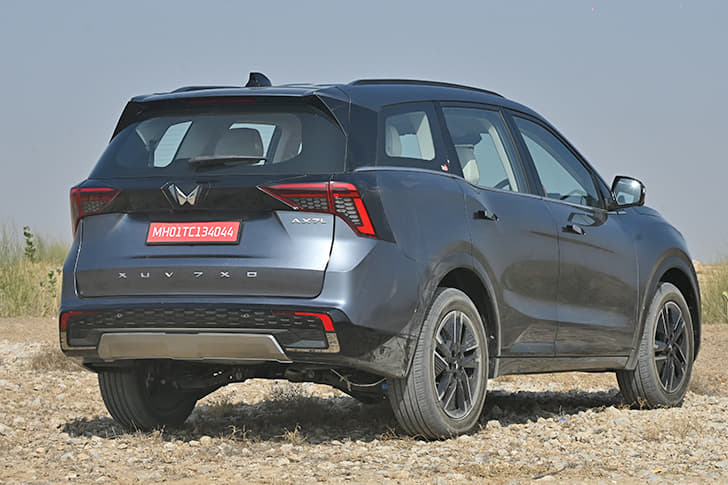
Go for the Mahindra XUV 7XO AX5 diesel 7-seater. With your Rs 22 lakh budget and a monthly run of 1,000-1,500 km, it is a more complete upgrade from your Duster. The diesel engine is strong, refined and feels effortless both in the city and on the highway, making long trips relaxed and overtaking easy. With the updates, the ride quality has also improved, now feeling more plush and comfortable, even compared to the Tata Safari. Overall, it is the more modern, easier and more well-rounded SUV to live with.

One thing to be aware of: the third row in the 7XO is best suited for occasional use, as space and boot capacity with all seats up are limited. This is where the Safari still has an advantage, offering a more accommodating third row with better space and support for longer journeys.

In terms of cabin quality, however, the Safari does not have a clear advantage. The 7XO feels just as premium, if not more modern, with better technology and overall fit and finish, so the decision really comes down to whether you prioritise third-row comfort or a more effortless driving experience.
 Mahindra XUV 7XO

Mahindra XUV 7XO

Got a suggestion for Keshav?

Add a Comment

Recommended questions for you

AT

Atharva

12h

I currently own September 2019 of kia Seltos HTX petrol iVT, having done 69,000 km till date, out of that almost 70% is on highways. I am confused between Tata Safari Petrol Accomlished X+ and Kia Carens Clavis GTX+. please suggest me which is better with respect to ride comfort, safety, space, highspeed stability on highways for long journeys.

Autocar India team

Autocar India

Verified
2h

Go for the Tata Safari Petrol Accomplished X+. For your 70 percent highway usage, it is the more rounded choice when it comes to ride comfort, safety and high-speed stability. The Safari feels more planted at expressway speeds, deals with broken roads with greater composure, and overall gives you a stronger sense of confidence on long journeys. It also benefits from proven crash safety credentials, which adds to its appeal as a family SUV.In comparison, the Kia Carens Clavis GTX+ is easier to drive and more practical, especially if you regularly use all three rows. Its lighter controls, smoother low-speed behaviour and more usable third row make it better suited to mixed city use and carrying more passengers. However, it does not feel as solid or as planted as the Safari at higher speeds, particularly on uneven highways or in crosswinds.If your driving is largely highway-focused and you value stability and reassurance over outright practicality, the Safari petrol is the better fit. The Carens makes more sense if you prioritise space and everyday ease, but for your usage, the Safari is the stronger long-distance companion.

VehicleTata Safari
AS

Abhishek Sood

1w

I am confused between petrol, diesel, and electric options from Mahindra. My annual running is around 10,000 km, and I am considering the XUV700 (AXT automatic - petrol or diesel) or the XEV 9E. Mahindra is known for its diesel engines, but given my relatively low usage, will DPF (Diesel Particulate Filter) issues become a concern? On the other hand, I have heard that the petrol engine is not very refined and has poor fuel efficiency. Also, I am unsure about choosing an EV, as daily charging management could be challenging, especially with a 2-year-old child. Which option would be the most practical and suitable for my usage?

Autocar India team

Autocar India

Verified
1d

Your annual running of 10,000km isn’t very high, but the gap in running costs between petrol, diesel and EV is still significant over a few years.The Mahindra XEV 9e is naturally the cheapest to run, and it’s not a headache to live with if you can install a home charger and don’t regularly do very long drives beyond roughly 400-420km in a day. A home charger is like having a petrol pump at your house - you plug in at night and leave with a full “tank” every morning. It will actually make an EV more convenient to top up than a petrol or diesel car, where you always have to detour to a fuel station. However, if you don’t have home charging (or very reliable workplace charging), then an EV quickly becomes inconvenient because of the planning and the long waits for charging. Also, the uncertainty with public chargers, so in that case it’s best to avoid one.Between the petrol and diesel Mahindra XUV7XO automatics, the petrol is actually quite refined and much smoother than the diesel. The real issue is its very low real‑world fuel economy, especially in city use, which makes running costs shoot up. The diesel, on the other hand, is also reasonably refined and much more practical because of today’s pump prices and the efficiency gap. Moreover, you can recover the diesel XUV7XO’s roughly ₹1.4 lakh higher upfront cost in about a year of your usage.After that, you are clearly ahead on total cost of ownership. Also, the diesel’s resale value is likely to be higher as well. So between the petrol and diesel XUV7XO, the diesel is the better option for you. Between diesel and EV, it really comes down to whether you have stress‑free home charging.

VehicleMahindra XEV 9e
VehicleMahindra XUV 7XO
VE

Venkat

1d

I need advise on choosing my next car. Im looking to buy xuv 7xo automatic. But im confused to make a decision between petrol and diesel. My current usage is ~10-15k per year mostly within city(60-70%). If i go for diesel variant, what are the things i should be aware interms of expenditure/maintenance as a user. Or do i have any advantage if i choose petrol

Autocar India team

Autocar India

Verified
3h

Go for the Mahindra XUV 7XO petrol automatic (2.0 turbo with the 6‑speed auto) for your use – with 10–15k km a year and mostly city driving, it will be the easier and cleaner choice. In traffic the petrol feels smoother and quieter, the gearbox shifts gently, and you will not have to worry about the diesel’s exhaust filter. City running is where modern diesels can struggle because the DPF – a filter that traps soot – can clog if the car only does short, slow trips. When that happens it asks for a “regen”, which means you need to drive at higher speeds for a while to clear it; ignore it and you may need a workshop visit. Diesel also brings a higher on‑road price, slightly higher service bills, and you must top up AdBlue (DEF) from time to time.The diesel automatic still makes sense if you do many highway trips, often carry a full load, or you really value lower fuel use – it pulls strongly and sits at low revs on the open road. One thing to be aware of with the petrol is that in heavy traffic it will use more fuel than the diesel, and you will hear the engine when you press hard.If you’re still split, drive both back to back in slow traffic and ask the dealer to show you the DPF regen process on the diesel. Given your pattern, the petrol auto will keep ownership simple and stress‑free.

VehicleMahindra XUV 7XO

Posted on: 7 Apr 2026