Autocar India
•1d

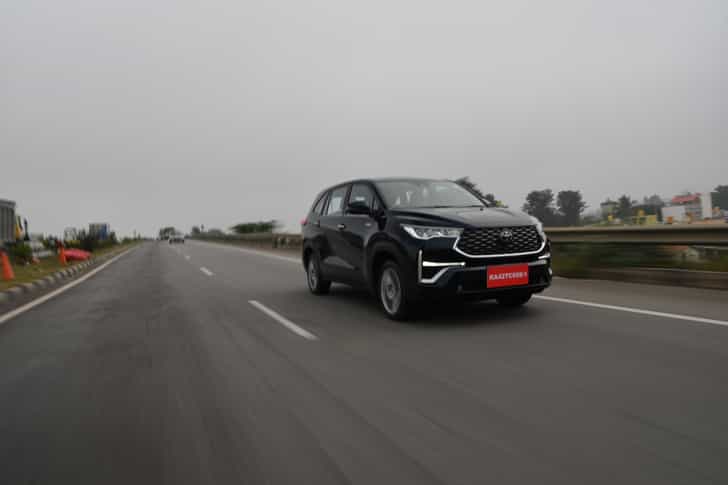
I recently booked an Innova Hycross GX(O) and have been promised delivery by the beginning of November 2026. However, seeing the recent facelift shots has me second-guessing my decision. I need to upgrade from my current car before February 2027, but I do have priority dealer access if I decide to shift my booking to the upcoming facelift. Given my February timeline, is it realistically possible to get the facelifted GX(O) variant by then? Or should I stick to my current allocation? In comparison, is it worth the while to wait for the facelift?

Verified
•17h

For this particular situation, waiting for the facelift does not make much sense. The current Toyota Innova Hycross is already a mature product, and the facelift is expected to bring styling, interior and feature updates rather than a fundamental change to the powertrain or mechanical package.The bigger issue is timing. Even with priority access through dealers, the Toyota Innova Hycross facelift is likely to be introduced with the higher trims being prioritised initially. Since GX(O) is the chosen variant, its availability could take longer. That creates a genuine risk of missing the February 2027 deadline, whereas a November delivery comfortably meets both requirements of having the car before Diwali and having it available by February.The facelift will naturally be newer and could bring some useful updates, but those benefits need to be weighed against an uncertain launch date, variant availability and potentially higher pricing. There is also little reason to expect the current Toyota car to suddenly become outdated from an ownership perspective.

VehicleToyota Innova HyCross
Toyota Innova HyCross

•2d

I purchased a Kia Sonet 1.0 iMT in 2024 after owning Maruti Suzuki Dzire for around 11 years. I was so bored of driving it for more than a decade that I rushed to change. I wanted a compact SUV as an upgrade but settled for a sub-compact SUV due to budget constrain or may be due to lack guidance and understanding. Soon after buying it, I realized that this is not the car that I want to drive. I want a vehicle that looks and feels rugged but at the same time, is usable for daily commute with 80 - 90% city drive. I want to feel the same way I feel when I drive my Royal Enfield (strong and rugged). In less than 3 years, I am looking for a change again but this is time I don't want to make the same mistake. I have a few cars in mind but I am not sure which one should I go for. I have shortlisted Renault Duster Hybrid (upcoming), Tata Harrier AT (diesel), Thar Roxx AT (diesel), Toyota Hyryder Hybrid and Hyundai Creta AT (Diesel or Petrol). I drive around 1000 to 1200 km per month, mostly in the city but when I plan for long drives to mountains in Himachal, Uttarakhand or even Leh, I shouldn't have to worry about it. My budget is between 17 to 19 lakh (ex-Showroom). Please advise.

Verified
•22h

Go for the Renault Duster Hybrid when it launches. It is the best fit for what you are looking for. You want a car that feels rugged and strong like your Royal Enfield, but is still usable for daily city driving. The Duster has always been known for its tough, no-nonsense character and excellent ride quality, and the new generation continues that tradition. The hybrid powertrain will make it much more suitable for your 80-90% city driving, while still being capable enough for long drives to the mountains without you having to worry about fuel efficiency or reliability.The Tata Harrier diesel is a good car, but it is a much larger vehicle and not as easy to live with in the city. The Thar Roxx/OG is a great lifestyle vehicle, but it is not practical as a daily driver. The Toyota Hyryder Hybrid is a sensible choice, but it does not have the same rugged character you are looking for. The Hyundai Creta diesel is a good all-rounder, but it does not feel as tough or as special as the Duster. With your running, you could consider the 1.3 turbo petrol Duster with the DCT as well. It is not the most efficient engine and gearbox combination, but given your limited running, the fuel economy penalty should not be significant.

VehicleRenault Duster
VehicleToyota Urban Cruiser Hyryder
VehicleTata Harrier
VehicleMahindra Thar Roxx
VehicleMahindra Thar OG
VehicleHyundai Creta
•1d

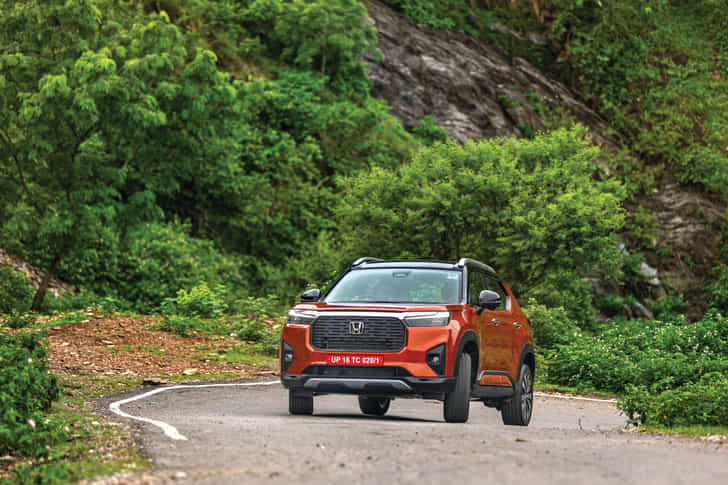
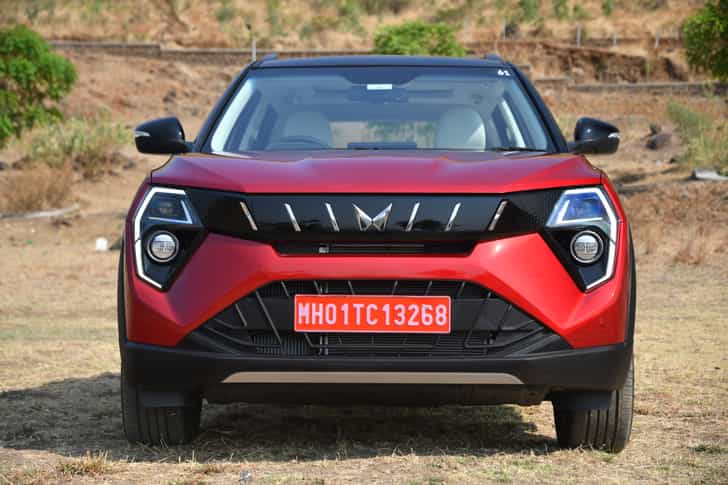
Hi, I am looking for an automatic car for my dad for 70% travelling on open highways/country roads and 30% in slow moving (not heavy) traffic. with quarterly over 350km of travel. Fuel efficiency is not a concern to me and features as well as cabin toys are not deal brakers. My pure focus is on engine, transmission and reliability. I have shortlisted i20 CVT as the belt drive is smooth, but I am not sure about longer 110kph cruising and overtakes. I have also shortlisted, 3XO TC as the MPFi is convincing but I am not convinced about the service of Mahindra. The car is also a bit bulky for my dad. I have also shortlisted Kylaq automatic as this car is compact but has enough power but I am a bit worried about the 2.0 Skoda/Volkswagen reliability. The nearest ASC is 70kms away, which is the major concern as accessibility worry when i face some issues. Also, I am not sure how the engine will feel while driving in the city because of direct Injection in the long run. Other cars are rejected because of AMT/DCT/Budget/strict petrol requirement.

Verified
•23h

Go for the Hyundai i20 CVT. Your priorities are reliability, ease of ownership and a stress-free driving experience for your father, and the i20 CVT fits that brief perfectly. The CVT is smooth and predictable, and the naturally aspirated petrol engine is well suited to both city and highway driving. It will cruise at 110 km/h comfortably and overtakes are manageable with a little planning. Hyundai's service network is extensive and ownership is generally hassle-free, which is important given your father's usage pattern.The Mahindra XUV 3XO is a good car with a powerful turbo petrol engine, but it is a larger and heavier car, which may not be ideal for your father. Mahindra's service experience can also be inconsistent depending on location.The Skoda Kylaq is the driver's choice with a strong turbo petrol engine and a smooth torque converter automatic, but the 70 km distance to the nearest service centre is a significant drawback. Skoda's ownership experience is generally good, but service accessibility is a key consideration.Given your requirements, the i20 CVT is the most sensible and reliable choice. It will deliver a smooth, comfortable and hassle-free ownership experience, which is exactly what you are looking for.

VehicleHyundai i20
VehicleMahindra XUV 3XO
VehicleSkoda Kylaq
•2d

Hi, I am looking to buy either Syros EV or a hybrid car. My usage is around 65 km run in heavy traffic zone between Delhi and Gurgaon almost 3 times a week on weekdays and local city driving on weekends. Once in 4-5 months, I plan intercity trips. Please tell whether Syros EV or Maruti Grand Vitara makes sense. I do have an independent house so I can set up home charging. However, I am also concerned on what should be done if EV breaks down considering current facilities and how quick is the road side assistance for EV. Finally, I want to go ahead with company leasing due to which I will be the second owner and have to buyback after 3 years. Please suggest.

Verified
•23h

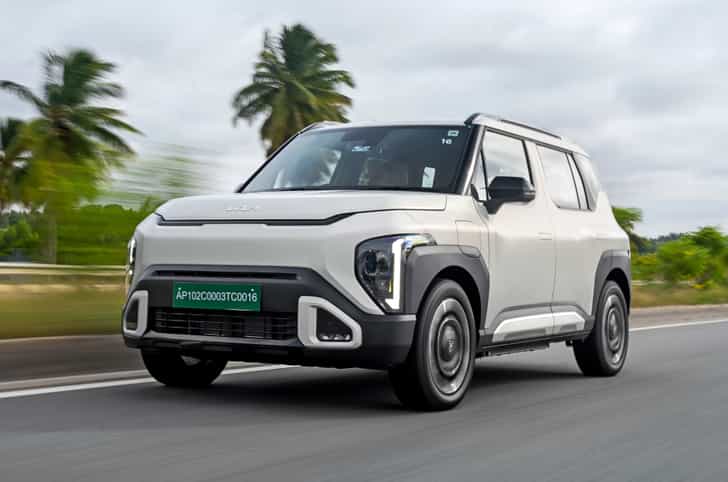
Go for the Kia Syros EV. With your usage pattern of 65 km runs in heavy traffic three times a week, plus local city driving on weekends, the Syros EV makes far more sense than the Maruti Grand Vitara Hybrid. You have a predictable, high-frequency commute and the ability to install a home charger, which is exactly the scenario where an EV delivers maximum benefit. The Syros EV is a well-rounded package with a comfortable ride, spacious cabin and a premium feel, and it will handle your daily runs effortlessly while keeping running costs low.On the question of breakdowns and roadside assistance, Kia offers a robust support network and dedicated EV roadside assistance. In the event of a breakdown, the response time is generally comparable to that of an ICE car, and Kia can arrange for the car to be towed to the nearest service centre if required. The Syros EV also comes with an 8-year battery warranty, which covers the most expensive component of the car and provides peace of mind over the ownership period.The company lease arrangement with a buyback after three years further strengthens the case for the Syros EV. You are not exposed to long-term depreciation risk, and you get the benefit of lower running costs and a modern EV ownership experience without worrying about long-term battery degradation.

VehicleKia Syros EV
VehicleMaruti Suzuki Grand Vitara
Kia Syros EV
Kia Syros EV
•2d

I own a used Toyota Innova Crysta. I am used to spacious 5 seater cars. Now, there are two things to note. I am retired so my car may run only around 10000km annually. My son and daughter-in-law also moved abroad so I don't need 7 or 8-seater unless there is no spacious, comfortable 5-seater car. I am looking for a car (preferably SUV). I wish to spend around 15-18 lakh although I am not rigid. Which one should I select?

Verified
•1d

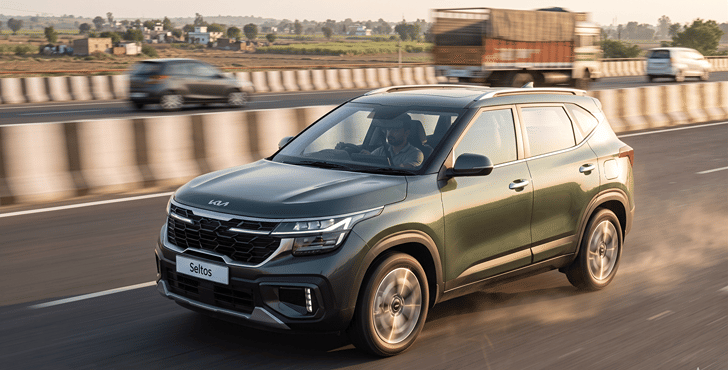
With your usage now down to around 10,000km a year and no real requirement for seven seats, a good five seat SUV makes more sense than replacing one large Innova with another. The Elevate gives you a spacious cabin, excellent rear legroom, good ground clearance and a comfortable driving position, while the naturally aspirated 1.5-litre petrol and CVT are simple and easy to live with. It also keeps ownership costs and purchase price sensible.The Toyota Innova HyCross is the obvious choice if maximum space and long distance comfort remain priorities, and its 5-star Bharat NCAP rating is reassuring. However, you would be carrying around a 4.75m long, three-row vehicle when you no longer need the additional seating. The petrol HyCross also returned only 9.7kpl in testing, which makes little sense for relatively low annual running.The Seltos is another option if you want a more feature rich and premium cabin, but for a retired owner looking for relaxed, long term ownership, the Elevate's naturally aspirated engine is a simpler proposition.

VehicleHonda Elevate
VehicleToyota Innova HyCross
VehicleKia Seltos
•1d

Hi, I want to buy my last car as I am 66 years old. I have been driving a Honda City for the last 12 years without any major hiccup. The Honda City engine and its reliability is excellent although its ground clearance is an issue. I have looked at Elevate and given its ground clearance as an SUV, I am impressed although the issues on E20 and abrupt blending issues are surely technical issues. Windsor EV was a great test drive but all controls on screen could be a bottleneck for me at my age and am planning to move to an automatic. Please recommend as experts. My monthly running will not be more than 500 km. Should I also look at Seltos. I will appreciate a feedback from experts. I want a reliable, easy to drive car with low maintenance cost and good family value with. There won't be any great pick ups or many highway drives will not be there.

Verified
•1d

Given your 12 years of trouble free City ownership, the Elevate is the most natural replacement. It retains Honda’s simple 1.5-litre naturally aspirated petrol engine, adds substantially better ground clearance and gives you the easier ingress and SUV driving position you liked. The CVT is also very well suited to your low speed, low running usage and should make the transition to an automatic easy.On your E20 concern, we would not treat it as a reason to avoid the Elevate. Honda says all its cars manufactured in India since January 2009 are E20 material compatible, and the current Elevate is officially certified for E20. Honda also says E20 should not cause durability concerns or require any component changes. There can be a marginal reduction in fuel economy because ethanol contains less energy than petrol, but with your 500km monthly running, that is unlikely to be significant.The Seltos is worth a look, particularly if you want a more feature rich and premium cabin, but given your priorities of reliability, easy driving, low maintenance and long term ownership, the Elevate fits your requirements more naturally. The Windsor EV is also an interesting option, but at just 500km a month, there is little financial reason to move to an EV, especially when you have concerns about its touchscreen heavy interface.

VehicleHonda Elevate
VehicleHonda City
VehicleMG Windsor
VehicleKia Seltos
Honda Elevate
Honda Elevate
•2d

How exactly is the Hyundai Bayon different from Hyundai Creta?

Verified
•1d

While both are midsize SUVs, the Bayon and Creta are quite different from each other in their size, platform and positioning, and the distinction will become even clearer once the next-gen Creta is launched in early 2027. While currently both use versions of Hyundai's Global K2 platform, the Bayon's is a newer more updated version with some tech advancements. The next-gen Creta, meanwhile will move to the even-newer K3 platform used by the new Kia Seltos, and this means it will grow larger and more spacious too. In terms of powertrains, while the Creta uses naturally aspirated petrol, turbo petrol, turbo diesel and electric powertrains, it's understood that the Bayon will use only the 1.5-litre naturally aspirated engine (with MT and CVT gearboxes), and will also incorporate CNG as its alternate powertrain, but that remains to be confirmed at this stage. The Bayon is also a lower-slung design with a falling roofline for a sportier look, while the next-gen Creta is expected to get more boxy and taller. Think of the approach Maruti Suzuki took with its Fronx and Brezza in the sub-4m space. With the Venue restricted by the sub-4m length requirement, and the next-gen Creta expected to grow even larger to nearly 4.5 metres, Hyundai plans to fill the gap between the two with the Bayon, which will measure in at around 4.2 metres.

VehicleHyundai Bayon
VehicleHyundai Creta
VehicleMaruti Suzuki Fronx
VehicleMaruti Suzuki Brezza
VehicleKia Seltos
VehicleHyundai Venue
•1d

I am planning to buy a new car for myself in Bangalore, with a budget of up to Rs 25 lakh on-road. I have shortlisted two cars: the Tata Sierra Accomplished 1.5-litre turbo-petrol and the Kia Seltos 1.5-litre turbo-petrol DCT. Which one would be the better choice, especially considering family comfort, ease of driving and driving enjoyment? I am also unsure about Tata’s reliability. Is the concern around Tata cars based mainly on social media noise, or is there a genuine reliability issue? If possible, how much of a reliability risk can realistically be expected with a Tata car? I find that the Sierra meets my expectations better overall, but I am hesitant because of the concerns around Tata’s reliability and after-sales experience. I have test-driven both cars and am comfortable with both. The Mahindra XUV 7XO was also on my shortlist, but I dropped it mainly because of its larger size. Should I reconsider the XUV 7XO, particularly for Bangalore city driving and family use?

Verified
•1d

For your priorities of family comfort, easy driving and some fun, the Tata Sierra is a very strong fit. It is the roomiest SUV in this comparison, with excellent rear legroom and headroom, while its 1.5-litre turbo petrol and torque converter automatic make for smooth, effortless progress in traffic. The ride is also very good over broken roads, although the 19-inch wheels on the Accomplished do take away some of that comfort.The Kia Seltos is the more polished choice, with the best finished cabin, excellent space and strong refinement. However, the turbo DCT is not always smooth at low speeds and can fumble occasionally in traffic. That makes the Sierra's torque converter a better match if ease of driving is important. The Seltos is also more efficient, though the Sierra's 160hp engine has no shortage of performance.The Tata reliability concern should not be dismissed entirely, but neither can a percentage be put on the likelihood of a Sierra developing problems. The car is too new for meaningful long-term reliability data. The more legitimate concern is Tata's inconsistent after sales experience, which is also highlighted in the comparison. The local dealer and service centre therefore matter considerably.The Mahindra XUV 7XO can be considered, but if its size already feels excessive for Bengaluru, there is little reason to stretch to it. The Sierra gives you a genuinely spacious family cabin without moving into that larger footprint.

VehicleTata Sierra
VehicleKia Seltos
VehicleMahindra XUV 3XO