Autocar India
•30w

I am looking to upgrade my current car, and my choices are the XUV 7XO and the MG Majestor, which I’m guessing would be almost twice as expensive as the 7XO. I have always been a fan of the Endeavour, so I thought the Majestor would tick those boxes, but I’m unsure if it’s worth the wait.

Verified
•30w
The MG Majestor will sit in a completely different league compared to the Mahindra XUV 7XO, and yes, it is expected to be almost twice as expensive. Early indications suggest an on-road price of around Rs 50 lakh, with a formal price announcement expected next month. It would make sense to wait for that, because pricing will ultimately determine how compelling it really is.
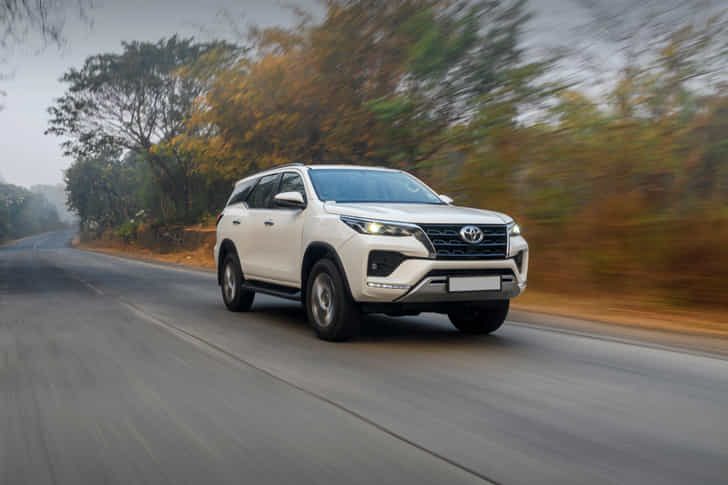
From our brief drive, the MG Majestor feels like a significant step forward over the MG Gloster it effectively replaces. It’s more polished, the cabin feels properly premium, and there’s a real sense of space and road presence. In fact, the interior ambience and equipment levels feel a notch above both the Ford Endeavour and the Toyota Fortuner. If what you loved about the Endeavour was that big, imposing, body-on-frame SUV feel with a commanding driving position, the Majestor should tick many of those boxes.
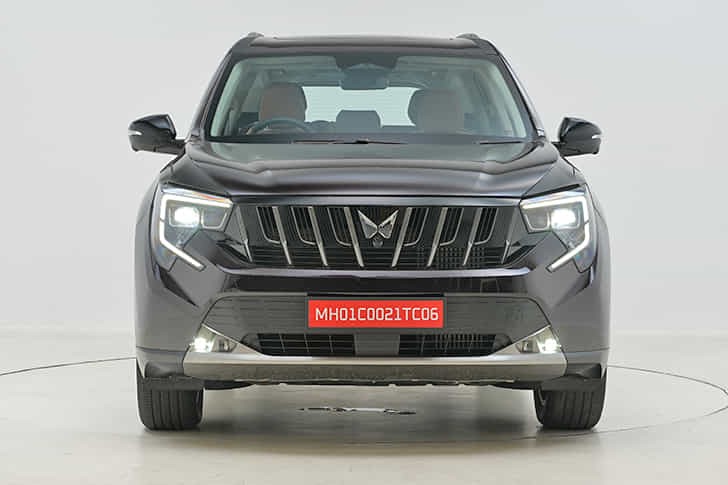
The Mahindra XUV 7XO, on the other hand, plays in a very different space. It’s not as large or as imposing, but in its segment, it is genuinely impressive. For its price, it offers strong performance, good driving dynamics, generous space for its footprint and a surprisingly plush, well-finished interior. It feels modern, easy to live with and far more manageable in everyday urban use.
So the real question is what you want from your upgrade. If you’re chasing that full-size SUV presence and are willing to pay for it, the Majestor is worth waiting for, at least until the price is revealed. If the pricing stretches beyond what feels reasonable, the XUV 7XO remains a brilliant, well-rounded option that delivers a lot of car for the money, even if it doesn’t have the same size or road presence.
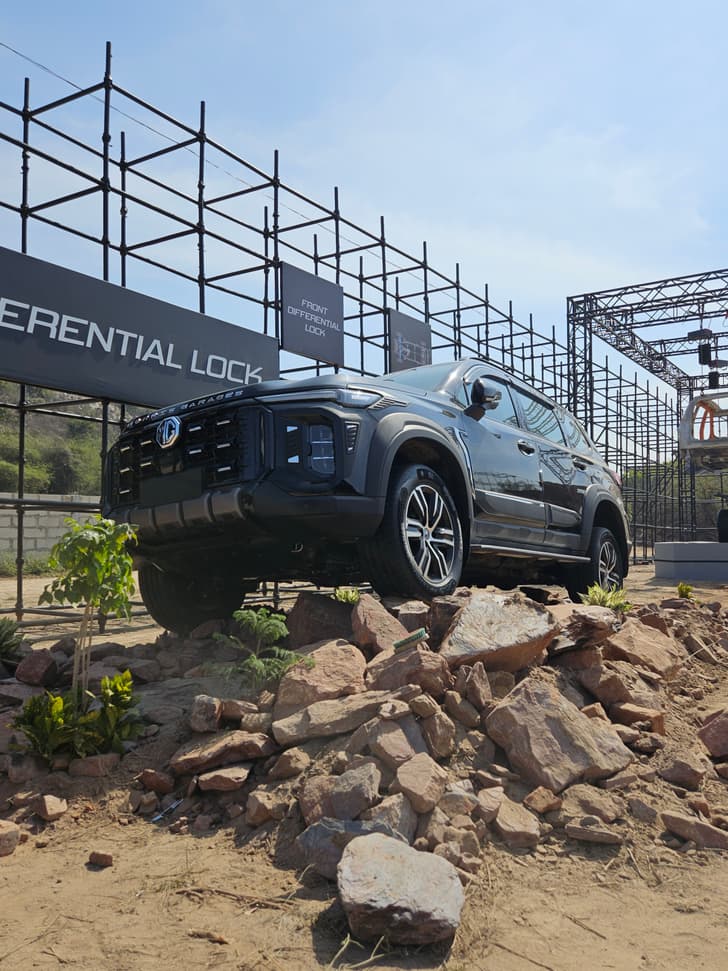
MG Majestor

MG Majestor

•29w•

Xuv 7xo vs safari

•29w•

I am looking buy MG semester , wether is it better choice then fartuner

•29w•

Hi I'm having Baleno with average drive of 75kms per day city /highway driving, and now looking for Bigger car, my choice is Hybrid Grand Vitara, we are 4 , , and my family look for other options , please suggest

More posts on similar cars

•1d

I am planning to buy a 7-seater car and am confused between the Kia Carens Clavis HTX (O) Petrol DCT and the Mahindra XUV 7XO AX5 Diesel. My confusion is mainly around a few points. The XUV 7XO has better looks and more power than the Clavis, while the Clavis offers better third-row space and a more spacious cabin. I do not have a very high annual running either. With my current car, I drive around 12,000-14,000km a year, including both city and highway driving, with occasional hill trips. This has left me confused about whether I should opt for a diesel or petrol. The XUV 7XO petrol is also not known for particularly good mileage, which makes the decision even more difficult. With the diesel option, I am also concerned about potential DPF-related issues, especially given my relatively low annual running. Since the car will primarily be driven in NCR, there is also some uncertainty around the applicability of BS6 diesel vehicles when GRAP Stage 4 restrictions are in force, as government regulations can change. Another concern is the DCT transmission. I have heard about DCTs facing heating issues in bumper-to-bumper traffic, although I am not sure how significant this issue is with the Carens Clavis. During my test drive, I also felt that the Clavis seemed somewhat underpowered in Normal mode, particularly when starting from a standstill. I had to press the accelerator pedal quite hard to get it moving more quickly. Is this simply a characteristic of the DCT and its calibration, or could it be specific to the particular test-drive car? I would really appreciate any suggestions or experiences that could help me clear up these doubts before making a decision. Thanks in advance.

Verified
•20h

Go for the Kia Carens Clavis HTX (O) Petrol DCT. Your annual running of 12,000-14,000km with a mix of city, highway and occasional hill drives is pretty healthy actually, but given your other concerns like DPF regeneration and NCR policies, petrol is the safer long-term choice. A turbo petrol gives you the punch you need out on the highway and in the hills, while also the benefits of a petrol engine that you're looking for. The Mahindra XUV 7XO is the more powerful and more rugged SUV, but the Clavis is the better family car. It has a more usable third row, a more spacious and practical cabin, and a more comfortable ride for everyday use. On the DCT, yes, it can feel a bit hesitant at low speeds and in bumper-to-bumper traffic, but Kia’s DCT is one of the better ones in the market, and it is not a deal-breaker. The slight lag you felt in Normal mode is more to do with the car’s tuning than the gearbox itself. Switch to Sport mode and it feels much more responsive. The Clavis is not as powerful as the XUV 7XO, but it is quick enough for family use and much easier to live with in the long run. And as you pointed out, the heavier, more powerful XUV 7XO petrol is is nowhere near as efficient as the Clavis.

VehicleKia Carens Clavis
VehicleMahindra XUV 7XO
•1d

I am planning to buy a new vehicle for myself and my parents. I have seen the new Audi Q3 2026 and am quite interested in it, but I am not fully convinced about the petrol-only option. I was hoping for a hybrid version, especially considering fuel efficiency at this price point. Secondly, I am also looking for a 4x4 and am currently waiting for the new Fortuner. However, I am confused because many people are suggesting the new Scorpio N or Thar Roxx, saying that if the primary purpose is off-roading, there is no need to spend so much on a Fortuner. Please suggest what would be the better option for my requirements.

Verified
•23h

The Audi New Q3 is a good choice if you want a premium, comfortable SUV, but I would not buy it expecting a hybrid. The India-spec Q3 is expected to use a 2.0-litre turbo-petrol engine with 204hp, a 7-speed DCT and quattro AWD, with no confirmed hybrid version for India.If your requirement is genuine 4x4 capability, the Toyota Fortuner remains a very different proposition. The next-generation Fortuner is already being tested and is expected in India by early 2027. It is expected to retain petrol and diesel engines, 4x4 capability and the ladder-frame construction, while gaining a much more modern cabin and ADAS.The Mahindra Scorpio N is the sensible alternative if you want a capable 4x4 without spending Fortuner money. The Thar Roxx makes more sense if off-road ability is the priority, but it is less comfortable and practical as a family SUV.For parents, the Q3 will be considerably easier to live with in the city, while the Fortuner is better suited to long-distance touring and serious rough-road use.

VehicleAudi New Q3
VehicleToyota Fortuner
VehicleMahindra Scorpio N
VehicleMahindra Thar Roxx

Popular discussions right now

•3d

I currently drive a Hyundai i10 CNG, with daily running of around 6 km in Gurgaon city traffic and a monthly highway drive of around 200 km. I am now planning to upgrade my car, with an on-road budget of Rs. 12 lakh for a petrol sub-4-metre SUV, up to Rs. 14 lakh for a petrol midsize SUV, and Rs. 15 lakh for an EV. I live in a rented apartment on the second floor, so I am apprehensive about getting an EV. I prefer an EV, but installing a charger could be complicated due to the sanctioned load. My running could increase to nearly 800 km per month in the future. My key priorities are: - Good suspension and ride comfort, as I have a back problem - Decent fuel efficiency in heavy city traffic - Low to medium maintenance costs - Auto hold and ventilated seats would be good to have I sometimes consider buying a manual, but I mostly prefer an automatic. I am currently considering the Maruti Brezza, Baleno AMT, Fronx AMT/AT, Sonet iMT, Exter AMT, and even the upcoming Inster, VF3, and Bayon. I am open to other suggestions as well. Note: I had a bad driving experience with the Punch AMT, as it caused back fatigue.

Verified
•2d

Given your priorities of ride comfort, fuel efficiency and low maintenance, the Maruti Brezza automatic is the most sensible upgrade. It offers a comfortable ride, a proven naturally aspirated petrol engine and Maruti's strong service network, which keeps long-term ownership costs in check. The torque converter automatic is smooth in city traffic, and the Brezza's higher seating position will help with your back issues. The Sonet iMT is not the right choice here. While it is a good car, the iMT is not a true automatic and will not offer the same ease of use in Gurgaon traffic. The Baleno AMT and Exter AMT are also not ideal given your back issues and the fact that AMT gearboxes are not as smooth as torque converter automatics in stop-start conditions.On the EV front, your apprehension about charging is valid. Without a straightforward home charging solution, an EV will add unnecessary complexity to your ownership experience. The upcoming Bayon is interesting and if you can wait a few weeks you would have a better picture before making a decision. For now, the Brezza automatic strikes the best balance between comfort, efficiency and hassle-free ownership.

VehicleMaruti Suzuki Brezza
VehicleKia Sonet
VehicleMaruti Suzuki Baleno
VehicleHyundai Exter
VehicleHyundai Bayon
•1w

Help me choose the right car for my usage. Please be practical and challenge my assumptions. My situation: I am 31 and work as a software developer. I currently work from home in Balsane, Dhule, but I am moving to Mumbai around March. My wife and I are expecting a baby in February. My parents live in a village where local transport is poor. My Mumbai office is near Powai, but parking is difficult. I prefer a manual car. Usage: My current running is around 10,000 km per year, but it may increase. I travel between Mumbai and Balsane, which is around 400 km one way, around 5-7 times a year, along with Dhule/Sakri and local trips. I also drive around Mumbai on weekends. The AC is usually on, and on long trips, the car will have my wife, baby, and luggage. Budget: Rs. 6-9 lakh on-road. I am willing to spend more only if it is genuinely worth it. Shortlist: - Tiago XE Petrol - Punch Pure+/Smart Petrol - Punch Pure+/Smart CNG - Brezza LXi turbo-petrol Please tell me: 1. Which one should I buy and why? 2. Petrol vs CNG for my usage? The CNG premium is around Rs. 1 lakh, and the nearby village pump may open around Diwali, but this is not guaranteed. 3. What real-world mileage can I expect with the AC on? 4. Please consider loan interest, fuel costs, maintenance, depreciation, and resale value. 5. Is the Brezza worth the extra money? 6. Give me one final choice and tell me what I should avoid.

Verified
•6d

The Brezza LXI Turbo is far superior to the Punch and Tiago as far as smoothness, performance, and cabin space are concerned. It is also backed by Maruti's widespread support network, and the ownership experience is likely to be fuss-free. The on-road cost of the Brezza LXI will fall within your Rs 9 lakh budget, and even though you might miss a few features, it still feels worth opting for. Alternatively, you could also consider the Maruti Dzire VXI MT for its large boot, comfy ride and strong fuel efficiency.

VehicleMaruti Suzuki Brezza
VehicleTata Punch
VehicleTata Tiago
VehicleMaruti Suzuki Dzire

Upcoming launch buzz

Community discussions on upcoming launches
Posted on: 27 Feb 2026