
autocar-logo
Mumbai
PG

Prashanth G

3h

Road grip on wet and sand surfaces is really bad on my new xev 9e. Oem tyres are good year. Are there any better alternatives in the market which can provide better grip with out disturbing the company warranty.

Autocar India team

Autocar India

Verified
28m

What you’re experiencing is not unusual with EVs like the Mahindra XEV 9e. The standard Goodyear tyres are tuned more for efficiency and low rolling resistance, which helps maximise range, but that does come at the cost of outright grip, especially on wet roads and loose surfaces like sand. This is further amplified by the nature of the car itself — it is a relatively powerful, rear-wheel-drive EV, and the instant torque delivery means it is quite easy to overwhelm the rear tyres if you are not very progressive with the throttle in slippery conditions.

The good news is that you can upgrade tyres without affecting your warranty, as long as you stick to the same size, load index and speed rating recommended by the manufacturer. Moving to a more grip-focused tyre will make a noticeable difference in wet braking, traction and overall confidence.

Do keep in mind that while better tyres will improve grip, they will not completely eliminate the characteristics of a powerful rear-wheel-drive EV. Smooth throttle inputs and careful driving in low-grip conditions will still be important. That said, upgrading from the stock tyres is a worthwhile step if you are looking for more confidence and safety in challenging conditions.
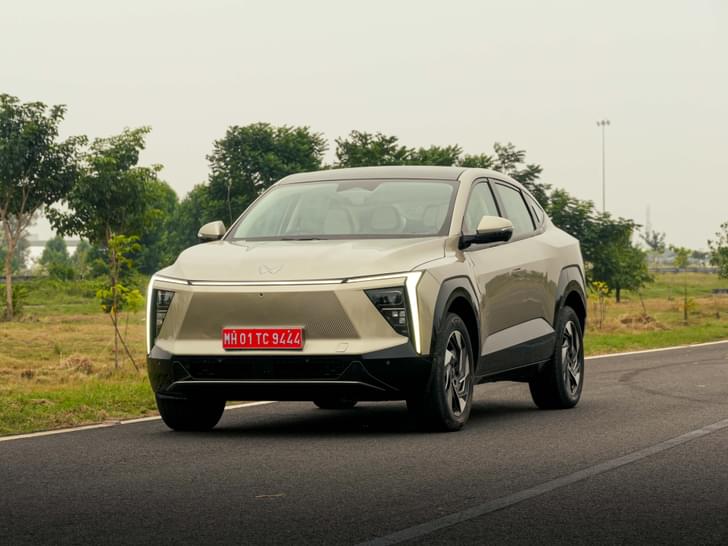
Mahindra XEV 9e

Mahindra XEV 9e

Explore cars mentioned
Got a suggestion for Prashanth?

Add a Comment

Recommended questions for you

RK

RAMDAS KAMATH

7h

I am one of the early owners of the Mahindra XUV400, which I purchased in March 2023. So far, I have driven approximately 1,17,000 km. Apart from a few minor BMS software-related issues, the vehicle has been trouble-free, and I have not noticed any significant drop in range even after 1 lakh km. Having gotten used to driving an EV, I now find it difficult to switch back to ICE vehicles. My daily running exceeds 100 km, which also helps keep my running costs low. However, I am concerned about the future maintenance costs and resale value, as many buyers seem hesitant to purchase used EVs due to uncertainty around long-term maintenance. In my opinion, EVs are generally easier to maintain compared to ICE cars. Given this, what does the future look like for used EVs in the market?

Autocar India team

Autocar India

Verified
3h

The used EV market is still evolving, and while your experience with the Mahindra XUV400 has been very positive, it is important to note that battery health and long-term performance can vary depending on usage patterns, charging habits and operating conditions. Covering over 1.17 lakh km with no noticeable range drop is encouraging and reflects what many modern EVs are capable of, but it may not be identical for every user. That said, EVs do have fewer moving parts than ICE cars, which generally makes them simpler to maintain over time.At present, the biggest challenge for used EVs is buyer perception. There is still uncertainty around battery health, replacement costs and long-term reliability. It is largely because there is no widely standardised, easy-to-understand battery health certification in the resale market. This lack of transparency makes buyers cautious and affects resale values. However, as EV adoption increases, this is expected to improve with better diagnostics, longer warranties and more structured resale ecosystems.Given your high daily running, you are in a use case where EV ownership typically makes strong sense from a running cost and ease-of-use perspective. In such a scenario, it is usually more practical to continue using the vehicle and extract maximum value rather than focus on near-term resale. While the used EV market is still maturing, it is likely to become more stable and transparent over time, which should improve buyer confidence gradually.

VehicleMahindra XUV400
SI

Siddhant

3d

I am planning to buy the Jeep Compass Sport manual variant. What is your overall review of this car? Apart from the higher maintenance costs, are there any other important factors I should consider before buying? I particularly like its driving dynamics and prefer a manual diesel.

Autocar India team

Autocar India

Verified
1d

If you are inclined towards it, go for the Jeep Compass Sport diesel manual. For someone who enjoys driving a manual diesel, it is the most satisfying choice at this price. The 2.0 diesel has strong pull once it’s past the initial few metres, so overtakes are easy and hill drives feel effortless. The steering feels natural and gives good confidence. Also, the ride is comfortable on broken roads, and the whole car feels solid and safe at speed. If you care most about how a car drives, this one will make you smile every day.One thing to be aware of is the clutch - it is on the heavier side, so in slow, stop-go traffic, your left leg will feel it. Also, at very low speeds, you may need to shift down often, as the engine wakes up properly only once you’re moving a bit. The Sport trim is also quite basic in terms of features, so check you’re okay with that and budget for a few dealer-fit add-ons if needed. Jeep’s service network is smaller than the big brands, so confirm a good workshop near you and take the extended warranty and a service package.

VehicleJeep Compass
DW

DWV

4d

I am considering buying the BMW M340i and have heard from a few sources, including a BMW service technician, that it may be prone to frequent tyre punctures or sidewall damage due to its low-profile run-flat tyres and minimal sidewall height. Could you please clarify whether this is a common issue in real-world Indian driving conditions, especially on highways and roads with occasional rough patches? Also, would switching to non-run-flat tyres or opting for a higher sidewall setup significantly reduce this problem?

Autocar India team

Autocar India

Verified
1d

On the BMW M340i, what you’ve heard is largely true in Indian conditions. The car comes with low-profile run-flat tyres that have stiff, reinforced sidewalls. This helps you continue driving after a puncture, but it also means there is very little cushioning. On rough roads or sharp potholes, the impact is transferred more directly to the tyre and wheel, increasing the chances of sidewall damage or bulges. This is not a constant issue, but it is something owners do experience on broken roads or bad patches, especially at speed.BMW M340iSwitching to non-run-flat tyres does help. They offer more sidewall flex, which improves ride comfort and reduces the likelihood of damage. Moving to a slightly higher sidewall setup will help, too, but to maintain the overall diameter, you would need to switch to smaller wheels, which adds to the cost.Since the M340i already comes with a space saver spare, switching away from run-flats is much easier and more practical, as you still have a backup in case of a puncture.It is also worth noting that this is not unique to the M340i. Cars like the Mercedes AMG C43, which are sportier versions of the standard model with larger wheels and lower-profile tyres, face a similar risk on poor roads.

VehicleBMW 3 Series

Posted on: 7 Apr 2026