autocar-logo
Mumbai
VR

vivek R Singh

1d

What is the expected price of the upcoming JSW SUV based on the Jetour T2?

Autocar India team

Autocar India

Verified
27m

The Chery-based Jetour T2 will be the first product from JSW Auto, and it is expected sometime before the festive season this year. JSW is planning to launch the Jetour T2 with a fairly high spec, so it won't be cheap and is expected to cost around Rs 38-40 lakh. 

For that money, you get a 380hp plug-in hybrid variant with around 610 Nm of torque. It is larger than both the Mahindra XUV 7XO and the Tata Harrier/Safari in most dimensions and boasts a 580-litre boot. So if you are looking at the Jetour T2, you need to put aside a budget of Rs. 40 lakh
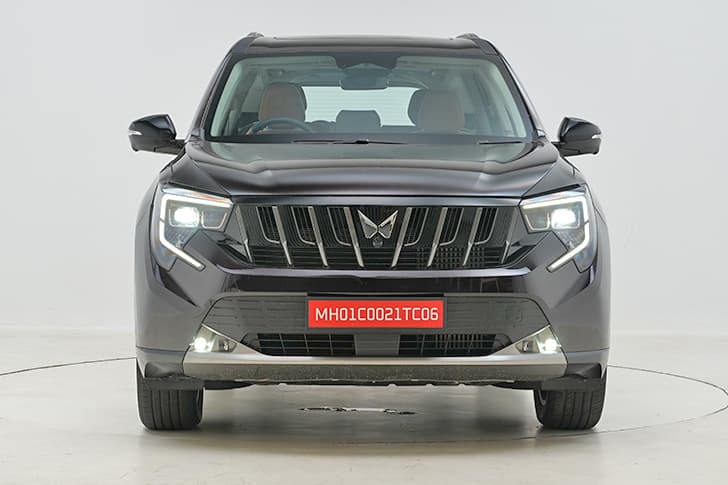
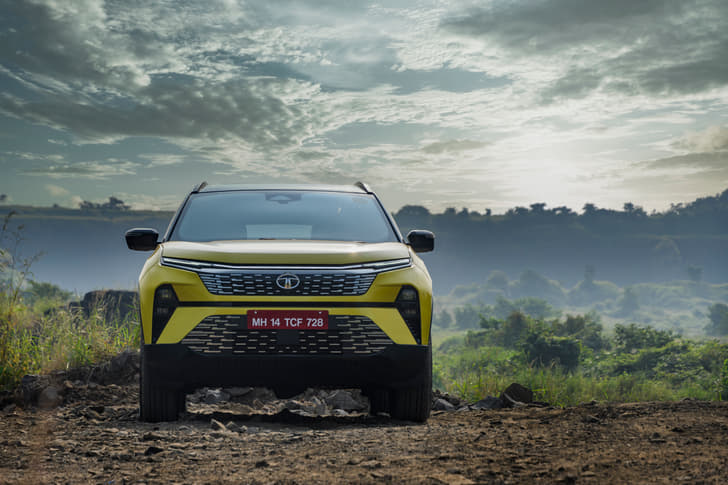
JSW Motors Jetour T2

JSW Motors Jetour T2

Got a suggestion for vivek?

Add a Comment

Recommended questions for you

AG

Ajay Garg

2d

Hi Team, you are doing a fantastic job providing accurate, helpful guidance to your readers. I am planning to buy a new car with a budget of around ₹20 lakh. I will be retiring in about 2.5 years, and until then, my daily commute will be approximately 50 km, along with a 600 km highway trip once every three months. Post-retirement, I plan to travel extensively with my family, at least once a month. We are a family of 4-5 members, and I am considering either an electric or a hybrid car. We really like the Mahindra XEV 9S (Pack One and above, 59 kWh), which costs around ₹22 lakh. Could you please advise if this is the right choice for my usage, or should I consider other options within my budget?

Autocar India team

Autocar India

Verified
1d

We can completely understand why your family loved the Mahindra XEV 9S. It is feature‑packed, very refined and smooth, and has enough space for your 4-5 family members, so as a family car it fits your brief well. For your daily 50km commute, the XEV 9S is actually ideal, provided you can install a home charger - you’ll hardly scratch the range of the 59kWh pack in regular city use.It’s your 600km highway trip every three months, when life with an EV requires more planning. With the 59kWh battery, you will have to stop for a fast charge at least once mid‑way, and often again at your final destination if you don’t have a charger there. The public charging network has definitely improved, but charging an EV is still not as quick or as effortless as filling a tank with petrol or diesel. So if you are willing to sacrifice some time and take a bit of extra effort on your three‑monthly highway drives, you can confidently go ahead with the XEV 9S.If you don’t want the hassle of hunting for highway chargers and waiting typically 30-40 minutes each time, then you should look at the Mahindra XUV 7XO diesel automatic instead. It has broadly similar features to the 9S, is very comfortable, and for frequent long‑distance touring, it is actually better suited. The XUV 7XO’s suspension is more composed at speed than the softer‑sprung 9S, which can feel a bit floaty on highways.

VehicleMahindra XEV 9S
VehicleMahindra XUV 7XO
AS

Abhishek Sood

1w

I am confused between petrol, diesel, and electric options from Mahindra. My annual running is around 10,000 km, and I am considering the XUV700 (AXT automatic - petrol or diesel) or the XEV 9E. Mahindra is known for its diesel engines, but given my relatively low usage, will DPF (Diesel Particulate Filter) issues become a concern? On the other hand, I have heard that the petrol engine is not very refined and has poor fuel efficiency. Also, I am unsure about choosing an EV, as daily charging management could be challenging, especially with a 2-year-old child. Which option would be the most practical and suitable for my usage?

Autocar India team

Autocar India

Verified
3h

Your annual running of 10,000km isn’t very high, but the gap in running costs between petrol, diesel and EV is still significant over a few years.The Mahindra XEV 9e is naturally the cheapest to run, and it’s not a headache to live with if you can install a home charger and don’t regularly do very long drives beyond roughly 400-420km in a day. A home charger is like having a petrol pump at your house - you plug in at night and leave with a full “tank” every morning. It will actually make an EV more convenient to top up than a petrol or diesel car, where you always have to detour to a fuel station. However, if you don’t have home charging (or very reliable workplace charging), then an EV quickly becomes inconvenient because of the planning and the long waits for charging. Also, the uncertainty with public chargers, so in that case it’s best to avoid one.Between the petrol and diesel Mahindra XUV7XO automatics, the petrol is actually quite refined and much smoother than the diesel. The real issue is its very low real‑world fuel economy, especially in city use, which makes running costs shoot up. The diesel, on the other hand, is also reasonably refined and much more practical because of today’s pump prices and the efficiency gap. Moreover, you can recover the diesel XUV7XO’s roughly ₹1.4 lakh higher upfront cost in about a year of your usage.After that, you are clearly ahead on total cost of ownership. Also, the diesel’s resale value is likely to be higher as well. So between the petrol and diesel XUV7XO, the diesel is the better option for you. Between diesel and EV, it really comes down to whether you have stress‑free home charging.

VehicleMahindra XEV 9e
VehicleMahindra XUV 7XO
RA

Rakesh

2w

I am looking for a car that feels as stable on the road as the Tata Harrier- something that feels very planted and confident at high speeds. I have tried the Toyota Fortuner Legender, but I felt that the Harrier is more stable. Could you suggest cars that offer similar or better road stability and driving confidence?

Autocar India team

Autocar India

Verified
4h

You are right, the Toyota Fortuner Legender isn’t as well settled as the Tata Harrier. The Fortuner is built on a body-on-frame chassis, which is very tough but compromises ride and handling. You could consider the Jeep Meridian, which is built on a tough monocoque chassis and has a multi-link suspension to keep planted at 100-120 km/h, feeling even more “chipak ke” stable than your Harrier.Since your top priority is high-speed stability, the Meridian feels rock-solid during quick lane changes and in crosswinds, requiring fewer steering corrections at 90-120 km/h. Body roll is well controlled, so it inspires confidence in sweeping curves taken at 70-90 km/h. Compared to the Fortuner Legender you tried, the Compass’s monocoque chassis and lower centre of gravity make it feel tighter and more car-like in response, while still riding firmly and flat.

VehicleToyota Fortuner
VehicleTata Harrier
VehicleJeep Meridian

Posted on: 5 Apr 2026