Autocar India
1d

My Innova Crysta’s periodic service quote came to almost Rs 14,000 this time. Does that sound right for the 40,000km service, or should I look around for better rates?

Verified
3m
A Rs 14,000 bill for a 40,000km service on the Toyota Innova Crysta does not sound out of line, especially if it is the diesel. The 40,000km service is one of the bigger scheduled services and typically includes a full oil change, all filters (air, fuel, oil, cabin), brake fluid, differential oil, and a more thorough inspection. The diesel in particular has a more expensive fuel filter and higher oil capacity, which pushes the cost up. That said, it is always worth asking for a detailed breakdown of the bill and checking for any add-ons like wheel alignment, balancing, AC cleaning or engine bay cleaning that are not part of the standard service schedule. If those are included, you can opt out and bring the cost down. Overall, though, Rs 14,000 for a major 40,000km service on the Crysta diesel is within the expected range.
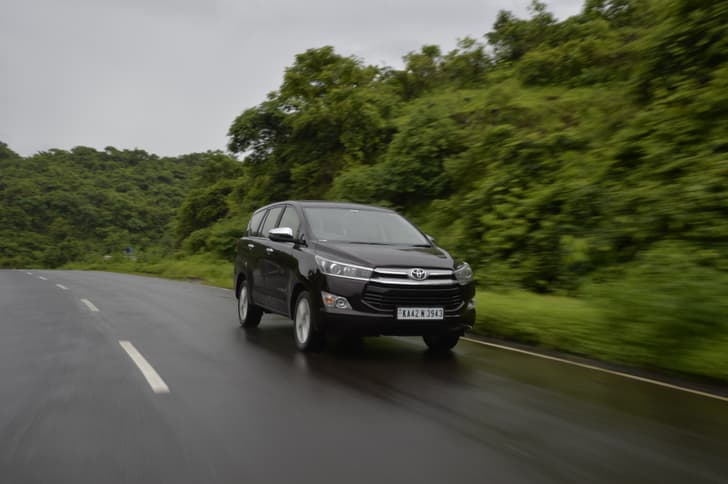
Toyota Innova Crysta

Toyota Innova Crysta

Was this helpful? Ask a follow-up

Help Rohan Reddy with similar question

More posts on similar cars

2d

I'm in Bangalore and drive a 2017 Toyota Innova Crysta automatic, which came with the 2.8-litre engine. I have covered 1.3 lakh km, and the body, suspension, engine and gearbox are all in excellent condition. I see no reason to replace the car and am happy to drive it for many more lakh kilometres. However, I'm concerned about external factors that could limit the longevity of the car: Legal longevity of a BS4 diesel car in India: My understanding is that only Delhi-NCR currently has a 10-year age limit for diesel vehicles, and I don't recall any other state or city imposing a similar restriction. However, with rising pollution levels in cities and increasing concerns around older diesel vehicles being high-polluting, are you hearing anything from automakers or industry insiders about potential regulations that could limit the use or lifespan of BS4 diesel cars in other parts of India? Iso-butanol blends: I understand that iso-butanol blending in fuel is still in the early stages of exploration. Could higher levels of iso-butanol blending potentially create any compatibility issues with BS4 diesel engines? Given that my car is in excellent mechanical condition, I'm keen to understand whether these external factors could eventually force me to replace it, despite the car itself having plenty of life left.

Verified
22h

You are absolutely right to want to keep your Toyota Innova Crysta 2.8 automatic running for many more years. It is a proven workhorse, and at 1.3 lakh km, with the engine, gearbox, and suspension in good shape, there is no reason to replace this Toyota car from a mechanical perspective.On your concerns:Legal longevity of BS4 diesel: You are correct that the 10-year diesel ban is currently limited to Delhi NCR. There is no nationwide policy capping the age of diesel vehicles, and most other states and cities have not imposed similar blanket restrictions. The industry view is that while there is always a possibility of tighter emission regulations in the future, there is currently no concrete indication from policymakers of a nationwide age-based ban on BS4 diesels. That said, it is always wise to keep an eye on local policy changes, especially in cities with rising pollution concerns.Iso-butanol blends: This is still in the early stages of exploration in India, and there is no clear roadmap for widespread adoption yet. Iso-butanol is being considered as a potential diesel blend to reduce emissions, but its impact on older diesel engines is not fully understood. The general industry view is that modern diesel engines, including BS4 units, are fairly robust, but compatibility will ultimately depend on the blend ratio and how the fuel is rolled out.The bottom line is that your Crysta still has plenty of life left in it, and there is no compelling reason to replace it purely out of regulatory fear.

VehicleToyota Innova Crysta
3d

I currently own a 2024 Maruti Suzuki Fronx Zeta manual. The vehicle has covered around 17,000 km, and I notice vibrations starting to creep in whenever I go beyond 120kph. There are no vibrations below 120kph. Is this due to the characteristics of the three-cylinder engine, and is it common with all Fronx turbo models? Or could there be an issue with my vehicle that needs to be addressed?

Verified
1d

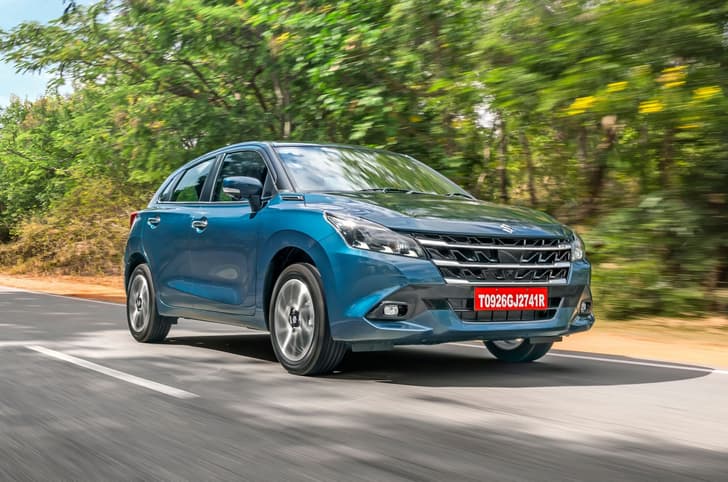
This is not a limitation of the 3-cylinder engine or something inherent to the Fronx turbo. Modern 3-cylinder engines are well balanced and do not suddenly develop vibrations at a specific speed. What you are describing is far more likely to be a wheel or tyre-related issue. The fact that the vibration only appears above 120kph suggests it is a classic case of wheel imbalance or possibly a slightly bent rim or uneven tyre wear. At lower speeds, these issues are not noticeable, but as speed increases, the imbalance becomes more pronounced and is felt as a vibration through the steering wheel or the cabin.The first step should be to get all four wheels balanced and checked for any bends or damage. Also, inspect the tyres for uneven wear or flat spots. If the vibration persists after balancing, have the alignment checked and ensure there are no suspension components that are worn or loose. This is a common issue on many cars and is not specific to the Fronx or its engine configuration. It is worth addressing promptly, as prolonged driving with an imbalance can lead to premature tyre and suspension wear.

VehicleMaruti Suzuki Fronx

Expert reviews worth reading

Popular discussions right now

Want to sell your car?

Sell your car at the right price, without the stress.
Posted on: 21 Aug 2026