
Autocar India
SP

Shervin PJ

5d

I am planning to buy a 2026 Kushaq 1.5 DSG. My usage will be 60% city and 40% highway. Will the city usage be a dealbreaker? I do night shift, so I can expect real traffic only onward to the office, and I tend to travel to the office only twice a week. Am I making the right choice?

Autocar India team

Autocar India

Verified
10m
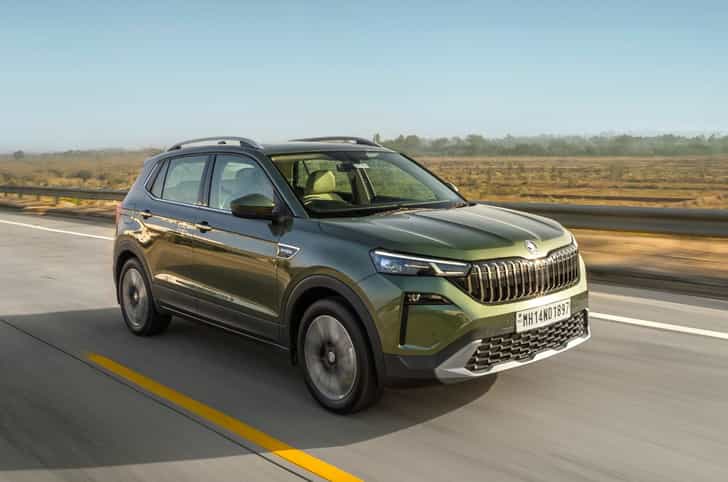
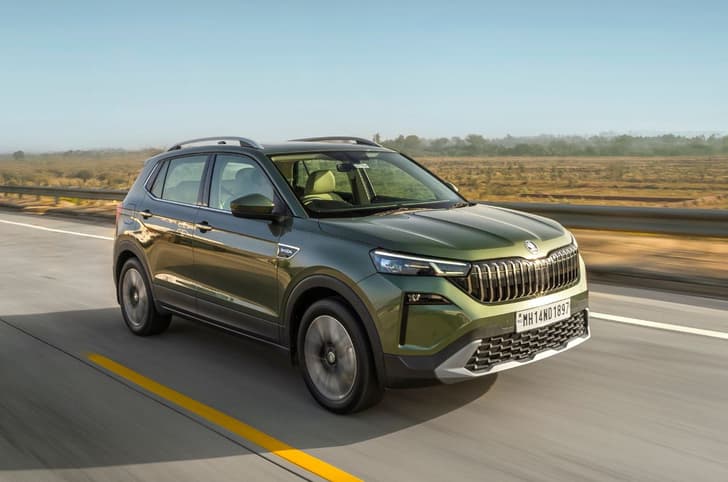
With 60% city, 40% highway, mostly night runs and only two commutes a week, the Skoda Kushaq 1.5 TSI DSG is a good choice for you. The DSG automatic, a dual-clutch gearbox, changes gears very quickly, which is good for confident overtaking on the highway and for scooting around in the city.
On your night drives, the roads will be clearer, and this gearbox feels smooth and quick when you get a gap. The Kushaq’s size also helps in the city; it is not too big, so parking and narrow lanes are easier. Safety is a strong point too; the current Skoda Kushaq is rated 5-star, and the 2026 update should be just as safe.
The one thing to know: in very slow, bumper-to-bumper traffic, a DSG can feel a bit jerky at crawl. But, given your driving pattern, which is light traffic at night, and only two office runs a week, this is unlikely to be a problem.
Skoda Kushaq

Skoda Kushaq

Explore cars mentioned

More questions on similar cars

AC

Annesha Chakraborty

1d

I am looking to buy an automatic petrol car within a budget of ₹18 lakh. My requirements are: 5-star safety, comfort for family use, mostly city driving, and occasional trips outside the city. I have explored the Skoda Kushaq, Slavia, and Tata Nexon, but I do not want to go with Tata as I already own a Tiago. I am open to options from Toyota, Hyundai, and Kia, provided they meet my safety requirements. Please advise.

Autocar India team

Autocar India

Verified
1h

On a Rs 18 lakh budget, for your requirements, the Hyundai Verna HX6+ IVT automatic is a good pick because it meets your 5-star safety needs and feels the most relaxed in traffic. The IVT, a CVT by another name, is a type of automatic that does not shift in steps, so it feels very smooth at low speeds, which makes stop-and-go driving easy. The back seat is roomy, the ride is comfortable over rough patches, and Hyundai’s wide service network adds peace of mind on those occasional trips out of town. The latest Verna has a 5-star Global NCAP crash test rating in India, so you are not compromising on your main ask. You could stretch to the HX8 variant if you want more features and your budget is flexible.Two things to keep in mind with the Verna: it sits lower than a taller car like the Skoda Kushaq, so you need a bit more care on big speed breakers, and the rear seat is set a little low, so elderly family members who prefer a higher seat may not love it. If you want a higher seating position and more ground clearance without giving up 5-star safety, go for the Kia Seltos HTK(O) Petrol CVT, which recently got a 5-star Bharat NCAP rating. Though you might sacrifice some features in this variant on your budget.

VehicleHyundai Verna
VehicleSkoda Kushaq
VehicleKia Seltos
MB

manjunath BR

1w

I am considering the Skoda Kushaq 1.5 DSG, Renault Duster 1.3 DCT, and Honda Elevate. My usage is mostly city (70:30). I am unsure about DSG and DCT reliability, rear seat comfort, and long-term maintenance. I enjoy driving and prefer a driver-oriented car with a good music system. Please advise.

Autocar India team

Autocar India

Verified
9h

From your shortlist, there isn’t one SUV that perfectly ticks every box. If driving enjoyment is a priority, the Skoda Kushaq 1.5 TSI stands out. Its quick-shifting DSG, strong mid-range performance and sharp, agile handling make it the most engaging and driver-focused of the three. It also offers one of the best audio setups in the segment, with an 8-speaker system, subwoofer and amplifier delivering rich and punchy sound.On the reliability front, the 7-speed DSG has improved over time, but it’s still not as inherently robust or smooth in stop-and-go city use as Honda’s CVT. The Elevate, in contrast, is the easiest-going and fuss-free option here. It offers significantly better rear-seat space and comfort, along with Honda’s strong reputation for long-term reliability. However, it’s not particularly exciting to drive.The Renault Duster 1.3 DCT sits somewhere in between. Its turbo-petrol engine is strong and refined, but the car itself isn’t as sharp or driver-oriented as the Kushaq. Rear-seat space is also not its strong suit, and overall, it doesn’t quite stand out in any one area.So broadly, Kushaq for driving fun and audio, Elevate for space and peace of mind, and Duster as a middle-ground option.

VehicleSkoda Kushaq
VehicleHonda Elevate
VehicleRenault Duster

Popular discussions right now

KY

Krishna Yadav

1w

I am planning to sell my Mahindra XUV700 and switch to the Renault Duster. I would like your expert opinion on whether this would be a good decision.

Autocar India team

Autocar India

Verified
6d

On paper and in real-world ownership, these are very different cars, and the Mahindra XUV 7XO sits in a clear segment above. The XUV 700 is a bigger, more complete SUV. It offers more space, better road presence, stronger performance and a far richer overall experience, including the option of a third row and a more premium cabin. It is designed as a proper family SUV and feels more capable on highways and long drives.The Renault Duster, even in its new form, is a simpler, more driver-focused and lighter SUV. It will likely be easier to drive in the city and feel more rugged and straightforward, but it is still a step down in terms of overall size, features and cabin experience.So the decision really comes down to intent. If you are moving because you want something more compact, easier to use daily and less feature-heavy, then the Duster can make sense. But if you are expecting it to feel like an upgrade or even equal to the XUV700 in terms of space, comfort and overall experience, it will not.

VehicleRenault Duster
RO

Rohin

1w

I am confused about buying the AMT version of the Skoda Kylaq, Tata Nexon, or Maruti Fronx. My budget is between 11 and 13 lakh. My usage is mostly city driving of about 1,000 km per month, with occasional long highway drives.

Autocar India team

Autocar India

Verified
5d

Between the three, the Skoda Kylaq is the best automatic for the money. It doesn’t use an AMT but a proper 6‑speed torque-converter with the 1.0 TSI, which is smooth, robust and easily the nicest for your occasional highway runs.The Maruti Suzuki Fronx 1.0 turbo also gets the same 6‑speed torque-converter auto, and while it is refined and efficient, it doesn’t have the same solid, European feel or driving dynamics as the Kylaq. However, from an overall cost-of-ownership point of view - price, fuel efficiency and service, the Fronx is likely to work out cheaper.The Tata Nexon in your budget doesn’t get a torque-converter. You mainly have a 6‑speed AMT, which is convenient but nowhere near as smooth or quick as a proper automatic. There is also a 7‑speed DCA dual‑clutch option, which is noticeably better than the AMT, but still not as seamless as the autos in the Kylaq and Fronx, and it can push the price higher.For 11-13 lakh, 1,000km a month in the city and the odd long drive, we would pick the Kylaq auto. If budget discipline and running costs are top priority, go for the Fronx 1.0 turbo automatic.

VehicleSkoda Kylaq
VehicleMaruti Suzuki Fronx
VehicleTata Nexon
DE

Devakumar

1w

I have booked the Tata Sierra Adventure Plus petrol manual, but I am now confused between the petrol and diesel manual variants, particularly in terms of mileage and performance. I am not interested in an automatic transmission. My annual running is less than 6,000 km. Could you please advise which engine option would be more suitable for my usage? Additionally, I would appreciate any alternative suggestions for a spacious car with good mileage that fits my needs.

Autocar India team

Autocar India

Verified
6d

The Tata Sierra is a big, heavy car, and the petrol engine, being a naturally aspirated unit, feels just about adequate, especially once you load it up or hit the highway. The diesel, on the other hand, suits the car far better with its stronger low-end pull, making overtakes easier and long-distance driving far more relaxed.That said, with your low annual running of under 6000 km, the petrol still makes sense if your usage is mostly in the city. It will feel smoother, easier to live with and perfectly adequate for everyday driving, even if it lacks that effortless punch on highways.If you are open to alternatives for a better petrol manual experience, the Renault Duster with its turbo petrol engine is a strong option. It feels far more effortless to drive, while naturally aspirated options like the Kia Seltos or Hyundai Creta offer a more refined and effortless experience than the Sierra petrol.

VehicleTata Sierra
VehicleRenault Duster
VehicleKia Seltos
VehicleHyundai Creta

Posted on: 25 Apr 2026