Latest questions answered by experts
When will the Autocar India 27th anniversary issue be released?
It will be on stands this week. It is quite a bumper issue, so don't miss it! You can also order it on Amazon.com. To make sure you don't miss a copy and have it delivered to your doorstep, simply click on the link below and subscribe!https://subscriptions.autocarindia.com/product-details/sub/1
I am currently using a Hyundai Creta 1.5 CRDi diesel and am looking for an upgrade. I have shortlisted three cars: the Mahindra XUV 7XO, Toyota Innova HyCross and Hyundai Alcazar. I will drive around 400-500 km per week. Which one should I prefer?
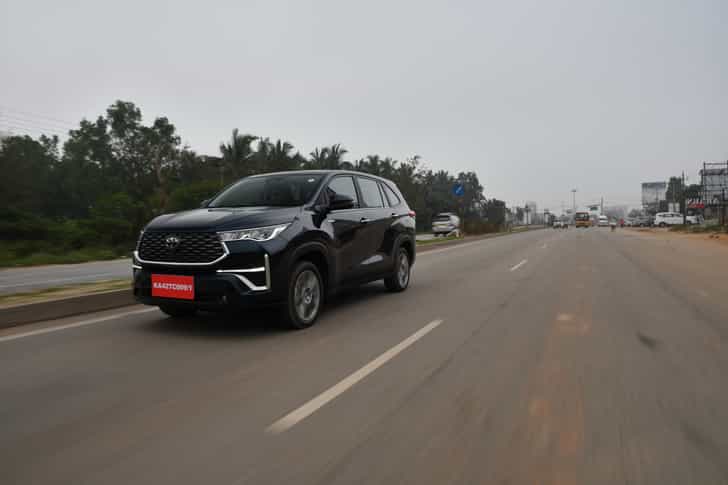
Go for the Toyota Innova Hycross. With 400-500 km a week, you need a car that is comfortable, reliable and effortless over long distances. The Toyota Innova HyCross hybrid is the best fit here. It is extremely comfortable, has a spacious cabin, and the hybrid powertrain is smooth and efficient, especially on highways where it delivers excellent fuel economy for a car of its size. Toyota's reliability and low maintenance costs also make it a strong long-term ownership proposition.The Mahindra XUV 7XO diesel is a good alternative if you specifically want a diesel SUV with strong performance and a more engaging driving experience, but the Hycross is the better all-rounder for your usage. The Hyundai Alcazar is not a true upgrade from your Creta and does not offer the same level of space, comfort or long-distance capability as the other two.The only drawback with the HyCross is that it is not as engaging to drive as the XUV 7XO, but for your usage, comfort and efficiency matter more. Overall, the HyCross is the car you will be happiest with after five years of ownership.
My daily running is around 70km, mainly on rural roads and highways. My budget is Rs 10-15 lakh. Fuel efficiency and safety are my top priorities, followed by reliability and good performance on highways and rural roads. For my usage, should I buy a CNG car or an EV? Please suggest the best options available in India within my budget, with good safety, and compare their purchase price, running cost, range/mileage, maintenance and suitability for rural and highway driving.
With a daily running of 70 km on rural roads and highways, fuel efficiency and safety as top priorities, and a budget of Rs 10-15 lakh, a diesel car is the most sensible choice. Diesel engines are inherently more fuel-efficient than petrol or CNG, and they deliver strong torque at low revs, which is exactly what you need for overtaking on highways and tackling rural roads. Modern diesel cars are also far more refined and reliable than they used to be, and with your kind of running, the cost savings over time are significant.CNG is not the right fit here. While it is cheap to run, it comes with compromises that do not suit your usage. Refuelling infrastructure is still patchy in many rural areas, the boot space is compromised, and performance on highways is noticeably weaker, especially when overtaking or climbing gradients. CNG works best for city commuters with predictable routes and easy access to filling stations.Electric cars are also not ideal for your use case. While they are cheap to run and great in the city, your daily running is already quite high, and rural charging infrastructure is still developing. Range anxiety on longer highway runs and the lack of fast chargers in remote areas can become a real issue. EVs make the most sense when you have home charging and predominantly city usage.Within your budget, the Mahindra XUV 3XO diesel and Tata Nexon diesels are good options. They are safe and well-built, with strong diesel engines, good ground clearance for rural roads, and a comfortable highway ride. They also come with a 5-star safety rating, which aligns with your priorities.
I am looking to buy a new car and am confused between two options: the Renault Duster Techno+ 1.3 DSG and the Volkswagen Virtus 1.0 GT Line. I will be driving the car daily for an office commute of about 20 km. I plan to keep the vehicle for 3 to 4 years and would like to know which one is the better choice in terms of features, resale value, premium feel, driving performance, and overall peace of mind.
Go for the Virtus 1.0 GT Line. With a 20 km daily office commute and a 3-4 year ownership horizon, the Volkswagen Virtus is the more sensible and enjoyable choice. The 1.0 TSI engine paired with the torque converter automatic is smooth, efficient and well-suited to daily driving, while the GT Line trim gives you a genuinely premium feel inside the cabin. The Volkswagen car also offers a more refined ride and a lower centre of gravity, making it more confidence-inspiring on highways and in city traffic.The Duster Techno+ 1.3 DSG is a genuinely appealing driver's car with strong performance and a robust, planted feel, but the 1.3 turbo petrol has 'turbo lag' at low revs, is not as efficient in daily stop-start conditions, and the DSG gearbox is not as smooth as Volkswagen's torque converter automatic. The Duster also doesn't feel as premium inside, and Renault's resale value is unlikely to match Volkswagen's over a 3-4 year ownership period.The Virtus strikes the best balance between premium feel, driving performance, efficiency and overall peace of mind. It is the car you will be happier living with every day.
I'm looking to buy the Seltos HTK(O) automatic but am confused between the 1.5 NA petrol IVT and the 1.5 diesel turbo TC. The petrol is costing me around Rs 17.9 lakh, while the diesel is around Rs 19.7 lakh, before any discounts or negotiations. My monthly running is likely to be around 1,200-1,300km, with roughly 60 percent highway and 40 percent city driving. This includes a 700km highway run to Dwarka from Bathinda and back, which is a regular trip, around 300-350km of office commute, and another 100-150km for weekend outings. In the petrol, I'm mainly concerned about E20-related issues such as moisture, the possibility of higher ethanol blends in the future, lower mileage and the engine feeling slightly underpowered, particularly during occasional trips to the mountains. With the diesel, my main concern is the possibility of DPF and EGR-related issues. The car will be driven by both me and my wife. Which one would you suggest for this usage? I'm more inclined towards the diesel, but the concerns around DPF issues are making me reconsider.
Go for the Kia Seltos HTK(O) Diesel AT. Your running is around 1,200-1,300 km a month with a 60% highway bias, which is exactly the kind of usage where a diesel makes sense. The diesel engine is stronger on the highway, offers better overtaking performance and will be more efficient over long distances, so the higher upfront cost will be recovered over time. The DPF concern is understandable, but your usage pattern is actually ideal for a modern diesel – regular highway runs keep the system healthy and minimise the risk of issues. The petrol IVT is smooth and reliable, but it will feel less punchy on the highway and in the hills, and the fuel cost difference will add up over time. As for E20, modern engines are engineered to handle it, and there is no official roadmap beyond E20, so it should not be a reason to avoid petrol, but in your case the diesel is simply the better fit. The Seltos diesel automatic is a well-rounded package and will suit your usage perfectly.

I’m planning to buy a Brezza and keep it for at least 10 years. My usage will mostly be family use with occasional highway trips, and I won’t be driving it every day. I’m considering the 1.5L NA and 1.0L Turbo. The Turbo VXi fits comfortably within my budget and offers good features, so I’m leaning towards it For someone planning to keep the car for 10+ years, would you recommend the 1.5 NA or the 1.0 Turbo? How reliable are these small turbo engines in the long run? Can brezza 1 litre turbo last for 10+ years?
Go for the Maruti Suzuki Brezza 1.5 NA petrol. For a 10+ year ownership plan, it is the safer and more sensible choice. The 1.5 naturally aspirated engine is a simple, proven unit with a long track record of reliability, and it is exactly the kind of engine you want when you are planning to keep a car for a decade or more. It is also well suited to your usage pattern of family use with occasional highway trips and not being driven every day.The 1.0 turbo is a good engine, and modern turbo petrols can last 10+ years with proper maintenance, but they are more complex, have more components that can wear over time (like the turbocharger itself), and are generally not as stress-free to own long-term as a naturally aspirated engine.
Planning to buy the Sierra Petrol MT Pure / Pure Plus for normal driving, around 300km per month, with a maximum speed of 100-110kph. How good is it for this kind of usage, especially in terms of pickup, AC performance and cabin noise?
With just 300km a month and a maximum speed of 100-110km/h, the Tata Sierra petrol manual is a perfectly sensible choice. The naturally aspirated petrol engine is tuned for smoothness and ease of use rather than outright performance, so it will feel relaxed and comfortable at the speeds you are talking about. Pick-up is adequate for city driving and steady highway cruising, but it is not a particularly quick car, so overtaking at higher speeds will require a bit of planning. The AC is strong and the Sierra's cabin is well insulated, so noise levels are well controlled at city speeds and up to around 100km/h. Overall, for your usage pattern, the Sierra petrol manual is a comfortable and practical choice. The only thing to be aware of is that the engine is not particularly punchy, so if you regularly drive with a full load or do a lot of overtaking on the highway, you may notice the lack of power. Otherwise, it is a solid and sensible option.
I currently own a Mahindra XUV 3XO TGDi (Revv variant) and have clocked 6,300km over the past eight months. However, I am averaging only 8–9kpl. Since around 80 percent of my driving is within the city and I prefer high-performance engines, should I consider switching to the Kia Seltos Diesel or the XUV 3XO Diesel?
At 80% city usage, switching to a diesel purely for better mileage doesn’t make much sense. Your 8–9kpl is on the lower side, but the T-GDi is the performance-oriented engine, and frequent stop-start traffic will naturally bring down its efficiency.The Mahindra XUV 3XO diesel will deliver considerably better fuel economy and strong low-end torque, but it also brings the added complexity of a DPF. Since most of your driving is in the city, short and slow trips can make DPF regeneration more difficult. You would need to give the car occasional sustained runs to allow the system to regenerate properly.The Kia Seltos diesel is the better of the two if you want to move to a larger and more premium SUV. It is refined, has strong torque, and the automatic is well suited to relaxed driving. However, you would still have the same DPF consideration, and neither diesel will give you the performance character of your T-GDi.

Which of the three would be most suitable for cross-country trips involving a mix of smooth, average and bad roads: the Honda Elevate CVT, Maruti Grand Vitara Smart Hybrid AT, or Volkswagen Taigun 1.0 AT? My key criteria are reliability and safety, ride quality, and fatigue-free driving. I am also considering a few potential downsides: the NVH levels of the Elevate, the long-term reliability of the Smart Hybrid battery in the Grand Vitara, although this is not a deal-breaker, and the possibility of EPC-related faults in the Taigun. I would appreciate some expert advice on which of these three would be the best overall choice for my requirements.
For your requirements, the Honda Elevate CVT is the most balanced choice. It is a simple, robust and reliable package with a proven naturally aspirated petrol engine and a smooth CVT gearbox, which makes it well suited for long-distance touring. The Elevate also offers a comfortable ride, good ground clearance and a suspension setup that can handle a mix of road conditions, including bad patches, without feeling fragile. Honda’s long-term reliability track record is strong, and the car’s simplicity is actually an advantage for ownership over 5-10 years.The Maruti Suzuki Grand Vitara Smart Hybrid AT is also a good option, but the hybrid system adds complexity without a significant advantage on long highway runs, where the fuel savings are less pronounced. The battery is not a major reliability concern, but it is still an additional component to consider over long-term ownership.The Volkswagen Taigun 1.0 TSI AT is the enthusiast’s choice with a more engaging driving experience and strong performance, but your concerns about EPC-related faults are not unfounded. While Volkswagen has improved reliability, the ownership experience is still not as hassle-free as Honda or Maruti.
I’m looking for an Audi, BMW or Mercedes-Benz test-drive car that has covered less than 5,000 km and is priced within a budget of Rs 65-70 lakh. Which would be the best cars available in this budget?
Firstly, don’t assume that a low-mileage test-drive or dealer demo car will be easy to find. The best examples are often sold quickly, and availability will vary sharply by city, dealer and model.A Mercedes-Benz E-Class would be our pick if you can find a clean, well-specced example, but even one with under 5,000km may stretch beyond your Rs 65-70 lakh budget. Also, many dealer demo cars are unregistered. That means you become the first registered owner, which is a plus, but it also means the dealer may not discount it as aggressively as a formally pre-owned car.You could also look for a BMW 5 Series LWB demo car, although finding one within budget may again be difficult. The more realistic option could be an Audi A6, especially because Audi has historically offered strong discounts on outgoing or slow-moving stock. Do check availability with your local dealer, though, as stock can be limited depending on the city and the model year.For this money, our more practical recommendation would be a nearly new BMW 3 Series. It is likely to fit the budget more comfortably, is genuinely engaging to drive, and should offer a newer car with lower financial risk than stretching for an E-Class or 5 Series.Whichever route you choose, insist on a full-service record, tyre and brake inspection, accident-repair history, remaining warranty details, and clarity on whether the car has been registered. A dealer demo can be good value, but only if the discount properly reflects its usage and age.
I have an elite i20 2018 model my stock size is 195/55 r16 but I want to install 195/60 r16 because that's the tyre comes in Geolandar XCV newly launched by Yokohama. I am confident enough that these upsize will not hamper but I want to know that installing these tyres will it be good? As my i20 is lightweight compared to SUV and these tyres are mostly made for SUV and heavy vehicle so am I putting an extra load by adding these heavy tyres, will it damage my enitre dynamics drastically? I want a superior braking, and a good comfort road noise minimisation could be average but should not be too soft that it gets easily punctured or cracks in sidewall while hitting a potholes. heard many reviews of UC 6 getting punctures and cracks in sidewalls due to potholes. Turanza 6i is also an alternative but comes with the same problem too much soft compound and I drive like idgaf in potholes without any stress. Another good option is blue earth gt max shall I consider it but heard that wet grip is not that great and doesn't feel good in steering. As the geolandar xcv launched newly in India so I was kinda leaned towards its preference but as it is made for only Suv and crossover am kinda in doubt what should I do. Please suggest something worth invsting my money for.
The Geolandar XCV is a good tyre, but it is designed for SUVs and crossovers, and your Hyundai i20 is a much lighter car. The tyre will be heavier than your stock tyre, and that will add unsprung weight, which will affect ride quality and handling. The sidewall will also be stiffer than a typical hatchback tyre, which could make the ride harsher on a light car like the i20. The upsize from 195/55 R16 to 195/60 R16 is not huge, but it will increase the overall diameter by about 3.5%, which will slightly affect speedometer accuracy and gearing.If your priority is durability and resistance to sidewall damage, the Geolandar XCV will do the job, but it is overkill for an i20.
I have recently moved to a new city, and my office is 3km from my house. I need to travel to and from the office twice a day, including during my lunch break. On weekends, around twice a month, I travel 90km one way on the national highway to meet my husband, who drives a Jeep Compass manual diesel. I used to drive his car earlier, but now I am looking to buy a car within a budget of Rs 15 lakh. My top priority is cabin comfort, particularly a car that can handle potholes and rough roads without causing excessive jerks or discomfort inside the cabin.
Given your usage pattern, the Mahindra XUV 3XO petrol automatic is the best fit. Your daily commute is short and frequent, so a petrol engine is the right choice, and the 3XO's automatic gearbox makes city driving effortless. The car also has a well-tuned suspension that handles potholes and broken roads well, minimising cabin jerk and improving comfort. On your weekend highway runs, the 3XO feels stable and confident, and the wide cabin makes it a comfortable five-seater. The diesel option is not worth considering here because your annual running is not high enough to justify the higher purchase cost and maintenance. The 3XO also offers good value for money, with a strong feature set and a comfortable cabin within your Rs 15 lakh budget. Overall, it strikes the right balance between city comfort, highway stability and ownership costs.
I am planning to buy a sub-4m SUV and have shortlisted the Skoda Kylaq Signature Plus Automatic and Hyundai Venue HX5 Diesel Automatic. My annual running is expected to be around 16,000 to 18,000 km, including approximately 12,000 km of highway driving. From an economic point of view, I am slightly concerned about the Kylaq’s real-world petrol mileage, especially given the high amount of highway running. I am also concerned about the long-term implications of E20 petrol and whether it could lead to any issues in the future. On the other hand, I have concerns about buying a diesel due to the possibility of future government restrictions and the uncertainty around long-term diesel ownership. Considering these factors, I would appreciate your advice on which of the two would be the better choice for at least eight years of ownership.
Go for the Hyundai Venue Diesel Automatic. With your annual running of 16,000-18,000 km and a strong highway component, the diesel makes clear financial sense. The Venue’s diesel is refined and well suited to long-distance driving, and the 6-speed torque converter automatic is smooth and reliable. Hyundai’s service network and ownership experience are also strong, which matters over an 8-year horizon.The Skoda Kylaq Signature Plus Automatic is the better driver’s car, but the 1.0 TSI petrol will not match the diesel’s efficiency at your running, and the E20 concern is largely overstated – modern engines are engineered for it, and there is no official roadmap beyond E20. On the diesel side, the government has not announced any blanket restrictions on private diesel cars, and with Bharat Stage 6 and DPF technology in place, long-term ownership is not a major concern.The Venue is the more sensible and cost-effective choice for your usage pattern. If you want a more premium and spacious diesel SUV, the Kia Seltos Diesel Automatic is worth stretching for, but within your shortlist, the Venue is the right call.
I'm considering buying the Hyundai i20 N Line N8 MT. I've driven other cars, including the new Venue DCT and XUV300 MT, but this will be my first car. Is the i20 N Line a good choice for me? My annual running will be low, and I'll mostly be driving on highways. Also, should I consider going for the DCT instead of the manual?
The Hyundai i20 N Line N8 MT is actually a very good choice for your requirements. Since this is your first car, you want something that is easy to drive, reliable and confidence-inspiring, and the i20 N Line fits that brief well. The turbo petrol engine is punchy and refined, and the manual gearbox is smooth and easy to operate, which makes it a great car for both city driving and highway runs. The N Line also adds a bit of sportiness and character without compromising on everyday usability.Given your low running and predominantly highway usage, the manual makes more sense than the DCT. The Hyundai Venue DCT is a good car, but the i20 N Line feels more special to drive.
I’m planning to buy a sub-compact SUV with a budget of around Rs 12 lakh. I prefer a manual transmission and am looking for a car that offers a smooth and comfortable driving experience in both the city and on highways. I also travel to hill areas about twice a year, so I’m unsure whether a turbocharged or naturally aspirated (NA) engine would be better suited to my requirements. The two cars I’m currently considering are the Maruti Suzuki Brezza with its 1.5-litre naturally aspirated engine and the Hyundai Venue with its 1.0-litre turbo-petrol engine. I’d like to understand which engine would be better suited to my usage, how the two compare in city traffic, highway driving and hill roads, and which would offer better long-term reliability and ease of maintenance. I’d also like to know the expected difference in real-world mileage between the two and, considering my overall requirements and budget, which of the two would be the better choice.
Go for the Maruti Suzuki Brezza 1.5L naturally aspirated petrol. It is the better fit for your requirements. The 1.5L NA engine is smooth, refined and delivers linear power, which makes it easy to drive in the city, comfortable on highways and predictable on hill roads. It has enough torque to handle inclines without feeling strained, and you do not have to worry about turbo lag or the need to downshift aggressively on steep sections.The Hyundai Venue 1.0L turbo is a punchy engine and feels more energetic when pushed, but it does have some turbo lag at low speeds and requires more gear changes on hills. It is also a smaller three-cylinder engine, so it is not as refined as the Brezza’s four-cylinder unit. In terms of reliability and maintenance, Maruti has the edge with a simpler naturally aspirated engine and a wider service network.Real-world mileage will depend on driving style, but the Brezza should deliver slightly better consistency, especially on highways and hills, while the Venue turbo can be more efficient if driven gently in the city. Overall, the Brezza is the more dependable and easier-to-live-with choice for your usage pattern.
Hello, I own a Ford EcoSport 1.5 TDCi Titanium, and as per the new NCR norms, I will have to retire the car after it completes 10 years, which is next year. I am looking for the best replacement. I drive to Gurgaon on a weekly basis, along with regular city driving and occasional long trips to the hills. I am considering a petrol automatic as an upgrade from my current manual. Which car should I go for? I am looking for a car that offers a similar or better driving experience than my EcoSport, along with a slightly larger boot space.
The Skoda Kylaq 1.0 TSI automatic is the closest match to the Ford EcoSport’s character. The turbo petrol engine delivers strong mid-range punch, making highway overtakes and hill climbs effortless, while the 6-speed torque converter automatic is smooth enough in city traffic. The Kylaq also offers a bigger boot than the Ecosport, addressing your luggage space requirement, and its compact dimensions make it easy to manoeuvre in urban conditions.
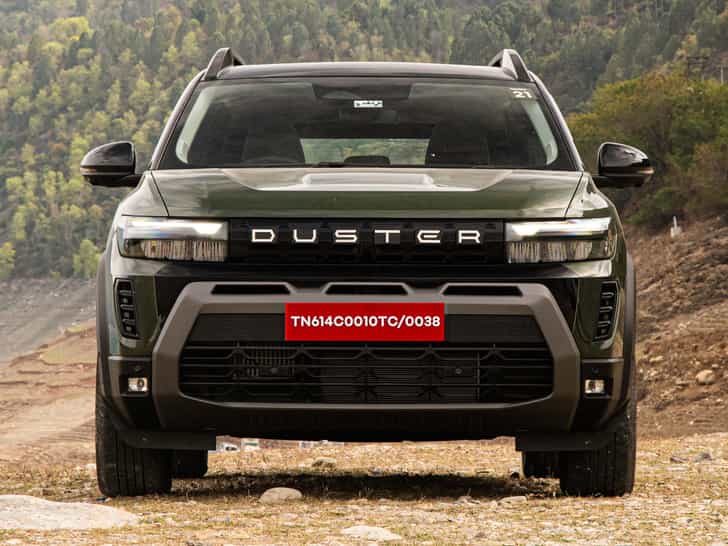
Hello Team, I currently own a 2013 Hyundai i20 Sportz CRDi and am planning to upgrade to a mid-size SUV. My budget is around Rs 20 lakh on-road in Kerala. My monthly running is approximately 700-800km, with occasional long drives, and I plan to keep the car for at least 10 years. I recently test drove the Duster 1.3-litre DCT automatic and was quite impressed with its driving dynamics and comfort. I really enjoyed the overall driving experience. Could you please share your insights on whether the Duster would be a good choice for long-term ownership, considering my usage and the fact that I plan to keep the car for 10 years? Also, are there any other alternatives in this budget that I should consider?
The Renault Duster actually sounds like a very good fit for your requirements. With just 700–800km of monthly running and occasional long drives, there is little reason to choose a diesel, and the 1.3-litre turbo-petrol gives you plenty of performance for both city use and highway trips. The Duster’s biggest strengths are its excellent balance of ride comfort and driving dynamics, along with 212mm of ground clearance.The 1.3 DCT is also a particularly good combination. It uses a wet-clutch DCT, and the gearbox is smooth enough in everyday driving while the engine provides strong performance when you are out on the highway.The only reservation is long-term ownership. This is a new-generation Duster, so there simply isn't enough 8 to 10 year Indian ownership data yet. The DCT is also mechanically more complex than a conventional torque converter, and Renault's service reach isn't as strong as Hyundai, Kia or Maruti.If you want alternatives, the Kia Seltos 1.5 IVT is the more conservative long-term choice, while the Skoda Kushaq 1.0 AT is worth considering if driving enjoyment is important.

Need expert advice?
Ask the Autocar community and experts.