


Latest questions answered by experts
Understanding DPF Maintenance for the Tata Harrier Adventure X Diesel

With 500km a week, you are well above the threshold where DPF becomes a concern. The DPF is designed to capture soot from the exhaust and then burn it off during a process called regeneration. This regeneration typically happens automatically when the engine reaches operating temperature and is held there for a sustained period, usually during a 15-20 minute drive at steady speeds. Your weekly running is more than sufficient for this.You do not need to drive the car every day. What matters is that the car gets regular runs where the engine is warm and running at a consistent speed. Short, stop-start city trips are what cause issues, not the frequency of use. As long as your usage includes some highway or longer stretches, the DPF will regenerate as intended.In real-world experience, modern Diesel cars are far less fussy about DPF than people fear. The issues tend to arise only with very low-mileage, purely urban cars. With your usage, the Tata Harrier Adventure X Diesel AT is a perfectly sensible choice. It is a strong, refined engine with good long-distance capability, and the automatic gearbox is well suited to both city and highway driving.The Harrier is also the right choice from a proportion and feel perspective. The Tata Safari is a good car, but if you do not need the third row, the Harrier is the more balanced and better-looking option.Go for the Harrier diesel without hesitation. Your usage is exactly what modern diesels are designed for.
 Tata HarrierTata Safari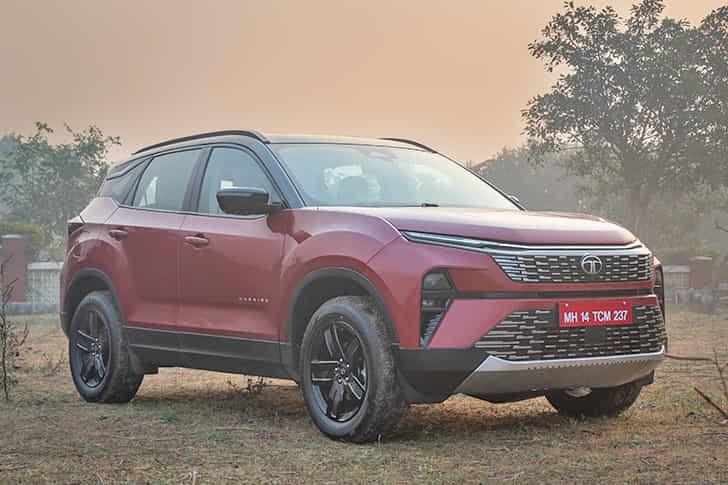
Tata Safari vs Tata Sierra Accomplished Petrol: Which Car Should I Choose?
Firstly, ask yourself whether you need the third row seating. If yes, then the Tata Safari is your best bet - it is a spacious three-row SUV. That said, its manual gearbox is not the smoothest, nor is its clutch as effort-free as that of most other smaller mid-size SUVs. Also, to extract 10-11kpl from your short city runs will be difficult. These are trade-offs you will have to make for its road presence, performance, as well as cabin space.If you don't need the extra row of seats, it makes sense to opt for the Tata Sierra instead. Do note, it isn't an efficient turbo-petrol-automatic combination, so be prepared for higher monthly fuel bills. The good news is that the 1.5 Turbo-Petrol's performance is strong, and the 6-speed automatic gearbox works smoothly. It is a spacious, sturdy SUV; you can choose from the multiple variants on offer.If you plan to keep the car for an 8-10 year period, it could be worth stretching your budget a bit and getting all the bells and whistles.
Tata SafariTata SierraChoosing Between Mahindra XUV700 AX7 and Scorpio N Z8S for a 7-Seater Family Car
Though both are Mahindra cars, they are quite different in character. The Scorpio N Z8S Petrol AT has undeniable road presence and a legacy that goes back over two decades, so it is easy to understand why it appeals to you. Its body-on-frame construction also makes it the tougher, more rugged choice, especially if your regular driving involves poor roads or occasional off-road use.However, for the usage you have described, the XUV 7XO AX7 Petrol AT would be the better fit. With only around 3,000km a year, mostly short weekend trips in Bengaluru and a few longer family journeys, you are likely to appreciate its more modern, car-like driving manners and greater everyday comfort. It feels easier to drive, more stable at highway speeds and less cumbersome in the city than the Scorpio N.The XUV 7XO also has the advantage on technology, cabin ambience and overall refinement. Its ride is more composed and its handling feels more predictable, while the Scorpio N can feel bouncier and more top-heavy, particularly when driven briskly or with a full load. For a family of five, both will work well, but the XUV’s cabin feels more premium and the third row though best kept for occasional use is better in the XUV 7XO as well.Choose the Scorpio N if its design, image and rugged character genuinely matter more to you, or if your long trips often involve badly broken roads. But if you want the more rounded family SUV, with better comfort, technology and on-road behaviour, the XUV 7XO is the one to go for.
Mahindra XUV 7XOMahindra Scorpio NChoosing My First Car: Brezza ZXI AT vs XUV300 for City and Highway Driving
Both are solid choices, but the Mahindra XUV 3XO AX5 AT is the better fit for your usage. Your daily 40 km city commute, combined with occasional 300 km highway runs through hilly terrain and rough roads, demands a car with a strong engine, good ride quality and a robust build. The 3XO’s turbo petrol engine offers noticeably better performance than the Maruti Suzuki Brezza ZXi AT, especially on inclines and overtakes, while the suspension is well-tuned for rough roads and potholes. It is also one of the most spacious compact SUVs, making it a comfortable family car. One drawback is that the boot is on the smaller side for this segment.The Brezza is the more sensible long-term ownership choice with Maruti’s service reach and reliability, but its naturally aspirated petrol engine feels underpowered on highways and hills. It makes up for it by offering better fuel efficiency than the 3XO, particularly in the city. The Kia Sonet HTK+ and Hyundai Creta HX5 are good alternatives, but the 3XO offers a better balance of performance, space and value for money.
Mahindra XUV 3XOMaruti Suzuki BrezzaHyundai CretaKia Sonet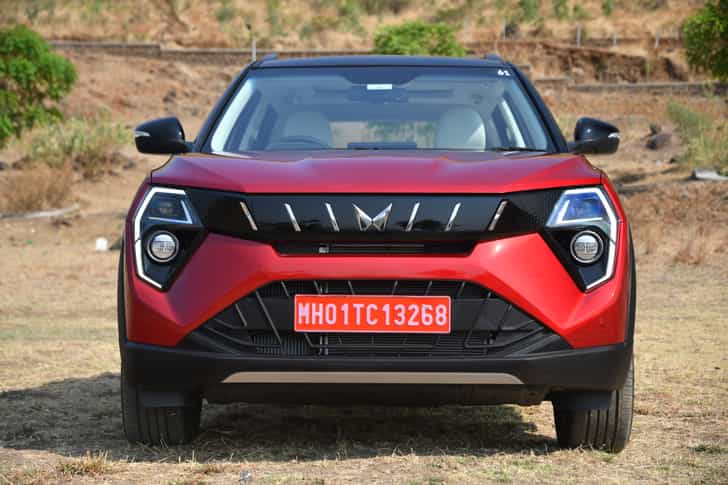
Best Automatic Petrol SUV Options Under 14 Lakh for Weekend Driving
Given your low annual running, weekend city use and a monthly highway trip, a petrol automatic is the right choice. Since you had a poor experience with Tata cars, we would recommend the Maruti Suzuki Brezza automatic. It is a reliable, hassle-free SUV with a proven service network, which is exactly what you are looking for. The 1.5-litre petrol engine is smooth and the 6-speed torque converter automatic is far better than the AMT you had in the Tata Nexon. It is not the most powerful car in the segment, but it is dependable and easy to live with.If you want something with a bit more power and a more engaging driving experience, the Skoda Kylaq 1.0 TSI automatic is a good alternative. The turbo petrol engine is punchy and the 6-speed torque converter automatic is smooth in the city. Skoda's service network is not as extensive as Maruti's, but it has improved significantly in recent years.The Mahindra XUV 3XO petrol automatic is also worth considering. It is one of the most powerful cars in the segment and offers a strong feature list, but the boot is on the smaller side.Overall, the Brezza is the safest recommendation for your requirements. If you want more performance, the Kylaq is the better choice.
Maruti Suzuki BrezzaTata NexonMahindra XUV 3XOSkoda KylaqShould I Upgrade My Hyundai Grand i10 to an EV with ADAS and Tech Features?
Given your usage, the key requirement is a larger boot for your son's folded wheelchair, along with a comfortable and hassle-free city driving experience. With 90% city driving and around 50 km a day, an EV can make sense if you have reliable home charging, but the premium is only justified if you are committed to keeping the car for the full lease period and maximising the running cost savings. Otherwise, a petrol automatic car is the more straightforward choice.ADAS and tech features are nice to have, but they should not be the deciding factor. In city driving, features like adaptive cruise control and lane keep assist are not as useful as they are on highways, and auto emergency braking tends to be too sensitive to pedestrian crowds; thus, it's only better out on the highway, not so in your case. Focus on a car with good visibility and a comfortable driving position instead. For your shortlist, the Maruti Suzuki Wagon R Swivel seat could be an ideal option. The front passenger seat swivels out fully to enable people with mobility challenges very easy entry. The boot is also large enough to store a folded wheelchair. You will have to order this from select Maruti dealers, so check with a few in your area. Being a company approved and provided system, there is a warranty for the swivel seat as well as the entire car. The Maruti Suzuki Brezza automatic is another option. It offers a large, square boot that should also take a folded wheelchair and the ride is very comfortable, especially at low city speeds. If you are looking for a slightly larger car, the Kia Seltos IVT or the Hyundai Creta IVT are worth considering for their bigger boots and more premium feel, but make sure the step in height is comfortable for your son.
Maruti Suzuki Wagon RMaruti Suzuki BrezzaKia SeltosHyundai CretaIs the Taigun DSG Gearbox a Reliable Option for Automatic Transmission?
Given your knee pain and Gurugram traffic, moving to an automatic is the right decision. The Volkswagen Taigun 1.5 TSI DSG is a fantastic driver's car, but the DSG gearbox is not the most stress-free ownership proposition in the long term, especially in heavy stop-start traffic. If you want to stay in the same segment and not compromise on performance, the Skoda Kushaq 1.0 TSI with the 8-speed torque converter automatic is the best option. The 1.0 litre TSI engine will not be as peppy as your 1.5 litre Taigun, but for everyday traffic it is surprisingly good and lively enough driven at everyday speeds. You will not lose any performance in the city and the torque converter gearbox is far more robust, smoother and better suited to city traffic. It is also a genuinely enjoyable car to drive, so you are not giving up the driving experience you enjoy. If you want to save some money, the Skoda Kylaq 1.0 TSI with the same torque converter automatic is also worth considering. It is essentially the same mechanical package in a slightly smaller and more affordable body. The key point is that the torque converter automatic is the right solution for your knee and your city usage, and you do not have to compromise on performance to get it.
Skoda KushaqSkoda KylaqVolkswagen Taigun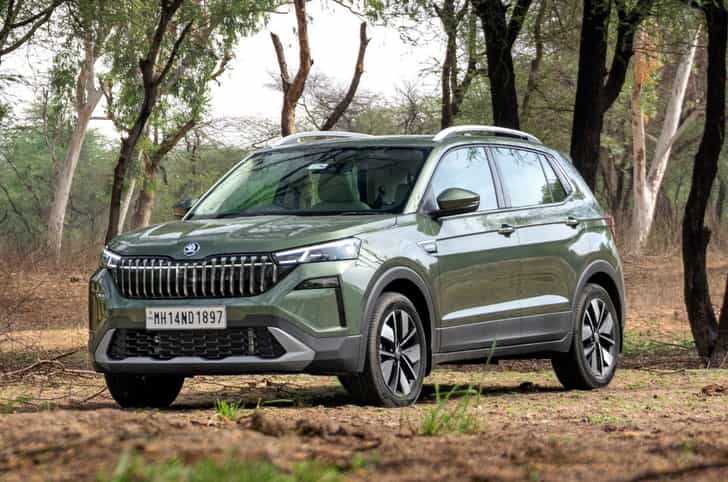
Best SUVs for Family Comfort and ADAS Safety Under 24 Lakh
For your usage, the Maruti Suzuki Victoris Hybrid is the best fit. Your 40 km daily run with 70% city driving makes a strong case for a hybrid, and the Victoris Hybrid delivers excellent fuel efficiency in stop-start traffic while still being comfortable and easy to drive on the highway. It also offers ADAS safety features and a proven ownership experience, which is important for long-term peace of mind.If you want a more premium feel and a slightly larger, more comfortable cabin, the Tata Sierra is a strong alternative. It is a very comfortable family SUV with a spacious interior and a premium feel, but it will not match the Victoris Hybrid on fuel efficiency in city driving.Overall, the Victoris Hybrid is the most balanced choice for your requirements.
Maruti Suzuki VictorisTata SierraComparing Kylaq and New Brezza 1.0 Liter Turbo for City and Highway Driving
Go for the Skoda Kylaq 1.0 TSI. It is the better fit for your usage. The 1.0 TSI turbo petrol engine is punchy and offers strong mid-range performance, which makes highway overtakes easy and the car feels stable and confident at triple-digit speeds. The suspension is well-tuned, offering a good balance between ride comfort and handling, and the steering is precise, which inspires confidence on long highway runs. The Maruti Suzuki Brezza 1.0 turbo is a good car, but the Kylaq feels more engaging to drive and is better suited to your requirements. The only thing to keep in mind is that the Kylaq's boot is on the smaller side, so if you regularly carry a lot of luggage, that is something to consider. Overall, for your mix of city driving and long highway trips, the Kylaq is the better fit.
Skoda KylaqMaruti Suzuki BrezzaI have a 2012 Volkswagen Jetta 2.0 TDI Highline. I’ve tried two cars since then,…
If you are still holding on to your 2012 Volkswagen Jetta 2.0 TDI Highline, it is clear that driving enjoyment is a top priority. The Jetta diesel’s strong torque, solid build and planted highway manners are difficult to replace, especially in today’s market, where diesel-powered mass-market sedans are no longer available.The closest modern alternatives in terms of driving feel would be the Skoda Slavia and Volkswagen Virtus with the 1.5 TSI engine. Both offer strong performance, good handling and a solid, confidence-inspiring feel on the highway. The 1.5 TSI engine is genuinely punchy, and the overall driving experience is among the better options in the segment.If moving up a segment is an option and an SUV body style is acceptable, the Skoda Kodiaq and Volkswagen Tayron are also worth considering. Both offer a more premium experience, excellent highway manners and a strong 2.0-litre turbo-petrol engine. However, they are considerably larger and more expensive than the Jetta.
Volkswagen VirtusSkoda KodiaqSkoda SlaviaVolkswagen Tayron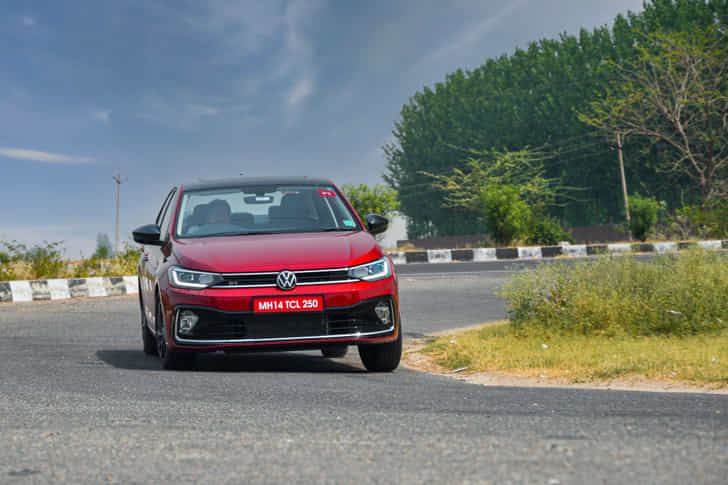
Hi Autocar, I’m looking for a petrol SUV under Rs 18 lakh with a manual transmi…
We would recommend the Renault Duster with the turbo-petrol engine paired with the six-speed manual. It is the best fit for the stated usage and priorities. With relatively low annual running, a petrol engine makes more sense, and while the Honda Elevate’s naturally aspirated engine is smooth, reliable and easy to live with, it does not have the Duster’s sense of toughness.The Elevate also feels less modern inside compared with the Duster. The Duster has a strong SUV stance, a commanding driving position and good ground clearance, which should provide greater confidence on rough patches and light off-road trails. Its handling and suspension are particular strengths, while the overall build quality also feels reassuring.Renault’s service network is not the strongest, but support should be better in Bengaluru, given that it is a major city. As an overall package, and considering the requirements, the Duster makes for the better choice. A relatively limited service network for Renault cars is a drawback, but the Duster’s strengths make it a more suitable option for this particular usage.
Renault DusterHonda ElevateHi, I own a Kia Sonet, which I am extremely disappointed with. About 99% of my d…
Given your priorities, the Honda City is the clear recommendation. It is a proven sedan with a comfortable ride, excellent reliability and low maintenance costs. The suspension is well-tuned for city use, and it handles speed breakers and potholes with a level of composure that many compact SUVs struggle to match. Honda's service network is strong, and ownership experience is generally hassle-free. The petrol engine is smooth and efficient, making it a great fit for predominantly city driving.Your observation about sedans is largely correct. A well-engineered sedan like the City often delivers a smoother and more settled ride than many compact SUVs, especially over broken city roads.If you want a more premium feel and a slightly softer ride, the Hyundai Verna is also worth considering. It is a comfortable and refined sedan with good service support, but the Honda City remains the more proven long-term ownership proposition.The key is to avoid turbo petrol engines with DCT gearboxes, as they can be less suited to stop-start city traffic. The naturally aspirated petrol engines in the City and Verna are smooth, reliable and well suited to your usage.Overall, the Honda City is the most sensible and satisfying choice for your requirements.
Honda CityHyundai VernaHi Autocar Team, I currently own a 2021 Maruti Suzuki Swift ZXi (P) and have cov…
Given the usage, the Maruti Suzuki E Vitara Alpha is the better fit. A 90- 95 km daily commute, combined with the ability to charge at home, makes an EV a sensible upgrade. The E Vitara is a well-rounded package, backed by Maruti’s extensive service network and established ownership experience.The VinFast VF6 Wind is an interesting alternative, with a larger battery and a longer claimed range. However, VinFast is still a new brand in India and does not have the same service reach or long-term track record as Maruti. The e Vitara’s 50.8kWh battery and 550km ARAI-claimed range are more than adequate for the daily commute, while the service network of Maruti Suzuki cars across Delhi-NCR and Noida is a significant advantage for long-term ownership.The VF6 Wind’s 59.6kWh battery and 525km claimed range are impressive, but its limited service footprint and lack of an established ownership history make it a riskier choice at this stage. The E Vitara Alpha also gets a good set of features, including a 360-degree camera, ADAS and a 12.3-inch touchscreen, making it a well-equipped and practical upgrade from the Maruti Suzuki Swift.The VinFast car does have an advantage in terms of rear-seat and boot space, although for a family of two, the e Vitara should be more than adequate. It also feels more solid and planted at higher speeds, while offering considerably more power and a more engaging driving experience. However, these advantages are not enough to sway the overall decision. For this particular use case, the e Vitara Alpha remains the safer and more sensible choice.
Maruti Suzuki e VitaraVinfast VF6Maruti Suzuki Swift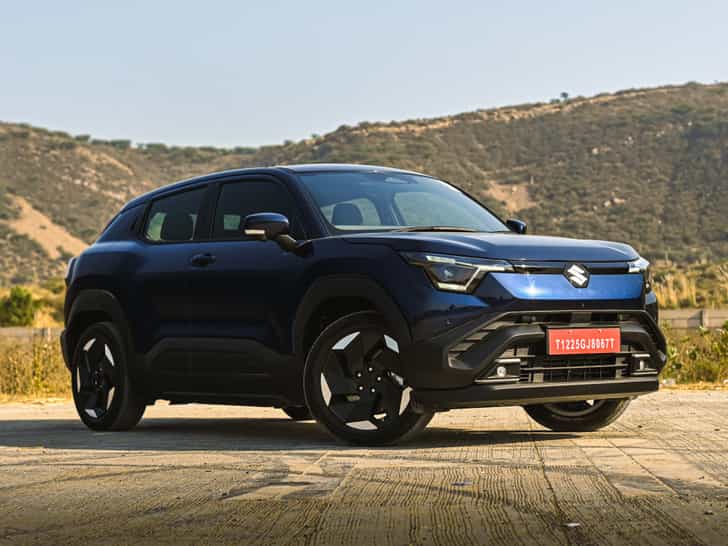
Upgrading from an Activa to a Meteor 350 as a first-time gear rider (5'6" height…
For anyone transitioning from a CVT scooter to a geared motorcycle, the initial period can be a little challenging. However, once you adapt to the system, it will almost become second nature, and there won’t be much to worry about.Going from a Honda Activa to a Royal Enfield Meteor 350 will certainly require some adjustment, given the significant difference in weight between the two machines. However, once on the move, the Meteor’s weight tends to fade into the background, so it shouldn’t be too difficult to manage. The Meteor also gets a slip-and-assist clutch, which makes the clutch action pleasingly light and should make the transition easier.
I am looking for a car that I can keep for the long term, around 8–10 years, wit…
Given the budget, usage and long-term ownership focus, we would recommend the Renault Kiger CVT over the Hyundai Venue or Kia Sonet DCT. A daily 15 km office commute with frequent bumper-to-bumper traffic, along with occasional highway trips, is better suited to a CVT than a DCT. CVTs are smoother at low speeds and work well in stop-start traffic. They can also be less demanding in such conditions over the long term.DCTs can be reliable when maintained properly, but they are not the ideal choice for regular stop-start traffic. Repeated low-speed crawling can generate heat and accelerate clutch-pack wear, potentially leading to expensive repairs over time.The Kiger also offers a modern design, a spacious cabin and a good feature set for its price. Renault's after-sales service has improved in recent years, while the Kiger offers strong value for money in this segment. The budget also stretches further with the Kiger CVT, allowing a higher-spec variant with some money left over. In comparison, the Sonet and Venue are positioned slightly higher, so the same budget would typically mean settling for a mid-spec variant.
Renault KigerHyundai VenueKia SonetIs a Plug-in Hybrid a Combination of ICE and EV, and Which Cars Are Available?
Yes, a plug-in hybrid (PHEV) is exactly that - a combination of an internal combustion engine (ICE) and an electric motor with a battery that can be charged from an external source. The idea is that you can use the electric-only mode for short local trips, and then the car seamlessly switches to the petrol engine for longer journeys, so you never have to worry about range.In India, however, the options are quite limited. You have the Mercedes S 450e at the top end as the only plug-in hybrid available at the moment. However, JSW MG is launching the MG Hector Tomahawk later this week, a plug-in hybrid, and next year you will get a Jetour T2-based SUV from JSW, also a plug-in hybrid. Other than these, there are no PHEV options for now.
MG Hector TomahawkMercedes-Benz S-ClassJSW Motors Jetour T2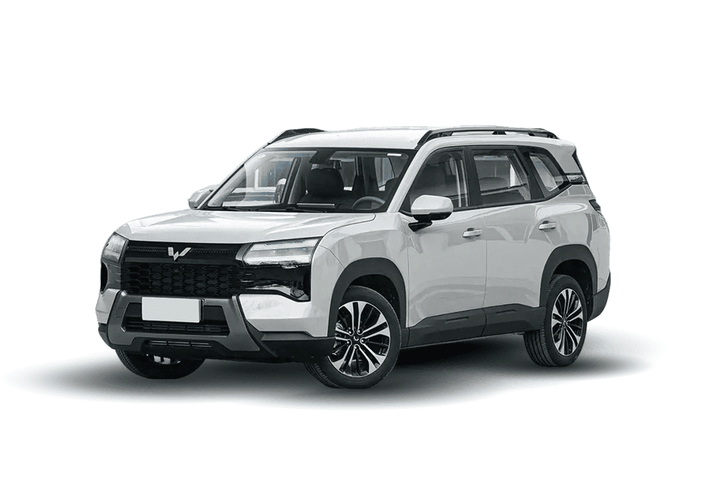
Tata Safari vs XUV700: Which Is Better Within 18 Lakh?
With a budget of Rs. 18 lakh, you're likely to get the entry-level variants of the Mahindra XUV 7XO and Tata Safari. Between the two, the Tata Car has a more spacious third row; however, the XUV 7XO is the better all-rounder.The XUV 7XO is essentially the facelifted XUV700, so you get the same proven mechanical package, along with a more modern interior, updated features and a more premium feel. The 2.0-litre turbo-petrol engine is strong and refined, making this Mahindra car well suited to both city and highway driving, while the manual gearbox is smooth and easy to use.The Tata Safari is still a good car, with a comfortable ride and a spacious cabin, but the XUV 7XO feels more modern and premium inside.
Mahindra XUV 7XOTata SafariBest Sub-4 Meter Car With Good Mileage and Safety: Manual or Automatic?
With a daily commute of 75 km and a driver, your priorities should be fuel efficiency, low running costs, and rear-seat comfort. The Maruti Suzuki Brezza CNG is the most sensible choice here. This Maruti Suzuki car is a sub-4-metre SUV with a comfortable rear seat, good ride quality, and very low running costs thanks to CNG. Maruti’s service network and reliability also make it a stress-free long-term ownership proposition. Since you have a driver, a manual transmission is perfectly fine and will keep costs down.If you want a more premium feel and better safety credentials, the Mahindra XUV 3XO diesel is the alternative. This Mahindra car is one of the safest cars in its segment, has a strong diesel engine, and is well-suited to high daily running.
Maruti Suzuki BrezzaMahindra XUV 3XOUpgrading From Ford Ecosport Petrol Automatic Within 18-19 Lakh Budget
You should consider the Honda Elevate ZX CVT. As far as reliable, no-nonsense midsize SUVs go, this Honda car is among the best. Honda's 1.5-litre i-VTEC is a great mix of smoothness, reliability and efficiency, and with 120hp on tap, it has enough punch to handle the hills of Uttarakhand and Himachal when you need it to. It's a fuss-free SUV that will serve you well over a long period of time; Honda's service is known to be of high quality, and you get quite a few features within your budget of Rs 18-19 lakh.Other options you could look at are the Maruti Suzuki Victoris/Grand Vitara, which use a similarly reliable 1.5-litre petrol engine with a torque-converter automatic, but it isn't quite as punchy as the Honda engine and may feel lethargic in the hills if the car is loaded up. In a similar vein are the Hyundai Creta/Kia Seltos, which also use a 1.5 petrol engine and CVT, though these aren't quite as efficient, and in your budget you'll only get the base models of these cars. Overall, we feel the Honda Elevate is the best bet for you.
Honda ElevateMaruti Suzuki VictorisKia SeltosMaruti Suzuki Grand VitaraHyundai Creta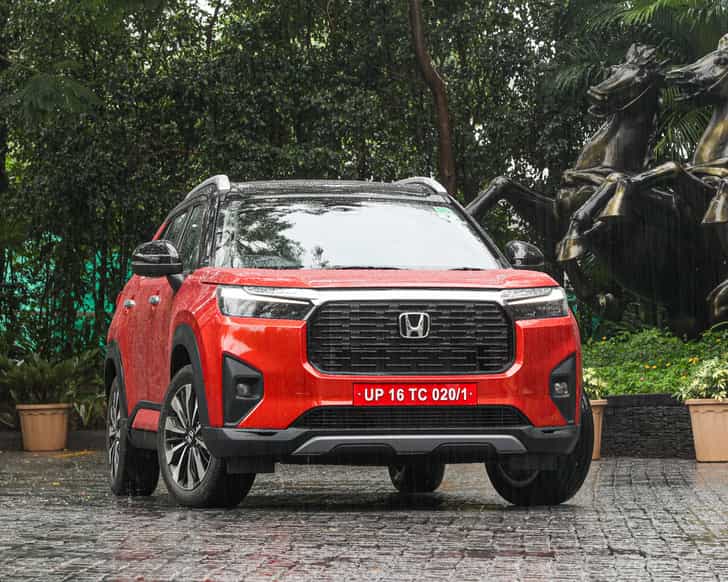
Upgrading From Altroz to SUV: Seltos vs Victoris for 15-18 Lakh in Pune
Between the two, the Kia Seltos is the better overall package. It is larger outside, roomier inside, and feels more modern and premium. The 1.5-litre engine and IVT combination is also excellent in terms of refinement and makes for a very relaxing car to drive in the city. With regard to your lighting concerns, this Kia car does come with LED headlights from the base model onwards, but LED fog lights are only standard from the HTX onwards. However, LED fog lamps should be part of the official accessories catalogue, so check with your dealer about the same.The Maruti Suzuki Victoris ZXi (O) is also a well-equipped variant with LED headlamps and a good feature set. Its engine is also very refined, and the 6-speed automatic transmission is very smooth-shifting. The downside compared to the Seltos is that it isn't as spacious inside.Overall, the Seltos is a better choice for your needs.
Kia SeltosMaruti Suzuki Victoris
Need expert advice?
Ask the Autocar community and experts.