
Autocar India
PS

prasad shiraskar

1d

I’m planning to buy the new Kia Seltos 2026, but I’m confused between the petrol NA IVT and the turbo petrol DCT options. My usage will mainly be office commute in Navi Mumbai, around 900-1200 km per month, and city driving. So good mileage and ease of driving in traffic are important, but at the same time, I don’t want the car to feel underpowered or sluggish. Please suggest to me which variant would suit my needs, or if there's any other car in the same segment.

Autocar India team

Autocar India

Verified
2m
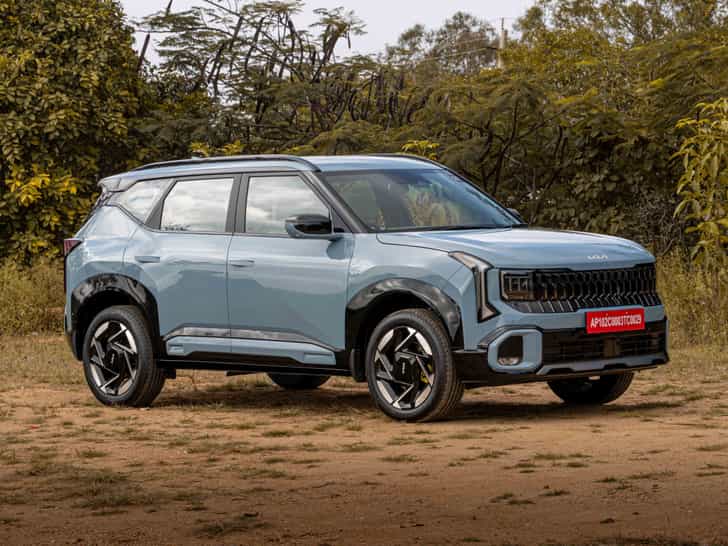
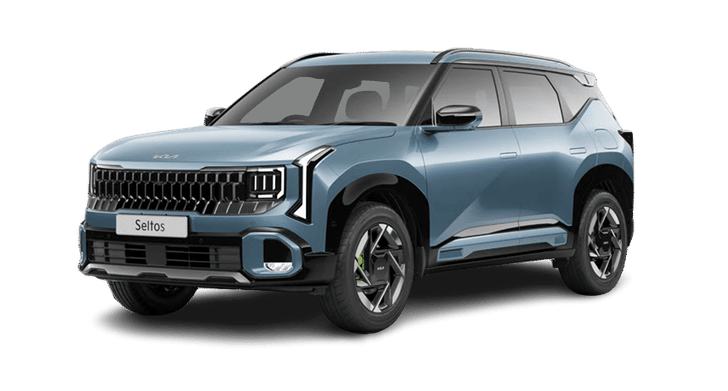
For mostly city runs in Navi Mumbai and 900-1200 km a month, the Kia Seltos 1.5 petrol with the IVT automatic fits your needs better than the 1.5 turbo with the DCT. The IVT is a type of automatic that prioritises smoothness, so it feels calm in stop-and-go traffic and usually uses less fuel in the city than the turbo DCT. It also edges forward smoothly at low speed, which makes bumper-to-bumper driving less tiring.
In the city, using 1.5 petrol does not feel slow. It keeps up with traffic and climbs flyovers without stress. The steering is light, and the power delivery is smooth, so daily commuting is simple. The turbo DCT will feel quicker if you often need sudden bursts, but in heavy traffic, the DCT can feel a bit hesitant and clunky at crawling speeds, can run hotter in long jams, and will likely use more fuel in the city.
The trade-off with the IVT is that when you press hard for a quick overtake, the engine gets loud and the pull is steady rather than instant. If you do frequent fast highway trips with a full load, the turbo will feel stronger. That said, the 115hp, 1.5-litre engine feels more than adequate and not underpowered. Overall, for your daily office run and focus on ease and mileage, pick the Seltos 1.5 IVT.
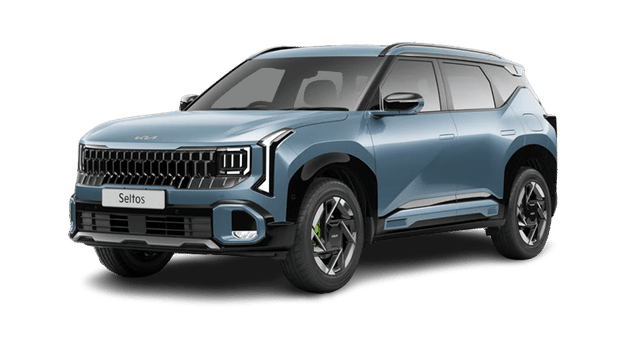
Kia Seltos

Kia Seltos

Explore cars mentioned

More questions on similar cars

VR

Vishal Raivadera

2d

I am planning to buy a compact SUV with a budget of around ₹20-21 lakh (on-road). I have shortlisted two models: Hyundai Creta 1.5 NA IVT SX (O) / SX Premium and Kia Seltos 1.5 NA IVT HTX. My usage will be mainly daily city driving, with occasional highway trips (around once a quarter). I have already owned a Tata car and do not want to go with Tata again due to post-sales service issues. I also took the test-drive of Toyota Hyryder but did not like its driving experience. In test drives, I preferred the Creta over the Seltos in terms of driving feel. However, I am concerned that the current Creta is based on the K2 platform, which may become outdated after the expected facelift next year, whereas the Seltos is on the newer K3 platform. Given my requirements and concerns, which car would be the better choice for me: the Hyundai Creta 1.5 NA IVT SX (O)/SX Premium or the Kia Seltos 1.5 NA IVT HTX?

Autocar India team

Autocar India

Verified
1d

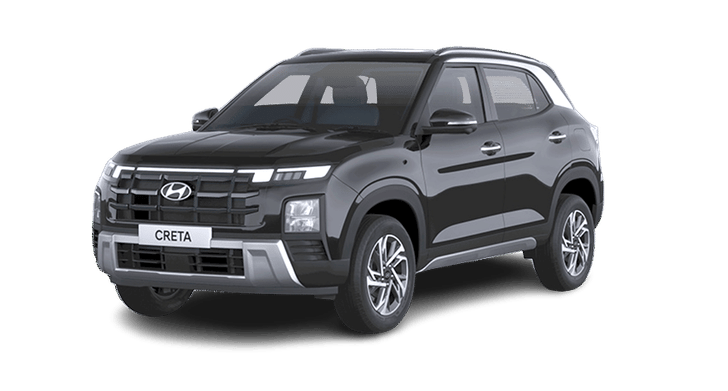
With mostly city use, occasional highway drives, and ₹20-21 lakh on-road, you are clearly looking for a smooth and stress-free automatic zone. In your case, we’d pick the Hyundai Creta 1.5 IVT. You already liked how the Creta drives, and that matters more in daily life than anything on a spec sheet. The 1.5 petrol with the IVT feels calm in stop-go traffic, and the steering is light, so parking and tight turns are easy. This Hyundai car is a touch softer than the Seltos, which takes the edge off bad roads and will keep you fresher after long city days. Hyundai’s service network is also wider, which should ease your worry after a poor Tata experience.While the K3 is a notable upgrade on the K2, bringing larger dimensions, improved structural rigidity and more features, it doesn’t matter if you don’t like how it drives.Two things to note with the Creta IVT: it is not very quick, so fast highway overtakes with a full load need a firmer press of the accelerator and a bit of planning. If you prefer a slightly sportier feel and a few extra features at this price, the Seltos 1.5 IVT HTX is a solid pick. But since you prefer the way the Creta drives, it’s the better choice for you.

VehicleHyundai Creta
VehicleKia Seltos
PC

PC

1d

I was using a Hyundai i20 N-Line iMT 2023 model, which I purchased in 2023. I have now sold it due to low mileage and heating issues. I am currently confused between the XUV 7XO AX7T petrol automatic (₹27.32 lakh), MG Hector petrol CVT (₹23.5 lakh), and Kia Seltos IVT GTX+ (₹24 lakh). I will be using the car with my wife and 3-year-old child, driving twice a week to office in the city and taking a road trip once every 3 months.

Autocar India team

Autocar India

Verified
1d

Do keep in mind that none of the models that you've shortlisted are particularly fuel efficient. Among these, the Kia Seltos IVT is likely to be the most fuel efficient, delivering approximately 10.3kpl in the city and 14.22kpl on the highway, while the petrol-automatic versions of XUV 7XO and MG Hector are likely to return fuel efficiency in single digits.Additionally, the interior of Seltos feels upmarket. This Kia car is spacious and for a family of three, it feels the right size. Sure, performance isn't as strong as the XUV 7XO, however for leisurely drives with the family its 1.5-petrol IVT combination works well.

VehicleMahindra XUV 7XO
VehicleMG Hector
VehicleKia Seltos
CV

Chhaya Vora

1d

Is the Seltos 2026 automatic petrol IVT worth purchasing for Mumbai traffic? I have heard that the 1.5 IVT lags. My monthly running is 500–600 km in the city.

Autocar India team

Autocar India

Verified
1d

Your usage involves low monthly running, mostly city, and heavy traffic. In this scenario, the Seltos IVT works in your favour. This is smooth, creep-friendly and very easy to drive in stop-go conditions. There are no jerks, no clutch fatigue and very light controls, which makes daily driving stress-free. In real-world use, this engine-gearbox combo is known to be refined and well-tuned for everyday driving rather than outright performance.Now about the “lag” you’ve heard. It’s not exactly lag, it’s typical CVT behaviour. When you accelerate hard, the engine revs rise first and speed builds gradually, which can feel like a delay. But in city driving, where inputs are gentle and speeds are low, this is barely noticeable. This Kia car only feels weak if you expect quick overtakes or sporty response. The upside is that Kia has tuned it well, so the rubber-band effect is limited compared to older CVTs.Compared to alternatives, the turbo petrol DCT version is quicker and more fun, but in Mumbai traffic it can feel jerky and less reliable in long term. The IVT is the safer, smoother and more relaxed choice. Compared to something like a Creta CVT, the experience is very similar, but the Seltos feels a bit more premium inside.

VehicleKia Seltos
VehicleHyundai Creta

Popular discussions right now

KY

Krishna Yadav

5d

I am planning to sell my Mahindra XUV700 and switch to the Renault Duster. I would like your expert opinion on whether this would be a good decision.

Autocar India team

Autocar India

Verified
4d

On paper and in real-world ownership, these are very different cars, and the Mahindra XUV 7XO sits in a clear segment above. The XUV 700 is a bigger, more complete SUV. It offers more space, better road presence, stronger performance and a far richer overall experience, including the option of a third row and a more premium cabin. It is designed as a proper family SUV and feels more capable on highways and long drives.The Renault Duster, even in its new form, is a simpler, more driver-focused and lighter SUV. It will likely be easier to drive in the city and feel more rugged and straightforward, but it is still a step down in terms of overall size, features and cabin experience.So the decision really comes down to intent. If you are moving because you want something more compact, easier to use daily and less feature-heavy, then the Duster can make sense. But if you are expecting it to feel like an upgrade or even equal to the XUV700 in terms of space, comfort and overall experience, it will not.

VehicleRenault Duster
DE

Devakumar

5d

I have booked the Tata Sierra Adventure Plus petrol manual, but I am now confused between the petrol and diesel manual variants, particularly in terms of mileage and performance. I am not interested in an automatic transmission. My annual running is less than 6,000 km. Could you please advise which engine option would be more suitable for my usage? Additionally, I would appreciate any alternative suggestions for a spacious car with good mileage that fits my needs.

Autocar India team

Autocar India

Verified
4d

The Tata Sierra is a big, heavy car, and the petrol engine, being a naturally aspirated unit, feels just about adequate, especially once you load it up or hit the highway. The diesel, on the other hand, suits the car far better with its stronger low-end pull, making overtakes easier and long-distance driving far more relaxed.That said, with your low annual running of under 6000 km, the petrol still makes sense if your usage is mostly in the city. It will feel smoother, easier to live with and perfectly adequate for everyday driving, even if it lacks that effortless punch on highways.If you are open to alternatives for a better petrol manual experience, the Renault Duster with its turbo petrol engine is a strong option. It feels far more effortless to drive, while naturally aspirated options like the Kia Seltos or Hyundai Creta offer a more refined and effortless experience than the Sierra petrol.

VehicleTata Sierra
VehicleRenault Duster
VehicleKia Seltos
VehicleHyundai Creta
RO

Rohin

1w

I am confused about buying the AMT version of the Skoda Kylaq, Tata Nexon, or Maruti Fronx. My budget is between 11 and 13 lakh. My usage is mostly city driving of about 1,000 km per month, with occasional long highway drives.

Autocar India team

Autocar India

Verified
3d

Between the three, the Skoda Kylaq is the best automatic for the money. It doesn’t use an AMT but a proper 6‑speed torque-converter with the 1.0 TSI, which is smooth, robust and easily the nicest for your occasional highway runs.The Maruti Suzuki Fronx 1.0 turbo also gets the same 6‑speed torque-converter auto, and while it is refined and efficient, it doesn’t have the same solid, European feel or driving dynamics as the Kylaq. However, from an overall cost-of-ownership point of view - price, fuel efficiency and service, the Fronx is likely to work out cheaper.The Tata Nexon in your budget doesn’t get a torque-converter. You mainly have a 6‑speed AMT, which is convenient but nowhere near as smooth or quick as a proper automatic. There is also a 7‑speed DCA dual‑clutch option, which is noticeably better than the AMT, but still not as seamless as the autos in the Kylaq and Fronx, and it can push the price higher.For 11-13 lakh, 1,000km a month in the city and the odd long drive, we would pick the Kylaq auto. If budget discipline and running costs are top priority, go for the Fronx 1.0 turbo automatic.

VehicleSkoda Kylaq
VehicleMaruti Suzuki Fronx
VehicleTata Nexon

Posted on: 24 Apr 2026