Autocar India
SG

Sumit gupta

24w

I’m looking for an automatic car in the ₹10-12 lakh range - I drive approximately 1,000 km and want reliable, low-maintenance options. Please suggest suitable models. Also, explain the types of automatic transmissions available (and their order of technological advancement), and tell me whether automatic cars with factory-fitted CNG are available and which models to consider.

Autocar India team

Autocar India

Verified
24w

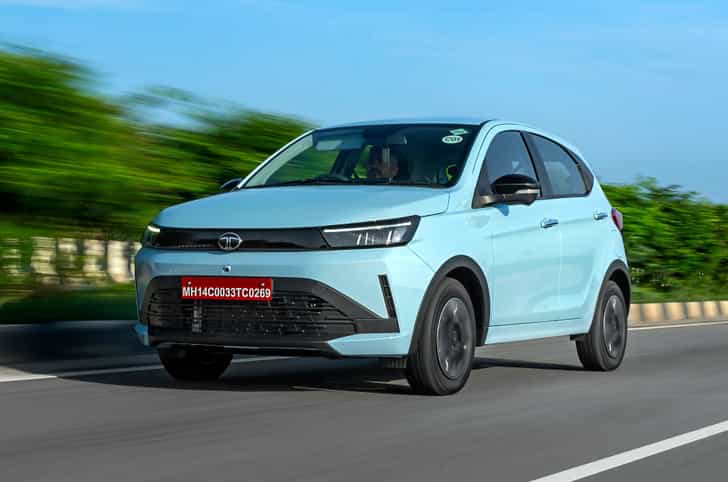
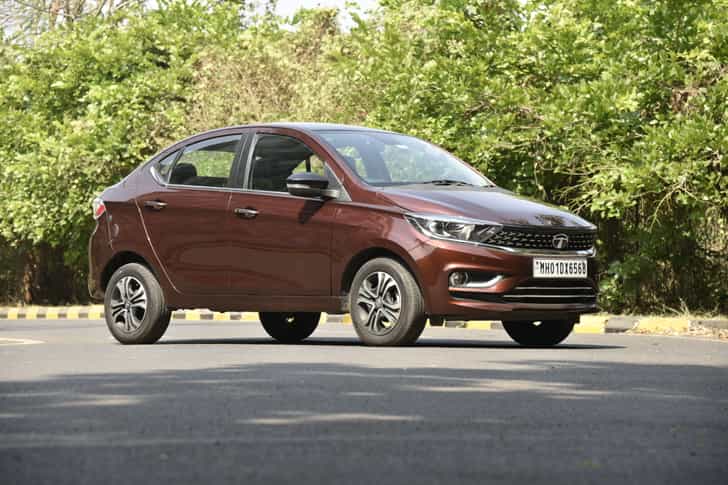
Tata offers the Tiago and Tigor with a CNG and automatic combination. Both cars fit well within your budget and are convenient, pocket-friendly options.

The only downside is their automated manual transmissions (AMT), they tend to feel a bit slow and aren’t as smooth as conventional automatics.

To know more about the different types of automatic transmissions, you can check this detailed podcast: Deep Drive - All You Need to Know About Automatic Gearboxes.
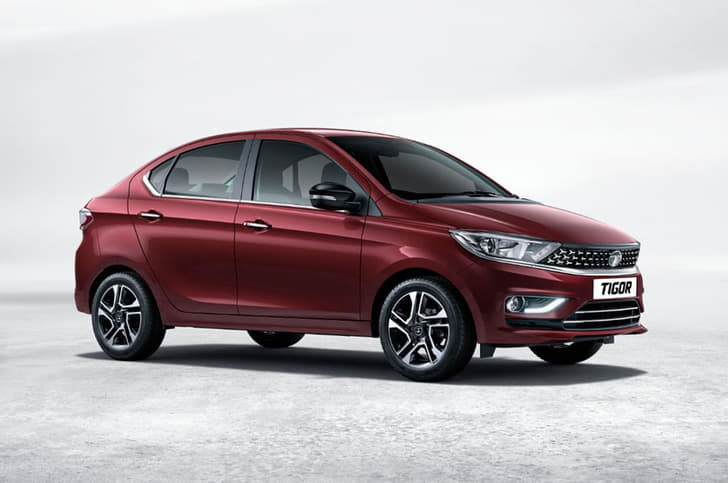
Tata Tiago

Tata Tiago

More questions on similar cars

ER

Eric

1d

I am interested in buying a Hyryder or a Grand Vitara strong hybrid, specifically for their fuel efficiency. My question is, with the government pushing for E85 or E100 in the future, should I wait for CAFE III norm-compliant vehicles to enter the market instead of purchasing an E20-compliant vehicle now?

Autocar India team

Autocar India

Verified
7h

Vehicles designed to run on E20 fuel simply cannot run on E85. Fuel grades of E85 and above, require hardware changes and thus, whenever the government decides to introduce these fuels, it will have to ensure supply of lower ethanol blends too. From that point of view, it is safe to purchase a car today as the fuel to run it, will have to be supplied even after the introduction of E85 fuel. The Toyota Hyryder and the Maruti Suzuki Grand Vitara are essentially the same vehicle, thus pick the one that offers you a better deal.

VehicleToyota Urban Cruiser Hyryder
VehicleMaruti Suzuki Grand Vitara
MB

MB

18h

I am considering the Kia Clavis petrol for my family of six. I am a relaxed driver with mostly city usage and occasional long road trips. I am conscious about my budget but willing to stretch if it is the right choice for the next 7 years. I am confused about which transmission to choose — naturally aspirated petrol, turbo petrol manual, or turbo petrol DCT. I have heard about DCT issues in slow-speed traffic and uphill driving. Given this, would going with the naturally aspirated petrol be sufficient, or should I consider the turbo petrol manual instead? Currently, I drive a Honda City i-VTEC manual, and during uphill driving with a full load, it feels underpowered and requires frequent downshifts. Could you please advise on the best option for my usage?

Autocar India team

Autocar India

Verified
10h

You have already experienced how a naturally aspirated engine feels under load in your Honda City, especially on inclines. In a larger and heavier car like the Kia Carens Clavis, that limitation will be even more noticeable. With six people on board and occasional hill drives, the naturally aspirated petrol will feel strained and require frequent downshifts, which takes away from the relaxed driving experience you are looking for.The turbo petrol solves this. It offers stronger low and mid-range performance, making city driving easier and highway or hill driving far more effortless, even with a full load. It reduces the need for constant gear changes and feels more relaxed in real-world conditions. The DCT does offer convenience, but your concern is valid. In slow traffic and uphill situations, it can feel less smooth and slightly hesitant, which does not suit your usage.That said, since you are based in Gurugram, where traffic can get quite heavy, you should be prepared for the manual to feel tiring in daily stop-and-go conditions. If convenience becomes a bigger priority, the DCT is still usable, but it comes with the trade-off of low-speed smoothness.

VehicleKia Carens Clavis
AD

Abhijeet Desai

1d

I am planning to buy the Tata Sierra (top-end variant) and need advice on choosing between the petrol and diesel options. My usage is as follows: Daily driving: 50-60 km Long trips: around 400 km once every 2–3 months Location: Shirala, Maharashtra (mix of city, highway, and ghat roads) Considering mileage, maintenance, and long-term ownership costs, which engine would be better suited for my usage - turbo petrol or diesel? I would also appreciate insights based on real user experiences and practical ownership.

Autocar India team

Autocar India

Verified
11h

With 50-60 km every day, a 400 km trip every couple of months, and a mix of city, highway and ghat roads around Shirala, the Tata Sierra diesel in the top trim will suit you better than the turbo petrol. Your running is high, so the diesel will use less fuel day to day and, over a few years, the lower fuel bills usually make up for the higher buying price. On hilly roads, the diesel’s stronger pull at low speeds makes life easy - fewer gear changes, cleaner overtakes, and it feels more relaxed when the car is full of people or luggage.There are a couple of points to know. A modern diesel has a soot filter in the exhaust - called a Diesel Particulate Filter (DPF). It needs regular warm runs to keep itself clean. Your daily 50-60 km should be enough, but those highway runs would be ideal for this. If you do many short, cold-start drives for a week or two, you may see a warning asking for a steady drive to clear it. The advantage of Tata's diesel is that it doesn't require AdBlue, as it uses a Lean NOx trap rather than a Selective Catalytic Reduction (SCR) system to manage NOx, so that's one less thing you'll have to keep in mind.Pick the turbo petrol only if you value refinement above all else, and performance, which is much stronger than the diesel's. However, its fuel economy is nowhere near as good, and in our tests, we managed just 6.49kpl in the city and 13.7kpl on the highway.

VehicleTata Sierra

Popular discussions right now

YA

Yash

1w

I am confused between the 7XO and Safari. I took the test drive of both and loved the rugged suspension setup of the Safari, but I also liked the easy driving nature and dynamics of the 7XO.

Autocar India team

Autocar India

Verified
5d

Between the two, the Tata Safari does a great job of projecting toughness. It feels solid, has that reassuring heft, and its suspension setup really shines on broken roads and you can carry speed with confidence and it just shrugs off rough patches.That said, the Mahindra XUV 7XO is the more rounded package overall. Its 2.2-litre diesel is not just more modern, but also noticeably smoother and stronger than the older Fiat-sourced 2.0-litre unit in the Safari. It delivers better drivability in everyday conditions, which makes a difference in city use as well as on the highway.Mahindra car has also worked well on the suspension, and the improvements show. The 7XO feels more composed, offers better ride comfort over a wider range of surfaces, and is simply easier to drive. It has lighter controls, better balance, and a more user-friendly nature overall.Where the Safari still holds an edge is in the third row. It’s more usable and accommodating, whereas the 7XO’s last row is quite tight and best reserved for occasional use.So unless third-row space is a priority, the 7XO stands out as the better all-rounder. It’s more refined, easier to live with, and ultimately the more modern SUV.

VehicleTata Safari
VehicleMahindra XUV 7XO
MA

Mahesh

5d

Could you please help me choose the most suitable car within a ₹14 lakh on-road budget? I am currently confused between the Skoda Kushaq facelift, Tata Nexon Creative Plus, and Mahindra XUV 3XO AX5, considering my usage of around 1,000 km per month and the need for a safe, comfortable, and reliable family car for use with two young children?

Autocar India team

Autocar India

Verified
4d

With around 1,000 km a month, two young kids and a cap of ₹14 lakh on-road, the Mahindra XUV 3XO AX5 is the one that fits your brief best. It rides comfortably over broken city roads and speed breakers, and the rear seat is more than spacious enough for your kids. Safety is a strong point too, with a solid feel, good driver aids for this price, and mounts to fix child seats in the back. It also fits your budget in a well-equipped trim, so you are not forced into a bare-bones version. A trade-off to note: The boot is not the biggest in this price range, so if you often carry a full-size stroller plus luggage, do a quick fit check. If you prefer a more contemporary looking cabin, the Tata Nexon Creative Plus is your alternative from your list. It offers a slightly roomier boot and a very nice interior, and is easy to drive in the city, but the petrol engine feels a bit less smooth at low speeds and Tata service quality can vary by city. The Skoda Kushaq facelift would be a good pick, but only if you can stretch your budget, as within ₹14 lakh you’ll only get the base manual model, and Skoda’s service reach is smaller. Overall, for your family use and budget, the XUV 3XO AX5 lines up best.

VehicleMahindra XUV 3XO
VehicleTata Nexon
VehicleSkoda Kushaq

Posted on: 9 Nov 2025