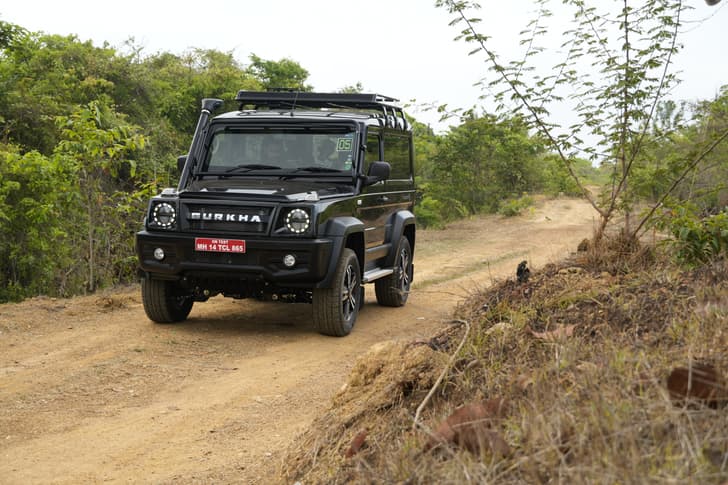
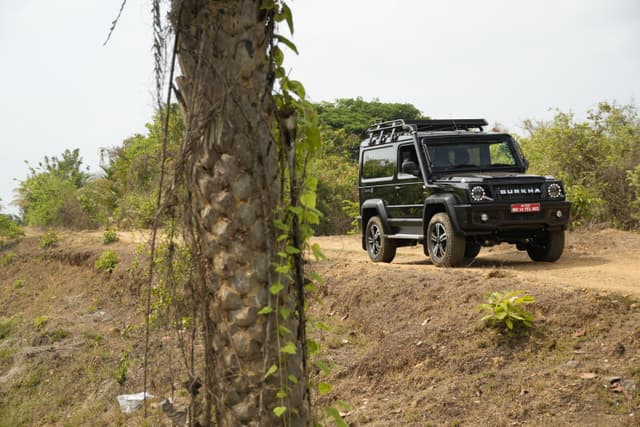
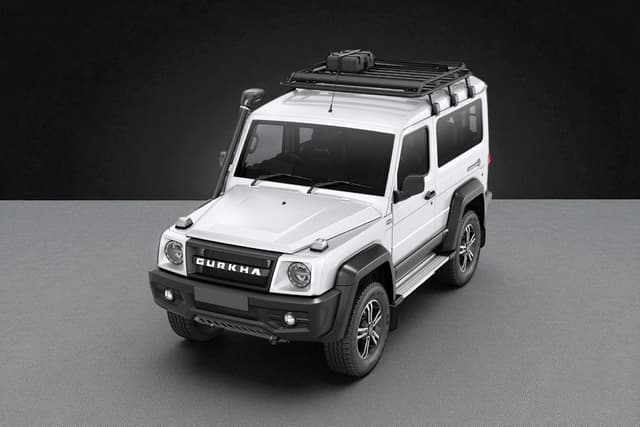
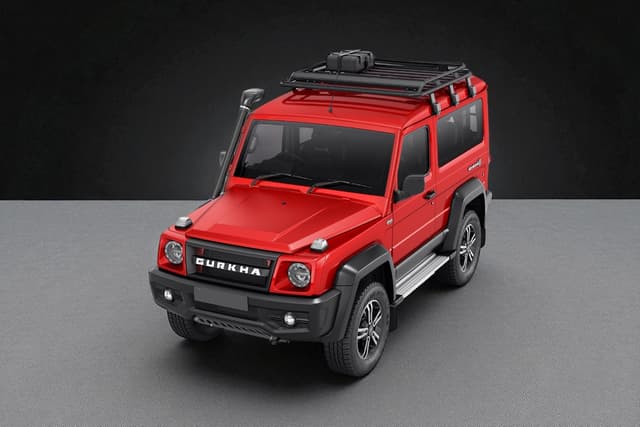
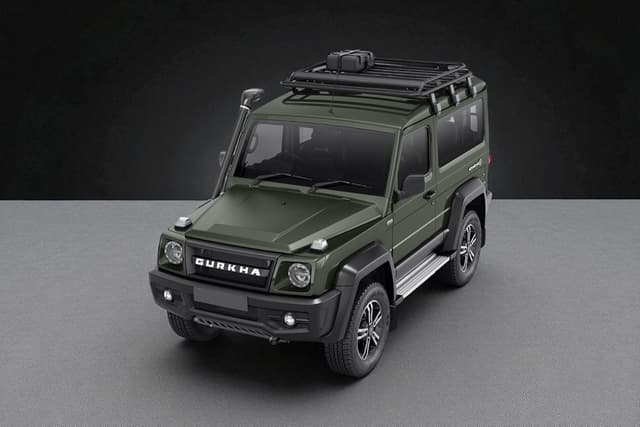
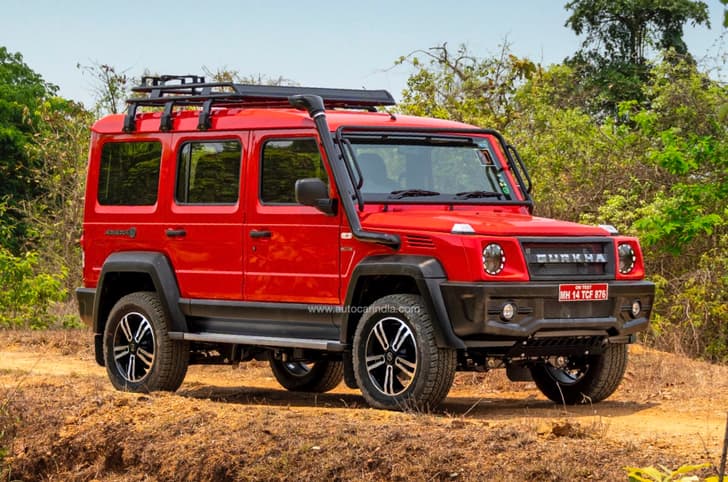
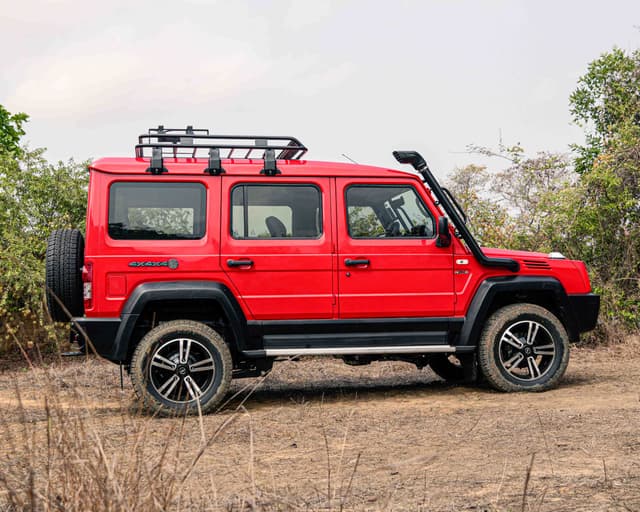
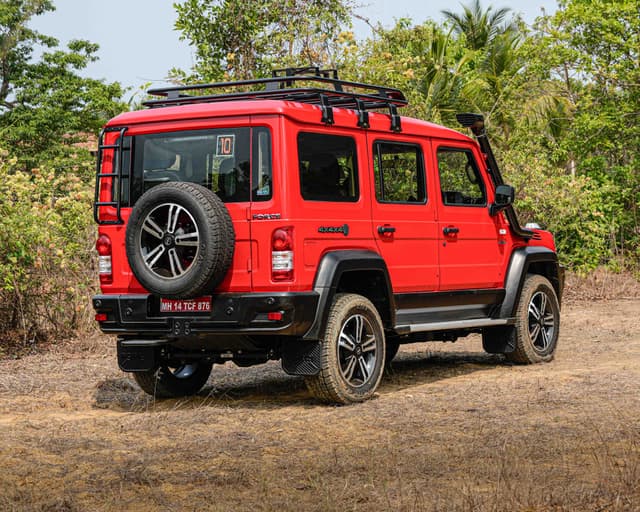
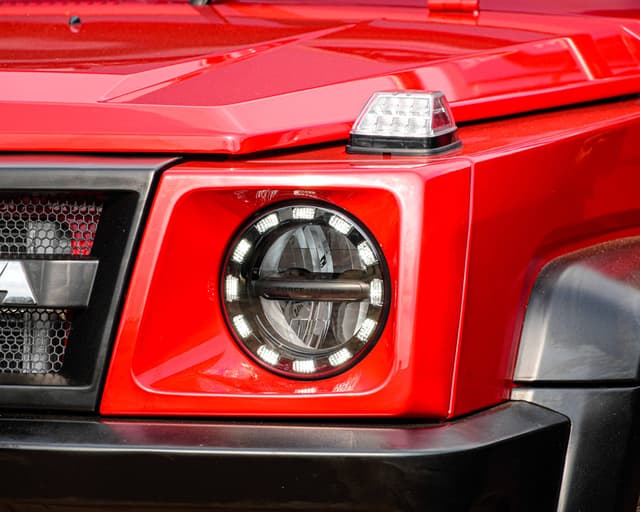
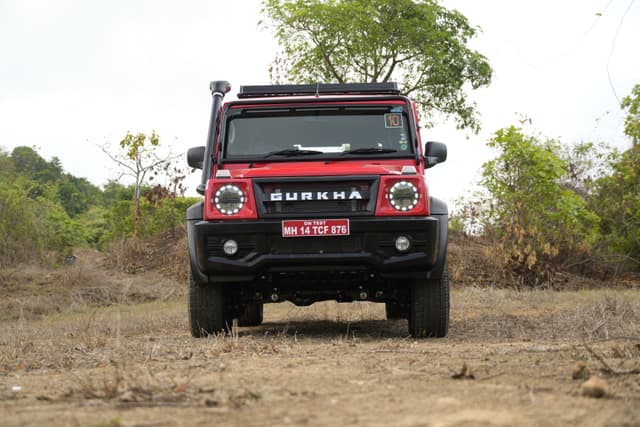
Founded in 1958 by Navalmal Kundanmal Firodia, Force Motors has primarily been known for building commercial vehicles and engines rather than passenger cars. Its own move into passenger vehicles came much later, with the Force One SUV in 2011. Force still assembles every engine that goes into a Mercedes-Benz sold in India at a dedicated factory in Chakan, Pune. That heritage is still active as the brand's only car on sale in India right now is the Gurkha, an off-roader, in two body styles: 3-door and 5-door. There is no hatchback, no sedan, and no mid-size SUV in the lineup.
Mainstream brands like Mahindra and Maruti do compete with Force with models like Thar, Thar Roxx, and Jimny that add options like an automatic gearbox or petrol engine that the Gurkha skips. But as per us, at Autocar India, we think Force Gurkha is the most rugged of the three, and the most capable off-roader. Though, it is the least comfortable, feels utilitarian, and its diesel engine lacks performance when used on on-road in comparison to the three listed above.
Pros and Cons of buying Force Cars in India
Pros
Cons
Strong off-road capability
No automatic gearbox and petrol engine option
Simple diesel engine designed for long term durability
Its large body can be harder to manage in city traffic for some
5-door comes with a third row that can be used for occasional family use
Smaller service network than mainstream brands like Maruti Suzuki, Hyundai, Mahindra, etc
Less common on Indian roads, if standing out is something that matters to you
Low demand for preowned cars
Good ground clearance
Fewer features than rivals
How Safe Are the Force Cars?
None of the Force cars in India (Gurkha 3-door and Gurkha 3-door) have been tested by either Bharat NCAP or Global NCAP, so there is no official crash-test rating. But this isn't unusual for a low-volume, niche model, but it's something that a buyer like you should be aware of.
Both of these models are equipped with dual airbags, a tyre pressure monitor, ISOFIX child seat mounts, and a rear parking camera with sensors, as standard. But, despite having these features, Force cars fall short of the 6-airbag setup that’s now common on the Thar and Roxx.
What Service and Warranty Coverage Do Force Cars Get?
Force offers four free services, scheduled at 10,000km, 20,000km, 30,000km, and 40,000km (or 150, 270, 390, and 510 days, whichever comes first).
From the fifth service, you need to pay. Servicing should be done every 10,000km or 120 days, whichever comes first.
All Force cars in India come with a 3-years or 1.5 lakh km warranty, whichever comes first.
Force Motors also offers a pickup and drop facility and free roadside assistance that includes services like:
Repair on spot
On-site minor repairs, battery jump start, tire problem/change, locked/lost keys, and fuel delivery
Towing coverage
For all registered Gurkha owners
Other services
Phone, taxi, legal, and medical assistance,
How is the After-Sales Experience With Force Cars?
Some owners find service staff not properly equipped with tools as well as knowledge to service or repair personal consumer vehicles. Meanwhile, some owners report proactive gestures and direct involvement from regional or plant teams.
The number of Force service centers and dealers are quite less in comparison to mainstream brands like Maruti, Tata, Hyundai, Mahindra, etc. So, it could be a hassle to find one, especially in smaller towns and you may need to travel farther for servicing or repairing your car. But, if you live in metro cities like Pune, NCR, it won’t be an issue.
So, in short Force Motors after-sales experience varies widely, with mixed opinions.
Note: If you are planning to buy a Force car in India, it’s better to check the availability of the nearest dealer and service center. To do that, you can use the Force dealer locator (https://forcegurkha.co.in/find-dealer).
Force Motors launched its first model - Force One - in the private vehicle space in 2011.
In 2014, Force Motors inaugurated its Chennai plant to produce and test engines for BMW cars made in India.
Currently, both the three and five-door Force Gurkha models are offered with diesel engines only.
In 2016, Force Motors inaugurated its new plant at Chakan in Pune. As per the carmaker, the state-of-the-art plant produces engines and axles for all Mercedes-Benz cars made in India.
Need an expert opinion on your car related queries?
Trending Questions on Force Cars - Answered by Autocar Experts
•4w
Hi. I plan to buy a car that can perform both on-road and off-road. My current options are the Force Gurkha and the Mahindra Scorpio N. I am leaning towards the Gurkha, but I am not sure if it is the right choice. Suggestions?
•3w
The Force Gurkha is a hardcore off-roader and excels in extreme conditions, but it is a very focused tool. On the road, it feels agricultural, refinement is limited, and long-distance comfort is not its strength. So opt for this only if you are doing a lot of serious off-roading.The Mahindra Scorpio N, on the other hand, strikes a far better balance. It is comfortable, refined, spacious and easy to live with on a daily basis, while the 4x4 system and low-range gearbox make it quite capable off-road.So if your usage is predominantly off-road and you are specifically looking for a purpose-built off-roader, go with the Gurkha; if not, the Mahindra car mentioned above is the better all-rounder.
Mahindra Scorpio N
Force Gurkha 3 Door
•36w
I’m looking for a diesel SUV and am torn between the Force Gurkha, Tata Safari, and Scorpio N. It will be my second car, mainly for highway trips and some city driving. Which one should I choose?
•36w
Out of the three options, the Tata Safari is the one to go for, for its excellent ride comfort, both on the highway and in urban conditions. It feels tough and flattens bad roads very nicely. The Tata Safari price starts at Rs 13.40 lakh for the base Smart variant (ex-showroom).Moreover, it is more comfortable in all three rows than the Mahindra Scorpio N. Tata's 2.0-litre diesel engine is punchy, although the Mahindra car has an edge in terms of refinement.The Force Gurkha is the most rugged of the three, and the most capable off-road. But since you want a car for on-road driving, it is also the least comfortable, feels utilitarian, its diesel engine lacks performance, and there is a lot more body roll than the other two cars.