What’s new?
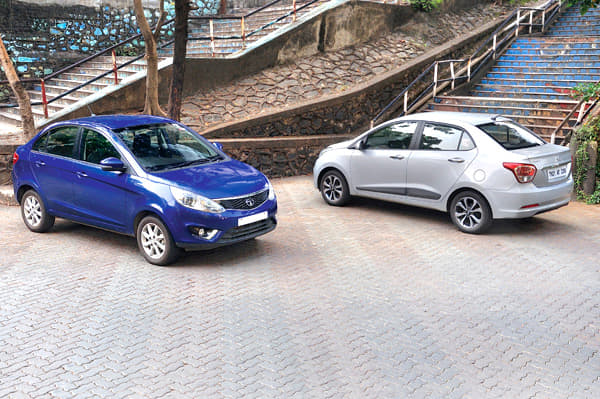
The last time these two cars went head to head, the Maruti Dzire and Honda Amaze were there too, but that time we were comparing petrol engines – and Tata’s new turbocharged ‘Revotron’ petrol motor, sadly, wasn’t enough to win that battle. This time, however, we’ve got our hands on what is traditionally the most popular version of such cars – a good old diesel with a manual gearbox. So naturally, we’ve brought back our previous winner in the diesel manual compact sedan segment – the Hyundai Xcent. Is the simplest version of the Tata Zest the one you should go for, and is it good enough to beat the best?
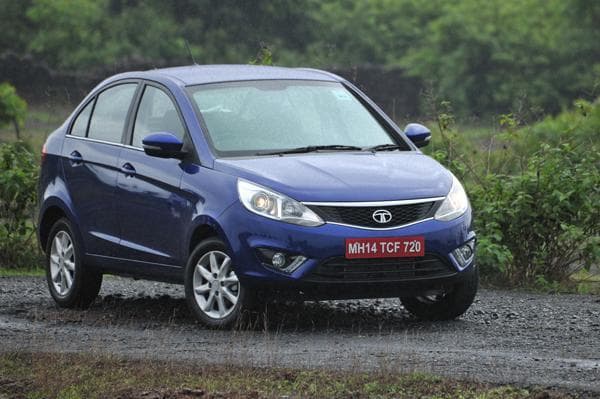
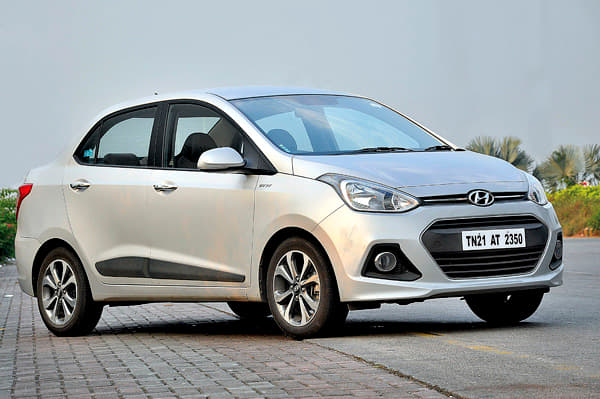
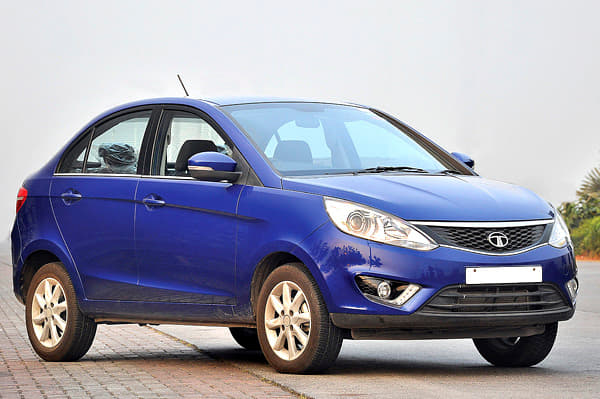
On the looks front, some will like the Tata’s bolder, more extrovert styling, with its big headlamps, chunky wheel arches and high-riding stance, while some might not appreciate the obvious resemblance to the old Tata Vista. The boot also looks a bit short and stubby compared to the Xcent’s more neatly integrated one, which gives the Hyundai better proportions, akin to a conventional mid-size sedan. The Xcent’s overall exterior design is neat, but next to the Zest, some could argue that it looks a little bland, particularly from the rear, and definitely half a size smaller.
What are they like inside?
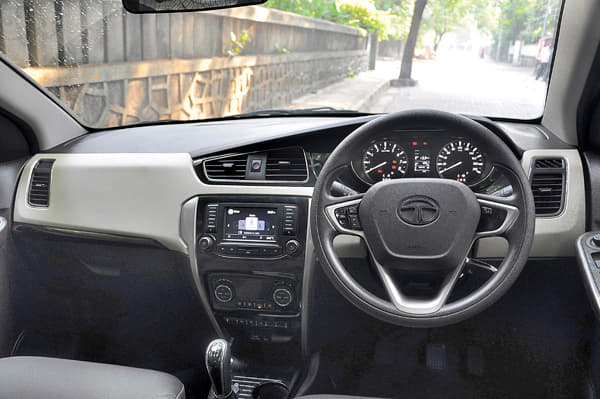
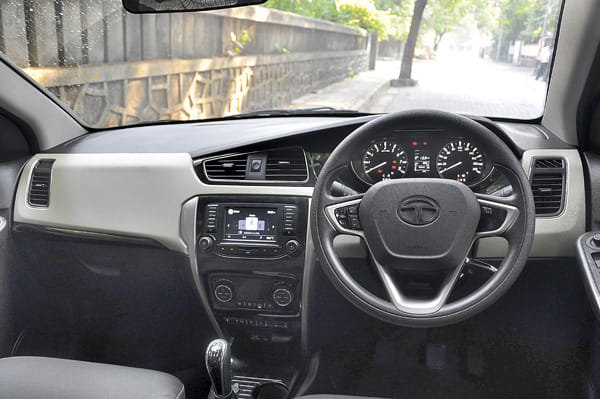
The Zest’s interior is easily the best effort from Tata Motors yet. The design is modern and stylish, with a good combination of beige, grey and glossy black plastics. We particularly like the dials, with their crisp jewelled effect and the neat and informative digital trip computer nestled within them. The integrated touchscreen audio system is also very well made, but the screen itself is hard to read in bright sunlight – a shame since it holds so many functions.
Quality levels are again a huge step up for Tata, but still not as good as the Xcent, which uses better quality plastics all round and generally feels better screwed together. The Tata also scores poorly on in-cabin storage, with just one small cup holder, a tiny cubby hole beneath the gear lever and very small door pockets. It does, however, have a nice tray under the front passenger seat.

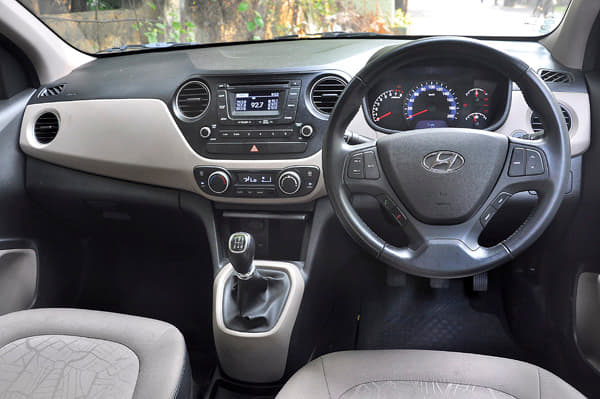
As we mentioned earlier, the Xcent has a high-quality cabin, and though it doesn’t look as flashy as the Zest’s, it is simple and logically laid out; we do wish there was a bit more flair to the design, actually. Here too, the colour scheme is beige and black, and it immediately fares better on practicality with more cup holders and cubby holes, including a handy, closable one just behind the gearlever.
The Zest, however, claws back an advantage with the front seats, which are large, comfortable and supportive. The Xcent’s, in comparison, are a little more firmly cushioned, with non-adjustable headrests, and the fit may be a little too snug for wider frames. Move to the back and both cars offer pretty generous legroom for what are essentially still compact cars. Here too, however, the Zest gives you a slightly better experience. Not only are the cabin and the rear bench considerably wider than the Xcent’s, making it better suited for three, the larger windows also give a better sense of space. Again, we find the softer cushioning of the Tata to be better over long distances than the Hyundai’s, and the Xcent’s backrest is a little too reclined. The Xcent does at least get a rear AC vent and rear central arm rest, which the Zest does not. At 407 litres versus 360 litres, the Hyundai has the bigger boot too, and it’s also better shaped to accommodate larger bags, with a lower loading lip as well.
 Dipan Sur
 Viraaj Bhatnagar