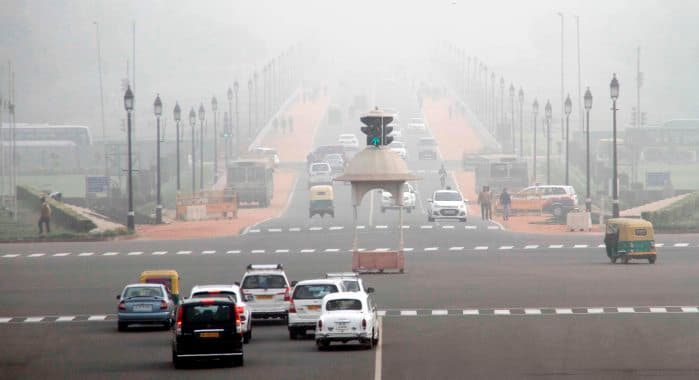
Even as the Delhi High Court today questioned the efficacy of the odd-even scheme running in the capital for more than a week, automotive industry captains were subdued in their reactions. Implemented from 1 January 2016, the Delhi government’s experiment stipulates that odd-even numbered private cars will run on city roads on alternate days with certain exemptions granted to vehicles like two-wheelers, VIP cars, defence and emergency vehicles as well as all women-driven cars for the duration of the scheme that is to run for two weeks.
The trial run of the odd-even scheme that is a bid to rein in the high pollution levels in the capital, puts a question mark over whether it has been really able to achieve its target. While the Delhi High Court has directed the state government to ready a detailed report on its impact on pollution, private car owners living in the NCR are believed to have found ways of skirting the scheme to some extent.
While the odd-even scheme becomes operational from 8am to 8pm, during the day there have been reports of cars driving into Delhi from neighbouring cities very early in the morning and leaving after 8pm after completion of work. That hardly helps curb pollution levels to any great extent.
By all counts, the response of Delhiites to the odd-even trial is beginning to show chinks. Autocar Professional spoke to some industry captains to gauge their response. Ramesh Suri, chairman of Subros Ltd, which makes air-conditioning systems and is a major supplier to the country’s leading carmaker Maruti Suzuki India, while applauding it as a good beginning in terms of cutting traffic congestion by almost 40-50 percent, expressed misgivings about its effectiveness and practicality in the long-term. “It is too early to say as schools are closed till January 15. The aim was to reduce pollution but when after paying penalties, violators can drive their cars on the roads, how is pollution being curbed?” he asks.

 Viraaj Bhatnagar
 Dipan Sur
 Dhruv Dhaka


 Saptarshi Mondal