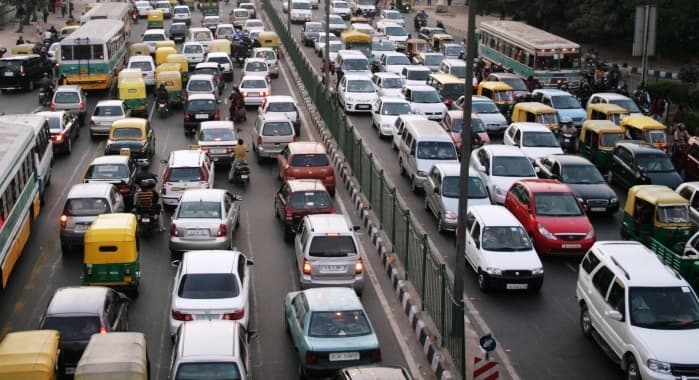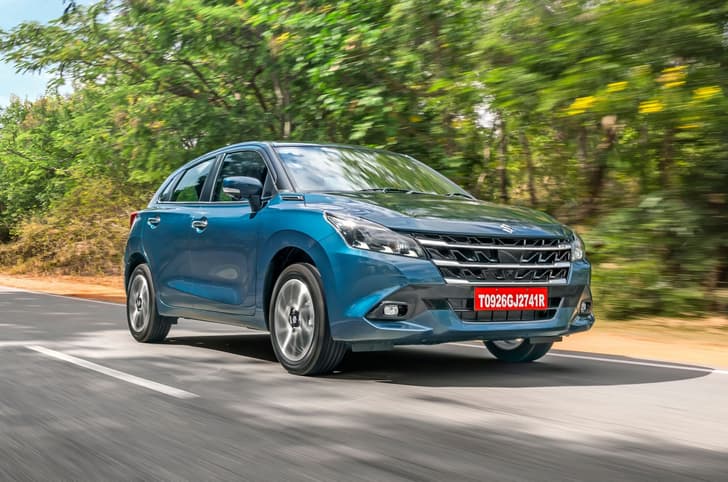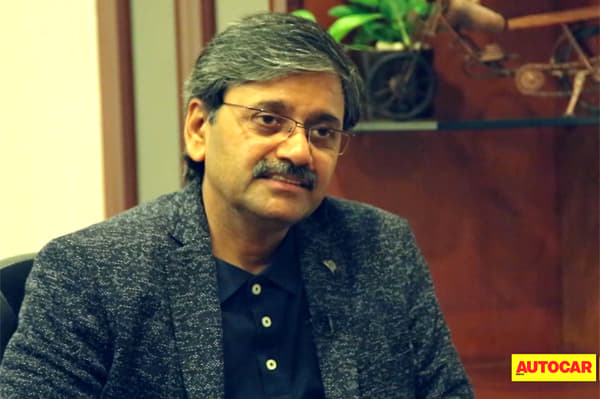
The government advancing BS VI emission standards implementation by three years to 2020 poses a big challenge to diesel vehicles, says C. V. Raman, executive director, R&D, Maruti Suzuki. The higher costs of leapfrogging to a greener emission standard could weigh on demand for diesel vehicles whose popularity has eroded considerably of late. India is in the process of implementing BS IV in the current year and will skip BS V for BS VI in the next three years.
“The cost is definitely going to go up. How this is going to pan out is yet to be seen. I think the challenge for Indian manufacturers would be how they optimise the cost and the engineering so that they can give a better value proposition to the customer. Europe is an example where penetration of diesel is almost 45-50 percent,” Raman told Autocar India.
Moreover, making diesel cars compliant would be more of a challenge from an engineering point of view as well, according to Raman. As a result, the cost impact on diesel vehicles would be nearly five or six times of what it will have on the petrol technology.
“Diesel cars would be more challenging (to engineer). This is because, in a petrol engine, the air-fuel mixture has to be kept at a particular ratio, so we're able to control the emissions well. And for meeting the BS VI norms, we may need to change the catalyst and some of the engine hardware, but the complexity is lesser,” he said.
While BS V requires vehicles in India to be fitted with a diesel particulate filter (DPF), BS-VI involves the optimisation of selective catalytic reduction (SCR) technology.
“Diesel is a different ballgame, where we need to actually upgrade from a BS IV engine, first to a BS V and then to a BS VI. And progressively we need to do that because in BS V we are trying to tackle the particulate matter and in BS VI we're trying to reduce the NOx. The key challenge is that while the technology is available in Europe and everywhere else, it needs to be made relevant for India because the vehicle average speeds are much lower than Europe,” Raman said.
Diesel cars in India have been under attack ever since the Supreme Court banned above 2,000cc diesel for over eight months starting December 2015. The ban was later lifted but subject to a levy of 1 percent green cess on the ex-showroom price. Moreover, in the Budget 2016-17, the government announced a cess of 2.5 percent on diesel cars under four metres and with engine capacity of less than 1,500cc, as against one percent for petrol and CNG cars of similar length.
 Viraaj Bhatnagar
 Dipan Sur
 Dhruv Dhaka

 Saptarshi Mondal