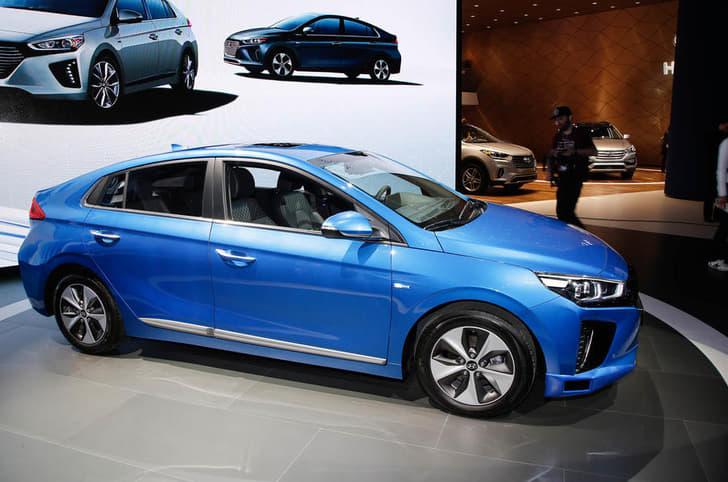
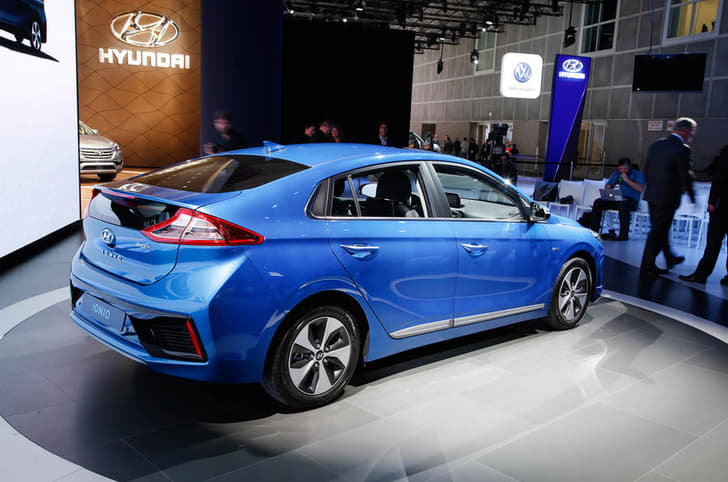
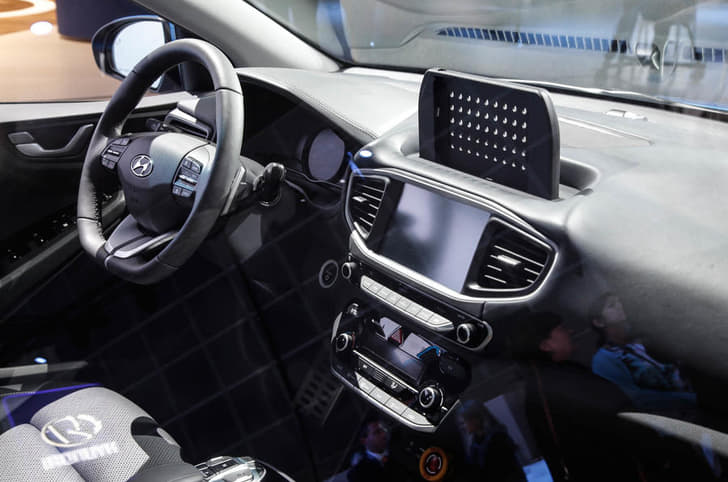
Revealed at the LA auto show, the new autonomous Hyundai Ioniq concept features affordable driverless technology that could soon appear on the carmaker’s future production models.
The autonomous hardware on the Ioniq concept includes a forward-facing radar, a three-way camera set-up, GPS antenna and blind spot detection radar, as well as laser-based Lidar technology. Some parts included in the concept’s hardware, such as automatic emergency braking, smart cruise control and lane departure warning, are already in use on Ioniq production models for its driver assist systems.
Hyundai claims that this is a deliberate tactic that has been employed in order to keep costs down, further adding that it should mean the driverless system can make its way into production models at an affordable cost in the future.
Hyundai USA product boss Mike O'Brien said: "We want to make it look like a car and not a science laboratory test. We have adapted the Ioniq's existing systems and are developing the tech in house. We're using lower computing power than most as we want people to be able to afford it, which is no different to the existing Hyundai ethos."
The carmaker has already been spotted testing its autonomous Ioniq in urban areas near its base in South Korea, but it won’t be demonstrating the technology in LA. Instead, it will bring two autonomous Ioniqs to the Las Vegas Consumer Electronics Show (CES) in January 2017, where the cars will drive themselves along Las Vegas Boulevard to showcase the hardware.
While no date has been set so far for when this autonomous technology will make its way to production, the advanced state of the system suggests it could appear before the end of the decade.
 Viraaj Bhatnagar
 Dipan Sur
 Dhruv Dhaka
 Saptarshi Mondal