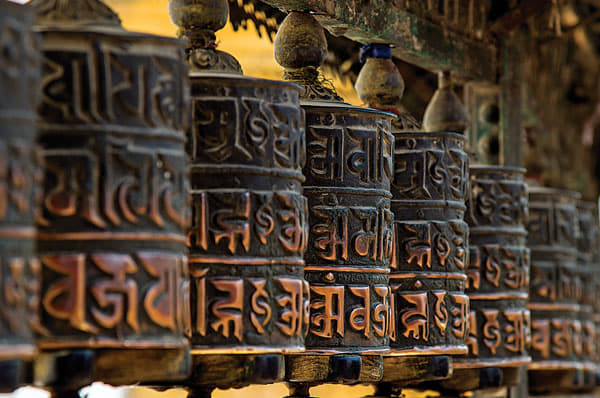
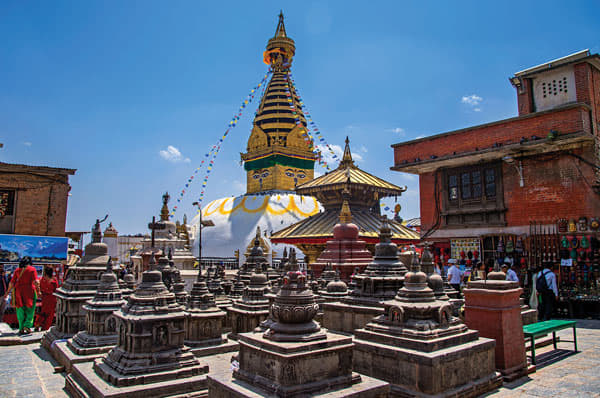
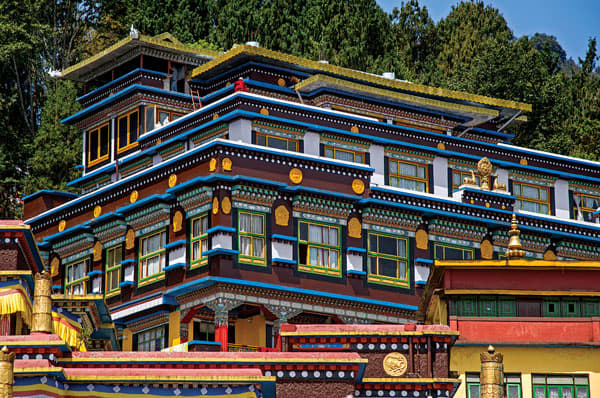
To say that this is the high point of our Great India Drive is not an exaggeration. We are standing at the highest point of the twin-peaked hill rising at the centre of the Kathmandu Valley. This is the Swayambhu Stupa. Legend has it that Kathmandu valley used to be a lake in which Swayambhu hill existed as an island. And on top of this hill stood a natural crystal stupa. Buddha, when visiting the place, declared that it was a wish-fulfilling stupa and whoever is touched by the wind that passes over the stupa receives the seed of liberation from the cycle of existence. Whether it’s legend or fact, there is no argument that its history goes back to ancient times. The earliest written record of the Great Stupa of Swayambhu is a 5th century stone inscription. Now a UNESCO World Heritage site, Swayambhu Stupa is an important stop for us as we follow the Buddhist trail through India and Nepal. As we look at the panoramic view of the city below, visitors and pilgrims walk around the stupa in a clockwise direction and recite mantras, make offerings, turn prayer wheels and make wishes for the benefit of all beings.
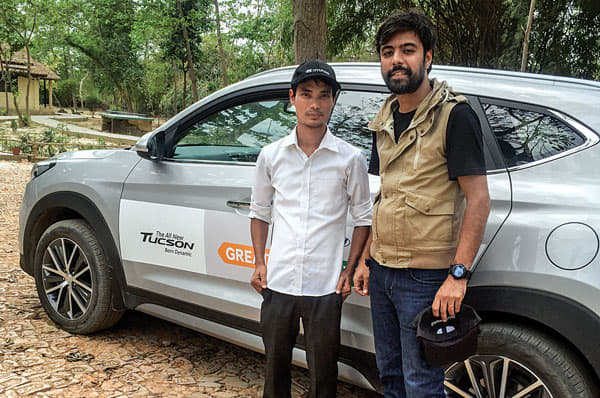
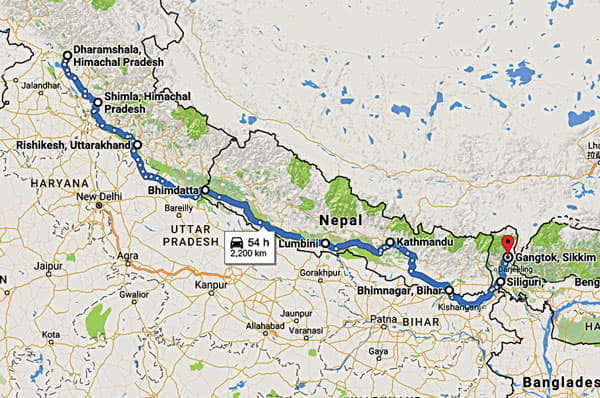
Joining us in Kathmandu is the winner of Autocar India’s Great India Drive contest, Emon Mitro. Emon is a digital content producer whose two passions in life are photography and motorcycles. He has flown down to Kathmandu to join us on the second leg of the drive where we will take the Hyundai Tucson from Kathmandu to Gangtok. But before we can do that, we have another important Buddhist site to visit.
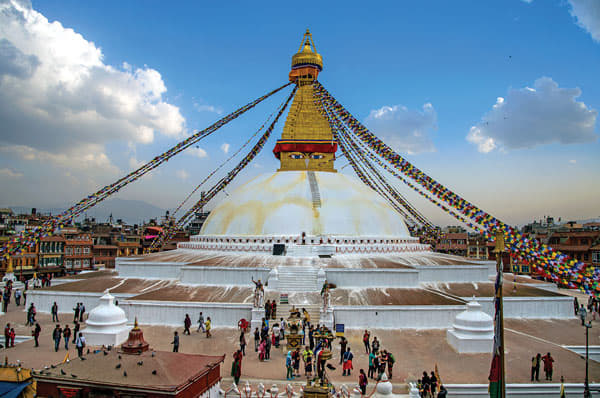
Boudhanath Stupa, built sometime around the 14th century, is one of the largest stupas in the world. Historically, the stupa was an important staging post on the trade route between Lhasa and Kathmandu, and Tibetan traders prayed here for a safe journey before taking their yaks on to the high passes of the Himalayas.
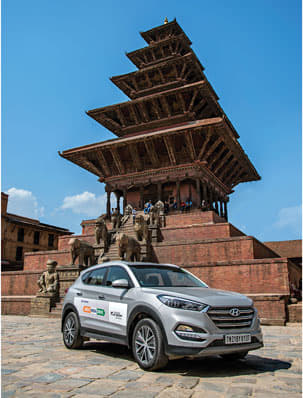
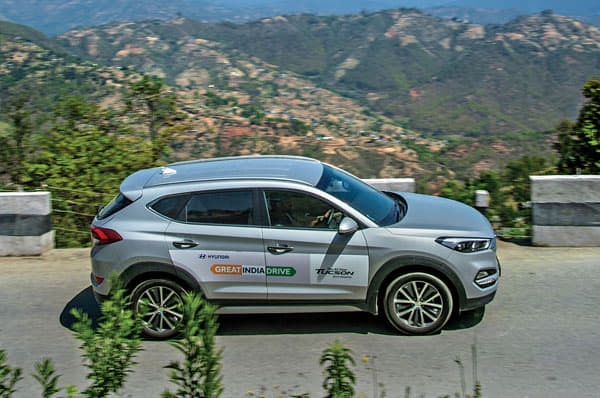
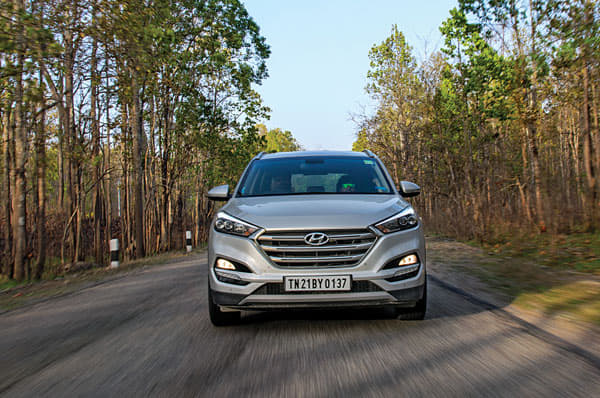
Treading the big SUV through Kathmandu’s streets is no problem. The high seating position and automatic gearbox make the drive stress-free. The architecture, the way the people dress, the signboards and even the cars on the streets are so familiar that we could be driving in an Indian city. The only thing that gives it away is the colour of the number plates — red for private, black for public and green for tourist vehicles. The Boudhanath Stupa pulsates with life as thousands of pilgrims ritually circumnavigate the dome clockwise, beneath the watchful eyes of the Buddha who gazes at from the gilded central tower. Tibetan monks in maroon robes and with shaved heads wander the prayer flag–decked streets. The lanes around the stupa are crammed with monasteries and workshops producing butter lamps, ceremonial horns, Tibetan drums, monks’ headgear and other paraphernalia.
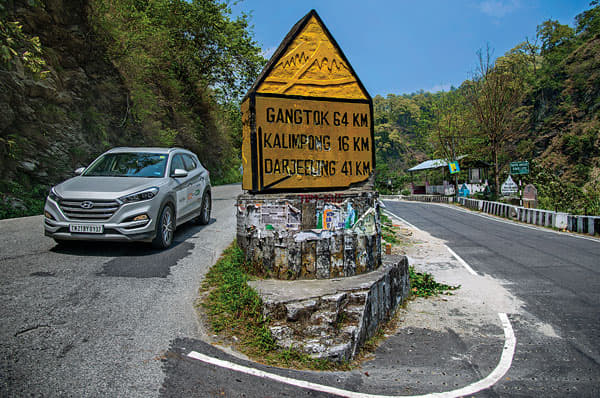
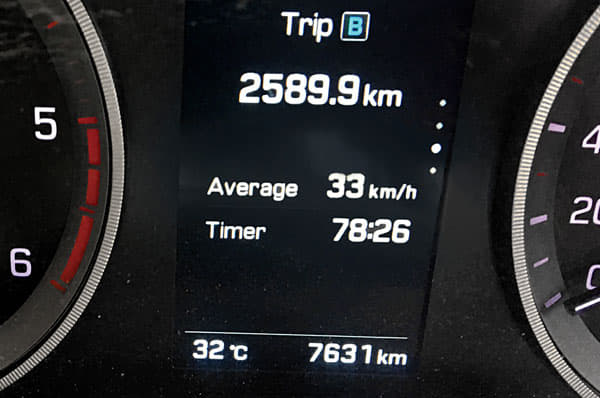
After a fascinating day in Kathmandu, it is time to say goodbye to Nepal and head back to India. It is going to be a long day’s drive of about 500km, but, having made the Tucson our home for the past few days, we know it is going to be a walk in the park. Having left Kathmandu early in the morning, we estimate a 10-hour drive to Siliguri. Add another two hours for photography and we should be in Siliguri by early evening. But fate has other plans. It is late morning and we are still in the hills when we see a long queue of vehicles lined up by the side of the road. We too pull over at the end of the queue. Two buses have collided further down the road. There are no injuries, but the road is blocked and they are waiting for the police to come. While we wait, we see people taking this opportunity to have an impromptu picnic by the side of the road as they wait for it to clear. No angry words, no impatient honking, nobody trying to jump the queue. Nepal might be a less developed country than India,
but we have a lot to learn from them. Though we lose an hour in the incident, we find a new respect for the Nepalese people.

 Uday Singh

 Glenn Noronha
 Dipan Sur