


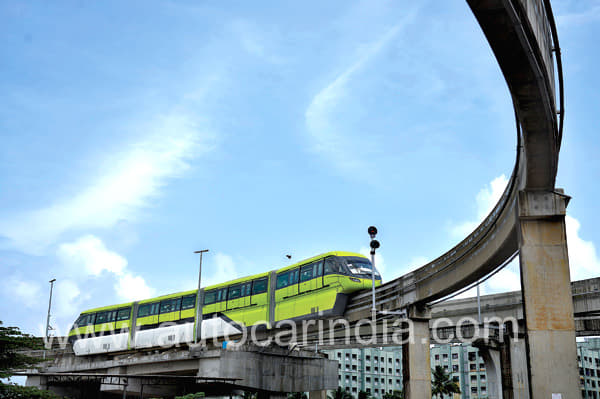
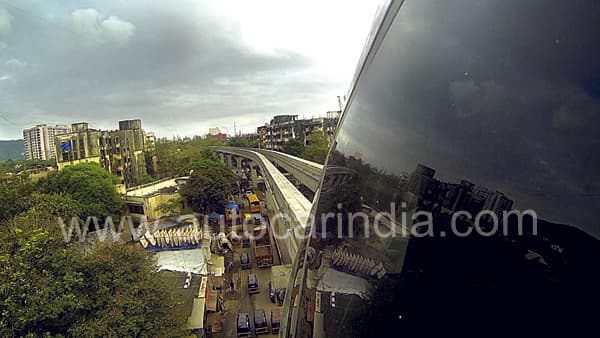
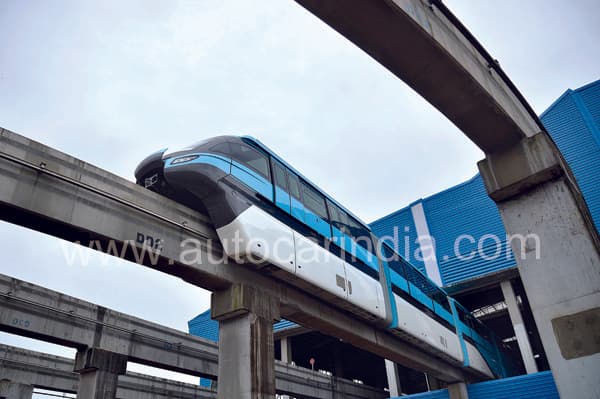
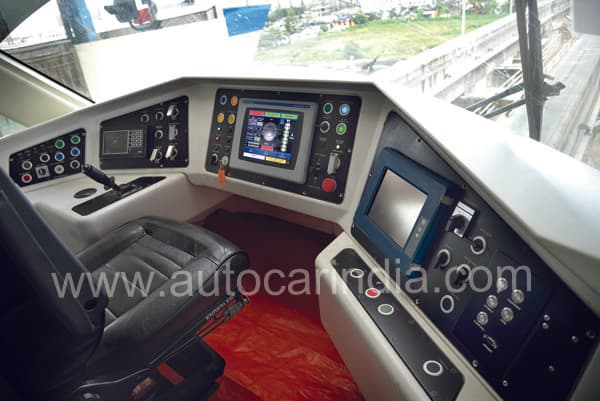
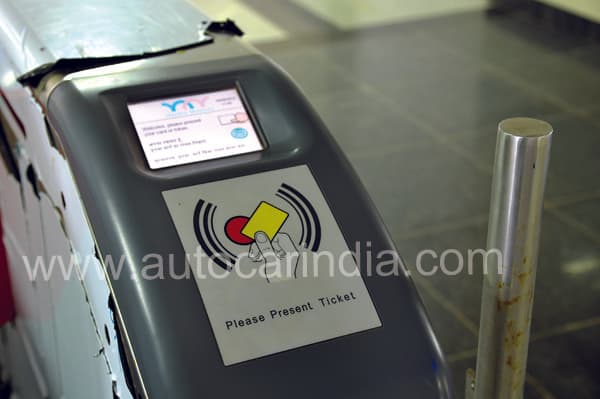
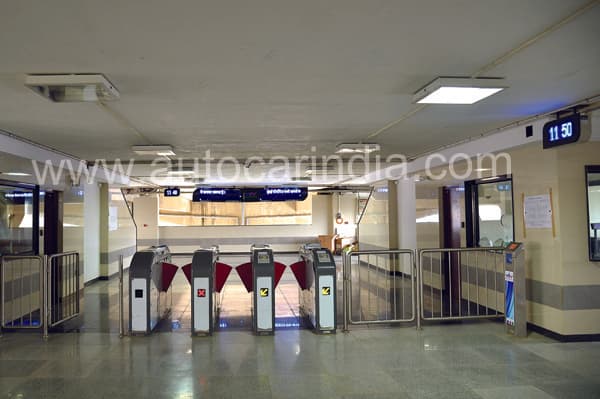
Urbanisation, it’s all about packing things into tight, confined spaces. This means people, buildings, cars, bikes, trains and your neighbour’s dog all fight tooth and nail for the same bit of turf. That’s where the futuristic monorail comes in; it uses space no one but the crows and pigeons are interested in. Riding six and a half metres above the road on a 800mm-wide cement rail, the monorail bothers no one - at least in theory.
The 20km long and approximately Rs 3,000 crore Mumbai Monorail project will be India’s first modern monorail. Once fully completed this year, it will be the second longest monorail corridor in the world, second only to the one in Osaka, Japan. When fully operational, the monorail is expected to cater to the needs of Mumbai’s bursting-at-the-seams population. Capable of handling 10,000 passengers an hour (per direction) the network will have 17 stations and one central hub. Implemented by the MMRDA (Mumbai Metropolitan Region Development Authority) and a consortium that includes bridge maker Louis Berger, engineering company Larsen & Toubro and Malaysian monorail specialist SCOMI (for the train), the Monorail project is a complex, high-tech operation.
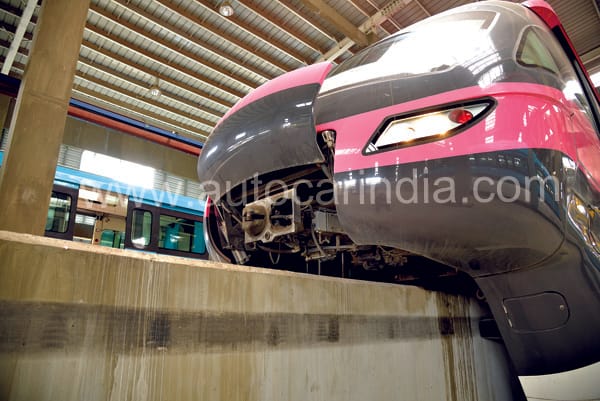
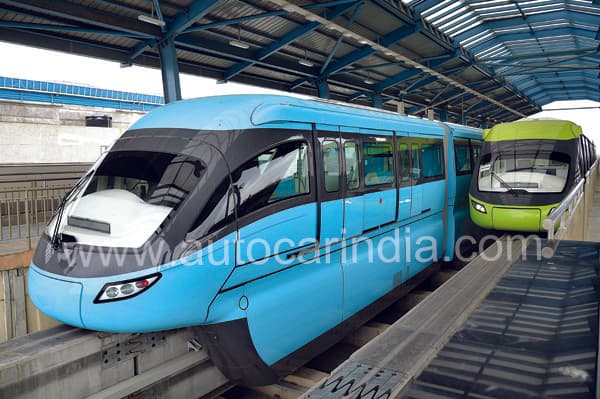
To put it simply, the monorail is a train that sits atop a single solid beam or rail. While there are numerous types of grasping systems, the SCOMI trains we will have in Mumbai are of the straddle type. A pair of large wheels fitted with aircraft-type tyres (Michelin run-flats) sit directly on top of the rail. The nitrogen-filled load tyres take all the weight, but they don’t carry the burden of keeping the train up there alone – that would be disastrous. Each set of wheels has its own set of octopus-like arms, with guide wheels attached, that clasp onto the sides of the rails and hold on for dear life. Like the Mercedes S-class, the suspension is pneumatic and the train rides an air cushion and shock absorbers help damp out any secondary vertical oscillations. The guide wheels have their own lateral suspension system, which prevents the train from swaying dangerously. Power for the monorail comes from electricity taken from the grid. Traction motors are connected to the axle through CV joint shafts and conductive ‘shoes’ on the carriages collect electricity from the wire lining across the guideway. Continued..

 Dipan Sur
 Uday Singh
 Saptarshi Mondal
 Viraaj Bhatnagar