

EXCLUSIVE
With prices of a tank of petrol now fast approaching that of a good bottle of single malt whisky, the timing for KPIT Cummins, makers of India’s first aftermarket plug-in hybrid kit, couldn’t have been better. But who is KPIT Cummins and what does this kit really consist of?
KPIT is a software firm that was set up by a couple of chartered accountants in India to design accounting software for the car industry. Soon they began working on software for cars, got together with Cummins Infotech and then went on an acquisition streak, gobbling up six specialist software firms around the globe. Today this 300-million-dollar company works with 60-plus automobile companies around the globe, has filed more than a dozen patents in the area of hybrids and is about to give Indian customers a chance to significantly chop their fuel bills. The company’s aftermarket plug-in hybrid system, called Revolo, simply uses a set of batteries in the boot, a charger that can be plugged into a wall socket and an electric motor that helps to push the crankshaft of the engine via a belt-driven pulley.
Sounds simple, but it isn’t. A lot of high-tech software is needed to make the system integrate seamlessly with the engine without causing mechanical dissonance or energy wastage, fine-tuning the system for maximum efficiency is fraught with compromise and you have to take care not to affect the mechanical bits of the car and batteries adversely. Being made by an Indian company that understands the needs of local customers well, the Revolo seems to be in tune with the needs of Indian car owners.
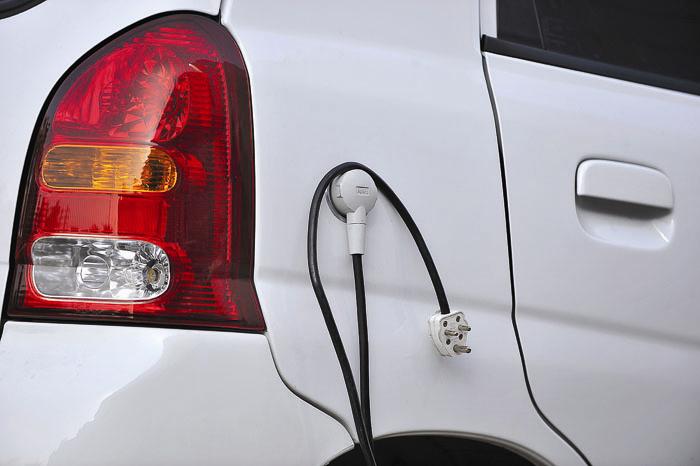
The plug used to charge the 92kg batteries placed in the boot, for example, can be pushed into any three-pin wall socket you can find. You get a 95 percent charge in three to four hours and to counter the extra weight of the batteries on the rear wheels, KPIT is in the process of developing a low-cost spring-in-spring solution to help share the load of the rear suspension.
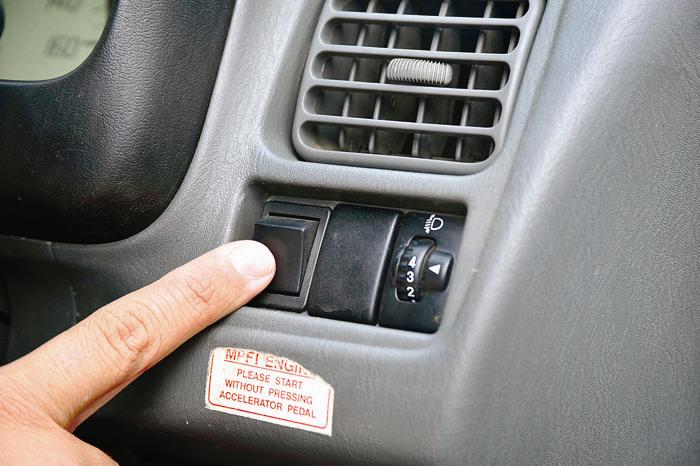
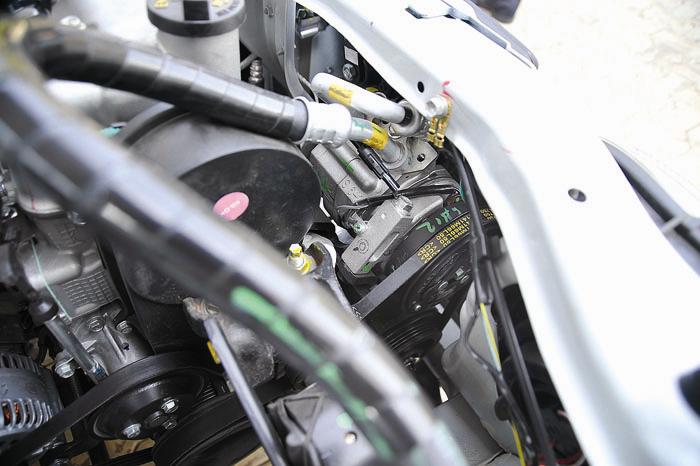
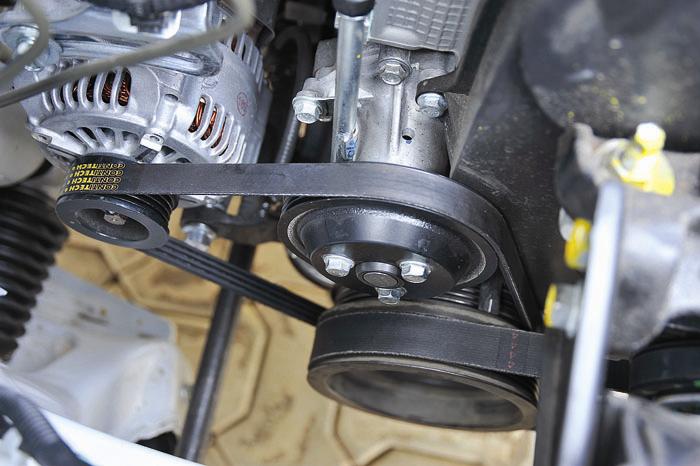
Under the hood, a small 2.2kW (peak power 7kW) electric motor is conneccted to the crankshaft. It is placed where the aircon compressor normally sits, with the compressor moved above it. Connected via a pulley and toothed belt to the crankshaft, this unique drive system functions really effectively as it only uses a low 48-volt system (a Prius in comparison uses 600 volts). KPIT claims a range of between 40-60km with the current batteries, and that’s including the 10-12 percent top-up charge accrued when the motor rewinds and during coasting. Regenerative braking only results in a minor increase in charge,but that contributes too. A piggy-back ECU reads data from the car’s sensors, there’s an advanced battery management system to prolong the life of the battery and a built-in function can also alter the ‘assist vs range’ ratio in accordance with your driving style.
But what’s it like to drive? At first the car feels surprisingly normal as you take off from rest. Soon, however, you notice the extra drag on the system every time you get off the throttle. Instead of the car just coasting forward when you lift off, you can feel the batteries getting topped up. There is also very little difference when the car is driven at full throttle. Not wanting to increase the overall performance of the car, KPIT has tuned its system to provide almost no assist at maximum power. In gear, however, the car feels much quicker and performance is startling at part throttle. There is a huge amount of electrical assist off idle, you can actually drive a gear higher than normal and the Alto now feels much lighter on its feet. We did a quick test of the car and found that it was a full six seconds quicker from 20 to 80 in third, taking only 9 seconds as against the unassisted car’s 15! Simply nuts. KPIT engineers however were quick to point out that this car was tuned for maximum performance as against economy.
Of course, the really big question is, should you go for the system, which in this case would cost approximately Rs 75,000, including installation at a dealership. KPIT claims a 25 to 35 percent increase in fuel economy and that would mean the Alto could give around 17.55kpl as against Autocar India’s city cycle test figure of 13.5 for the same car. We can only verify KPIT’s claim when we finally test the car over a longer period, and we hope by that time system integration will be a bit slicker too. For now all we can say is, watch this space.














 copy.jpg?w=728&q=75)