
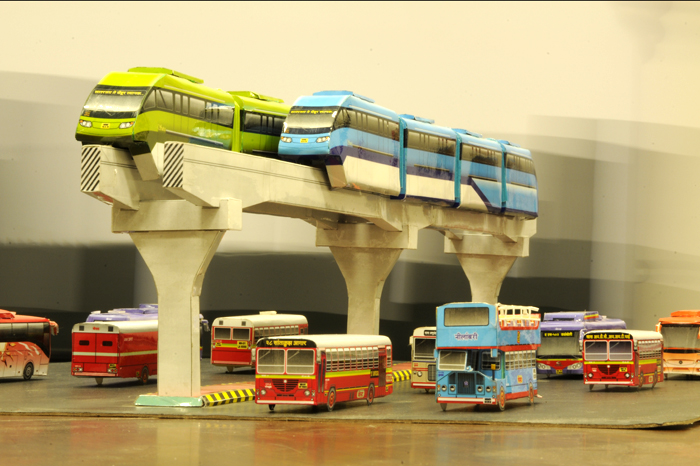
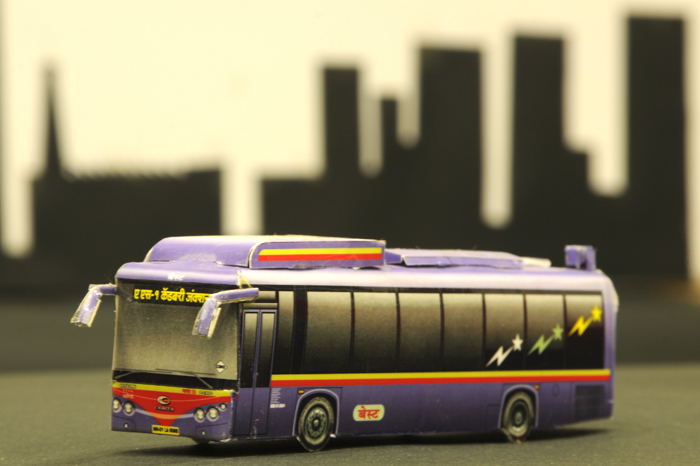
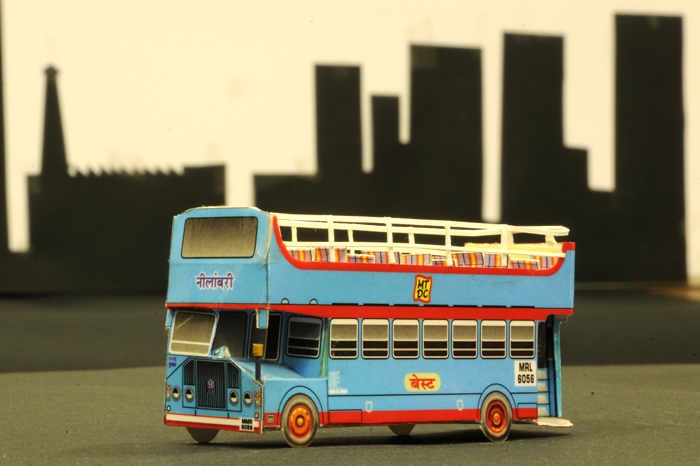
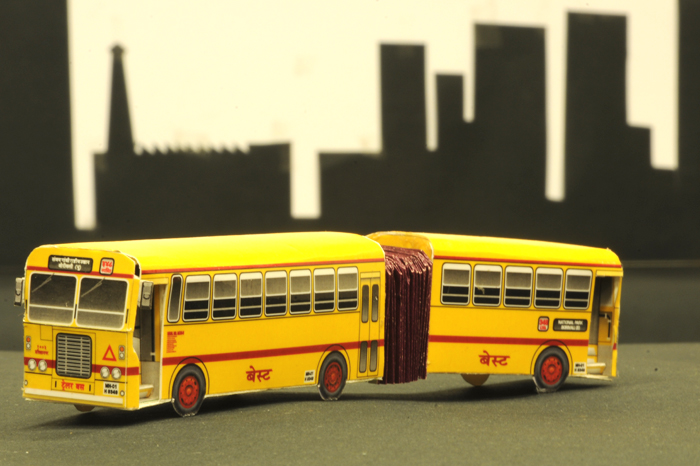
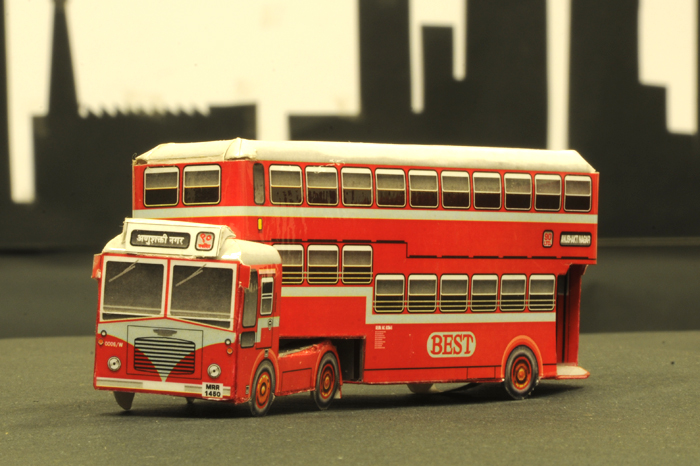
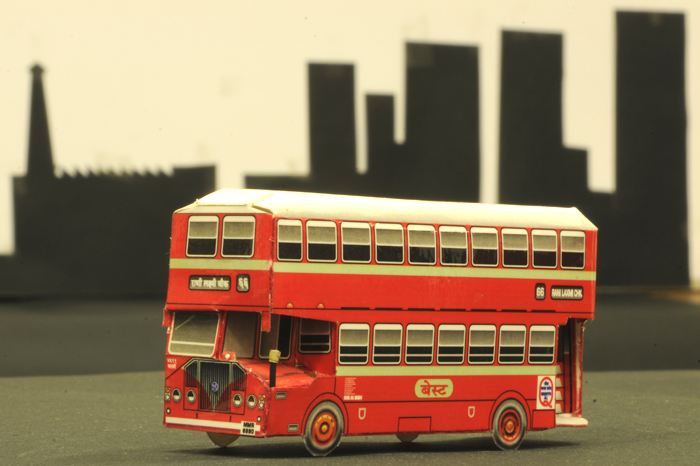
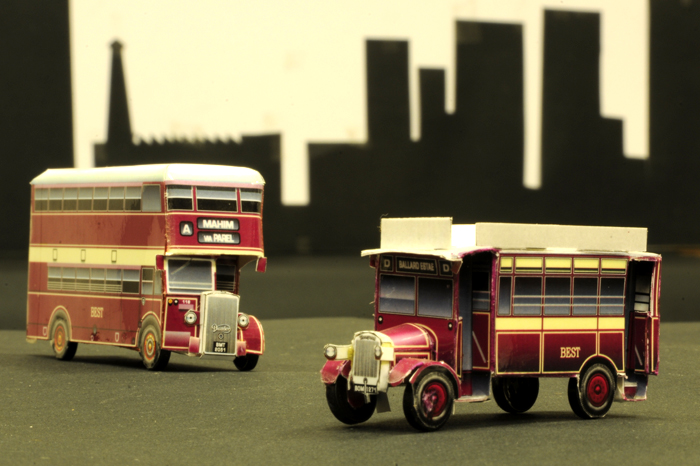
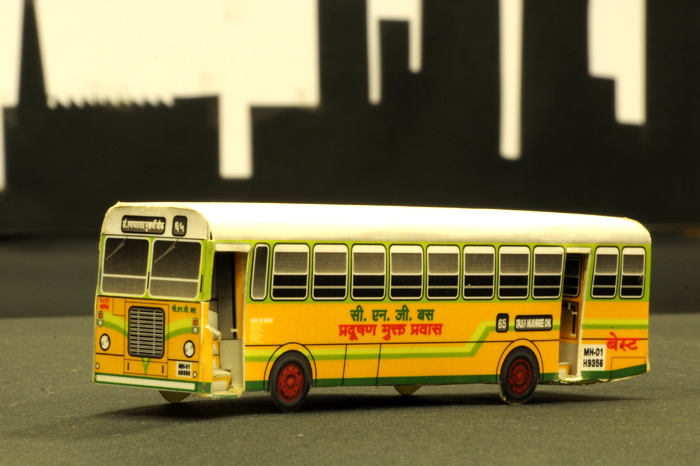
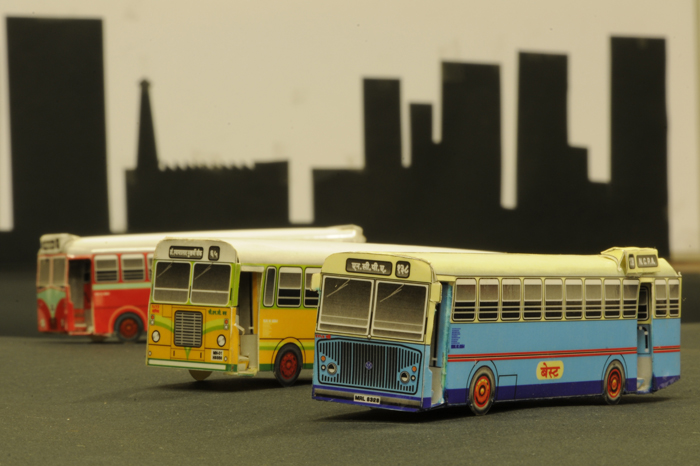
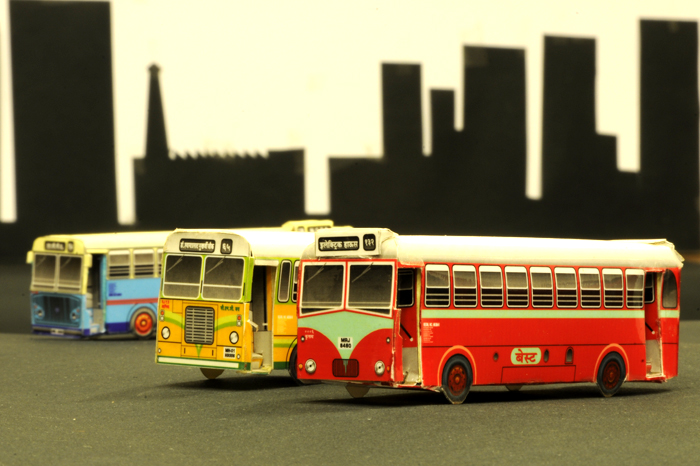
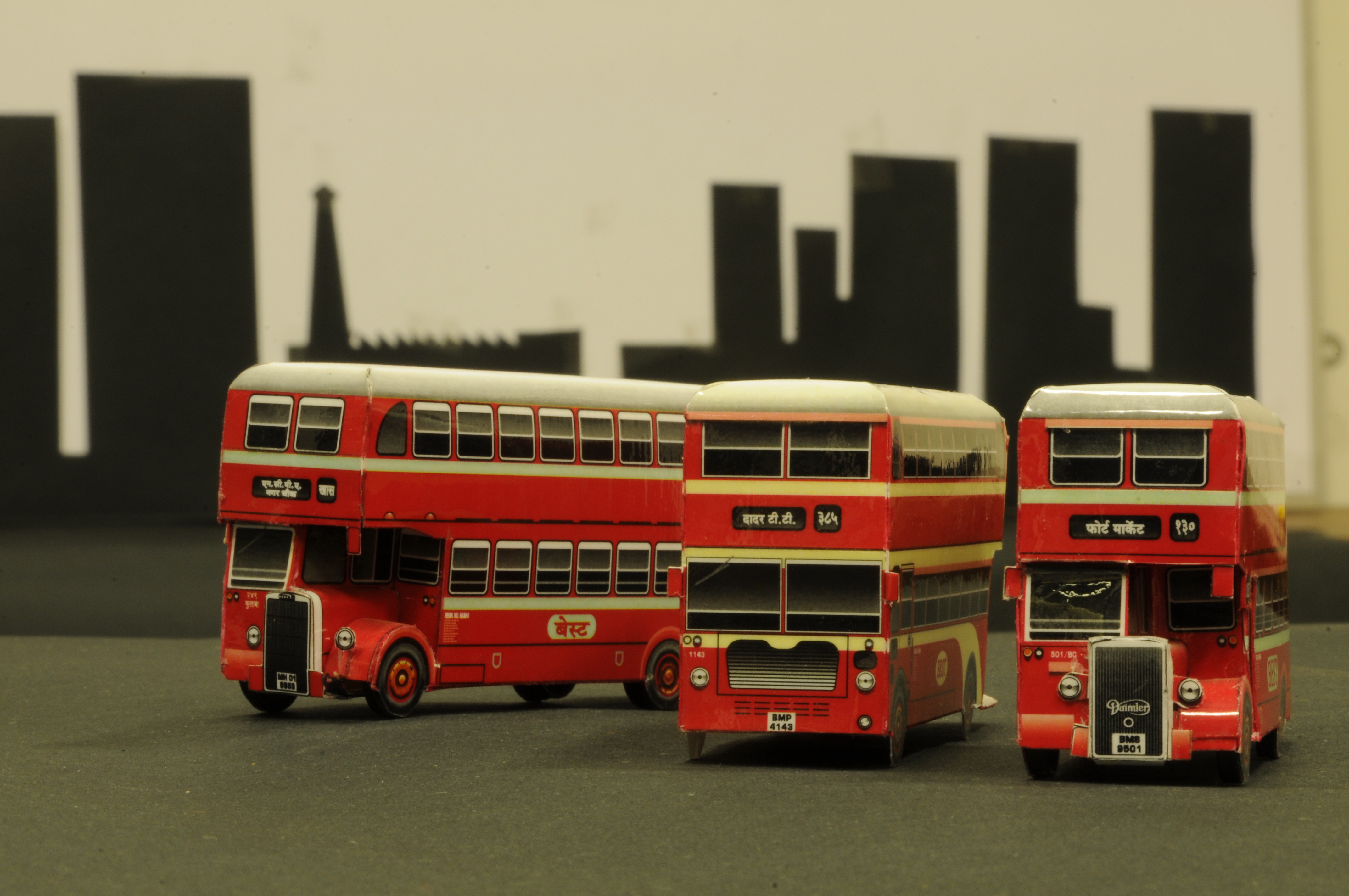
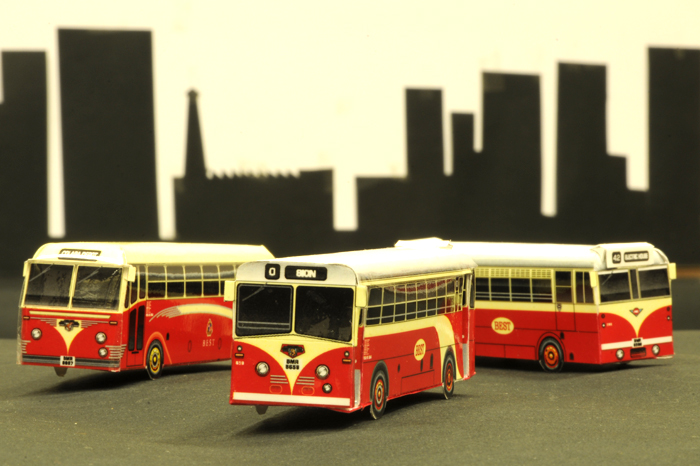
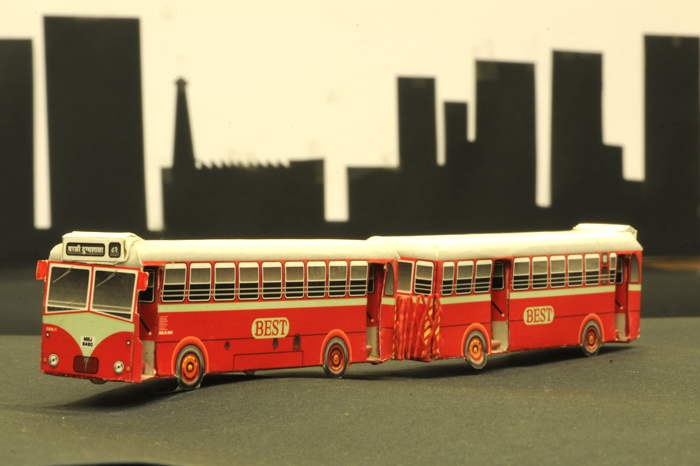
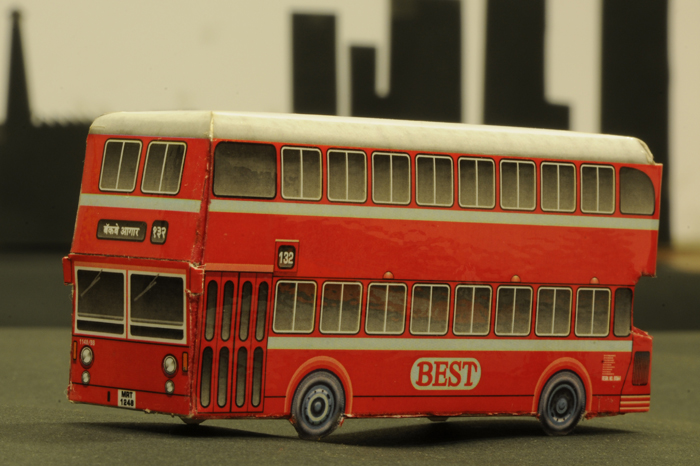
Converting a massive 13,000kg of aluminium into a near- weightless 5.9 grams of paper is no mean feat. More so if you’re also converting finer details like the radiator, mudguard, headlights, side mirrors, wheels and bonnet with sharp, pinpoint accuracy. Meet Yatin Pimpale who works as a mechanic with BEST (which runs Mumbai’s public transport buses) during the day and moonlights as an artist. While he manages both activities with equal aplomb, witnessing him work passionately at his ‘artist’s shed-cum-home’ will make you believe that he’s undoubtedly an artist first, mechanic later. And though his day job involves the use of many tools, his only instrument as an artist is a simple A4-sized paper.
Yatin began creating paper models of buses as a child, when he was in the sixth standard. When asked “Why paper?” pat comes the reply: “That’s all I really had.” However, he says metal was the source of his inspiration. “I’d enjoy seeing exquisitely designed metal figures of buses and cars. But I thought it’s simple to make these from metal. A real challenge is to make models from paper, and since no one had done that before, I took it up as a personal endeavour,” he says.
Today, this endeavour has borne fruit, not in terms of monetary gain but with the immense praise showered by visitors during his recently concluded exhibition in Mumbai. And that’s what really matters to Yatin. “I was never in it for the money. This is purely out of passion and in fact, I find selling my work a little awkward. But since people have taken such a liking to my creations, I’ve decided to go commercial.” The result is a price which hardly justifies the man’s talent – Rs 350 onwards.
Yatin’s attention to detail and quest for perfection, ironically, make his creations look effortless. A casual glance might suggest that this is child’s play. But it’s a far cry from those easy-to-create Lego sets we’ve all grown up with. “The whole process, depending on the size of the model, takes a minimum of 40 hours,” says Yatin, wiping the dust off from one of his paper models. “Of course, I’ve evolved a great deal since I started out, but earlier, the slightest error at any stage would take me back to the drawing board.” “Must have been frustrating” I interject, but with a smile Yatin replies, “There’s no question of frustration when you seek perfection.”
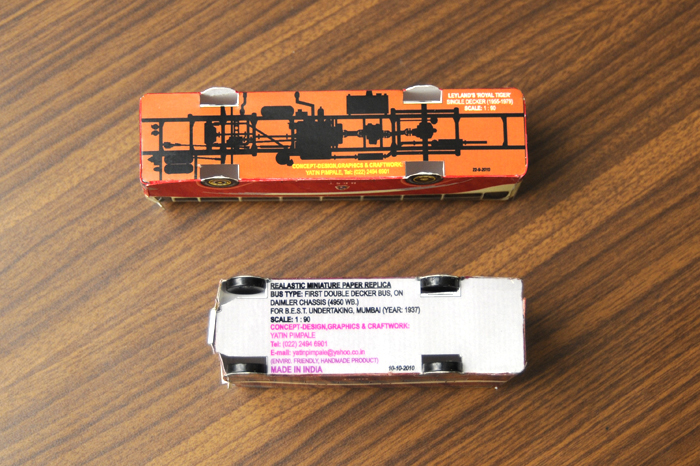
By this time, I’m really intrigued about the process, secretly thinking of creating my own paper bus. But a reminder of my grades in art and craft class swiftly transports me back to reality. Yatin begins to explain the process with a pencil and paper, in true artist style. “The first step is that I must have the original dimensions of the bus, after which I draw out the figure and then my work begins on the computer. I use software like Autocad, Corel Draw, and Photoshop. I need these programs for the perfect measurements and filling of text,” says Yatin. The paper used is the standard A4-sized printing paper. Yatin has to define the thickness of the paper depending on the size of the model, and he does this at the printing stage. And since he’s been with BEST for the past 24 years, he knows buses and their workings inside out, so fine detailing isn’t an issue. You’d think he’s done a course in art and craft, but as he proudly exclaims “I’m totally self-taught!”
My job makes me ask Yatin the obvious question, “Why not cars?” to which he replies “It’s overdone. There are too many scale models, toys, sculptures, and paintings of cars available everywhere. Moreover, while I do like cars, my heart lies in buses.” He fondly recalls his
childhood days of travelling in a double-decker BEST bus, and then delves into the history of Thornycroft (the first BEST bus), Royal Tiger Bus (the only one to have an engine on its underside), and a bus from the World War II era. Yatin has created paper models of all
these buses, to perfection.
While Yatin’s well versed with history, he’s quite ahead of time too. The Mumbai monorail is presently under construction, but Yatin’s model is ready to waft away. And it’s in the approved blue colour that will be used on the real thing. Next on his creation list is the Mumbai metro, but he doesn’t have the dimensions of that yet.
If you too wish to bring out the artist in you, then Yatin has a customised kit with instructions on ‘how to make your own paper bus’ at a nominal charge. Get in touch with him on 9869043017 if you desire to purchase one. It’s Yatin’s dream to someday open India’s first ‘paper models museum’ to promote artists like him. Who knows? Your creations could find a place there too.