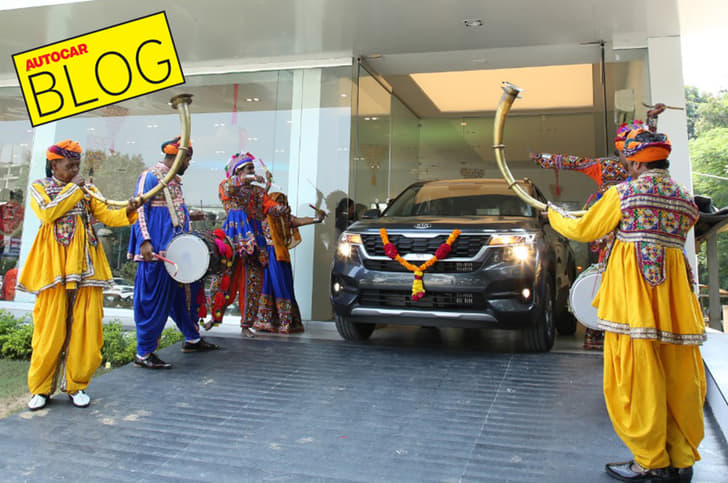
Since William Metzger build the first modern showroom way back in 1898, it has conceptually remained the same. Brick, mortar, glass, wood, chrome, lights and signs. The embellishments have kept evolving but the edifice has remained the same, while the rest of the ecosystem has changed over a dozen times already.
Buying an automobile is a multi-faceted experience. Making a purchase decision in a static store is possibly the worst option for anyone. The crisis has brought us face to face with the harsh reality that a physical showroom may not be enough to sell an automobile.
The prospect needs an experience outside the showroom. The brand needs to tell its story, around and about the vehicle, woven into the prospect’s life, outside of the showroom. The procedural formalities can well be done at a place of the prospect’s choice, outside the showroom. The salespeople are scanning for prospects, mostly outside the showroom. So, why are the automakers still obsessed with building these edifices that cost a fortune to put up and maintain, and then pass it all to the customer? Or is this a ‘comfort zone’ – a ritual kept alive for the system’s convenience rather than the customers’ benefit?
Nietzsche said, “The snake which cannot cast its skin has to die.”
What about the current showrooms?
Gradually wind them up. Reallocate part of the money into digital interfaces, training, test drive vehicles and service infrastructure. Save the rest, to the benefit of a lower vehicle price.
Where will the prospect see the vehicle?
For the individual buyer, at their place of choice. Or at places with prospect footfalls like malls, condominiums, panchayat buildings, educational institutions, corporate complexes and many more. There are enough to accommodate everyone.
The B2B buyers need no showrooms.
What about the experience?
Digital aids used by a salesperson and the vehicle. Use AR/VR, holographic projections, magic mirrors and drones creatively. Automakers can also create large brand zones in key cities, offering truly immersive experiences.
What about the current manpower?
Re-train and deploy them as a fully mobile force, armed with the right tools and a test vehicle. Operating from their homes allows a better work-life balance and ensures greater productivity.
The backend functions will be at the service centre.
What of mass-market vehicles?
What is mass market to one is premium to another. Every vehicle can be sold sans the physical constraint of a showroom. It is presented best at a place, time and context of the prospect’s liking.The semiurban/rural Indian is as savvy as the city one.
The showroom may be beyond its shelf life. This disruption is the best time to cast this skin aside, for nobody likes a dying automobile brand!
 Sergius Barretto
 Rishaad Mody