Autocar India
6d

I'm seeing a couple of mid-SUV drag races on the autocar India YouTube channel, and I have a very confusing question that needs answering. Every single auto-journo in this country lauded the VWAG's 1.5TSI + 7-speed DSG combination, raving about its snappy responses and performance-oriented calibration. Yet, after watching the latest drag race between the Tata Sierra and Skoda Kushaq, it's clear that the Kushaq lags, owing to the slow off-the-line response of the 7-speed DSG. If it is lagging behind a homegrown torque converter automatic, why is it still considered the best twin clutch gearbox out there?

Verified
15m

It’s still the quickest, most engaging auto in this class once the car is moving, but the 1.5 TSI DSG is deliberately soft off the line. The twin clutches hate heat and abuse, so VW-Skoda programs a gentle first bite to protect them. In a drag, that pause plus a hint of turbo lag can bog the launch. A torque converter can “brake‑torque” and multiply torque at zero speed, so it leaps ahead even if it shifts slower later.

Reviewers praise the DSG for what you feel 95 percent of the time - razor‑quick upshifts, near‑instant downshifts, and strong in‑gear pull for overtakes. From 20-120kph, it keeps the engine on boost and swaps ratios faster than any torque converter here. That’s why it feels eager and “snappy” on the road, even if a standing start looks lazy.

Two honest catches. The 1.5’s DQ200 doesn’t have an aggressive launch like bigger Euro DSGs, and in heavy crawl, it can feel hesitant compared with a smooth torque converter. So if you care about hard launches and bumper‑to‑bumper smoothness, a torque converter suits you. If you want the fastest shifts and mid‑range shove, the DSG remains the benchmark.

Was this helpful? Ask a follow-up

More questions on similar cars

4d

Having spent seven years with my Honda City, I am now looking to upgrade. My budget is around Rs. 45-50 lakh, and while I am inclined towards sedans, I am open to considering SUVs as well. My priorities are strong build quality, engaging driving dynamics, a high level of safety, and excellent interior comfort. I would appreciate your suggestions for a value-for-money vehicle that meets these requirements.

Verified
1h

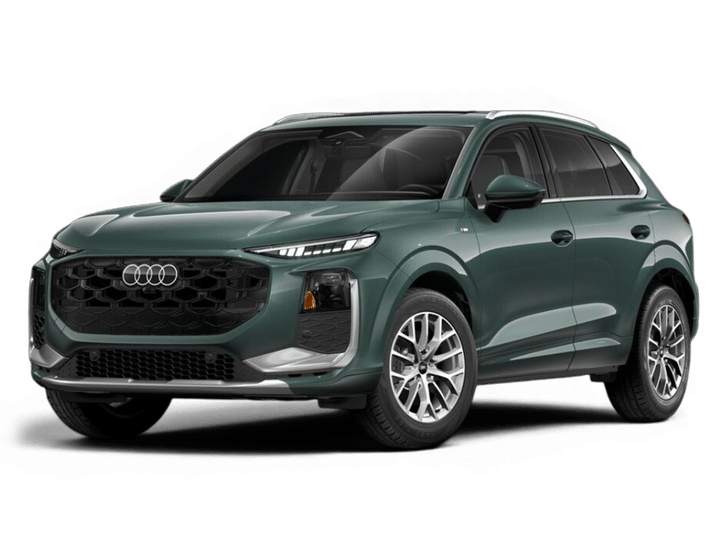
There aren't too many sedans left in the Rs 45-50 lakh price bracket, but the one that does remain represents superb value for money and fits most of your criteria. This is, of course, the Toyota Camry and will feel like an ideal upgrade from your Honda City. It's built around the same Japanese sensibilities of reliability, functionality, build quality and efficiency. It's incredibly well built, has a luxurious and comfortable interior with a spacious back seat, and being a strong hybrid, it's way more efficient than any other car of its size. Plus, with Toyota's famously reliable reputation, it will go on flawlessly for ages with minimal maintenance required. Its only shortcoming is that it isn't particularly fun to drive or tidy in its dynamics. For that, you'll have to stretch your budget by a few lakhs and get an Audi A4. If you want an SUV instead, there are plenty of great options like the Skoda Kodiaq and Volkswagen Tayron, or again, for a small stretch of the budget, the Audi Q3.

VehicleToyota Camry
VehicleHonda City
VehicleAudi A4
VehicleSkoda Kodiaq
VehicleVolkswagen Tayron

Popular discussions right now

2d

I am planning to purchase a new automatic car for my daughter. She recently obtained her driving license and is currently driving an automatic Tata Nano. Now that she is comfortable and confident with it, I am considering upgrading her to a larger vehicle. I am evaluating options such as the Kylaq and the Kia Sonet. However, my wife is insisting on an electric car. I am a bit sceptical about EVs, as they are not yet fully proven to be trouble‑free, and her weekly commute is around 150 km. I am also waiting for the launch of the updated Brezza, and my preference is for a torque‑converter automatic rather than a DCT. I would appreciate your opinion on electric cars, the Kia Sonet diesel, the Brezza, and which one I should go for. This car will be mostly used for city drives since I have an Ertiga manual for long trips.

Verified
1d

Of your shortlisted cars, go for the Skoda Kylaq automatic. For mostly city use and just 150km a week, its punchy turbo petrol engine with a smooth torque converter is a great mix of fun and ease of use. Its light yet sharp steering, upright seating and compact size feel like a natural step up from a Nano, and the interior feels fresh and upmarket too.The Kia Sonet diesel automatic is quick and efficient, but a diesel engine is overkill for your daughter's limited usage. Not only is it pound-for-pound more expensive than an equivalent petrol to buy, but it also requires extra care, such as regenerating the DPF (diesel particulate filter) every so often via a high-speed run, as well as top-ups of the ad-blue tank. The Brezza is a good option thanks to its simple, naturally aspirated engine, which should deliver better fuel economy than the Kylaq. But in its current form, it's just a bit uninteresting and unenthusiastic an offering, and it's best to wait for the facelift, which is right around the corner, before making that decision.For 150 km a week, an electric car is actually ideal if you have a private parking spot with a 15A socket or a home charger. The powertrains these days are much smoother, batteries carry long warranties, and city running is silent and cheap. Upfront cost, charging access and resale value are the only real hurdles, so if you are interested, a compact EV like the Tata Punch EV is a great option.

VehicleSkoda Kylaq
VehicleKia Sonet
VehicleMaruti Suzuki Brezza
VehicleTata Punch EV

Posted on: 17 Jun 2026