Autocar India
19h

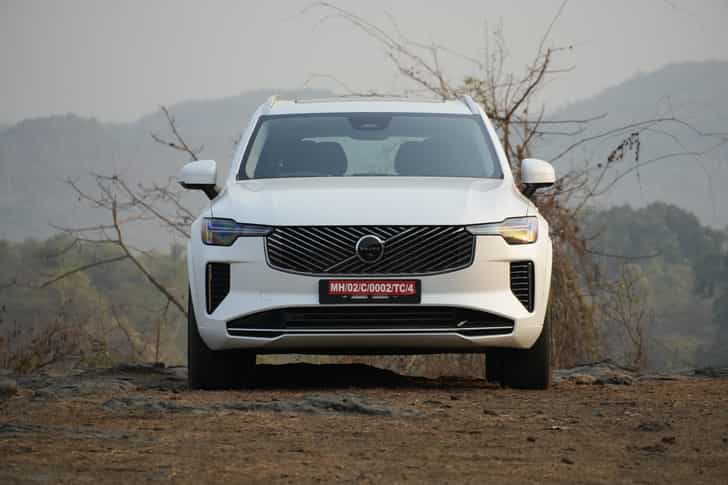
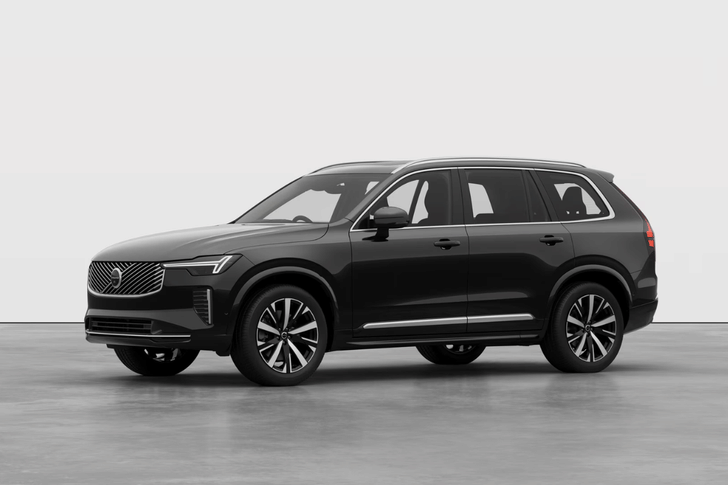
Recently, a Volvo XC90, often regarded as one of the safest cars, was reportedly involved in an accident and caught fire within a matter of seconds, resulting in the tragic death of a renowned neurosurgeon. What could be the possible reason for such a rapid and intense fire? While accidents can understandably cause injuries and trauma, a vehicle catching fire so quickly after what appears to be a relatively minor impact raises serious questions about fire safety and occupant protection. When a car costs around Rs 1.23 crore, buyers naturally expect a very high level of safety, including protection against such secondary hazards. If a relatively minor accident can result in a vehicle being engulfed in flames and a person being trapped inside, it is fair to question how such risks can be prevented. This is also not the first reported case of a luxury vehicle catching fire after an accident. I have come across similar reports in the past. What do you think could be the possible cause, and what safety measures should manufacturers consider to prevent such incidents?

Verified
4m

Firstly, our deepest condolences to the family involved. This is a tragic incident and understandably raises serious concerns.

The Volvo XC90 is one of the safest cars on the road, with a strong safety record and a five-star Euro NCAP rating. However, no car is immune to fire in the event of a severe accident. Modern vehicles, regardless of price, carry significant amounts of fuel and electrical systems, and under certain conditions, such as a high-energy impact, ruptured fuel lines, electrical shorts, or a fire starting in the engine bay, a fire can develop rapidly.

The key point is that fire risk is not directly linked to the cost of the car. Even the most expensive and safest vehicles can catch fire if the conditions are met. Safety systems are designed to protect occupants in a crash, but they cannot always prevent a fire from starting, especially if the impact is severe or the fire source is difficult to contain.

It is also important to note that details of this specific incident are still emerging, and without a full investigation, it is impossible to say exactly what caused the fire. Factors such as the nature of the impact, the location of the fire, the speed of emergency response and the ability to exit the vehicle all play a role.

The takeaway is that while modern cars are safer than ever, fire remains a rare but real risk in high-energy accidents. The focus should be on understanding the cause through a proper investigation rather than assuming that a premium car is immune to such outcomes.
Volvo XC90

Volvo XC90

Explore cars mentioned

More posts on similar cars

1w

I have a 2016 Hyundai Creta. During servicing, I was informed that the ECV valve of the AC unit is faulty. The service centre said that the valve can be replaced at a cost of Rs 23,000, while replacing the complete compressor would cost Rs 25,000. I wanted to clarify whether the ECV valve for my car actually costs Rs 23,000. I checked online and found ECV valves priced at around Rs 3,000. However, the service centre said that my car uses a specific ECV valve that costs Rs 23,000. Could you please clarify whether this is correct and whether the quoted price is reasonable? Thank you.

Verified
1d

The ECV (Electronic Control Valve) is a component within the AC compressor that regulates refrigerant flow. On your 2016 Hyundai Creta, it is not a separate, easily replaceable part in the way it is on some newer cars. Hyundai typically supplies the ECV as part of a larger compressor sub-assembly, which is why the quoted price is so high. The Rs 3,000 price you are seeing online is for generic ECV valves that are not compatible with your specific compressor. The service centre is quoting you the correct Hyundai part price.If the compressor itself is otherwise healthy, replacing the ECV sub-assembly is the correct repair. If the compressor is noisy or showing signs of wear, replacing the entire compressor for Rs 2,000 more is sensible. If the AC is otherwise working well and the only issue is cooling performance, replacing the ECV sub-assembly is the more cost-effective solution. If the compressor is noisy or showing signs of wear, replacing the entire compressor for Rs 2,000 more is sensible.You can also check with a trusted independent AC specialist who can source the correct Hyundai part at a lower price. Do not fit a generic ECV valve from the internet as it will not work with your compressor.

VehicleHyundai Creta

Expert reviews worth reading

Popular discussions right now

4d

Help me choose the right car for my usage. Please be practical and challenge my assumptions. My situation: I am 31 and work as a software developer. I currently work from home in Balsane, Dhule, but I am moving to Mumbai around March. My wife and I are expecting a baby in February. My parents live in a village where local transport is poor. My Mumbai office is near Powai, but parking is difficult. I prefer a manual car. Usage: My current running is around 10,000 km per year, but it may increase. I travel between Mumbai and Balsane, which is around 400 km one way, around 5-7 times a year, along with Dhule/Sakri and local trips. I also drive around Mumbai on weekends. The AC is usually on, and on long trips, the car will have my wife, baby, and luggage. Budget: Rs. 6-9 lakh on-road. I am willing to spend more only if it is genuinely worth it. Shortlist: - Tiago XE Petrol - Punch Pure+/Smart Petrol - Punch Pure+/Smart CNG - Brezza LXi turbo-petrol Please tell me: 1. Which one should I buy and why? 2. Petrol vs CNG for my usage? The CNG premium is around Rs. 1 lakh, and the nearby village pump may open around Diwali, but this is not guaranteed. 3. What real-world mileage can I expect with the AC on? 4. Please consider loan interest, fuel costs, maintenance, depreciation, and resale value. 5. Is the Brezza worth the extra money? 6. Give me one final choice and tell me what I should avoid.

Verified
4d

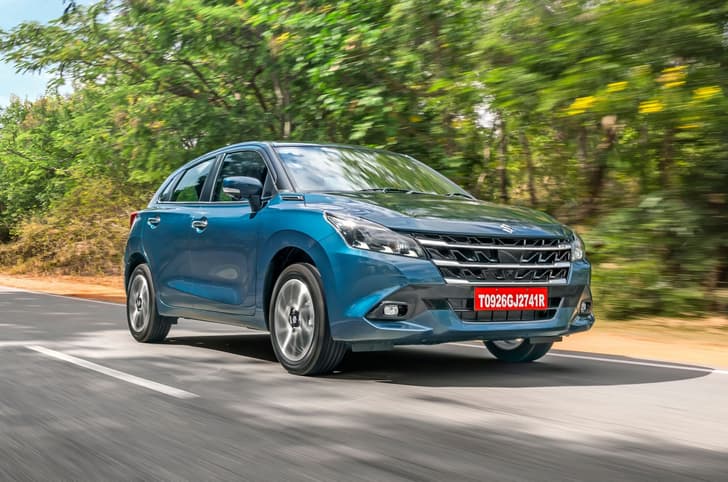
The Brezza LXI Turbo is far superior to the Punch and Tiago as far as smoothness, performance, and cabin space are concerned. It is also backed by Maruti's widespread support network, and the ownership experience is likely to be fuss-free. The on-road cost of the Brezza LXI will fall within your Rs 9 lakh budget, and even though you might miss a few features, it still feels worth opting for. Alternatively, you could also consider the Maruti Dzire VXI MT for its large boot, comfy ride and strong fuel efficiency.

VehicleMaruti Suzuki Brezza
VehicleTata Punch
VehicleTata Tiago
VehicleMaruti Suzuki Dzire

Want to sell your car?

Sell your car at the right price, without the stress.
Posted on: 22 Sept 2026