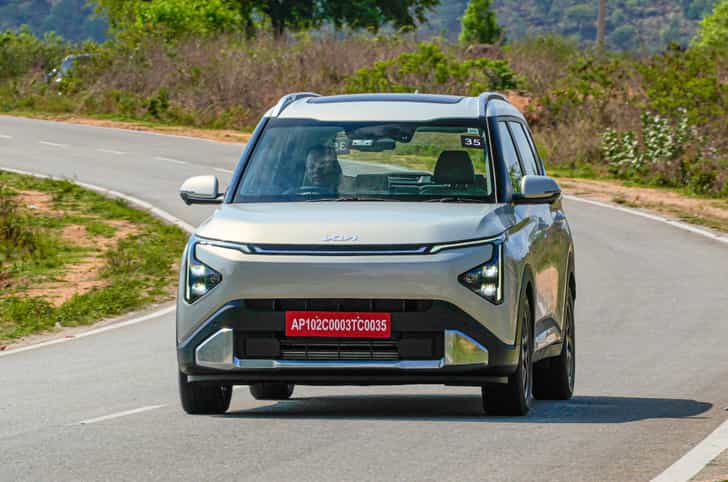
Autocar India
RK

Ram Kumar

21w

I currently own a 2020 Kia Sonet and a 2024 Honda Elevate, and I need a larger seven-seater. I’m deciding between the Mahindra XUV700 AX7 L and the Kia Carens Clavis HTX(O). Please provide a detailed comparison of these two.

Autocar India team

Autocar India

Verified
20w

While both the Mahindra XUV 700 and the Kia Carens Clavis are seven-seaters, their strengths are quite different. The Mahindra car is larger with a more powerful engine and a comfortable ride, and in the top AX7L variant, it is packed with features. Fuel efficiency is not its strong point in either petrol or diesel, and the third row is not ideal for long journeys.

The Kia Carens Clavis is more affordable with more efficient engines and is a better seven-seater. Thanks to a roomier and more comfortable third row. It is well-equipped too. However, while its engines are adequate, it does not feel as effortless or punchy as the XUV 700.

Your final choice should depend on what you prioritise. If you are leaning towards the XUV 700, it may be worth waiting as the facelift is expected soon with more features and updated styling.
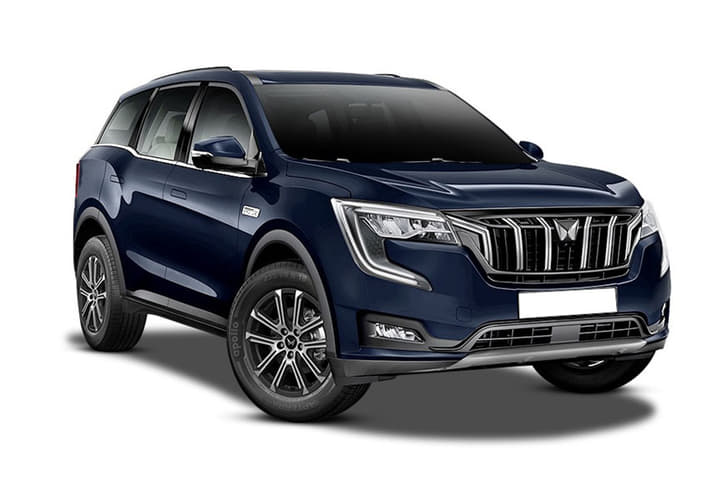
Mahindra XUV700

Mahindra XUV700

More questions on similar cars

RA

Rahul

2d

Hi, I am planning to purchase an SUV. My family has seven members (six adults aged 25+ and 53+, and one child). Currently, I own a 2025 Maruti Baleno (petrol), a 2018 Maruti Swift Dzire (petrol), and a 2010 Maruti Swift (diesel). I am planning to exchange my 2018 Swift Dzire for an upgrade. I am considering the Toyota Innova Crysta, Mahindra Scorpio N and Mahindra XUV 7XO. However, the base variant of the Innova Crysta (GX) is not available for booking at the dealership. My budget is around 25 lakh. Please suggest the best option for my family with low maintenance. Thanks in advance.

Autocar India team

Autocar India

Verified
12h

Seven people, mostly adults, and a Rs 25 lakh cap points to one clear choice, the Mahindra XUV 7XO diesel. It rides smoother than the Scorpio N and the Innova Crysta. The step-in height is friendlier for elders, and you get more features at this price.One thing to note is that the XUV 7XO's third row is not the most spacious around. Alternatively, also consider the Kia Carens Clavis diesel. It is refined and comfortable, easy to drive in the city, and the third row is comfortable for adults.We would avoid the Scorpio N for your use. Its third row is tight for adults, access is not easy, and the high step can bother older family members, even though it is very strong on rough roads.Overall, the XUV 7XO diesel 7-seater fits your family and budget best.

VehicleMahindra XUV 7XO
VehicleMahindra Scorpio N
VehicleToyota Innova Crysta
VehicleKia Carens Clavis
MB

MB

3d

I am considering the Kia Clavis petrol for my family of six. I am a relaxed driver with mostly city usage and occasional long road trips. I am conscious about my budget but willing to stretch if it is the right choice for the next 7 years. I am confused about which transmission to choose — naturally aspirated petrol, turbo petrol manual, or turbo petrol DCT. I have heard about DCT issues in slow-speed traffic and uphill driving. Given this, would going with the naturally aspirated petrol be sufficient, or should I consider the turbo petrol manual instead? Currently, I drive a Honda City i-VTEC manual, and during uphill driving with a full load, it feels underpowered and requires frequent downshifts. Could you please advise on the best option for my usage?

Autocar India team

Autocar India

Verified
2d

You have already experienced how a naturally aspirated engine feels under load in your Honda City, especially on inclines. In a larger and heavier car like the Kia Carens Clavis, that limitation will be even more noticeable. With six people on board and occasional hill drives, the naturally aspirated petrol will feel strained and require frequent downshifts, which takes away from the relaxed driving experience you are looking for.The turbo petrol solves this. It offers stronger low and mid-range performance, making city driving easier and highway or hill driving far more effortless, even with a full load. It reduces the need for constant gear changes and feels more relaxed in real-world conditions. The DCT does offer convenience, but your concern is valid. In slow traffic and uphill situations, it can feel less smooth and slightly hesitant, which does not suit your usage.That said, since you are based in Gurugram, where traffic can get quite heavy, you should be prepared for the manual to feel tiring in daily stop-and-go conditions. If convenience becomes a bigger priority, the DCT is still usable, but it comes with the trade-off of low-speed smoothness.

VehicleKia Carens Clavis
KD

Koustav Dutta

2d

Hi, I’m planning to buy my first car with a budget of around 13-14 lakh. My usage will be minimal, mostly occasional office travel and a few long drives each year (like Ladakh or Spiti). Based on this, I’ve decided to opt for a petrol manual, naturally aspirated engine, as I prefer a simpler and more reliable setup (also a bit concerned about future fuel changes, like E85). Initially, I shortlisted the Kia Sonet because of its looks, but I’ve seen reviews mentioning it lacks power on highways and in hilly terrains, especially during overtakes. I also considered Honda Elevate, Toyota Hyryder, and Hyundai Creta. However, after comparing base variants, I found the Kia Seltos (2026) to be the most value-for-money option. It offers key features, like a display, all-disc brakes, steering-mounted controls, cruise control, TPMS, Rear view camera, parking sensor, speakers, etc., which are missing in the base variants of the other cars. I’m also not interested in a sunroof. Given my usage and priorities, would you recommend going ahead with the Seltos, or should I reconsider any of the other options?

Autocar India team

Autocar India

Verified
9m

Light daily use with a few tough hill trips in a Rs. 13-14 lakh cap points you straight to the Kia Seltos HTE 1.5 petrol base manual. From your list, it fits your brief best because the 1.5-litre naturally aspirated motor feels adequate on highways and hills compared to smaller engines, and the base trim still gives you the useful everyday features you care about without paying for a sunroof or extra frills.Why does it suit you? First, power and gearing. Versus the Sonet’s smaller petrol, the Seltos feels stronger when you need a quick overtake or a climb with luggage, so you will shift less and feel more relaxed on the highway. Second, you’ve called out features like a touchscreen, steering controls, cruise control, rear camera and TPMS. The Seltos base packs most of these, so you don’t need to step up to a variant just to avoid living with a bare cabin. Third, your choice of a simple petrol manual lines up well with the Seltos 1.5, which is a proven, easy-to-own engine.A couple of trade-offs to note. On broken roads at low speeds, the Honda Elevate and Hyundai Creta ride softer over bad patches, but their base trims miss many of the features you want. Also, like any non-turbo petrol at high altitude, you will need to use lower gears on steep climbs.Given your priorities, go ahead with the Seltos 1.5 petrol base manual. It lines up with your needs and budget the best.

VehicleKia Seltos
VehicleHyundai Creta
VehicleHonda Elevate

Posted on: 7 Dec 2025