Autocar India
•22h

I am confused about choosing between the Invicto Zeta Plus 8-seater and the Hycross Hybrid VX 8-seater. My annual running is around 30,000-40,000 km. Which one would cost less in terms of maintenance and be more beneficial in the long run? As of now, if I choose the Invicto, I will save approximately Rs. 3 lakh upfront, but I will miss out on a few features that the Hycross offers. Please suggest.

Verified
•7m

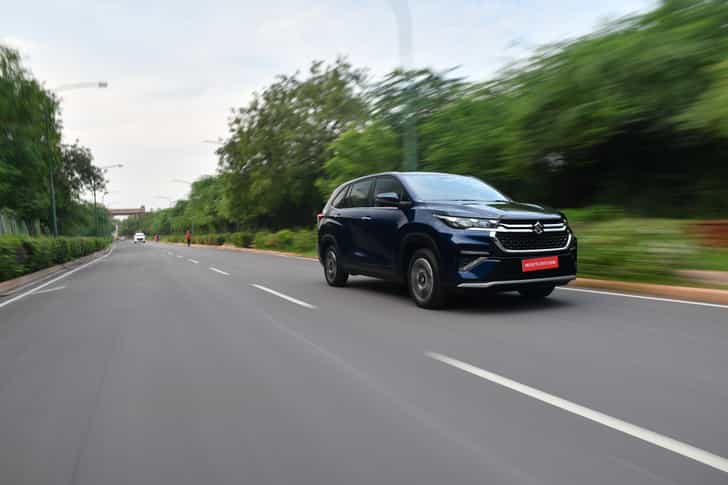
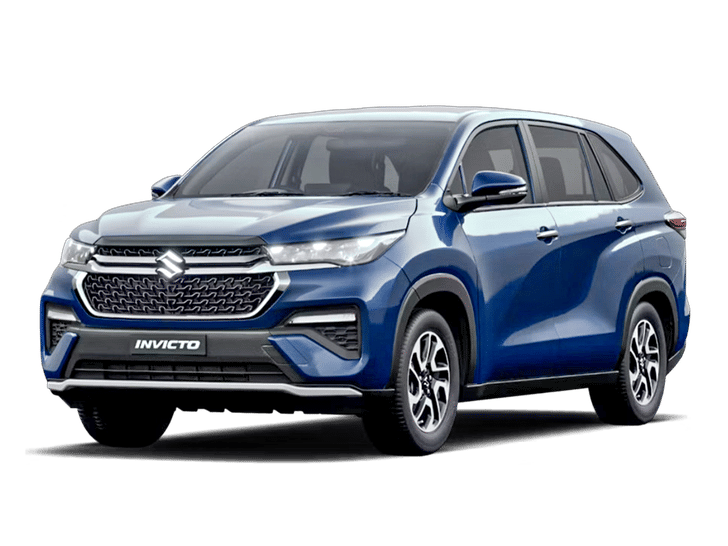
At 30,000- 40,000 km a year, the Invicto Zeta Plus makes a lot of sense, particularly with an upfront saving of around Rs 3 lakh. The Invicto and Hycross share the same basic hybrid powertrain, platform and e-CVT, so there is no meaningful difference in the fundamental driving experience or fuel efficiency. Both have an ARAI-claimed 23.24 kpl, while Autocar's user-reported figure for the Invicto is around 21.2kpl.

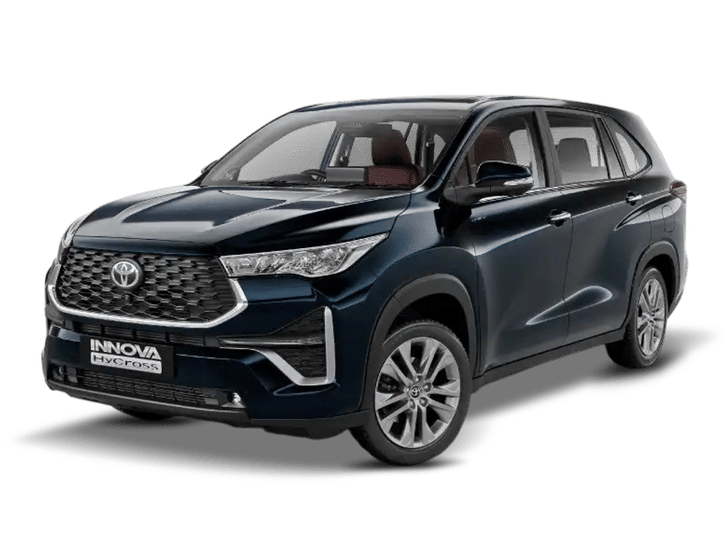
The Hycross VX does give you some useful additional equipment, like a 360-degree camera, front and rear parking sensors. The Invicto, however, gets six airbags as standard and is not a stripped-down version of the Hycross.

For your annual running, the bigger consideration is that the Invicto is not likely to cost significantly more to run or maintain simply because it carries the Maruti badge. The underlying hybrid system is essentially the same Toyota-developed system. Maruti also has a much wider service network, which can be useful if the car is being used this extensively.

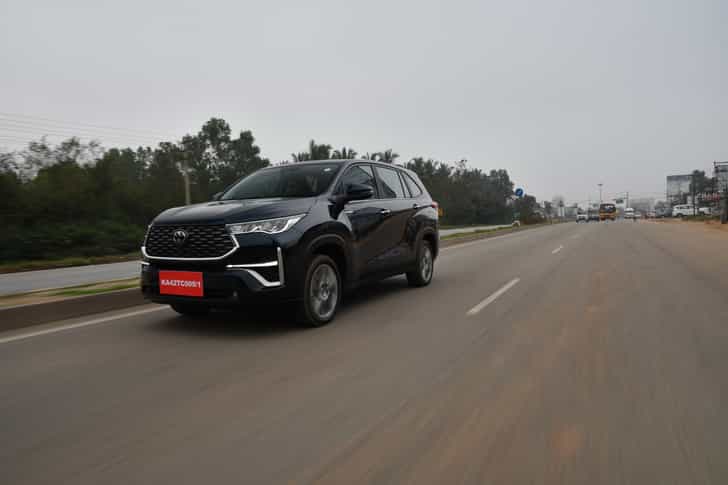
The Hycross does have an advantage in terms of Toyota's long-standing ownership reputation and potentially stronger resale value. However, paying roughly Rs 3 lakh more for the VX purely for the additional features is difficult to justify when the powertrain, space and efficiency are fundamentally similar.
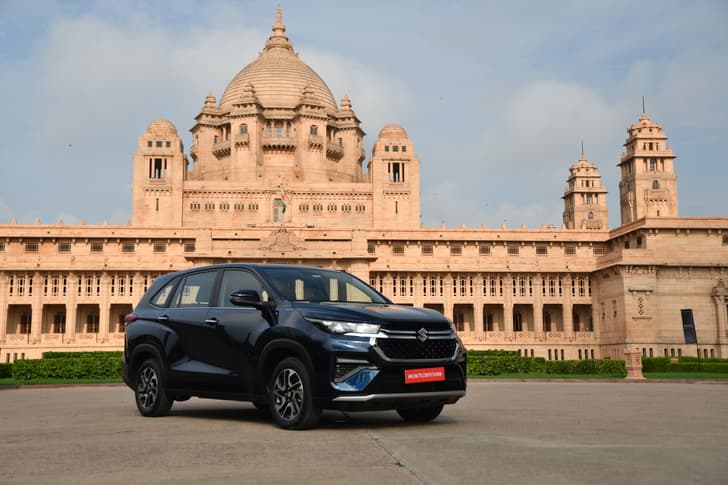
Maruti Suzuki Invicto

Maruti Suzuki Invicto

More posts on similar cars

•1d

I’m 26, and we’re planning to buy a new car. We have shortlisted two options: the Hycross GX(O) 7-seater and the Seltos HTX(A) Turbo Petrol. We removed the Kushaq from the list due to concerns about spare parts availability and maintenance costs. We also ruled out the Creta, as it feels outdated compared to the Seltos, and the turbo-petrol variant is much more expensive. Around 80% of my driving will be in the city, but I want a good engine and a comfortable ride, as my parents will be travelling with me at times. Although the Hycross is lower on features and there are talks of a facelift, I don’t know why, but it still feels like something different.

Verified
•4h

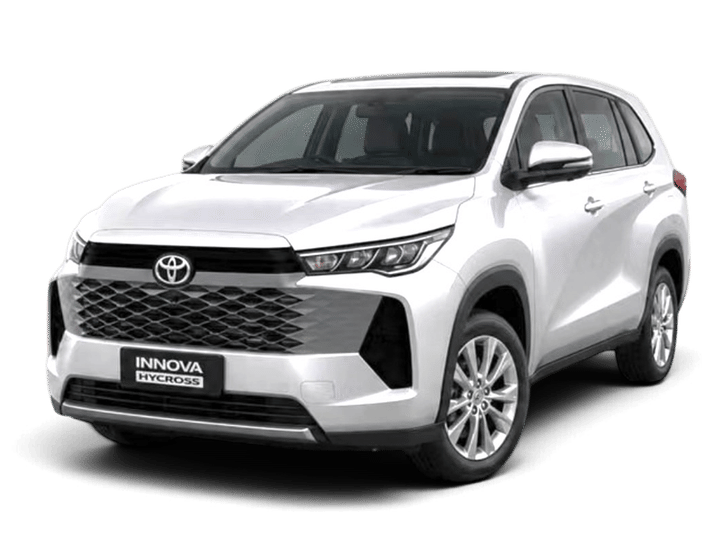
Go for the Toyota Innova Hycross GX(O) 7-seater. Your usage is 80% city driving with occasional family trips, and you want a comfortable ride for your parents. The Hycross is a fundamentally different proposition from the Seltos. It is a larger, more spacious MPV with a strong focus on comfort, reliability and long-term ownership. The hybrid powertrain is well suited to city driving, offering smooth performance and better fuel efficiency in stop-and-go traffic. The ride quality is more comfortable, and the rear seat experience is significantly better for family use.The Seltos HTX(A) Turbo petrol is a good car with a strong engine and a more feature-rich cabin, but it is still a midsize SUV. It does not offer the same level of space, comfort or long-term ownership confidence as the Hycross. The turbo petrol engine is also less efficient in city driving conditions.The Hycross may feel less feature-rich, but it makes up for it with a more comfortable and dependable ownership experience. The facelift is worth noting, but the current car is already a very well-rounded package. If you are looking for something that feels different and will keep you happy for years, the Hycross is the better choice.

VehicleToyota Innova HyCross
VehicleKia Seltos
•2d

I recently booked an Innova Hycross GX(O) and have been promised delivery by the beginning of November 2026. However, seeing the recent facelift shots has me second-guessing my decision. I need to upgrade from my current car before February 2027, but I do have priority dealer access if I decide to shift my booking to the upcoming facelift. Given my February timeline, is it realistically possible to get the facelifted GX(O) variant by then? Or should I stick to my current allocation? In comparison, is it worth the while to wait for the facelift?

Verified
•1d

For this particular situation, waiting for the facelift does not make much sense. The current Toyota Innova Hycross is already a mature product, and the facelift is expected to bring styling, interior and feature updates rather than a fundamental change to the powertrain or mechanical package.The bigger issue is timing. Even with priority access through dealers, the Toyota Innova Hycross facelift is likely to be introduced with the higher trims being prioritised initially. Since GX(O) is the chosen variant, its availability could take longer. That creates a genuine risk of missing the February 2027 deadline, whereas a November delivery comfortably meets both requirements of having the car before Diwali and having it available by February.The facelift will naturally be newer and could bring some useful updates, but those benefits need to be weighed against an uncertain launch date, variant availability and potentially higher pricing. There is also little reason to expect the current Toyota car to suddenly become outdated from an ownership perspective.

VehicleToyota Innova HyCross
•2d

I own a used Toyota Innova Crysta. I am used to spacious 5 seater cars. Now, there are two things to note. I am retired so my car may run only around 10000km annually. My son and daughter-in-law also moved abroad so I don't need 7 or 8-seater unless there is no spacious, comfortable 5-seater car. I am looking for a car (preferably SUV). I wish to spend around 15-18 lakh although I am not rigid. Which one should I select?

Verified
•1d

With your usage now down to around 10,000km a year and no real requirement for seven seats, a good five seat SUV makes more sense than replacing one large Innova with another. The Elevate gives you a spacious cabin, excellent rear legroom, good ground clearance and a comfortable driving position, while the naturally aspirated 1.5-litre petrol and CVT are simple and easy to live with. It also keeps ownership costs and purchase price sensible.The Toyota Innova HyCross is the obvious choice if maximum space and long distance comfort remain priorities, and its 5-star Bharat NCAP rating is reassuring. However, you would be carrying around a 4.75m long, three-row vehicle when you no longer need the additional seating. The petrol HyCross also returned only 9.7kpl in testing, which makes little sense for relatively low annual running.The Seltos is another option if you want a more feature rich and premium cabin, but for a retired owner looking for relaxed, long term ownership, the Elevate's naturally aspirated engine is a simpler proposition.

VehicleHonda Elevate
VehicleToyota Innova HyCross
VehicleKia Seltos

Popular discussions right now

•4d

I currently drive a Hyundai i10 CNG, with daily running of around 6 km in Gurgaon city traffic and a monthly highway drive of around 200 km. I am now planning to upgrade my car, with an on-road budget of Rs. 12 lakh for a petrol sub-4-metre SUV, up to Rs. 14 lakh for a petrol midsize SUV, and Rs. 15 lakh for an EV. I live in a rented apartment on the second floor, so I am apprehensive about getting an EV. I prefer an EV, but installing a charger could be complicated due to the sanctioned load. My running could increase to nearly 800 km per month in the future. My key priorities are: - Good suspension and ride comfort, as I have a back problem - Decent fuel efficiency in heavy city traffic - Low to medium maintenance costs - Auto hold and ventilated seats would be good to have I sometimes consider buying a manual, but I mostly prefer an automatic. I am currently considering the Maruti Brezza, Baleno AMT, Fronx AMT/AT, Sonet iMT, Exter AMT, and even the upcoming Inster, VF3, and Bayon. I am open to other suggestions as well. Note: I had a bad driving experience with the Punch AMT, as it caused back fatigue.

Verified
•4d

Given your priorities of ride comfort, fuel efficiency and low maintenance, the Maruti Brezza automatic is the most sensible upgrade. It offers a comfortable ride, a proven naturally aspirated petrol engine and Maruti's strong service network, which keeps long-term ownership costs in check. The torque converter automatic is smooth in city traffic, and the Brezza's higher seating position will help with your back issues. The Sonet iMT is not the right choice here. While it is a good car, the iMT is not a true automatic and will not offer the same ease of use in Gurgaon traffic. The Baleno AMT and Exter AMT are also not ideal given your back issues and the fact that AMT gearboxes are not as smooth as torque converter automatics in stop-start conditions.On the EV front, your apprehension about charging is valid. Without a straightforward home charging solution, an EV will add unnecessary complexity to your ownership experience. The upcoming Bayon is interesting and if you can wait a few weeks you would have a better picture before making a decision. For now, the Brezza automatic strikes the best balance between comfort, efficiency and hassle-free ownership.

VehicleMaruti Suzuki Brezza
VehicleKia Sonet
VehicleMaruti Suzuki Baleno
VehicleHyundai Exter
VehicleHyundai Bayon
•2d

I am planning to buy a new vehicle for myself and my parents. I have seen the new Audi Q3 2026 and am quite interested in it, but I am not fully convinced about the petrol-only option. I was hoping for a hybrid version, especially considering fuel efficiency at this price point. Secondly, I am also looking for a 4x4 and am currently waiting for the new Fortuner. However, I am confused because many people are suggesting the new Scorpio N or Thar Roxx, saying that if the primary purpose is off-roading, there is no need to spend so much on a Fortuner. Please suggest what would be the better option for my requirements.

Verified
•2d

The Audi New Q3 is a good choice if you want a premium, comfortable SUV, but I would not buy it expecting a hybrid. The India-spec Q3 is expected to use a 2.0-litre turbo-petrol engine with 204hp, a 7-speed DCT and quattro AWD, with no confirmed hybrid version for India.If your requirement is genuine 4x4 capability, the Toyota Fortuner remains a very different proposition. The next-generation Fortuner is already being tested and is expected in India by early 2027. It is expected to retain petrol and diesel engines, 4x4 capability and the ladder-frame construction, while gaining a much more modern cabin and ADAS.The Mahindra Scorpio N is the sensible alternative if you want a capable 4x4 without spending Fortuner money. The Thar Roxx makes more sense if off-road ability is the priority, but it is less comfortable and practical as a family SUV.For parents, the Q3 will be considerably easier to live with in the city, while the Fortuner is better suited to long-distance touring and serious rough-road use.

VehicleAudi New Q3
VehicleToyota Fortuner
VehicleMahindra Scorpio N
VehicleMahindra Thar Roxx

Upcoming launch buzz

Community discussions on upcoming launches

Posted on: 26 Sept 2026