
Latest questions answered by experts
Venkat
•3dMy monthly running is around 500 km only. Is it worth opting for a hybrid, or should I consider another car in a similar price range that offers better features which I may not get in a hybrid at the same cost?

Autocar India
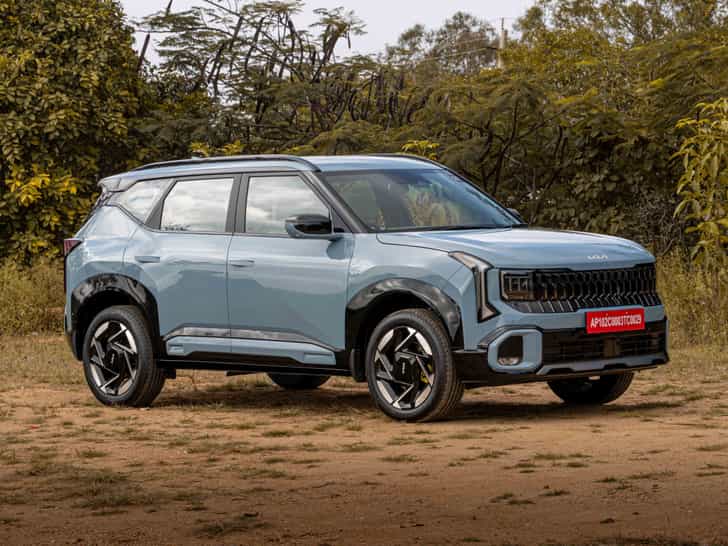
With about 500 km a month, a strong hybrid is usually not worth the extra price. In your case, pick a well-equipped petrol automatic instead; something like the Kia Seltos 1.5 petrol IVT or 1.5 turbo-petrol DCT, which come with the latest features.At this low monthly use, the fuel you save with a hybrid will take a very long time to cover the higher price. A modern petrol automatic is smooth enough in traffic and still uses a sensible amount of fuel for 500km a month. More importantly for you, the same money can get more features in the petrol version than in a hybrid at the same price, like a 360-degree camera, six airbags, a better sound system, and connected tech that some lower or mid hybrid trims may skip.Know the trade-off: a petrol will use more fuel in heavy traffic and is not as silent as a hybrid at low speed.

Rahul Rajbhoj
•3dIs the Seltos Turbo DCT a good option, or should I go for the Seltos Diesel automatic for a monthly driving of about 800 km to 1000 km. My driving includes 80% city and 20% highway usage. I am concerned about the DCT being a dry clutch and the Diesel DPF issues. Please suggest the best option for my usage. The most important factors for me are comfort, performance, and safety.

Autocar India
The concern around the dry clutch DCT is valid. In heavy crawling traffic, it can feel a bit jerky and it is not as seamless as a torque converter automatic. But in everyday ownership, it is still a perfectly liveable gearbox if you drive it as intended and do not constantly creep aggressively in bumper to bumper traffic. The upside is that you get strong performance, a punchy engine and an engaging drive.The bigger concern for your usage is actually the diesel. With 800 to 1,000 km a month and 80 percent city use, you are entering the zone where DPF related issues can become a bigger ownership concern, especially if most of those city runs are short stop go commutes. Yes, your highway usage helps, but if peace of mind is what you are after, the DCT is actually the less worrying choice here.That said, if your absolute priority was smoothness and fuss free city comfort, the ideal recommendation would actually be the Seltos IVT, because that gearbox is far better suited to urban use than either of these. But since performance is one of your key requirements, the naturally aspirated IVT loses its edge.So between your two options, we would choose the turbo DCT. It may be slightly less polished at crawling speeds, but it is livable, enjoyable and for your usage pattern, the safer long term bet versus worrying about diesel DPF issues.
Mousumi Bhattacharya
•6dWhich is the better option among the Maruti Suzuki Wagon R ZXi manual petrol top variant, the Maruti Suzuki Ertiga with similar features, or the Maruti Suzuki Dzire top variant petrol manual? I drive around 24 km daily in a metropolitan city. I am 57 years old and have a family of four.

Autocar India
With mostly 24 km a day in city traffic and a family of four, the Maruti Suzuki Dzire top petrol manual fits your use best. It rides smoother than the Wagon R on broken city roads, so you and your family feel less tired. The steering and clutch are light, and the car feels steady on the highway. You also get a big boot for bags, while the car still stays easy to park in tight spots.Two small trade-offs: the seat is lower than the Wagon R, so you sit less upright, and you need to bend a bit more to get in and out.If a high, easy step-in seat is your top need, the Wagon R ZXi works well for short city trips and narrow lanes, but it can feel bouncy on bad patches and is not as wide for two adults in the back. Skip the Ertiga unless you often carry six or seven people; for four in a metro, its extra size just adds parking and traffic hassle. For your daily city use, pick the Dzire top petrol manual.
Vipin
•6dHi Autocar, I am planning to buy a new car (currently using an i10). I am from Delhi, and my budget is around ₹15-16 lakh on-road. My daily running is around 30 km, with highway trips only once every quarter. We are confused between the Skoda Slavia 1.0 Signature/Sportline CVT and the Honda Elevate VX CVT. We are planning to keep the car for long-term usage. Kindly suggest which one would be the better choice.

Autocar India
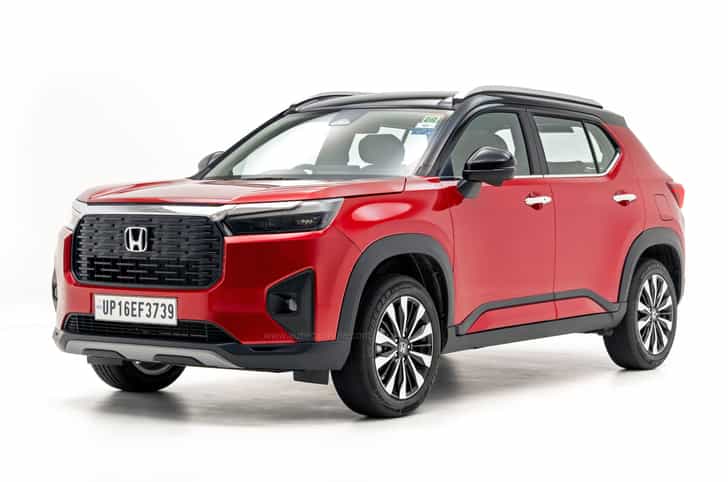
Mostly city use with short highway runs and a ₹15-16 lakh on-road cap in Delhi, in this brief the Honda Elevate VX automatic is the safer long-term pick. It suits daily Delhi driving better because the higher seat and ground clearance make bad roads, tall speed breakers and waterlogging less stressful. Honda’s wide service network in NCR and the simple, proven petrol with a smooth automatic also point to easier, lower-hassle ownership over many years.The Slavia 1.0TSI automatic is the one to choose only if you care more about how it drives on the open road. It feels quicker when you press the accelerator, the ride is more confident at speed and being a sedan, handling is more engaging than the Elevate. But it sits lower and Skoda’s network is smaller.Two trade-offs with the Elevate VX: the cabin feels simpler than the Slavia’s, and highway overtakes need a firm press, especially with a full load.Overall, for your city-heavy routine and long-term peace of mind, go with the Elevate VX automatic.

Viji narayanan
•1wI am looking for an SUV under ₹20 lakh. I love driving and live on a farm. I currently drive a Renault Kwid and cover around 10,000 km a year. Which car would you suggest?

Autocar India
Since you already own a Renault, the new Duster would be a great pick. With mostly rural roads, about 10,000 km a year and a Rs 20 lakh cap, you can opt for the Duster 1.3 turbo-petrol with either the manual or the DCT, depending on your preference.The 1.3 petrol feels strong and punchy once you get past the initial turbo lag, and the DCT is almost torque-converter smooth. The manual has a satisfying clutch and shifter action, though turbo lag feels slightly more pronounced with this gearbox. It stays steady at speed and the steering gives good confidence, so it will feel like a big step up from your Kwid. Ground clearance is good and the suspension handles broken patches well, so you won’t have to slow to a crawl for every rut, yet it still feels tight and enjoyable on a twisty road.Two things to note: it is not a true off-roader, so avoid deep slush and very uneven fields; and Renault’s dealer reach in smaller towns can be limited. Since you already own one, though, that should not be a major concern.If your routes are very rough and you often need to go into fields, look at the Mahindra Scorpio N instead. It is tougher and sits higher, but it is not as nice to drive on smooth roads as the Duster.
Samir Shah
•3wDear Autocar team, I am confused between XUV 7XO AX7AT and Kia Carens Clavis HTX (O). My daily driving is approx 30km in Mumbai bumper-to-bumper traffic and three to four highway trips of approx 400 km each. This will be a chauffeur-driven car, so back-seat comfort is important. This car will be used once a week by my elderly mother for short trips, so ease of use from old age person is also critical. From a seating comfort point of view and after considering my overall requirement, I have shortlisted Kia Carens Clavin DCT HTX (O) as I need certain minimum features in my car. My concern is DCT behaviours and heating issues in heavy city traffic, and the long-term reliability of DCT transmission. I intend to keep this car for 10 years. Do advise me on the correct option between the two cars which I have shortlisted.

Autocar India
Your usage of 30km of daily Mumbai traffic, a chauffeur-driven setup, occasional 400km highway runs, and the need for easy access for your mother clearly leans towards comfort and ease rather than outright performance.In that context, the Kia Carens Clavis HTX (O) is the more suitable pick over the Mahindra XUV 7XO AX7 AT. The Carens’ lower floor and more MPV-like stance make ingress and egress far easier, especially for elderly passengers. The second row is also more accommodating and comfortable, and in tight urban conditions, it’s simply less cumbersome to place than the bulkier XUV.Your concern about the DCT is valid, particularly in Mumbai’s stop-and-go traffic. Traditionally, dual-clutch transmissions could heat up due to constant clutch slip at low speeds. However, newer Kia/Hyundai DCTs have improved cooling and software calibration, and are better engineered to handle “clutch creep”, essentially mimicking the gentle roll of a torque converter automatic in traffic without excessive wear.That said, the bigger trade-off isn’t outright reliability as much as smoothness. A DCT can still feel a bit jerky at very low speeds compared to a torque converter, which remains the benchmark for creep and seamless response in bumper-to-bumper conditions.Overall, given your priorities of rear-seat comfort, ease of use, and urban drivability, the Carens Clavis remains the better fit for your needs, even with the DCT consideration.
Need expert advice?
Ask the Autocar community and experts.