Autocar India
2d

I'm planning to buy a Honda Elevate and have received an on-road quote of Rs. 18.7 lakh in Hyderabad for the ZX CVT. However, I've been reading reports that an Elevate facelift may be launched soon. My top priorities are: ADAS (Honda Sensing), LaneWatch camera Nice-to-have features: 360-degree camera, ventilated seats Given the current discounts, would it be better to buy the Elevate now or wait for the facelift? If the facelift does add features such as a 360° camera, ventilated seats, or expanded ADAS availability across more variants, do you expect Honda to increase prices significantly? Honda has already expanded ADAS availability in some City variants. Is it likely that Honda could make ADAS available in more Elevate variants as part of the facelift? I usually keep my cars for 8-10 years, so I'm trying to understand whether the current discounts on the existing model outweigh the potential benefits of waiting for the facelift. Thank you

Verified
1h

The facelift is expected soon, but Honda is unlikely to make major changes to the mechanical package. The Elevate is a simple, reliable SUV with a proven naturally aspirated petrol engine and a smooth CVT. It is not a feature-rich car, and Honda has positioned it as a straightforward, dependable family SUV rather than a tech-heavy product.That said, Honda Sensing (ADAS) is already available on the ZX variant, and like the City, Honda may expand ADAS availability to lower variants in the facelift. A 360-degree camera and ventilated seats are possible additions, as they were in the City, but Honda is not known for aggressive feature updates, and any meaningful additions would likely be accompanied by a price increase.If you keep cars for 8-10 years, the Elevate is a good choice nonetheless. While the current discount is quite significant, if these features mean a lot to you, it's just a matter of waiting a few months more. There's a chance that stocks of the outgoing model will still be available and going at even higher discounts as the updated model is launched, so in case the price hike is too much, you could even take a call then.

VehicleHonda Elevate
VehicleHonda City
5d

I’m looking to buy a 7-seater SUV and currently have two options shortlisted: the Mahindra XUV 7XO AX Petrol and the Tata Safari Pure Plus Petrol. I’m not very concerned about features, bells and whistles, or premium interiors. My main priorities are engine performance, long-term engine reliability, reliability with low usage, mechanical durability, ownership experience, highway stability, and comfort. My running is extremely low, but I occasionally do a ~1,500 km continuous highway trip. Between the XUV 7XO 2.0-litre turbo-petrol and the Safari 1.5-litre turbo-petrol, which one would you choose specifically for performance and long-term reliability? Also, are there any other SUVs I should consider in a similar price range?

Verified
3h

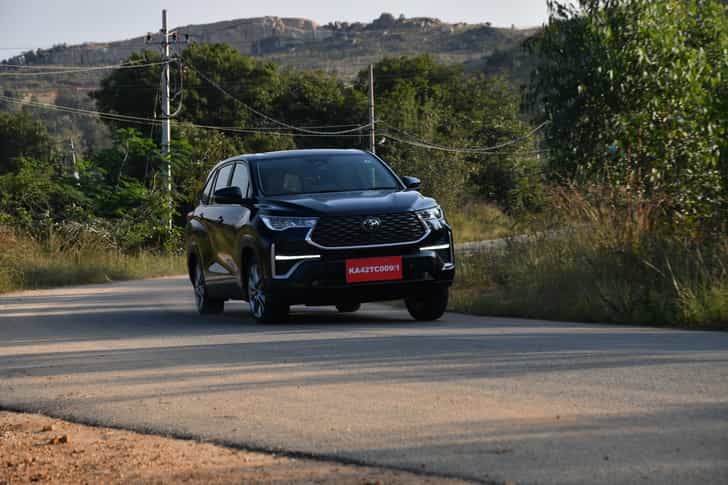
Go for the XUV 7XO AX petrol. It is the better fit for your priorities. The 2.0-litre turbo-petrol is a proven engine with a strong ownership track record, and delivers significantly better performance than the Safari’s 1.5-litre turbo-petrol. The Mahindra XUV 7XO feels more effortless on the highway, especially with a full load, and overtaking is easier thanks to its stronger mid-range.It is also the more mechanically sorted package overall, with a better-calibrated gearbox and a more mature ownership experience.The Tata Safari’s 1.5-litre turbo-petrol is adequate for city driving, but it can feel strained on the highway with a full load and does not offer the same level of performance, refinement, or long-distance ease as the engine in the Mahindra car.For your usage pattern, low running with occasional long highway trips, petrol is the right choice, and the XUV 7XO’s engine is better suited to this kind of usage. It is a robust, reliable powertrain that can handle high mileage over the long term, and it does not suffer from the same concerns around DPF or diesel-related issues that can arise with low usage.If you are open to alternatives, the Toyota Innova HyCross is worth considering. It is not an SUV, but it is the benchmark for long-term reliability and ownership experience. The hybrid powertrain is extremely well suited to your usage pattern. It is also a genuinely comfortable long-distance car with a proven track record.

VehicleMahindra XUV 7XO
VehicleTata Safari
VehicleToyota Innova HyCross
3d

My monthly running is around 800km, of which 60-70% is city driving. I do 3-4 long drives a year. We are a family of two with an average Indian build. I am confused between the Skoda Kylaq Prestige AT, Renault Duster 1.3 DCT Iconic, and Skoda Kushaq 1.5 DSG. My priorities are driving dynamics, suspension, long-distance comfort, and ownership experience. I plan to keep the car for more than six years. I am wondering whether I should go for the Kylaq, which would be easier in city traffic, or one of the other shortlisted options. ADAS is not a criterion.

Verified
4h

Go for the Skoda Kylaq Prestige AT. With your usage pattern of 800km a month, mostly city driving with a few long trips a year, the Kylaq is the most sensible and enjoyable choice. The 1.0 TSI engine paired with the 6-speed torque converter automatic is well-suited to city traffic, offering smooth and predictable shifts, while being punchy enough for highway runs. This Skoda car also delivers a good balance of ride comfort and driving dynamics, making it comfortable for long drives without sacrificing the fun-to-drive element you are looking for.The Renault Duster 1.3 DCT is the enthusiast's choice with its stronger performance and excellent ride quality. You will have to spend a bit more for the added performance, and fuel efficiency will be on the lower side. The Skoda Kushaq 1.5 DSG is a fair bit pricier; hence it might not justify the stretch.Overall, the Kylaq is the sensible pick for a family of two.

VehicleSkoda Kylaq
VehicleRenault Duster
VehicleSkoda Kushaq
3d

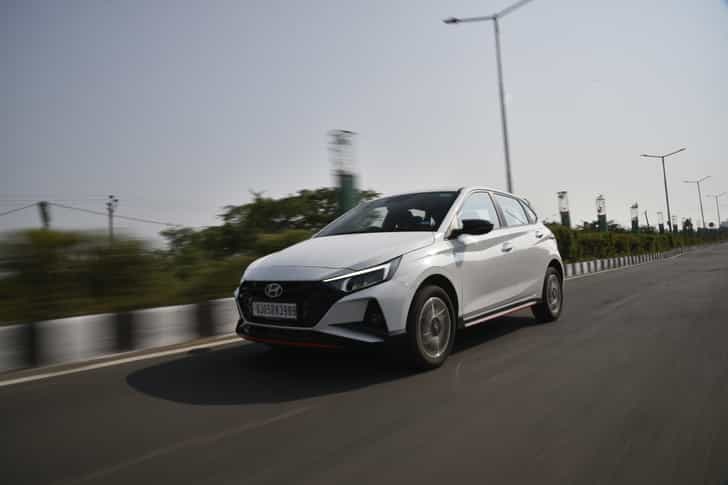
Hi Autocar India, I’m planning to buy a new car under Rs 16 lakh for my family of five. My monthly usage is around 500km, mostly on highways. I’m currently considering: Hyundai i20 N Line, Hyundai Verna 1.5 MPI, Kia Seltos, Volkswagen Virtus, and Skoda Slavia. I personally prefer low-slung cars over SUVs. My priorities are long-term reliability, family comfort, highway stability, good safety, reasonable maintenance costs, and overall ownership experience. Which one would you recommend for my requirements, especially for long-term ownership? Also, which engine and variant would be the best choice within my Rs 16 lakh budget? Thanks! I’d love to hear your expert recommendation.

Verified
4h

You can get the HX6+ variant of the Verna with the 1.5-litre naturally aspirated petrol-manual powertrain, which is pleasant to drive, stable on highways, and paired with a comfortable, soft suspension setup. Being a Hyundai car, it also has reasonable maintenance costs.The Hyundai Verna has also scored a perfect 5-star rating in the Global NCAP crash tests, so you can rest assured about safety. The Skoda Slavia is due for an update very soon, but in this budget you will have to settle for entry-level variants that don't offer much equipment. The Verna, on the other hand, will get you LED headlamps, front ventilated seats, a single-pane sunroof and others. All things considered, the Hyundai Verna is the best choice for your requirements.

VehicleHyundai Verna
VehicleSkoda Slavia
Hyundai Verna
Hyundai Verna
3d

Hi Team, I’ve finally decided to go ahead with the Tata Harrier Adventure X+ Diesel AT instead of the petrol variant. I was previously a WagonR owner, and for the last three years, I’ve been driving a VW Taigun 1.5 MT Petrol. My only concern with switching to a diesel is the DPF (Diesel Particulate Filter). My running is around 500 km per week, so I believe that should be sufficient, but I’m still not entirely clear about the DPF requirements. Does a diesel car need to be driven every day, or is regular weekly running of around 500 km enough to keep the DPF healthy? I’d also like to know about real-world experiences with diesel cars, particularly regarding DPF regeneration and maintenance. I’d really appreciate any suggestions or experiences you can share. Also, I’m a big fan of the Harrier. I did consider the 7-seater, but honestly, it feels a bit too long for my preference and has more of a “taxi” feel to it. The 5-seater Harrier looks much more proportionate and suits my taste better. Looking forward to hearing about your experiences.

Verified
15h

With 500km a week, you are well above the threshold where DPF becomes a concern. The DPF is designed to capture soot from the exhaust and then burn it off during a process called regeneration. This regeneration typically happens automatically when the engine reaches operating temperature and is held there for a sustained period, usually during a 15-20 minute drive at steady speeds. Your weekly running is more than sufficient for this.You do not need to drive the car every day. What matters is that the car gets regular runs where the engine is warm and running at a consistent speed. Short, stop-start city trips are what cause issues, not the frequency of use. As long as your usage includes some highway or longer stretches, the DPF will regenerate as intended.In real-world experience, modern Diesel cars are far less fussy about DPF than people fear. The issues tend to arise only with very low-mileage, purely urban cars. With your usage, the Tata Harrier Adventure X Diesel AT is a perfectly sensible choice. It is a strong, refined engine with good long-distance capability, and the automatic gearbox is well suited to both city and highway driving.The Harrier is also the right choice from a proportion and feel perspective. The Tata Safari is a good car, but if you do not need the third row, the Harrier is the more balanced and better-looking option.Go for the Harrier diesel without hesitation. Your usage is exactly what modern diesels are designed for.

VehicleTata Harrier
VehicleTata Safari
3d

I am confused between the Tata Safari Petrol MT and the Tata Sierra Accomplished/Accomplished+ Petrol AT. This will be my first car, and I plan to keep it for around 8-10 years. My primary requirement is a real-world city mileage of at least 10-11kpl. Most of the driving will be in the city, with a monthly running of around 300km and one long trip every 1-2 months. Good road presence is also important. I would also prefer an engine with enough power for effortless highway overtaking. My wife is particularly interested in the passenger screen available on the Sierra Accomplished+, which is why I am considering stretching the budget for it. However, the Accomplished+ is around Rs 2 lakh over my original budget. Considering my usage and requirements, which car would make the most sense? If the Sierra is the better choice, should it be the Accomplished or Accomplished+? Is spending around Rs 2.5 lakh more on the Accomplished+ mainly for the passenger screen and additional features actually worth it?

Verified
16h

Firstly, ask yourself whether you need the third row seating. If yes, then the Tata Safari is your best bet - it is a spacious three-row SUV. That said, its manual gearbox is not the smoothest, nor is its clutch as effort-free as that of most other smaller mid-size SUVs. Also, to extract 10-11kpl from your short city runs will be difficult. These are trade-offs you will have to make for its road presence, performance, as well as cabin space.If you don't need the extra row of seats, it makes sense to opt for the Tata Sierra instead. Do note, it isn't an efficient turbo-petrol-automatic combination, so be prepared for higher monthly fuel bills. The good news is that the 1.5 Turbo-Petrol's performance is strong, and the 6-speed automatic gearbox works smoothly. It is a spacious, sturdy SUV; you can choose from the multiple variants on offer.If you plan to keep the car for an 8-10 year period, it could be worth stretching your budget a bit and getting all the bells and whistles.

VehicleTata Safari
VehicleTata Sierra
Tata Safari
Tata Safari
3d

I am confused between the Mahindra XUV 7XO AX7 petrol automatic and the Mahindra Scorpio N Z8S petrol automatic. I am based in Bangalore and would mainly use the car on weekends, covering around 20km per outing, which works out to roughly 100km a month. I would also take occasional long trips, bringing the estimated annual usage to around 3,000km. We are a family of five, but our extended family occasionally joins us, taking the total to seven people. That is why I am looking for a seven-seater. I really like the Scorpio N for its looks and legacy, while the XUV 7XO appeals to me for its technology and features. Given my usage and requirements, which one would be the better choice?

Verified
17h

Though both are Mahindra cars, they are quite different in character. The Scorpio N Z8S Petrol AT has undeniable road presence and a legacy that goes back over two decades, so it is easy to understand why it appeals to you. Its body-on-frame construction also makes it the tougher, more rugged choice, especially if your regular driving involves poor roads or occasional off-road use.However, for the usage you have described, the XUV 7XO AX7 Petrol AT would be the better fit. With only around 3,000km a year, mostly short weekend trips in Bengaluru and a few longer family journeys, you are likely to appreciate its more modern, car-like driving manners and greater everyday comfort. It feels easier to drive, more stable at highway speeds and less cumbersome in the city than the Scorpio N.The XUV 7XO also has the advantage on technology, cabin ambience and overall refinement. Its ride is more composed and its handling feels more predictable, while the Scorpio N can feel bouncier and more top-heavy, particularly when driven briskly or with a full load. For a family of five, both will work well, but the XUV’s cabin feels more premium and the third row though best kept for occasional use is better in the XUV 7XO as well.Choose the Scorpio N if its design, image and rugged character genuinely matter more to you, or if your long trips often involve badly broken roads. But if you want the more rounded family SUV, with better comfort, technology and on-road behaviour, the XUV 7XO is the one to go for.

VehicleMahindra XUV 7XO
VehicleMahindra Scorpio N
4d

Hi everyone, I am planning to buy my first car. I will be driving around 40km daily in the city, along with occasional highway trips of around 300 km to nearby cities. Some of these highway journeys will involve hilly areas, while the roads in smaller cities can have potholes and rough patches. I am looking for an automatic transmission, with a budget of around Rs 12–14 lakh. Good mileage, safety features and overall value for money are my main priorities. The options currently on my list are the Maruti Suzuki Brezza ZXi AT, Mahindra XUV 3XO AX5 AT, Kia Sonet HTK+ or HTK+ (O), and Hyundai Creta HX5 AT. However, I am mainly confused between the Brezza and the XUV 3XO and would appreciate some guidance on which one would be better suited to my requirements.

Verified
18h

Both are solid choices, but the Mahindra XUV 3XO AX5 AT is the better fit for your usage. Your daily 40 km city commute, combined with occasional 300 km highway runs through hilly terrain and rough roads, demands a car with a strong engine, good ride quality and a robust build. The 3XO’s turbo petrol engine offers noticeably better performance than the Maruti Suzuki Brezza ZXi AT, especially on inclines and overtakes, while the suspension is well-tuned for rough roads and potholes. It is also one of the most spacious compact SUVs, making it a comfortable family car. One drawback is that the boot is on the smaller side for this segment.The Brezza is the more sensible long-term ownership choice with Maruti’s service reach and reliability, but its naturally aspirated petrol engine feels underpowered on highways and hills. It makes up for it by offering better fuel efficiency than the 3XO, particularly in the city. The Kia Sonet HTK+ and Hyundai Creta HX5 are good alternatives, but the 3XO offers a better balance of performance, space and value for money.

VehicleMahindra XUV 3XO
VehicleMaruti Suzuki Brezza
VehicleHyundai Creta
VehicleKia Sonet
4d

I used to own a Tata Nexon AMT petrol for five years, but I had to sell it due to a serious manufacturing-related rusting issue and a poor service experience. I’m now looking to buy a new automatic petrol SUV with a budget of up to Rs 14 lakh. The car will mainly be used for weekend driving within the city, with perhaps one long trip every month. The annual running is expected to be only around 5,000- 6,000 km. A car that does not require much hassle in terms of servicing would be a major plus. Good power output and decent fuel efficiency are also important. What options can be considered?

Verified
19h

Given your low annual running, weekend city use and a monthly highway trip, a petrol automatic is the right choice. Since you had a poor experience with Tata cars, we would recommend the Maruti Suzuki Brezza automatic. It is a reliable, hassle-free SUV with a proven service network, which is exactly what you are looking for. The 1.5-litre petrol engine is smooth and the 6-speed torque converter automatic is far better than the AMT you had in the Tata Nexon. It is not the most powerful car in the segment, but it is dependable and easy to live with.If you want something with a bit more power and a more engaging driving experience, the Skoda Kylaq 1.0 TSI automatic is a good alternative. The turbo petrol engine is punchy and the 6-speed torque converter automatic is smooth in the city. Skoda's service network is not as extensive as Maruti's, but it has improved significantly in recent years.The Mahindra XUV 3XO petrol automatic is also worth considering. It is one of the most powerful cars in the segment and offers a strong feature list, but the boot is on the smaller side.Overall, the Brezza is the safest recommendation for your requirements. If you want more performance, the Kylaq is the better choice.

VehicleMaruti Suzuki Brezza
VehicleTata Nexon
VehicleMahindra XUV 3XO
VehicleSkoda Kylaq
Maruti Suzuki Brezza
4d

I currently drive a 2014 Hyundai Grand i10 Asta AT, which has covered around 58,000km. I am looking to upgrade primarily because I need more boot space to accommodate my son’s folded wheelchair. The new car will be purchased through a corporate lease for four years. Around 90 percent of the driving will be in the city, with an average daily usage of about 50km. I need help with a few aspects of the purchase. First, is it worth paying a premium for an EV given my usage? Second, are ADAS and other technology features genuinely useful for this kind of usage, and should ADAS be considered a make-or-break feature? I would also appreciate a shortlist of cars that would suit these requirements.

Verified
20h

Given your usage, the key requirement is a larger boot for your son's folded wheelchair, along with a comfortable and hassle-free city driving experience. With 90% city driving and around 50 km a day, an EV can make sense if you have reliable home charging, but the premium is only justified if you are committed to keeping the car for the full lease period and maximising the running cost savings. Otherwise, a petrol automatic car is the more straightforward choice.ADAS and tech features are nice to have, but they should not be the deciding factor. In city driving, features like adaptive cruise control and lane keep assist are not as useful as they are on highways, and auto emergency braking tends to be too sensitive to pedestrian crowds; thus, it's only better out on the highway, not so in your case. Focus on a car with good visibility and a comfortable driving position instead. For your shortlist, the Maruti Suzuki Wagon R Swivel seat could be an ideal option. The front passenger seat swivels out fully to enable people with mobility challenges very easy entry. The boot is also large enough to store a folded wheelchair. You will have to order this from select Maruti dealers, so check with a few in your area. Being a company approved and provided system, there is a warranty for the swivel seat as well as the entire car. The Maruti Suzuki Brezza automatic is another option. It offers a large, square boot that should also take a folded wheelchair and the ride is very comfortable, especially at low city speeds. If you are looking for a slightly larger car, the Kia Seltos IVT or the Hyundai Creta IVT are worth considering for their bigger boots and more premium feel, but make sure the step in height is comfortable for your son.

VehicleMaruti Suzuki Wagon R
VehicleMaruti Suzuki Brezza
VehicleKia Seltos
VehicleHyundai Creta
5d

I own a 2022 Volkswagen Taigun 1.5 GT MT and have driven around 56,000 km. Recently, I have been experiencing knee pain and possibly the early stages of arthritis. Considering the traffic in Gurugram, I am thinking of switching to an automatic transmission, but I am unsure whether the Taigun’s DSG gearbox would be a reliable option for long-term ownership. What would you suggest? I do not want to upgrade to a higher segment, but I also do not want to compromise on the level of performance I currently enjoy.

Verified
21h

Given your knee pain and Gurugram traffic, moving to an automatic is the right decision. The Volkswagen Taigun 1.5 TSI DSG is a fantastic driver's car, but the DSG gearbox is not the most stress-free ownership proposition in the long term, especially in heavy stop-start traffic. If you want to stay in the same segment and not compromise on performance, the Skoda Kushaq 1.0 TSI with the 8-speed torque converter automatic is the best option. The 1.0 litre TSI engine will not be as peppy as your 1.5 litre Taigun, but for everyday traffic it is surprisingly good and lively enough driven at everyday speeds. You will not lose any performance in the city and the torque converter gearbox is far more robust, smoother and better suited to city traffic. It is also a genuinely enjoyable car to drive, so you are not giving up the driving experience you enjoy. If you want to save some money, the Skoda Kylaq 1.0 TSI with the same torque converter automatic is also worth considering. It is essentially the same mechanical package in a slightly smaller and more affordable body. The key point is that the torque converter automatic is the right solution for your knee and your city usage, and you do not have to compromise on performance to get it.

VehicleSkoda Kushaq
VehicleSkoda Kylaq
VehicleVolkswagen Taigun